Wetting Boundary
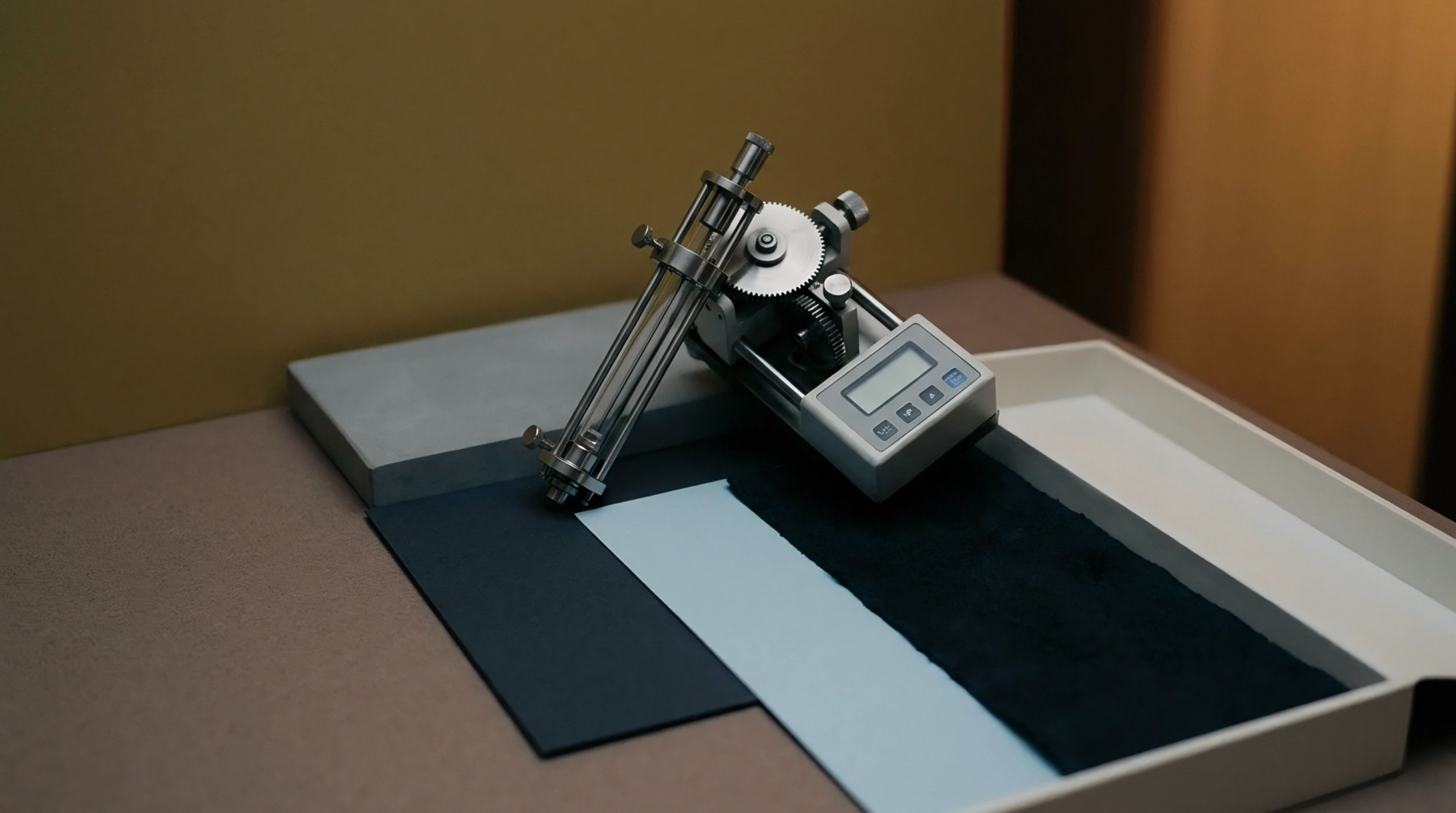
Physical boundaries exist where three distinct phases, such as air, liquid coating and solid substrate, meet while in a state of motion. The dynamic contact line is the specific locus of points where the wetting front advances or recedes across the surface of a moving web. Its behavior is fundamental to determining the quality of adhesion and the uniformity of the liquid layer applied during the converting process.
Line Stability
Forces acting at this intersection include surface tension and viscous drag. As the speed of the web increases, the dynamic contact line shifts its position and the angle it forms with the substrate changes from the static value. If the velocity is too high, the line becomes unstable and begins to oscillate or trap air pockets between the liquid and the board.
This instability is a primary cause of micro voiding and pinholes in barrier coatings designed for moisture resistance.
Bonding Quality
Characterization of this line requires high speed imaging and tensiometric analysis to ensure the coating remains stable. When the dynamic contact line is well managed, the liquid spreads evenly and penetrates the surface pores to create a strong mechanical bond. Adjusting the surface energy of the substrate via corona treatment is a common method to stabilize the wetting front during high speed production.