Predictive Tribological Degradation Kinetics under High Shear Mechanical Contact in Packaging Converting
Predictive tribological kinetics correlate shear stress with coating degradation to prevent surface failure in converting lines.
Contact
High-speed packaging converting machinery subjects paperboard, plastic films, and multi-layer laminates to severe mechanical friction during transport. Web guidance rolls, form-fill-seal collar shoes, folder-gluer belts, and rotary die nips exert localized compressive loads paired with high sliding velocities. Microscopic peaks on the substrate and tooling establish discrete interfaces where true mechanical interaction takes place.
Local real contact area represents a tiny fraction of the nominal contact area, concentrating macroscopic web tension into intense localized contact stresses that routinely exceed fifty megapascals.
Web tension creates normal load. Under these extreme stresses, protective varnishes, soft-touch laminating films, and barrier extrusions experience severe tribological degradation. Mechanical wear on a converting line does not occur as smooth macro-scale surface loss.
Instead, surface breakdown initiates through discrete micro-structural damage mechanisms driven by interfacial sliding friction.

Asperities Shear Dynamics in Web Converting Lines
Microscopic surface peaks on packaging substrates interact directly with machine rollers during high-speed web handling operations. When a flexible packaging web passes over stationary turnbars or driven nip rollers at line speeds between three hundred and eight hundred meters per minute, sliding contact generates severe velocity gradients across the interface. Shear rates within thin surface coatings routinely reach values between 104 s-1 and 106 s-1.
Sliding speeds reach ten meters per second.
The magnitude of interfacial friction depends on substrate topography, elastic modulus, and the dynamic coefficient of friction. Topographical interactions induce cyclic elastic and plastic deformation within the coating matrix. Asperities deform under force.
Repeated mechanical deformation under high shear stress weakens the structural integrity of thin-film polymeric coatings, initiating micro-voids at pigment-binder interfaces. Dynamic friction spikes quickly.

Where Does Asperities Friction Trigger Surface Delamination?
Interfacial failure occurs when localized tangential stresses surpass the internal bond strength of adjacent material layers. High friction along guiding plates causes severe stress concentration at the interface between the substrate and the functional topcoat. Surface energy dictates adhesion.
If the work of adhesion between an aqueous barrier coating and a bleached kraft board substrate falls below the applied shear stress, sub-surface shear cracks propagate horizontally.
| Converting Operation | Contact Geometry | Shear Rate (s⁻¹) | Initial COF Range (Static/Dynamic) | Dominant Wear Mechanism |
|---|---|---|---|---|
| Rotary Die Nipping | Cylinder to Cylinder Nip | 5.0 × 10⁵ | 0.25 – 0.35 | Compressive Plastic Deformation |
| Folder-Gluer Belt Guidance | Flat Belt to Board Surface | 1.2 × 10⁴ | 0.35 – 0.50 | Adhesive Micro-Transfer |
| Form-Fill-Seal Collar Drag | Conical Metal Former to Film | 8.5 × 10⁴ | 0.18 – 0.28 | Abrasive Micro-Plowing |
| Slitter Rewinder Web Tension | Steel Roll to Coated Paper | 3.0 × 10⁵ | 0.20 – 0.30 | Thermal Softening Extrusion |
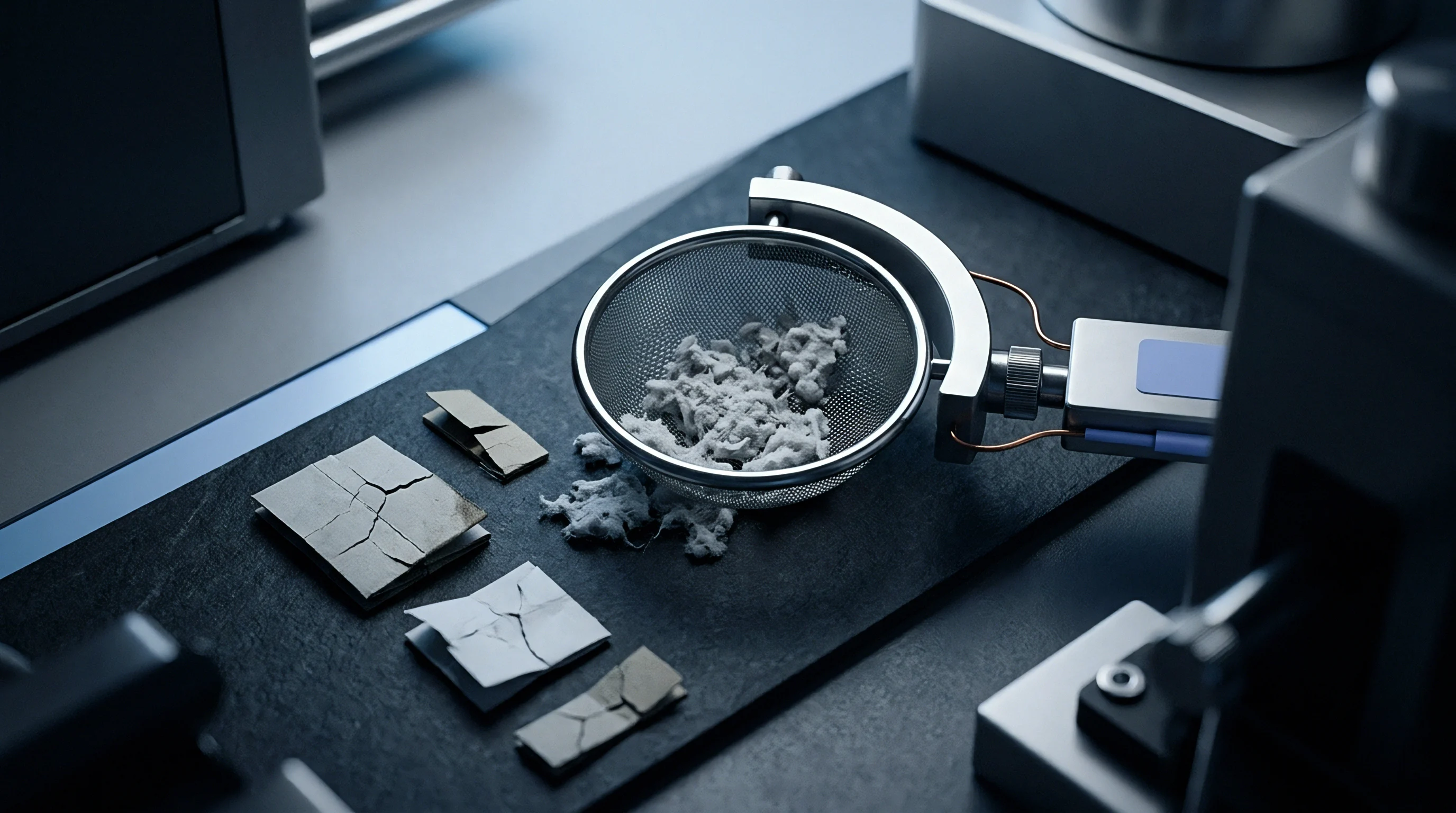
Progressive mechanical friction modifies initial surface topography and generates microscopic debris. Wear processes within converting machinery follow distinct mechanical pathways based on contact stress levels and material properties.
- Adhesive micro-transfer occurs when high localized frictional shear overcomes internal cohesive strength within an overprint varnish matrix, transferring polymer fragments onto steel guide rolls.
- Abrasive micro-plowing develops as mineral fillers or un-dispersed pigment agglomerates carve linear micro-grooves into soft film laminates under high normal load.
- Frictional micro-crazing initiates within brittle ultraviolet-cured acrylic networks under repeated high-frequency nip shocks during rotary converting.
- Thermal softening extrusion occurs when interfacial contact temperatures cross the glass transition threshold of thermoplastic polyolefin coatings, displacing material laterally.
High frictional shear during web guidance generates localized micro-thermal spikes that accelerate polymer chain scission long before macro-scale surface abrasion becomes visible to the naked eye.
Coating suppliers frequently assert that standard overprint varnishes pass lab-scale rub tests on flat sleds, attributing converting floor gloss loss to improper machine nip settings rather than inherent shear breakdown of the polymer binder.
Kinetics
Mathematical modeling of mechanical wear requires defining rate equations that account for normal pressure, sliding speed, and material hardness. Degradation kinetics under high mechanical shear describe the rate at which functional surface layers lose thickness, optical clarity, or barrier performance over time. Archard’s classical wear model links total wear volume directly to normal force and sliding distance while inversely relating wear to substrate surface hardness.
Packaging converting environments introduce complex chemical and thermal interactions that render basic linear wear equations insufficient.

Mechano-Chemical Degradation Rates under Sustained Normal Load
Polymer degradation under mechanical friction follows rate expressions modified by external force application. Mechanical stress reduces the activation energy barrier required for thermal scission of polymer backbones. The Zhurkov mechanochemical degradation model expresses the polymer chain scission rate constant as a function of temperature and local shear stress:
kdeg = A · exp( -( Ea – γ · σ ) / ( R · T ) )
The pre-exponential factor A represents fundamental molecular vibration frequency. Ea denotes the zero-stress thermal activation energy for covalent bond breakage. The structural activation parameter γ quantifies local stress concentration on polymer chains, while σ represents local applied shear stress.
R stands for the universal gas constant, and T denotes absolute interfacial contact temperature. Shear stresses exceed limits. When converted packaging webs pass over high-friction contact points, localized shear stress σ elevates the reaction rate constant kdeg by several orders of magnitude.
Polymer networks break down. Chain scission reduces the average molecular weight of topcoat resins, weakening cohesive film strength. Caliper loss triggers failure.
Material mass loss rate dM/dt per unit contact area correlates directly with stress-assisted reaction kinetics:
dM / dt = ρ · Kw · P · v · exp( ( γ · σ ) / ( R · T ) )
The variable ρ represents coating mass density, Kw is the intrinsic material wear coefficient, P denotes applied normal contact pressure, and v is web transport velocity. Frictional work input continuously feeds energy into the reaction zone, accelerating surface loss.

Activation Energy Modifiers for Shear-Assisted Degradation
Frictional heating lowers the energy barrier necessary to break covalent bonds along polymer backbones. High shear contact generates micro-scale flash temperatures at asperity contact points. Flash temperatures elevate localized T well above bulk web temperature.
Accelerated kinetic models calculate cumulative thermal-mechanical damage across successive converting passes.

Worked Mathematical Model for Scuff Wear Kinetics
Evaluating a high-speed packaging line running a twenty-five micrometer polypropylene barrier film over a fixed curved metal guide rail provides a clear numerical demonstration of wear kinetics. Assume a web speed of five hundred meters per minute, a web tension creating a normal contact pressure P of 2.5 MPa, and an initial dynamic friction coefficient of 0.25. Local shear stress σ equals P multiplied by friction coefficient, yielding 0.625 MPa.
Assume the polyolefin coating possesses a baseline activation energy Ea of 120 kJ/mol, a pre-exponential factor A of 1.0 × 10¹² s-1, and a stress coefficient γ of 45 kJ/(mol·MPa). Bulk room temperature is 296 Kelvin, but interfacial asperity friction creates a localized temperature rise of 35 Kelvin, pushing interfacial T to 331 Kelvin.
Calculating the stress-modified activation energy barrier: Eeffective = 120 – (45 × 0.625) = 91.875 kJ/mol. Inserting values into the modified rate equation: kdeg = (1.0 × 10¹²) × exp( -91875 / (8.314 × 331) ). The exponent evaluates to -33.39.
Evaluating the exponential term yields exp(-33.39) = 3.14 × 10⁻¹⁵. The resulting mechanical scission rate constant kdeg equals 3.14 × 10⁻³ s-1. If localized shear stress σ doubles to 1.25 MPa due to varnish set-off contamination on the guide rail, the effective activation energy drops to 63.75 kJ/mol.
The rate constant kdeg jumps immediately to 8.42 × 101 s-1. Mechanical scission rate accelerates by more than twenty-six thousand times under doubled shear stress.
- Baseline friction indexing measures static and dynamic friction coefficients on pristine converted samples under ISO 187 standard conditioning at twenty-three degrees Celsius and fifty percent relative humidity.
- Controlled shear stress loading applies incremental normal forces from five to fifty newtons using a tungsten carbide stylus across specified sliding velocities.
- Interfacial thermal logging records real-time contact zone temperature rises via infrared micro-thermometry during high-speed reciprocating rub cycles.
- Profilometric volume evaluation quantifies wear track cross-sectional area using non-contact optical profilometry to calculate total mass loss rate per unit energy.
Increasing varnish cross-link density raises scratch resistance but reduces compliance under high-impact rotary creasing dies.
Maintaining lower web tension across turnbars preserves protective varnish integrity more effectively than increasing coating coat weight on soft substrates.


Heat
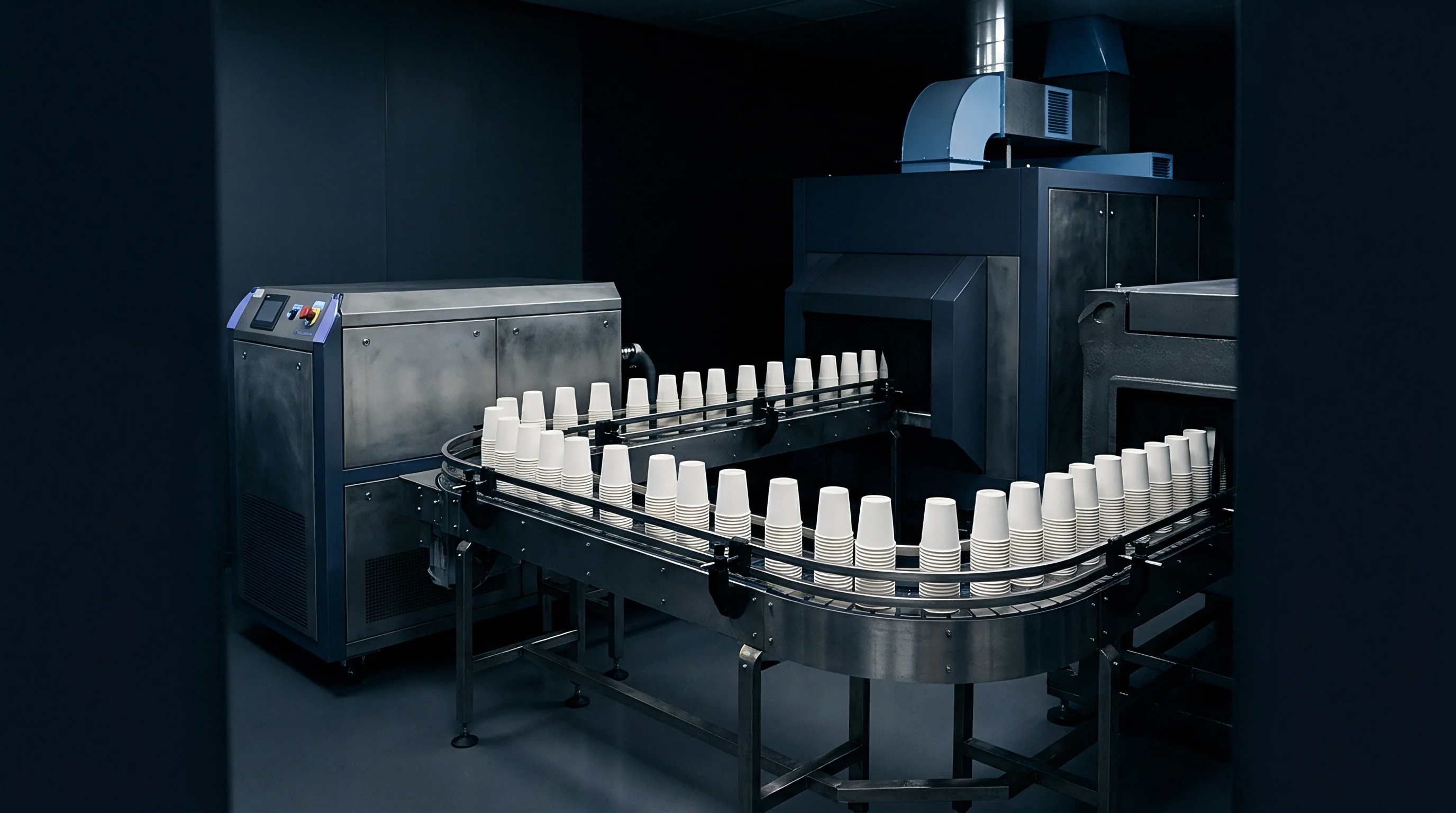
Frictional resistance at high sliding velocities converts mechanical energy into thermal energy localized within micro-scale boundary layers. High-speed packaging converting lines dissipate substantial mechanical energy at contact nips, turnbars, and slitter blades. Heat accumulation alters the mechanical moduli of polymeric surface finishes, shifting material behavior from brittle fracture to ductile plastic flow.

Interfacial Thermal Spikes in High-Speed Nip Rollers
Transient temperature rises within rubber-covered nip zones often exceed bulk substrate temperature measurements by substantial margins. Rubber rolls cushion nip shocks. Frictional heating follows the Jaeger classic flash temperature equation, where maximum contact zone temperature rise ΔT depends on sliding velocity v, contact spot radius a, thermal conductivity K, and volumetric heat capacity ρcp:
ΔT = ( 2 · μ · P · v · a ) / ( K · √( 1 + ( v · a ) / ( 2 · α ) ) )
The thermal diffusivity α equals K / (ρcp), and μ represents the dynamic friction coefficient. Friction generates thermal energy. High sliding velocities v produce narrow thermal spikes at asperity contacts.
Heat dissipates slowly through insulating paperboard substrates, trapping thermal energy within thin functional polymer films.
Polymer Glass Transition Shift under Localized Shear
Amorphous coating matrices soften rapidly when mechanical energy dissipation drives local temperatures past structural transition limits. Thermal flash heating shifts polymers from a glassy state into a rubbery state. Mechanical wear accelerates above glass transition.
Softened polymer matrices exhibit severe adhesive transfer to steel machine rolls, producing immediate gloss reduction and ink smearing.
| Finish Chemistry | Glass Transition (Tg, °C) | Thermal Scission Onset (°C) | Critical Shear Stress (MPa) | Rub Resistance Rating (TAPPI T815) |
|---|---|---|---|---|
| Water-based Acrylic Varnish | 45 – 55 | 180 | 12.5 | Moderate (200 cycles) |
| UV-Cured Free-Radical Acrylate | 85 – 110 | 230 | 35.0 | High (500+ cycles) |
| Soft-Touch Polyurethane Dispersion | -15 – 10 | 160 | 4.5 | Low (50 cycles) |
| Extrusion Low-Density Polyethylene | -120 (Tg) / 105 (Tm) | 200 | 8.0 | Moderate (150 cycles) |
Thermal softening interacts with mechanical shear stress to induce severe degradation modes across printed packaging surfaces. Scuffing ruins graphic appeal.
A dynamic friction coefficient increase of zero point fifteen under thirty newtons normal load raises interfacial contact temperature by twenty-four degrees Celsius at six meters per second line speed.
Whether hyper-branched acrylate monomer additives can suppress flash friction heating without compromising recyclability repulpability grades remains undetermined across high-volume production lines.

Viscosity
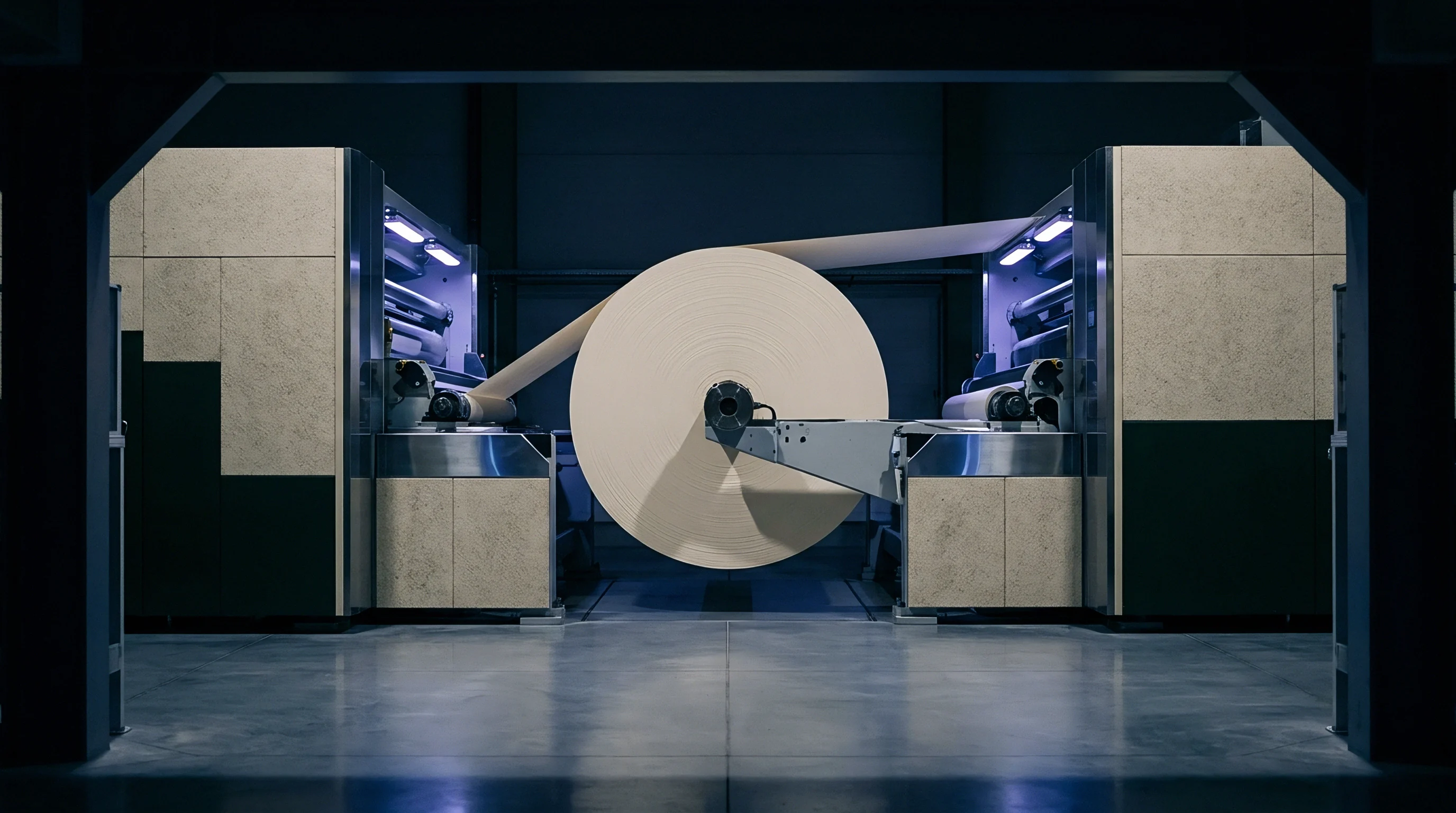
Fluid flow resistance in fluid overprint varnishes dictates film thickness formation and boundary lubrication efficiency under converting rollers. During roll-to-roll inline varnish application, fluid rheology governs coat weight uniformity and wet film levelling. After drying or curing, residual fluid components and migratory slip additives establish boundary lubrication layers that modify dynamic surface friction.
Rheological Shear Thinning in Inline Surface Coating
Non-Newtonian fluid coatings exhibit rapid yield stress reductions when exposed to high velocity applicator rolls. Inline flexographic and gravure coating units submit liquid varnishes to shear rates surpassing 105 s-1. High shear rate breaks polymer chains.
Under intense shear, polymer coils disentangle, dropping dynamic viscosity precipitously. Rapid viscosity loss enables thin, continuous film application, but inadequate elastic recovery post-shearing leaves micro-defects that act as stress concentration sites during subsequent converting operations.
Boundary Lubrication Mechanics in Polyolefin Extrusions
Fatty acid amide slip additives migrate toward film surfaces to establish sacrificial lubrication layers during roll winding. Erucamide crystallizes on outer film surfaces. Fatty acid amides like erucamide and oleamide possess limited solubility in polyolefin matrices.
Over twenty-four to seventy-two hours post-extrusion, additive molecules diffuse to the surface, orienting their hydrophobic hydrocarbon tails outward to lower surface energy and dynamic friction.
Mechanical shear contact during slitting or bag forming strips away thin boundary lubrication layers. Un-cured monomer lowers mechanical shear threshold. If converting speeds exceed the re-lubrication rate of migratory additives, metal-to-polymer contact recurs, driving dynamic friction up and initiating surface abrasion.
- Substrate roughness matching aligns surface topography parameters to ensure mechanical interlocking without creating high-stress micro-asperity points.
- Slip additive concentration control maintains migration kinetics of fatty amides within prescribed dosage windows to prevent set-off.
- Nip pressure distribution auditing verifies uniform contact geometry across wide press widths using pressure-sensitive tactile film strips.
- Curing energy calibration monitors ultraviolet dose density to ensure complete polymer cross-linking across the full thickness of the protective film.
Compliance with ISO 1518 scratch resistance thresholds mandates post-cure conditioning for forty-eight hours prior to high-speed die-cutting operations.
Neglecting shear-induced wax depletion leads to catastrophic ink scuffing during transit, incurring complete shipment rejections and full product repacking expenses.


Validation
Laboratory measurement of wear resistance demands standardized mechanical testing protocols that accurately mirror converting line stress. Standard testing methods isolate specific mechanical stress modes to quantify dynamic friction coefficient decay, coating mass loss, and surface haze changes. Reliable predictive modeling relies on establishing strict correlations between bench test data and long-term converting floor performance.

Standardized Friction and Scuff Test Protocols
Testing procedures like ISO 1518 and ASTM D5264 apply quantified mechanical actions to evaluate surface endurance. Static and dynamic friction measurement under ASTM D1894 pulls a weighted two-hundred-gram sled across a flat substrate test plane under controlled environmental conditions per ISO 187. ASTM D5264 rub testing uses a weighted reciprocating arc receptor block to simulate transportation vibration and handling scuffing.
Scratch resistance evaluation per ISO 1518 drives a hemispherically tipped stylus across a coated sheet under incrementally increasing normal loads. Scratch depth exceeds two micrometers during transport. Optical profilometry quantifies depth profile metrics and critical failure load where stylus contact penetrates through the coating into the underlying paperboard fibers.
Recyclability schemes score coated board down.

Economic Balance of Anti-Scratch Additives versus Waste Costs
Formulators adjust silicone and wax concentrations to strike an optimal financial equilibrium between chemical costs and batch reject rates. High-durability additives elevate liquid ink and varnish unit costs. Sacrificial slip agents reduce converting waste by suppressing surface scuffing during web transport.
High friction during cartoning generates unacceptable line jams, lowering overall equipment effectiveness metrics.
- Conditioning atmosphere logs record temperature and humidity history per ISO 187 throughout test specimen preparation and evaluation phases.
- Static and dynamic friction values provide numerical baseline figures measured under ASTM D1894 testing parameters before and after mechanical stress.
- Spectrophotometric color shift data documents delta E changes on printed graphics following standardized Sutherland rub testing under specified weights.
- Recyclability repulpability certificates verify that high-durability surface finishes do not compromise fiber recovery performance under EN 13430 evaluation protocols.
Inserting a mandatory ASTM D5264 rub resistance floor into supply contracts transfers liability for transit scuffing directly to the packaging converter.