Chemical Agent
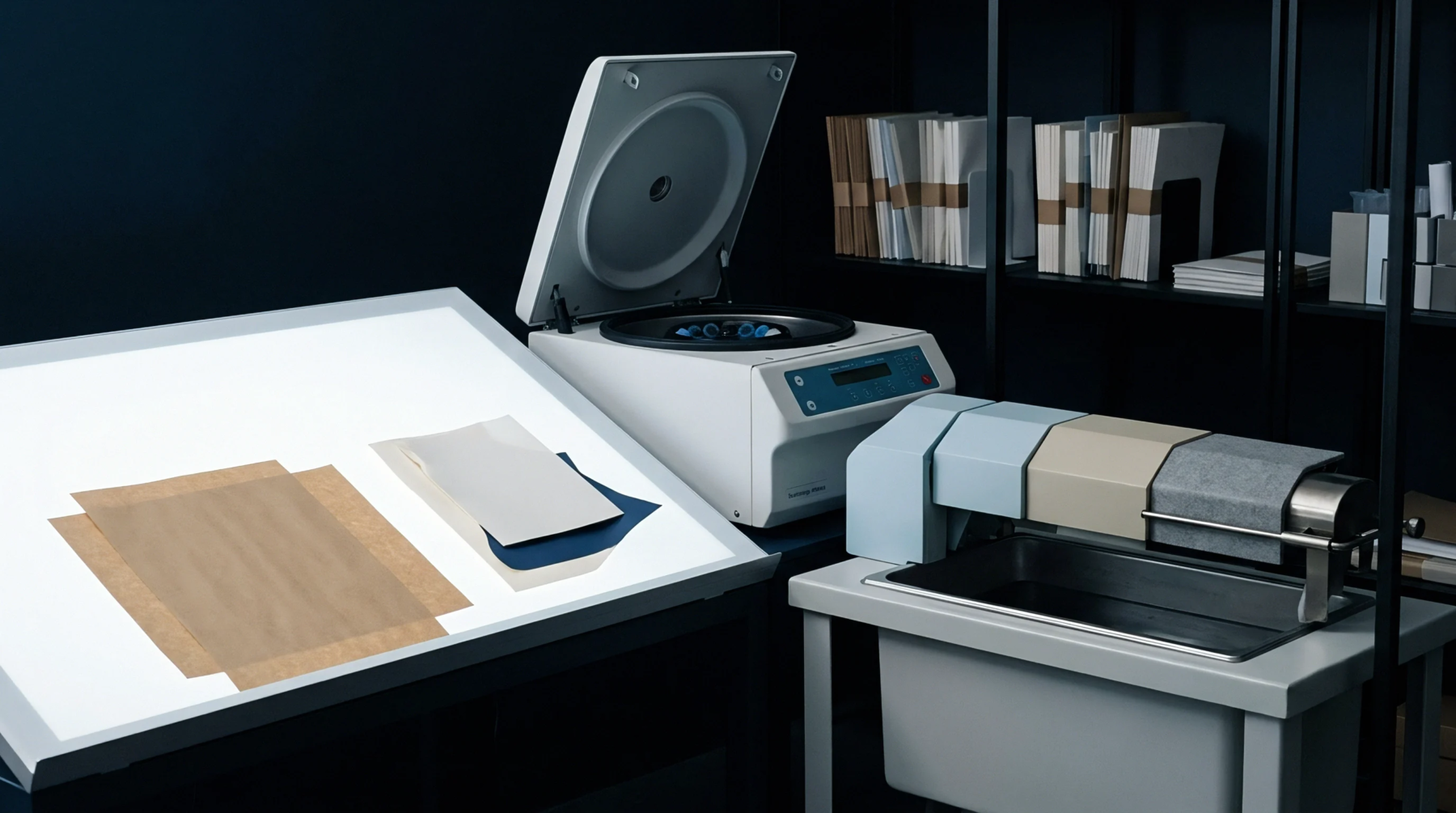
Laboratory media used in compliance testing dissolve and isolate specific chemical additives from packaging substrates for quantitative analysis. The chosen extraction solvent must be compatible with both the target analyte and the polymer or paper matrix being analyzed. It allows technicians to measure the concentration of migrateable substances.
This measurement ensures the packaging is safe.
Solubility Selector
Selection of the appropriate liquid agent depends on the chemical nature of the substances being targeted for analysis. In standard testing, an extraction solvent like hexane is used for non-polar compounds, while water or ethanol-water mixtures simulate food contact under various conditions. The solvent must dissolve the compounds of interest without destroying the paper matrix itself.
This selective action ensures that the analysis represents true potential migration rather than material decomposition.
Laboratory Protocol
Executing an extraction test involves exposing the paperboard sample to the liquid under controlled temperature and time conditions. Technicians place the sample in the extraction solvent and heat it to accelerate the migration of residues. After the exposure period, the liquid is collected and concentrated to allow detection by gas chromatography or mass spectrometry.
This procedure provides the precision needed to verify compliance with national food safety authorities. Accurate results depend on the purity of the chemical agents used.