Standard Laboratory Extraction Protocols for Recycled Packaging Board Compliance
Laboratory compliance testing of recycled packaging board requires isolating volatile and aqueous migrants using standardized extraction media and edge-sealed cells.
Solvent
Analytical verification of recycled folding boxboard and fluting mediums begins by isolating chemical migrants from complex cellulosic fiber webs. Recovered paper grades contain printing ink chemistries, synthetic sizing additives, adhesives, and processing aids accumulated across repeated repulping cycles. Distinguishing polar contaminants from nonpolar mineral fractions dictates specific liquid vehicles calibrated to target compound classes.
Standardized aqueous protocols isolate water-soluble elements, heavy metal ions, and polar processing aids. Cold water extraction under EN 645 macerates paper specimens at 23 degrees Celsius for twenty-four hours in deionized water, simulating direct exposure to ambient moisture and wet non-fatty groceries. Hot water extraction under EN 647 operates at 80 degrees Celsius for two hours, accelerating the leaching of formaldehyde, glyoxal, and water-soluble pentachlorophenol derivatives found in high-humidity food boards.
Secondary fibers harbor persistent chemical residues. Cold water extraction targets water-soluble salts. Solvent selection determines analytical extraction yields.
Under BfR Recommendation XXXVI, aqueous extraction figures exceeding 15 milligrams per square decimeter total dry residue invalidate a board grade for direct contact with wet foodstuffs.
Organic liquid extractions address lipophilic migrants that water fails to dislodge. ISO 15320 establishes liquid-solid immersion using 95 percent ethanol or acetone to determine bisphenol A, bisphenol S, and chlorinated phenols. Mineral oil saturated hydrocarbons (MOSH) and mineral oil aromatic hydrocarbons (MOAH) demand aggressive solvent pairs.
Standard EN 16995 employs a fifty-fifty mixture of hexane and ethanol, or dichloromethane, extracting recovered fibers for two hours under continuous agitation before high-performance liquid chromatography coupled to gas chromatography with flame ionization detection (HPLC-GC-FID).

Aqueous and Organic Extraction Matrixes
Recovered cellulosic packaging evaluation splits into standardized liquid extractions based on compound polarity, board porosity, and target migration ceilings.
| Standard Designation | Extraction Medium | Thermal Conditioning | Target Analytes | Action Limit Or Reporting Gate |
|---|---|---|---|---|
| EN 645 | Deionized Water | 23 °C for 24 hours | Water-soluble matter, heavy metals | 15 mg/dm² dry residue ceiling |
| EN 647 | Deionized Water | 80 °C for 2 hours | Formaldehyde, glyoxal, soluble phenols | Formaldehyde: 1.0 mg/dm² |
| ISO 15320 | Dichloromethane or Acetone | Room temperature, agitation | Bisphenol A, Bisphenol S, Alkylphenols | BPA: 0.1 mg/kg limit of quantification |
| EN 16995 | Hexane / Ethanol (50:50 v/v) | 2 hours shaking at 23 °C | MOSH (C16–C35), MOAH (C16–C35) | MOAH: non-detectable ( |
| EN 15519 | 95% Ethanol or Isooctane | 60 °C for 4 hours | Total specific migration, plasticizers | Specific SML per chemical substance |
| Thermal and duration figures reflect published European Committee for Standardization bench parameters; limits align with Council of Europe CM/Res(2020)9 recommendations. | ||||
Laboratory technicians calibrate solvent purity before paperboard immersion. Analytical-grade reagents require distillation checks: hydrocarbon solvents often introduce trace paraffinic baselines that mimic petroleum distillates extracted from paper furnish. A batch blank run establishes the laboratory contamination floor before cutting test specimens.
Solvents with boiling points below 70 degrees Celsius allow concentration under nitrogen streams without degrading thermally labile photoinitiators such as 2-isopropylthioxanthone (ITX) or 4-methylbenzophenone.
Supply agreements governing virgin-recycled duplex boards state that compliance with Regulation EC 1935/2004 Article 3 hinges on the EN 647 hot water extract yielding less than 1.0 milligram of free formaldehyde per kilogram of paper, transferring testing costs to the converter if initial mill declarations omit lot-level extraction data.


Vessel
Bench equipment geometry and specimen preparation govern analytical reproducibility across recycled pulp evaluation. Raw board samples cut from reels possess raw cut edges where internal plies lie open to direct chemical ingress. Unsealed edges distort migration calculations.
Paraffin wax creates a vapor seal.
A standard folding boxboard measures between 250 and 450 micrometers in thickness. The four sheared boundaries of an immersion coupon expose porous middle plies composed of unbleached wastepaper and mechanical pulp. When submerged in liquid simulants inside cylindrical glass chambers, these unsealed perimeter faces absorb solvents via capillary suction up to six times faster than the calendered, clay-coated outer liner.
Unsealed edge absorption inflates apparent migration numbers by 35 to 55 percent compared to real-world single-sided carton exposure.

Will Edge Sealing Invert Migration Test Outcomes?
Carton converters dispute extraction failures when laboratory reports omit perimeter masking details. Preventing edge penetration demands mechanical masking cells or molten paraffin coatings applied along all perimeter shears.
Unsealed specimen edges elevate measured extraction yields by forty percent during twenty-four hour solvent exposure trials.
Single-sided migration cells isolate the food-contact surface. The European standard EN 1186-1 outlines stainless steel and glass migration cells where circular board specimens compress against fluoroelastomer O-rings, exposing only the functional barrier or top coating to the liquid vehicle. Edge capillary uptake drops to zero.
Where total immersion proves unavoidable, technicians coat coupon margins with molten analytical-grade paraffin wax or two-component solvent-free polyurethane adhesives, trimming analytical surfaces to a calibrated 1.0 square decimeter.
Extraction equipment selection splits into specific thermal and pressure regimes:
- Soxhlet extraction units wash recycled paper fibers with freshly distilled boiling solvent cycles across four to six hours, isolating total solvent-extractable organic matter regardless of polymer entrapment.
- Accelerated solvent extraction cells apply elevated pressures up to 150 bar and temperatures reaching 100 degrees Celsius, stripping hydrocarbons from dense multi-ply carton structures within twenty minutes.
- Ultrasonic extraction baths dislodge surface-adsorbed photoinitiators and phthalate plasticizers through acoustic cavitation at 40 kilohertz without rupturing long-chain cellulosic fibers.
- Single-sided immersion cells clamp coated duplex boards against liquid simulants, restricting chemical transfer strictly to outward diffusion through the functional barrier layer.
Apparatus cleaning schedules prevent cross-batch contamination on the laboratory floor. Glassware washed in alkaline detergents undergoes acid rinses with 10 percent nitric acid, followed by baking at 400 degrees Celsius for five hours to vaporize residual silicone greases and heavy mineral fractions. Fluoropolymer seals require ultrasonic cleaning in dichloromethane between successive board trials.
Failure in apparatus decontamination transfers phthalates from historic test lots into fresh samples.
Mill technical managers often argue that edge penetration during laboratory immersion exaggerates contaminant release, claiming the calendered surface alone controls consumer safety in finished packaging.
Simulant
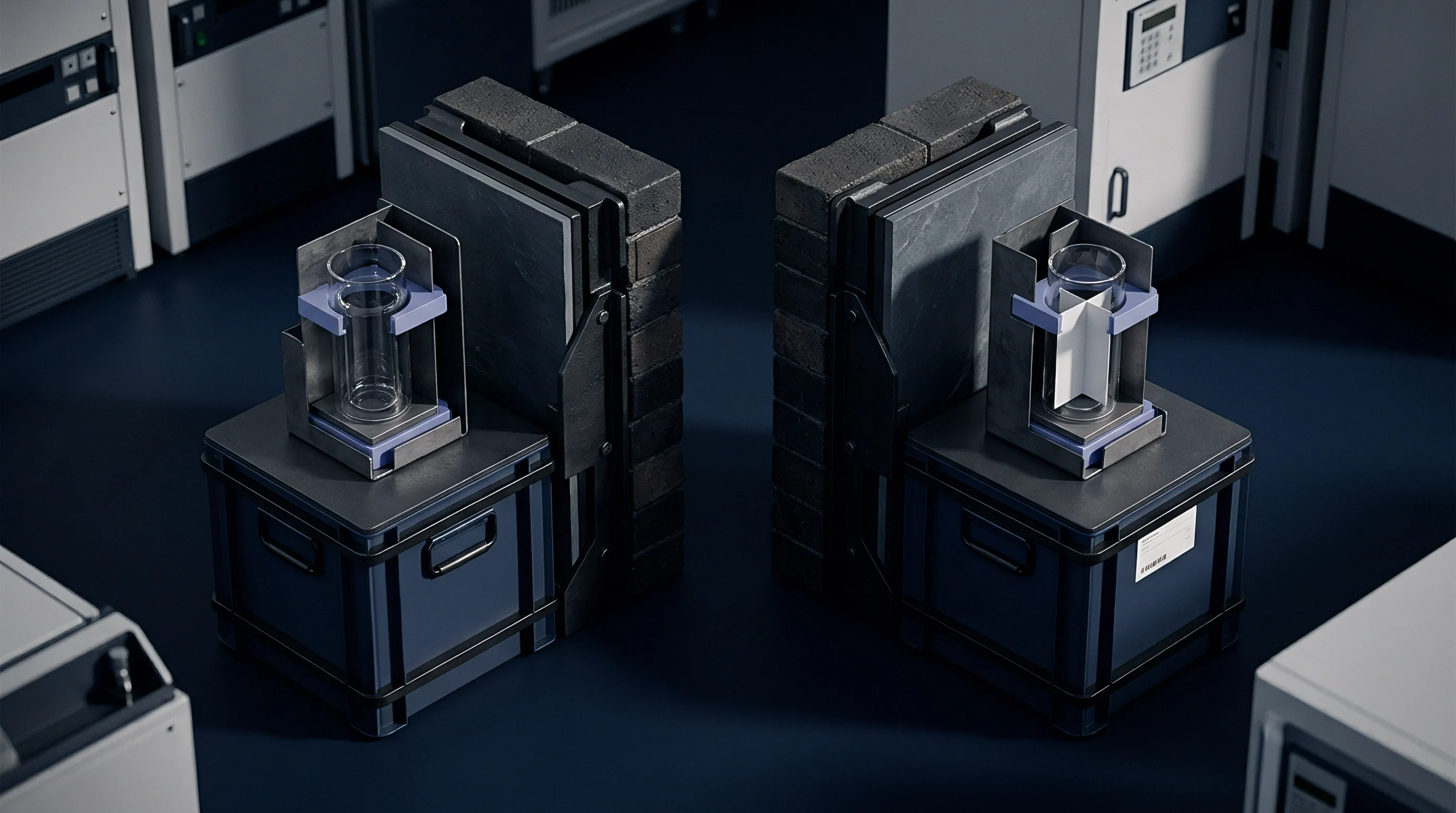
Direct liquid immersion poorly replicates dry food environments such as flour, cereal, dry pasta, and powdered infant formula packed in recycled board boxes. Dry foods demand solid adsorbents. Tenax traps volatile hydrocarbon fractions cleanly.
Standard EN 14338 governs the determination of chemical migration from paper and board into modified polyphenylene oxide, marketed commercially as Tenax. This porous polymer resin possesses a high affinity for volatile and semi-volatile organic compounds, functioning as an infinite sink for gas-phase migrants escaping cellulosic webs. Testing involves placing 4.0 grams of 60-to-80-mesh Tenax beads across one square decimeter of board surface inside sealed glass petri dishes, conditioned in temperature-controlled incubators at 40 degrees Celsius for ten days to simulate extended shelf storage, or at 60 degrees Celsius for ten days to reflect accelerated long-term exposure.

Adsorbent Media for Dry Contact Media
Tenax sorption mechanics decouple physical contact from pure vapor phase partition. Dry foodstuffs absorb volatile mineral oils, diisopropylnaphthalenes (DIPN) from carbonless copy papers, and photoinitiators evaporating across the internal packaging air gap. Liquid simulants like 95 percent ethanol dissolve the cellulosic binder matrix, extracting compounds that remain bound within packaging fibers under dry pantry conditions.
Tenax captures only mobile fractions that establish genuine vapor pressure at ambient temperatures.
| Food Commodity Class | Prescribed Simulant | Standard Exposure Conditions | Representative Migrants Monitored |
|---|---|---|---|
| Dry non-fatty groceries (cereals, pasta) | Modified polyphenylene oxide (Tenax) | 40 °C for 10 days (or 60 °C for 10 days) | MOSH (C16–C24), MOAH, DIPN, benzophenone |
| Aqueous and acidic products (cut produce) | 3% Acetic Acid (Simulant B) | 40 °C for 10 days | Heavy metals, primary aromatic amines |
| Alcoholic beverages, moist baked goods | 10% to 20% Ethanol (Simulant A / C) | 40 °C for 10 days | Water-soluble photoinitiators, organic acids |
| Fatty dry foods (chocolate, bakery) | Tenax or Isooctane (Alternative) | 60 °C for 10 days / 20 °C for 2 days | MOSH (C16–C35), plasticizers (DEHP, DIBP) |
Testing laboratories select simulant regimes based on the declaration of intended food contact. Deploying the wrong simulant produces legal exposure or commercial rejection:
- Porous solid media trap short-chain gas-phase fractions without swelling clay and latex surface barriers.
- Liquid substitute vehicles leach non-volatile cross-linkers that never migrate across an ambient air space during commercial transit.
- Acidic food simulants destabilize wet-strength resins, generating false positive releases of free epichlorohydrin and chloropropanols.
- Organic nonpolar solvents extract total additive reservoirs, evaluating chemical inventory rather than genuine migrant transfer rates.
Conditioning atmospheres dictate baseline packaging moisture before simulant application. Board sheets equilibriate under ISO 187 at 23 degrees Celsius and 50 percent relative humidity for forty-eight hours. Dry packaging boards exposed to elevated humidity prior to testing soften their starch networks, promoting accelerated desorption of low-molecular-weight volatiles into the adsorbent bed.
Conversely, desiccated samples yield suppressed migration figures that collapse once cartons absorb ambient shipping humidity.
Solid adsorbent testing reflects gas-phase migration without dissolving paper sizing agents.
Aggressive organic solvents establish worst-case chemical inventory while solid adsorbents establish true consumer exposure.

Residue
Quantifying extracted organic fractions requires gas and liquid chromatography coupled to mass spectrometry to resolve baseline humps and co-eluting interferences. Mineral oil hydrocarbons extracted from newsprint and offset inks form broad unresolved complex mixtures on flame ionization detector chromatograms. Natural plant waxes register as hydrocarbons.
Epoxidation removes unsaturated olefinic interferences. The chromatogram reveals unresolved complex mixtures.
Unrefined recycled pulp contains biogenic compounds originating from wood lignin, plant waxes, and vegetable-based binding oils. Odd-carbon-numbered n-alkanes ranging from C23 to C33 derive from natural wood waxes, eluting in the exact retention window designated for C16 through C35 MOSH. Polyolefin oligomeric saturated hydrocarbons (POSH) derived from polyethylene films and hot-melt adhesives contribute additional synthetic aliphatic humps.
Poly-alpha-olefins (PAO) from industrial lubricants further contaminate recycled paper streams.
Chromatographic Clean up and Interference Removal
Isolating anthropogenic mineral oil hydrocarbons from natural plant waxes requires a two-stage chemical clean-up before chromatographic injection. Standard EN 16995 dictates passing hexane extracts through an activated aluminum oxide column to separate MOSH from polar resin acids, followed by silver nitrate-impregnated silica gel chromatography to retain olefinic hydrocarbons and aromatic MOAH fractions.
When unsaturated biogenic terpenes or synthetic oligomers break through the silver column, technicians perform m-chloroperbenzoic acid (mCPBA) epoxidation. This oxidation reaction converts electron-rich double bonds into polar oxirane rings, shifting their retention times away from saturated hydrocarbon envelopes. Inadequate epoxidation leaves terpene dimers in the MOSH integration zone, reporting noncompliant mineral oil concentrations on compliant virgin-recycled blends.
Consider a 40-tonne commercial converting run of 350 grams per square meter recycled duplex board intended for dry food packaging. Standard EU food contact assumptions assign a packaging surface-to-food mass ratio of 6 square decimeters per 1 kilogram of food. A 350 g/m² board presents an area density of 3.5 milligrams per square millimeter, meaning 6 square decimeters of board weigh exactly 21 grams.
If laboratory extraction reveals a total MOSH concentration of 150 milligrams per kilogram of board, the 21 grams of packaging contains 3.15 milligrams of total MOSH. Assuming a conservative 10 percent gas-phase migration efficiency across a six-month shelf life without a barrier liner, 0.315 milligrams of MOSH migrates into the 1 kilogram of packaged cereal, producing a food contamination level of 0.315 milligrams per kilogram. This value remains below the German Draft Mineral Oil Ordinance guidance threshold of 2.0 mg/kg food for MOSH, but exceeds the strict 0.5 mg/kg threshold applied to sensitive pediatric goods.
A measured board concentration of 150 milligrams per kilogram transfers 0.315 milligrams of hydrocarbon into food per standard European packaging geometry.
Screening laboratories face specific failure modes during quantitative integration of extraction residues:
- Biogenic terpene breakthrough occurs when silver nitrate columns become overloaded with fatty acids, inflating reported MOAH baseline humps.
- Solvent evaporation loss strips volatile C10 to C16 hydrocarbons during nitrogen blow-down steps, under-reporting low-boiling volatile contaminants.
- Plasticizer fragmentation errors generate false phthalate identifications on low-resolution quadrupole mass spectrometers when processing recycled pulp containing diisononyl phthalate (DINP) and diisodecyl phthalate (DIDP).
- Internal standard degradation skews recovery calculations if deuterated standards evaporate during prolonged ultrasonic agitation baths.
Whether silver nitrate clean-up protocols completely separate polyolefin oligomers from synthetic printing ink aromatics remains an unresolved technical dispute between commercial testing houses and pulp research institutes.


Clearance
Documentation traveling with imported packaging boards establishes traceability under customs scrutiny and market surveillance audits. Customs inspectors impound undocumented board consignments. A flawed certificate voids entry clearance.
Re-testing delays incur daily demurrage charges. Secondary furnish quality fluctuates between batches. Laboratory accreditation confirms analytical baseline rigor.
National food safety authorities and port customs officials review compliance dossiers against Regulation EC 1935/2004 Article 16, which requires a detailed Declaration of Compliance (DoC) supported by accredited laboratory test records. Presenting an outdated migration report conducted on virgin kraftliner to clear an imported recycled chipboard lot constitutes documentation fraud under border inspection mandates.
Whose Ledger Absorbs Noncompliant Batch Destruction?
Cross-border procurement contracts govern analytical testing frequencies and define financial liabilities when customs authorities seize noncompliant packaging board. Importers of record carry initial administrative fines, but contractual indemnification clauses reallocate losses back to foreign mills.
| Regulatory Instrument | Mandatory Laboratory Proof | Governing Standard | Customs Action On Failure |
|---|---|---|---|
| Regulation (EC) No 1935/2004 | Overall migration limits, heavy metal leachates | EN 645, EN 647, EN 1186 | Consignment seizure, mandatory re-export |
| BfR Recommendation XXXVI | Specific migration of formaldehyde, glyoxal, PAA | EN 15519, ISO 15320 | Border rejection, commercial recall notification |
| Swiss Ordinance (SR 817.023.21) | Positive list ink migration, photoinitiators | LC-MS/MS, GC-MS screening | Immediate destruction, retailer notification |
| EU PPWR Article 11 Gateways | Heavy metals sum ( | EN 14582 (combustion ion chromatography) | Commercial fine, European market exclusion |
Testing schedules require lot-specific testing frequencies calibrated to furnish variability. Recycled furnish characteristics shift between seasonal collection periods: post-holiday paper waste contains elevated concentrations of foil-laminated boards, UV-cured varnishes, and offset inks compared to summer wastepaper collections. Commercial supply agreements specify verification testing on every 500 tonnes of recycled board delivered, or once every quarter per furnish grade, whichever occurs first.
Accredited laboratories must hold ISO/IEC 17025 certification covering the specific scope of paper extraction standards. An unaccredited laboratory report testing total heavy metals via simple acid digestion cannot satisfy European Union Packaging and Packaging Waste Directive obligations, which demand EN 14582 total fluorine analysis and leaching under food-simulating conditions.
When port inspectors identify banned substances, such as bisphenol A above 0.05 milligrams per kilogram or detected MOAH fractions between C16 and C35, authorities issue a Rapid Alert System for Food and Feed (RASFF) notification, impounding the palletized consignment at the container terminal, billing the importer for offsite high-temperature incineration, and triggering mandatory physical inspections on subsequent board shipments across all member state borders.