Quantifying Black Liquor Organic Dissolved Solids Carryover in Continuous Digester Extraction Screens
Continuous digester organic dissolved solids carryover quantification relies on TAPPI T 625 gravimetric ash testing to calibrate online refractometry.
Extract
Continuous kraft pulping relies on physical separation between moving wood chips and circulating cooking liquor at designated height zones within the pressure vessel. In continuous digesters, liquor drawn through circumferential screen plates removes spent cooking chemicals along with dissolved wood components, including alkali lignin, hemicellulose fragments, resin acids, and organic acid salts. The extraction zone marks the transition where the downward compaction of the chip bed meets counter-current or co-current washing flows.
Quantifying the carryover of organic dissolved solids past these screens requires analyzing hydraulic velocity vectors, chip bed void fractions, and liquor temperature profiles at the screen interface.
Digester hydraulics dictate washing efficiency. When liquor extraction rates through the screen plates drop below designed displacement ratios, dissolved organic matter remains entrained in the chip bed moving down toward the wash zone. This entrainment transfers heavy organic loads into downstream washing systems, increasing soda loss and depleting active residual alkali.
The boundary layer along the internal face of the screen plates exhibits complex shear stresses where liquor velocity spikes through screen apertures, creating localized zones of chip bed compaction.
Dissolved organic solids carryover occurs when extraction screen face velocity exceeds chip bed fluid percolation rates.
The concentration of organic dissolved solids in black liquor varies across wood species, pulping yield targets, and effective alkali charge. Hardwood liquor contains higher ratios of dissolved xylan and low-molecular-weight organic acids compared to softwood liquor, altering fluid viscosity and surface tension at elevated cooking temperatures. As liquor passes through extraction screen slots, thermal expansion and dissolved solids concentration gradients alter the effective kinematic viscosity.
Higher liquor viscosity slows drainage. If liquid withdrawal velocities across screen faces exceed local bed percolation rates, liquor bypasses the screen collection header, carrying organic dissolved solids into lower digester zones.

Chip Bed Permeability and Slot Hydraulics
Liquor movement across circumferential screen plates depends on pressure differentials maintained across the cooking zone boundary. Bed compaction increases exponentially near the bottom of continuous digesters due to the accumulated weight of the chip column and downward fluid drag forces. Higher bed density reduces inter-chip porosity, restricting the lateral movement of black liquor toward extraction ports.
If operators increase extraction pump suction to compensate for lower lateral flow, the resulting pressure drop draws chips tightly against the screen face, initiating localized plugging.
Screen slot erosion alters flow paths. Over operational cycles, abrasive sand and inorganic particulates rounded or widened screen apertures, disturbing uniform liquor distribution. Uneven slot dimensions generate preferential flow channels, allowing high-velocity jets of liquor to pass through worn screen sections while adjacent zones stagnate.
Stagnant zones allow organic dissolved solids to accumulate in chip interstitial voids, increasing carryover concentrations into the diffusion washing zone.

Liquor Displacement Mechanics at Zone Boundaries
Counter-current washing fluid introduced in the lower digester shell forces spent cooking dissolved solids upward into the primary screen belt. The efficiency of this hydraulic displacement determines how much dissolved organic material exits through black liquor evaporators versus how much descends with washed pulp. The displacement ratio measures the actual removal of dissolved solids relative to the theoretical maximum achievable under ideal plug-flow conditions.
Operational digesters rarely achieve ideal plug flow due to thermal convection currents, chip bed channeling, and radial temperature variations. When cold wash liquor contacts hot digester liquor at zone boundaries, localized density differences trigger internal circulation eddies. These eddies recirculate dissolved organic solids across the extraction screen boundary, elevating carryover levels into the wash zone.
Continuous measurement of liquor density and refractive index above and below the screen belt provides real-time verification of zone isolation stability.
Equipment vendors routinely attribute elevated organic dissolved solids carryover to inconsistent chip furnish size distributions rather than screen slot hydraulic blinding or improper liquor extraction flow setpoints.

Mesh
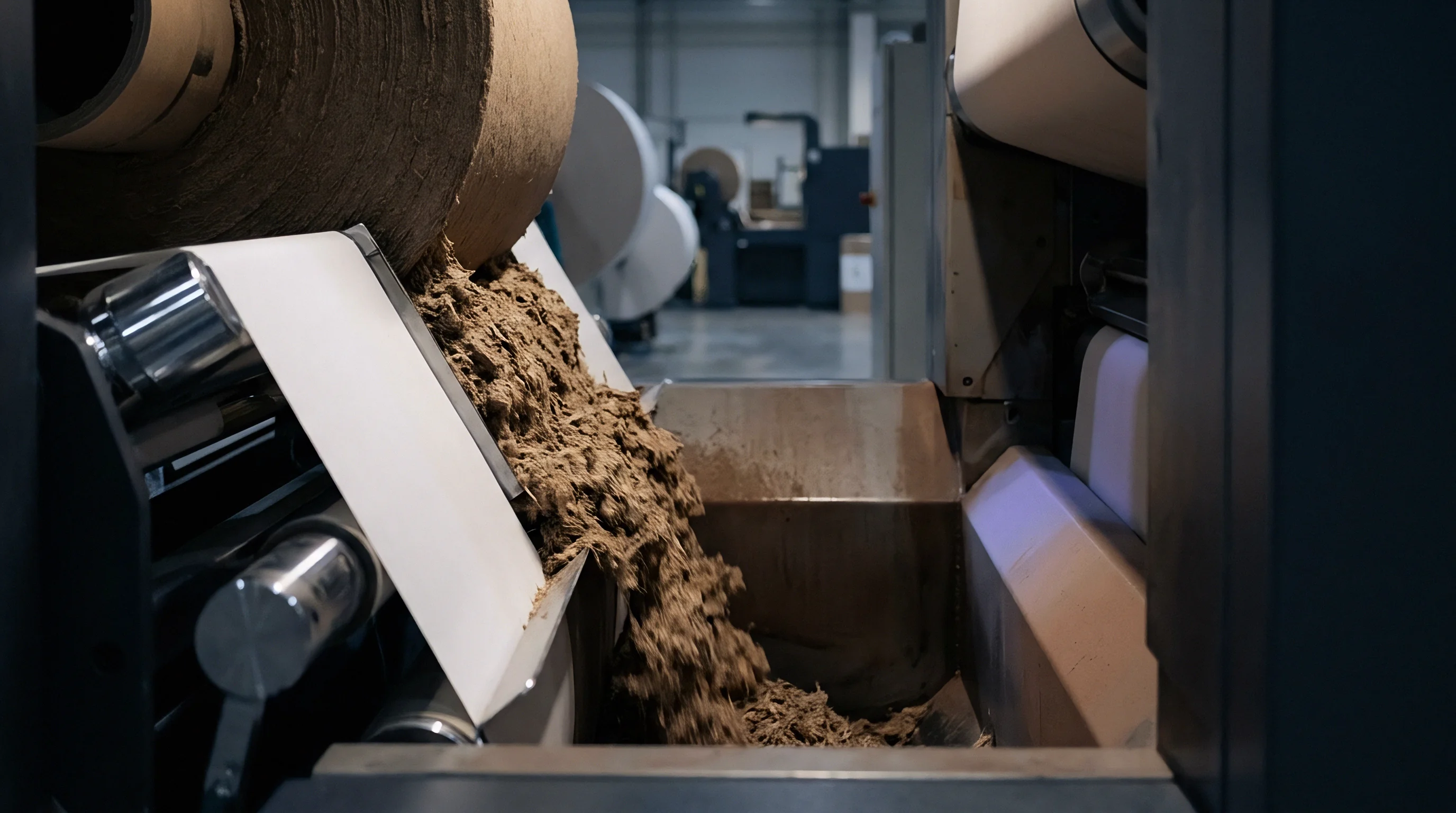
Screen plate aperture design governs the mechanical separation of residual wood fibers from circulating dissolved solids streams. Continuous digesters utilize profiled bar screens, wedge wire grids, milled slot plates, or drilled hole geometries to permit liquid passage while retaining wood chips within the vessel core. Slot geometry directly impacts the velocity profile of black liquor entering extraction headers.
Profiled bar designs create hydrodynamic shear fields as chips slide past screen surfaces, reducing fiber mat accumulation over slot openings.
Slot dimensions typically range from 3.0 mm to 6.0 mm in width for continuous kraft digesters processing softwood chips, and 2.0 mm to 4.5 mm for hardwood species. Narrower slots reduce fiber carryover into weak black liquor evaporator trains but increase hydraulic resistance and risk of surface blinding. Wider slots maximize liquid volumetric throughput at lower pressure drops, yet allow pin chips and wood fiber fines to pass into black liquor storage tanks, where they foul heat exchanger surfaces and evaporators.
| Aperture Profile | Open Area Percentage | Hydraulic Face Velocity (m/s) | Particle Rejection Efficiency (%) | Dissolved Solids Pass-Through Ratio |
|---|---|---|---|---|
| Milled Continuous Slot | 8.5 – 11.0 | 0.12 – 0.18 | 94.2 | 0.88 |
| Profiled Wedge Wire Bar | 12.5 – 16.0 | 0.08 – 0.14 | 97.8 | 0.94 |
| Drilled Countersunk Hole | 6.0 – 9.0 | 0.20 – 0.28 | 89.5 | 0.81 |
| Contoured Smooth Screen | 10.0 – 13.0 | 0.10 – 0.15 | 96.1 | 0.91 |
System performance depends on balancing fluid velocity through screen open areas against back-wash cycling regimes. The list outlines primary operational factors influencing screen plate efficiency and organic solids carryover control:
- Slot Face Velocity Control maintains fluid movement below critical thresholds that cause chip pinning against screen faces.
- Back-Wash Pulse Frequency clears accumulated fiber mats from slot entrances using sudden reversed hydraulic pressure surges.
- Screen Plate Surface Roughness minimizes mechanical friction between sliding chip masses and stationary metal plates.
- Submerged Headers Differential Pressure balances liquor extraction rates evenly across circumferential digester segments.
Profile Bar Geometry and Slot Blinding Dynamics
Wedge-shaped aperture contours create hydrodynamic shear forces that clear fiber mats from the active screen face during back-wash pulses. Profile bar relief angles, typically set between 3 degrees and 7 degrees, allow fluid to expand immediately after passing the narrowest slot throat. This rapid cross-sectional expansion drops local fluid pressure, preventing suspended fibers from lodging permanently within slot walls.
When operational disturbances cause digester liquor pH to drop below critical thresholds, alkali lignin loses solubility and precipitates directly onto metallic screen surfaces. Organic scale formation narrows effective slot widths, increasing face velocity and accelerating local fouling. Lignin scale build-up alters laminar flow lines into turbulent swirls, trapping organic dissolved solids near screen inlets and driving them back into the descending chip bed.

Back-Wash Cycle Optimization and Hydraulic Stability
Intermittent direction reversals in circulation pumps clear accumulated pin chips without interrupting continuous digester production rates. Back-wash systems operate by briefly pressurizing the outer screen header, forcing a reverse pulse of liquor through screen slots into the chip bed. Pulse duration typically ranges from 0.5 to 2.0 seconds, repeated every 2 to 5 minutes depending on liquor viscosity and chip furnish quality.
Excessive back-wash frequency disrupts chip bed downward movement, creating localized void pockets and hydraulic turbulence. These void pockets allow unextracted cooking liquor rich in dissolved organic solids to bypass extraction zones entirely. Optimizing back-wash timing requires tracking differential pressure across screen belts using high-precision transmitters calibrated for elevated temperature and high-alkali conditions.
A smooth screen profile with uniform slot clearance maintains lower dissolved solids carryover than an eroded plate operating under excessive back-wash pressure.
Metrics
Quantifying organic dissolved solids in continuous digester streams demands precise analytical distinction between inorganic pulping chemicals and dissolved wood components. Black liquor carryover contains both inorganic salts, primarily sodium hydroxide, sodium sulfide, sodium carbonate, and sodium sulfate, and dissolved organic mass composed of aliphatic carboxylic acids, hemicelluloses, and degraded alkali lignin. Total Dissolved Solids measurements capture the sum of both fractions, requiring multi-step analytical protocols to isolate the organic dissolved solids component.
Standard laboratory quantification relies on gravimetric drying combined with high-temperature ash testing. Drying liquor samples at 105°C until constant weight determines total solids content. Subsequent muffle furnace calcination at 525°C incinerates the organic fraction, leaving inorganic ash behind.
The weight loss on ignition yields the organic dissolved solids mass directly. While gravimetric methods serve as reference standards, they require several hours of lab processing, rendering them unsuitable for real-time digester feedback control.
Gravimetric determination of organic dissolved solids via TAPPI T 625 achieves an analytical precision of plus or minus 0.3 percent when samples are dried at 105 degrees Celsius and ashed at 525 degrees Celsius.
Refractometers measure refractive index changes. Online optical refractometers infer total dissolved solids by measuring the critical angle of light refraction at the liquor-prism interface. Optical refractive index correlates strongly with total dissolved solids concentration in black liquor streams.
Changes in the relative ratio between organic lignin and inorganic sodium salts shift optical calibration curves, introducing measurement error during species switchover or alkali charge adjustments.
| Test Standard | Target Property | Measurement Precision | Organic Solids Sensitivity | Operational Limitations |
|---|---|---|---|---|
| TAPPI T 625 cm-14 | Gravimetric Total & Organic Solids | ± 0.30% Absolute | High (Direct Ignition) | Off-line lab method, 6 to 8 hour delay |
| ISO 10359 / Refractometry | Optical Refractive Index (Brix) | ± 0.15% Brix | Indirect (Density Based) | Sensitive to liquor temperature and inorganic ratio shifts |
| UV-Vis Spectroscopy (280 nm) | Dissolved Lignin Concentration | ± 0.50 g/L | Very High (Specific Lignin) | Requires high dilution factors, sample cell fouling |
| Conductivity Correlation | Active Inorganic Salt Content | ± 2.0% Relative | None (Inorganic Only) | Fails at elevated solids concentrations due to signal saturation |
| Test conditions: TAPPI T 625 samples dried at 105°C for 16 hours, ashed at 525°C for 4 hours. Optical refractometry temperature compensated to 25°C base reference. | ||||

Why Do Refractometric Dissolved Solids Readings Deviate from Gravimetric Oven Solids?
Optical refractive index measurements respond directly to total dissolved chemical species, whereas thermal evaporative testing quantifies non-volatile mass after driving off water and light organics. Light organic compounds, including methanol, turpentine fractions, and volatile fatty acids generated during carbohydrate degradation, evaporate during 105°C thermal drying. Gravimetric oven tests report these volatile organic solids as lost liquid mass, yielding lower organic solids percentages than optical instruments that detect volatile species while in liquid solution.
Temperature variations bias optical readings. Online refractometer prisms operating in continuous digester extraction lines encounter black liquor temperatures between 130°C and 165°C. Refractometer prisms require active electronic temperature compensation algorithms to translate elevated-temperature refractive index values back to standard 25°C equivalent readings. Small errors in temperature measurement or drift in internal compensation polynomials generate significant deviations in calculated dissolved organic solids mass balances.
Ashing isolates inorganic pulping chemicals. Calculate organic dissolved solids carryover using a verified mass balance sensitivity model across continuous digester operating conditions. Assume a 1,000 air-dry metric ton per day continuous softwood kraft digester operating at a blow line kappa number of 30, with an extraction liquor total dissolved solids concentration baseline of 16.5 percent weight-by-weight.
Evaluation of three distinct carryover scenarios demonstrates the analytical and operational magnitude of dissolved solids tracking variations:
Scenario A represents optimized screen operation with an extraction liquor total solids content of 17.2 percent, an organic-to-inorganic ratio of 62:38, and an organic dissolved solids carryover rate into the wash zone of 35 kilograms per air-dry metric ton of pulp. Online Brix refractometry reads 17.1 percent solids, matching lab gravimetric TAPPI T 625 drying within 0.10 percentage points.
Scenario B represents baseline operation with total extraction solids at 16.5 percent, an organic-to-inorganic ratio of 60:40, and an organic dissolved solids carryover rate of 52 kilograms per air-dry metric ton of pulp. Gravimetric TAPPI T 625 testing reveals total solids of 16.4 percent, while optical refractometry reports 16.8 percent solids due to increased volatile organic acid concentrations in circulation.
Scenario C represents severe screen slot fouling or hydraulic bypass with total extraction solids dropping to 14.8 percent, an organic-to-inorganic ratio shifting to 55:45 due to poor displacement, and organic dissolved solids carryover expanding to 88 kilograms per air-dry metric ton of pulp. Optical refractometry overestimates effective extraction solids by 0.9 percentage points because degraded hemicellulose complexes distort the light refraction angle, masking the loss of extraction efficiency.
Analytical practices have not yet resolved whether real-time optical refractometry can isolate degraded hemicellulose solids from alkali lignin molecules across rapidly shifting hardwood chip species blends.
Impact
Dissolved organic carryover passing through extraction screens downstream into diffusion washing zones creates chemical burdens throughout subsequent pulping and bleaching operations. High concentration of organic dissolved solids in brownstock washing feed streams reduces wash liquor displacement efficiency, requiring higher wash water volumes to achieve target pulp cleanliness. Increasing wash water volumes dilutes weak black liquor going to evaporators, driving up steam consumption in evaporator trains and expanding mill energy footprints.
Lignin precipitates below pH eleven. When high levels of dissolved organic solids carry over into unbleached pulp storage chests, residual dissolved alkali lignin adsorbs back onto pulp fiber surfaces as liquor cools and pH declines. Re-precipitated lignin resists atmospheric washing and requires aggressive chemical oxidation in bleaching stages to remove.
This reprecipitation increases unbleached pulp kappa number artificially, masking effective digester delignification performance.
Solids carryover drives bleaching costs. Unwashed organic dissolved solids consume bleaching chemicals through non-selective side reactions. Sodium hydroxide, chlorine dioxide, ozone, and hydrogen peroxide applied in bleaching towers react rapidly with dissolved organic molecules present in residual entrained liquor before oxidizing residual lignin inside fiber walls.
Every excess kilogram of unwashed organic dissolved solids entering the bleach plant increases oxidant demand faster than residual fiber kappa reduction.
Process disruptions cascading from continuous digester screen performance degradation manifest across several downstream operations:
- Soda Loss Expansion increases sodium sulfate makeup chemical costs to replace inorganic pulping chemical ions entrained past brownstock washers.
- Bleaching Stage Chemical Overconsumption elevates chlorine dioxide usage per metric ton of pulp to achieve target brightness specifications.
- Effluent Chemical Oxygen Demand Loading expands wastewater treatment plant aeration demands and sludge disposal volumes.
- Evaporator Steam Demand Growth escalates live steam usage to evaporate excess wash water added to control pulp cleanliness.
| Organic Carryover Level (kg ODS/ADMT) | Soda Loss (kg Na2SO4/ADMT) | Bleach Plant ClO2 Demand Expansion (%) | Oxygen Delignification Efficiency (%) | Mill Effluent COD Increase (kg COD/ADMT) |
|---|---|---|---|---|
| 30 – 40 (Optimized) | 5.0 – 7.5 | Base Baseline | 62.0 – 65.0 | Base Baseline |
| 41 – 60 (Moderate) | 8.0 – 12.0 | + 6.5 – 11.0 | 55.0 – 61.0 | + 4.2 – 8.5 |
| 61 – 85 (Elevated) | 12.5 – 18.0 | + 12.0 – 22.0 | 47.0 – 54.0 | + 9.0 – 15.5 |
| 86 – 110 (Severe Bypass) | 18.5 – 26.0 | + 23.0 – 38.0 | 38.0 – 46.0 | + 16.0 – 28.0 |
Brownstock Washing Efficiency and Soda Loss Escalation
Residual dissolved organic material occupying fiber pore spaces reduces displacement washer washing efficiency metrics. The Norden efficiency factor and equivalent displacement ratio drop sharply as incoming organic dissolved solids concentrations rise. Dissolved organic molecules exhibit lower diffusion coefficients than inorganic sodium ions, making them harder to wash out from fiber lumens and cell wall matrices during short retention times on vacuum drums or wash presses.
High organic carryover distorts sodium-to-solids ratio balances in weak black liquor. When washers fail to remove entrained organic solids, carryover solids pass with washed pulp into oxygen delignification reactors. Oxidizing organic dissolved solids in oxygen delignification stages consumes dissolved oxygen rapidly, causing localized oxygen depletion, lowering delignification rates, and degrading fiber strength properties through non-selective cellulose depolymerization.

Bleaching Chemical Overconsumption and Lignin Reprecipitation
Unwashed dissolved organic molecules react directly with chlorine dioxide, diverting oxidizing chemical away from residual fiber lignin. In the first chlorine dioxide bleaching stage (D0 stage), carryover organic dissolved solids exert an immediate chlorine dioxide demand. Chlorine dioxide demand escalates rapidly.
Chemical side reactions consume active ClO2 within seconds of mixing, forcing operators to increase chemical dosage setpoints to maintain target kappa reduction after the stage.
Unwashed dissolved solids consume oxidants. The financial cost of carryover chemical consumption is substantial. Each additional kilogram of organic dissolved solids carryover per metric ton of pulp consumes approximately 0.12 kilograms of additional chlorine dioxide and 0.08 kilograms of sodium hydroxide in subsequent bleaching stages.
For a 1,000 ADMT/day bleached kraft pulp mill, a 20 kg/ADMT increase in organic carryover translates directly into hundreds of thousands of dollars in excess chemical expenditure annually.
Uncontrolled organic dissolved solids carryover forces mills to run higher chemical application rates in bleaching stages, elevating operational costs while increasing environmental discharge compliance exposure.

Proof
Converting pulping operational data into audited mass balance declarations establishes the foundation for packaging chain of custody certification and lifecycle accounting. International standards governing virgin pulp claims require verified tracing of wood mass from forest intake through chemical pulping conversion into finished paperboard products. Unquantified losses of organic wood components through extraction screen carryover or inefficient black liquor chemical recovery distort calculated yield ratios, compromising fiber input-output balances under certification scheme compliance rules.
Chain of custody frameworks, including FSC-STD-40-004 and PEFC ST 2002, require certificate holders to maintain accurate material conversion factors. Material conversion factors reflect the true physical yield of usable pulp fiber produced per unit mass of green wood chips entering continuous digesters. Uncontrolled organic dissolved solids carryover alters actual pulp yield ratios by causing unrecorded cellulose and hemicellulose degradation during cooking and bleaching operations.
Chain of custody standards mandate that raw fiber yield calculations account for unrecovered organic wood solids lost to chemical degradation during cooking.
Paper buyers audit yield claims. Packaging compliance files must establish clear links between pulping process measurements, material safety declarations, and environmental regulatory claims. The numbered sequence outlines the necessary verification sequence for establishing defensible pulping mass balance compliance dossiers:
- Compile daily chip furnish moisture and dry wood mass entering the digester feed system.
- Record volumetric extraction rates and total dissolved solids concentrations from continuous refractometer logs.
- Perform weekly gravimetric TAPPI T 625 drying and 525°C ash calibrations to verify organic-to-inorganic solids ratios.
- Calculate total organic dissolved solids mass recovered through weak black liquor evaporation lines.
- Determine residual organic carryover mass entrained in brownstock pulp via soda loss and COD displacement testing.
- Reconcile calculated wood yield factors against physical finished pulp bale weights and certified fiber claims.

Yield Allocations in Chain of Custody Certifications
Verification bodies cross-examine wood chip intake weights against finished pulp output volumes to validate mass balance accounting models. Under percentage or credit system implementations, conversion factors determine how many certified claims can be attached to outgoing packaging paperboard shipments. If digesters operate with unquantified organic solids losses, calculated yield factors overestimate fiber output, resulting in the improper issuance of certified claims exceeding physical input fiber entitlements.
Fibre purity dictates packaging compliance. When manufacturing virgin paperboard for direct food contact applications under Regulation EC 1935/2004 or BfR Recommendation XXXVI, carryover organic dissolved solids introduce unwanted low-molecular-weight extraction species into finished paper sheets. Unwashed resin acids, fatty acids, and chlorinated organic residues formed during bleaching of carryover liquor can migrate into dry or fatty food simulants during compliance testing.

Lifecycle Assessment and PPWR Purity Verification
Packaging compliance files submitted for European market access require audited proof that chemical recovery cycles consume dissolved organic wood fractions efficiently. Under the EU Packaging and Packaging Waste Regulation (PPWR), packaging materials must demonstrate high material recyclability and minimal chemical contamination risks. Organic dissolved solids carryover that remains trapped in finished paperboard structures increases specific organoleptic taint potential and alters water absorption characteristics (Cobb values).
Lifecycle assessment (LCA) declarations demand accurate allocation of biogenic carbon footprints between produced pulp fiber and black liquor energy recovery. Organic wood components extracted through digester screens travel to recovery boilers, generating green steam and bioenergy that offsets fossil fuel usage. When organic dissolved solids carry over into wash lines and bleach plant effluents instead of reaching recovery boilers, mills lose biogenic energy potential while increasing wastewater treatment electrical burdens, directly degrading published carbon intensity declarations.
FSC-STD-40-004 Clause 6.1 requires certificate holders to adjust material conversion factors annually based on measured pulping chemical yields, preventing over-allocation of certified fiber volume generated from digesters operating with unquantified organic solids losses.