Fiber Mass Shrinkage
A mass balance calculation tracks the dry weight of raw fiber lost during pulping and refining operations. Calculating furnish yield loss allows paper mill managers to quantify non-recoverable solids purged through reject streams and effluent treatment. Raw furnish contains usable cellulose along with moisture, inorganic fillers, coatings, latices and extraneous debris.
When recovered paper stock enters the hydrapulper, mechanical shear breaks down the paper matrix, releasing unwanted contaminants that must be removed prior to sheet formation.
Stock Preparation Waste
Mechanical screening devices remove plastic film, staples, hot-melt adhesives and coarse contraries, generating a concentrated solid waste stream. High-density cleaners settle out heavy inorganic particles such as sand and metal fragments. Deinking flotation cells remove ink particles and hydrophobic coatings in foam skimmings, which reduces overall mass yield.
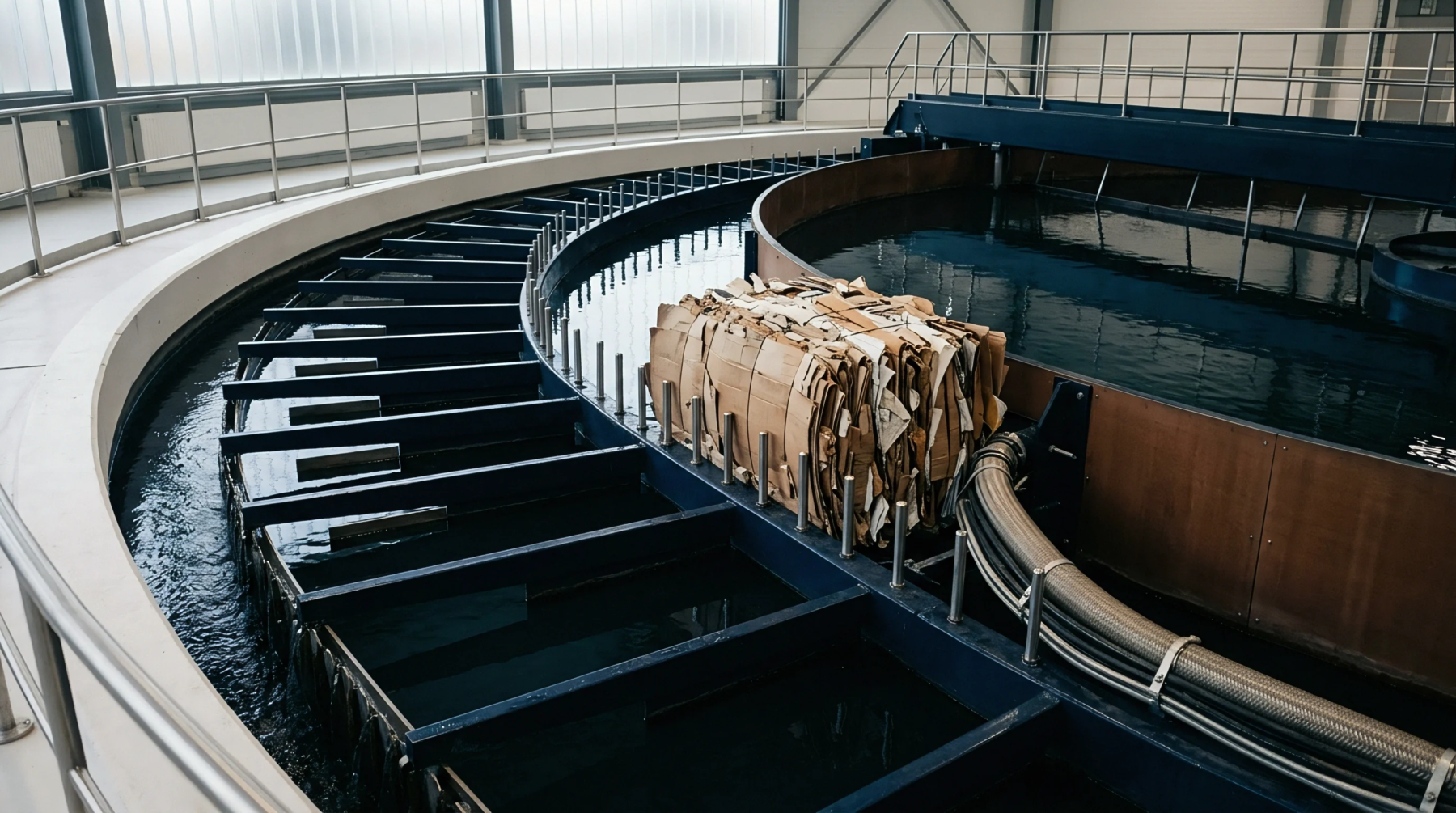
Fine papermaking fibers and mineral fillers also pass through wire mesh screens into white water loops, where fractionators and saveall disk filters attempt fiber recovery. Unrecovered fine solids discharge into primary wastewater clarification basins, forming sludge that represents permanent material loss.
Economic Production Limit
Yield losses in secondary fiber repulping typically range between eight percent for clean kraft scrap and thirty percent for heavily coated magazine stock. Mill accounting uses these loss figures to calculate net raw material costs per finished air dry ton of paper output.