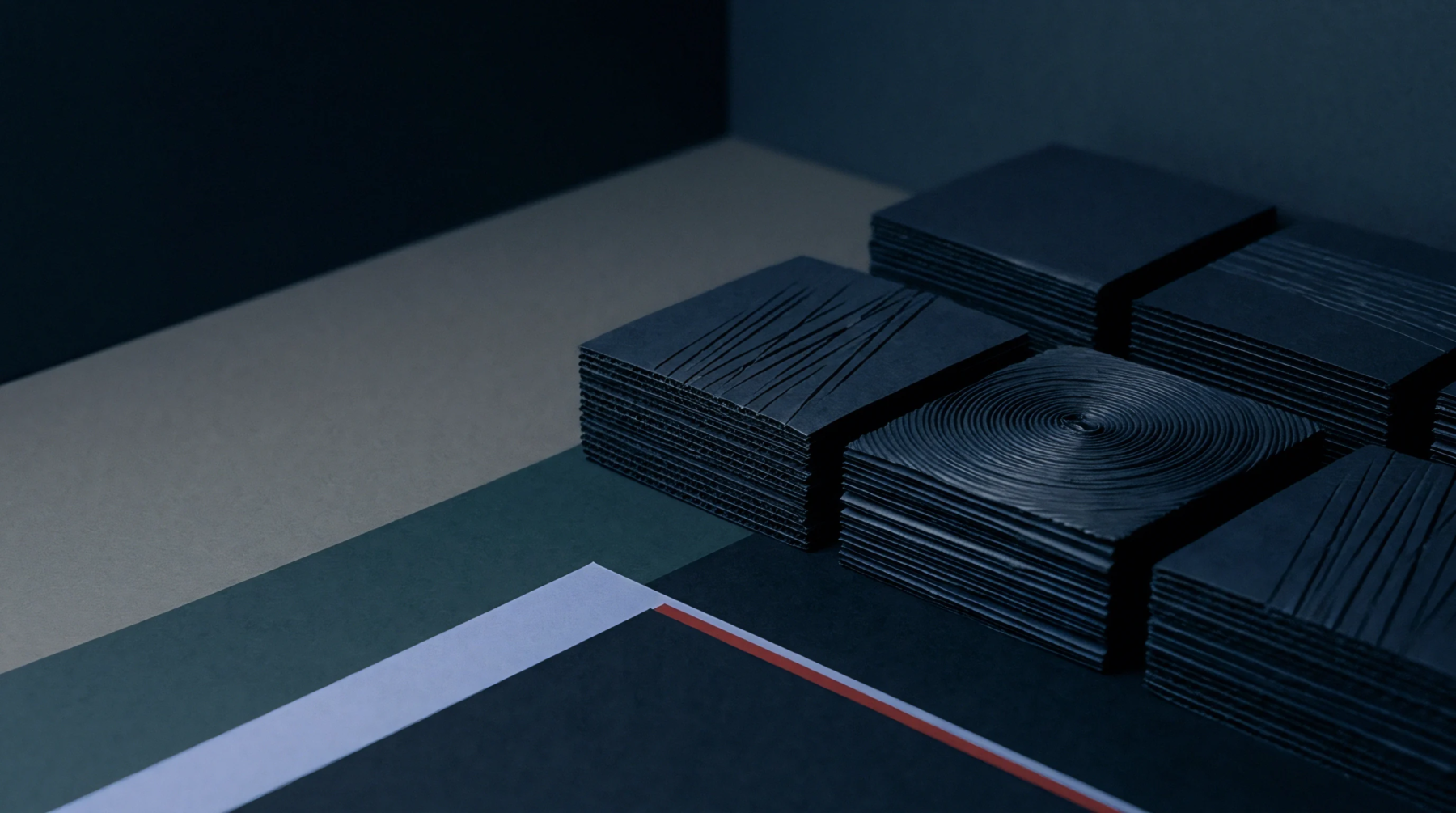
Thermal Forming Method
Applying simultaneous thermal energy and compression force alters cellulose fiber structures permanently without breaking surface coatings. Industrial heat embossing uses heated metal dies against resilient counter rolls to soften moisture bound wood fibers beyond their glass transition temperature. Packaging converters utilize this process to impart deep three dimensional relief patterns and smooth polished surfaces onto paperboard packaging stocks.
The scope excludes thermographic powder printing and cold mechanical graining methods.
Lignin Softening Mechanics
Cellulose and lignin within paper fibers respond to elevated temperature by relaxing internal hydrogen bonds. When heated brass or steel tooling contacts the sheet at temperatures between ninety and one hundred forty degrees Celsius, moisture vaporizes and allows fibers to realign without fracturing. Compression force shapes the softened structure into the die cavity, where immediate cooling sets the permanent shape.
Maintaining consistent platen heat across the full sheet width ensures uniform relief depth on multi up folding carton layouts.
Fiber Rupture Threshold
Excess heat causes moisture loss that makes board fibers brittle and prone to cracking along sharp embossed edges. Overheating also scorches surface coatings and degrades gloss levels on printed substrates. Dwell time must be calibrated against sheet speed to prevent thermal degradation while achieving full plastic deformation.