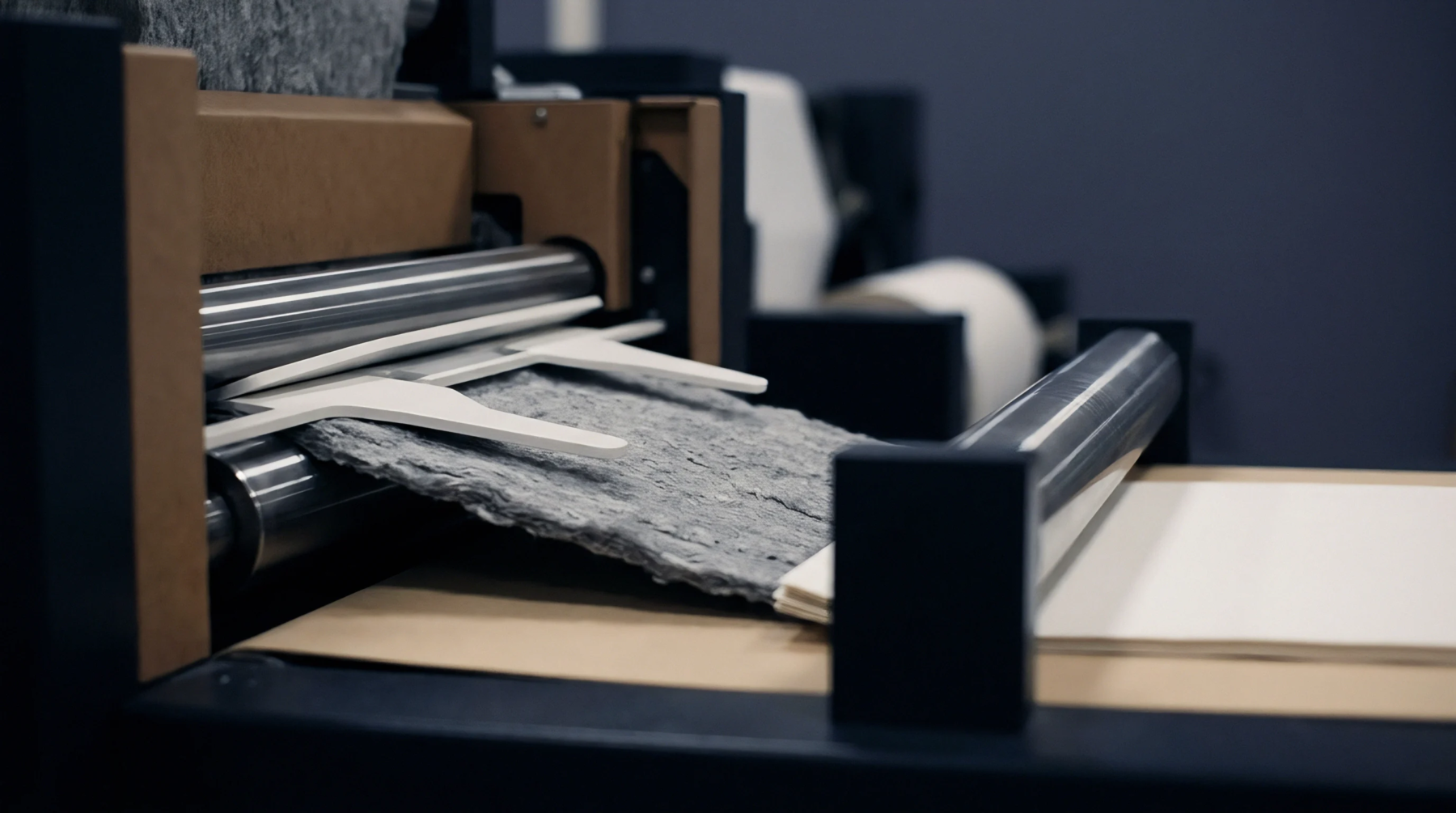
Grade Reassignment
Replacement of virgin unbleached softwood fiber liners with testliner or high-performance recycled packaging grades alters structural properties across corrugated materials. Industrial box plants implement kraftliner substitution to cut raw material costs and lower product carbon footprints across consumer supply chains. The technical shift lowers long-span box stacking strength under variable humidity, requiring corrugators to modify base paper substances to maintain top-to-bottom box compression targets.
Recycled fibers contain shorter, broken filaments that lack the natural hydrogen bonding and tear resistance found in primary virgin pine pulps. Sizing agents, dry-strength resins, and synthetic surface polymers are added to recycled testliners to close this performance gap during papermaking. Fiber substitution calculations exclude simple basis weight adjustments within the same pulp grade, focusing instead on shifting between pulp sources.
Moisture Sensitivity Shifts
Sorption behavior shifts dramatically when recycled cellulose replaces virgin softwood fiber in converting plants. Unbleached primary fibers maintain high water resistance and slow equilibrium moisture uptake under elevated relative humidity conditions. Recycled testliners used in kraftliner substitution absorb ambient moisture rapidly, which plasticizes internal fiber walls and triggers rapid loss of compression stiffness.
In refrigerated warehouses or overseas shipping lanes, recycled fiber structures soften, leading to carton bulging, corner creep, and eventual stack failure. Mills compensate by sizing testliner surfaces with starch cross-linked with synthetic polymers to impede moisture ingress. Hydrophobic chemical treatments delay moisture absorption through the surface, but cut-edge wicking continues to degrade structural box strength.
Creep rates accelerate under cyclic humidity loads, causing cartons made with substituted testliners to lose vertical stacking resistance faster than virgin counterparts.
Converting Adjustments
Operating parameters across corrugator and die-cutting lines require recalibration when running substituted board grades. Lower burst strength and reduced elongation values require corrugators to run lower single-facer labyrinth pressures, preventing medium fracture along flute lines. Rotary die-cutting tooling requires modified anvils and creasing profiles because brittle recycled testliners crack across scorelines under standard knife penetration depths.
Folder-gluers require water-based adhesives with extended open times to ensure carrier fluids wet dense, highly sized testliner surfaces. Printing units process testliner substrates with modified doctor blade settings and higher anilox volumes to overcome uneven surface roughness and darker base paper shades. Ink absorption variations across non-uniform recycled furnish cause visible dot gain fluctuations, complicating fine process printing.
Box manufacturers recalculate McKee compression formulas to balance lower material costs against necessary increases in flute caliper or medium basis weights.