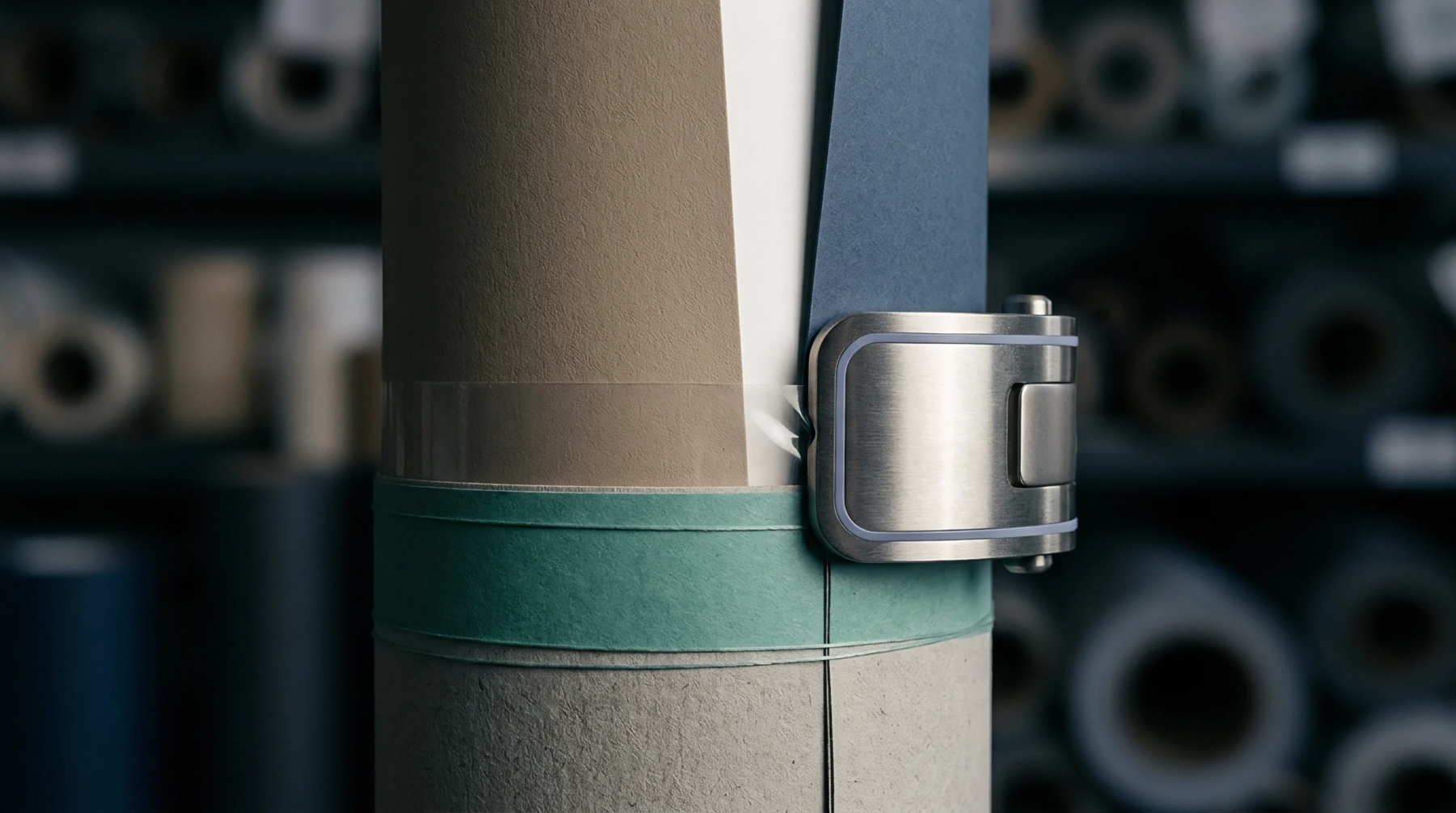
Structural Separation
Mechanical failure of the internal layers of a paperboard sheet occurs when the bonds between fibres are broken by external stress. Observing matrix delamination is common during the creasing process where the board must expand internally to accommodate a sharp fold. This controlled separation allows the outer liner to bend without cracking or tearing.
Mechanical Stress
Force applied by a creasing rule pushes the central plies of the board apart to create a permanent hinge. If matrix delamination happens in an uncontrolled way, the board loses its structural integrity and the crease becomes weak. This often happens when the material is too dry or when the fibre length in the core is insufficient to maintain a cohesive structure.
Such problems are frequently encountered in recycled boards where the fibres have been shortened by multiple processing cycles.
Production Defect
Unintended splitting of the material during printing or converting leads to substantial waste and machine downtime. If matrix delamination occurs on the printing press, the separated layers can wrap around the cylinders and damage the blankets. Testing the Z-direction tensile strength helps mills ensure that the board has the necessary internal cohesion for the intended application.
Maintaining optimal moisture levels throughout the storage and production cycle is the most effective way to prevent these failures.