Measurement Protocol
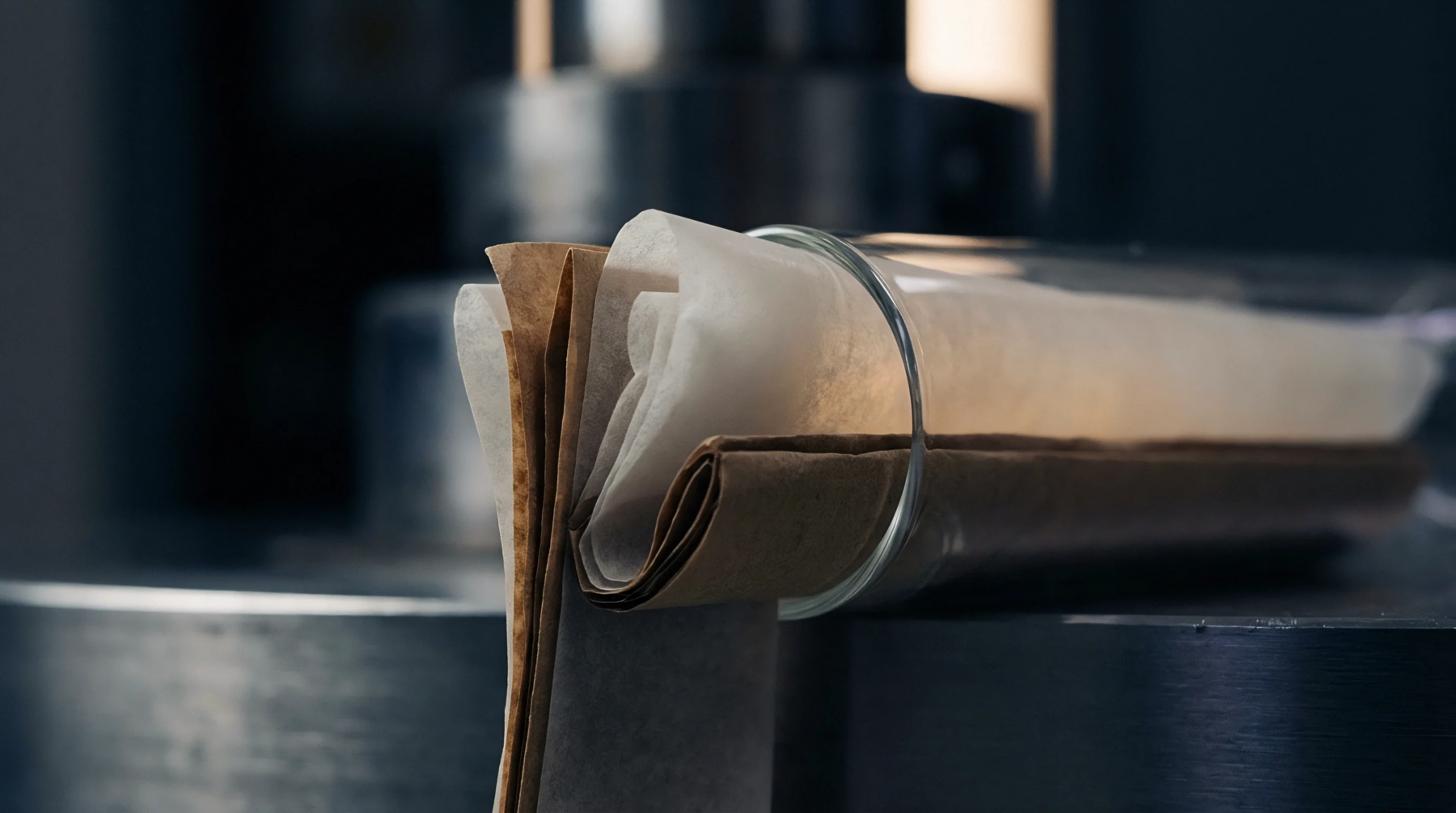
Hydrostatic rupture testing of clamped sheet specimens measures the multidirectional tensile resistance of paper and corrugated board under uniform hydraulic loading. Known commercially as the mullen burst test, this standard diagnostic subjects a circular testing area to pressure applied through an expanding rubber diaphragm until the substrate fails. Procedures standardized in ISO 2758 for paper and ISO 2759 for corrugated board define the clamping force, diaphragm elasticity, and pumping rate required to generate valid burst readings in kilopascals.
Testing boundaries stop where specimen slippage occurs in the annular clamp or where board caliper exceeds the linear elastic limits of the standard rubber membrane.
Fibre Contribution
Rupture values generated by hydraulic distension correlate directly with inter-fibre bonding, individual fibre length, and refining intensity within the paper pulp. Long softwood fibres provide the mechanical network necessary to disperse applied hydraulic stresses across the circular aperture, producing high burst indices compared to short hardwood pulps. Chemical additives including cationic starch and wet-strength resins raise burst resistance by increasing specific bond strength between cellulose fibrils without demanding excess refining energy.
Machine direction orientation creates uneven strain distribution across the dome of the expanding specimen, with initial rupture lines consistently tracking parallel to the machine direction where cross-directional stretch reaches its failure limit. Test performance falls sharply when sheet moisture climbs above standard testing levels, as water molecules plasticize hydrogen bonds between fibres. Board converters rely on burst data to certify shipping container compliance under carrier freight rules, ensuring box walls withstand internal puncture stresses during distribution.
Substrate Boundary
Elastic diaphragm loading fails to deliver meaningful quality discrimination on high-caliper, heavy-flute triplewall corrugated structures where shear crushing precedes pure tensile rupture. Unrestrained board delamination distorts hydraulic pressure curves, obscuring true tensile failure. The test stops serving quality control programs when evaluating high-stretch micro-creped sack papers, where elongation values outstrip the physical displacement capacity of standard test bells.