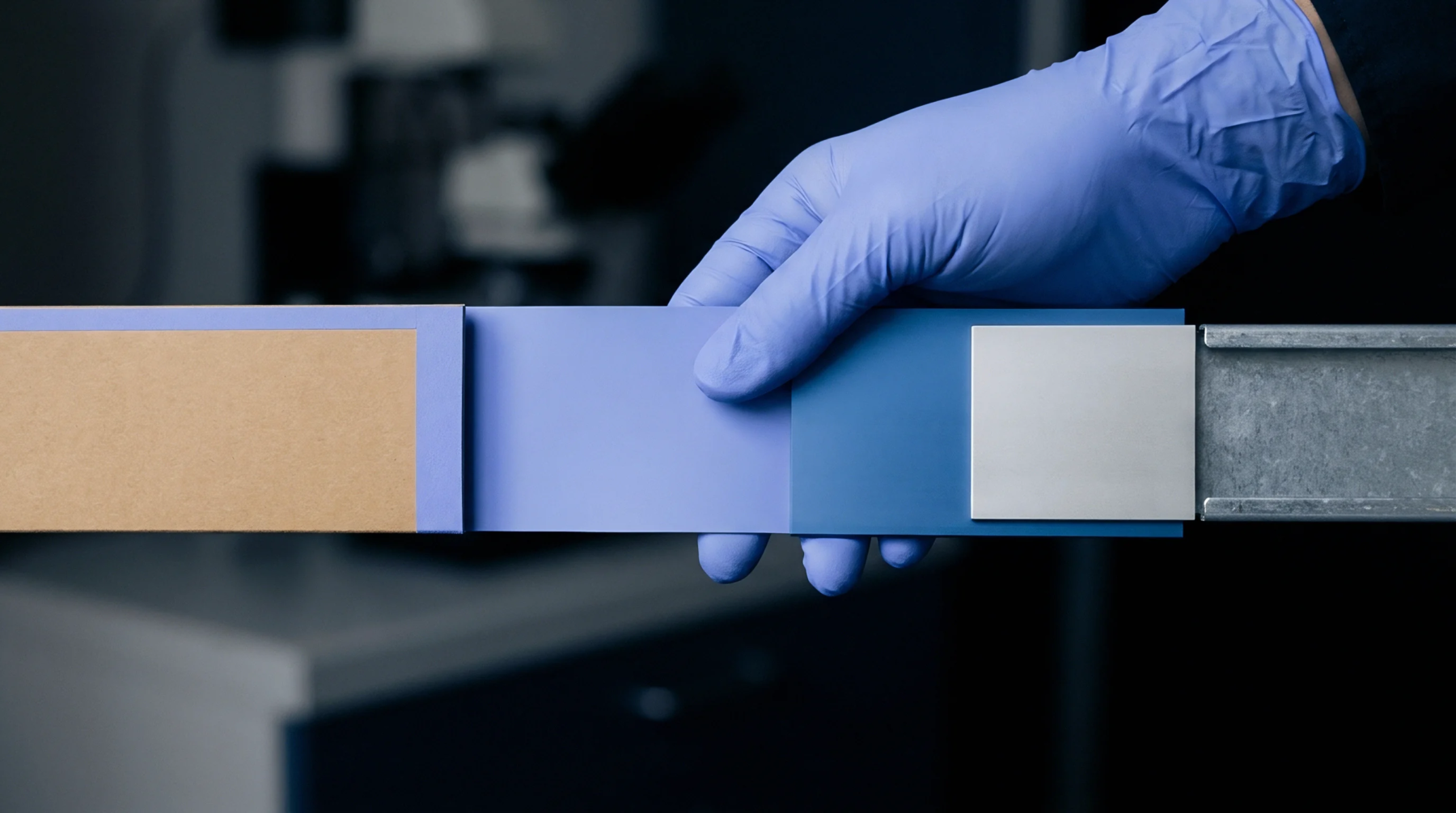
Surface Cohesion
The ability of a paper or board surface to resist the lifting of fibers or coating particles during the printing process determines the runnability of the substrate. A high pick strength ensures that the coating layer remains firmly bonded to the underlying fiber base when exposed to high-viscosity inks. If this resistance is too low, the tension generated as the sheet pulls away from the ink blanket will tear the surface.
Measurement Process
Standardized testing employs accelerating-speed printability testers to determine the limits of surface adhesion. Under controlled conditions, an oil of known viscosity is applied to the paper at increasing speeds until the surface starts to rupture. This point of initial damage, measured in meters per second, represents the maximum press speed the board can tolerate before failure.
This measurement allows papermakers to adjust the binder levels in the coating mixture to meet specific print demands.
Press Performance
Failure in this surface property leads to severe print defects and frequent press stoppages for plate cleaning. When coating particles are pulled loose, they accumulate on the ink blanket, creating unprinted spots or hickeys on subsequent sheets. This debris can also contaminate the ink fountain, requiring a complete wash-up of the printing unit.
Specifying paper with adequate pick strength prevents these costly production delays and maintains a clean, high-resolution print output throughout the entire run. This parameter is critical for multi-color offset runs where multiple ink applications compound the strain on the paperboard surface.