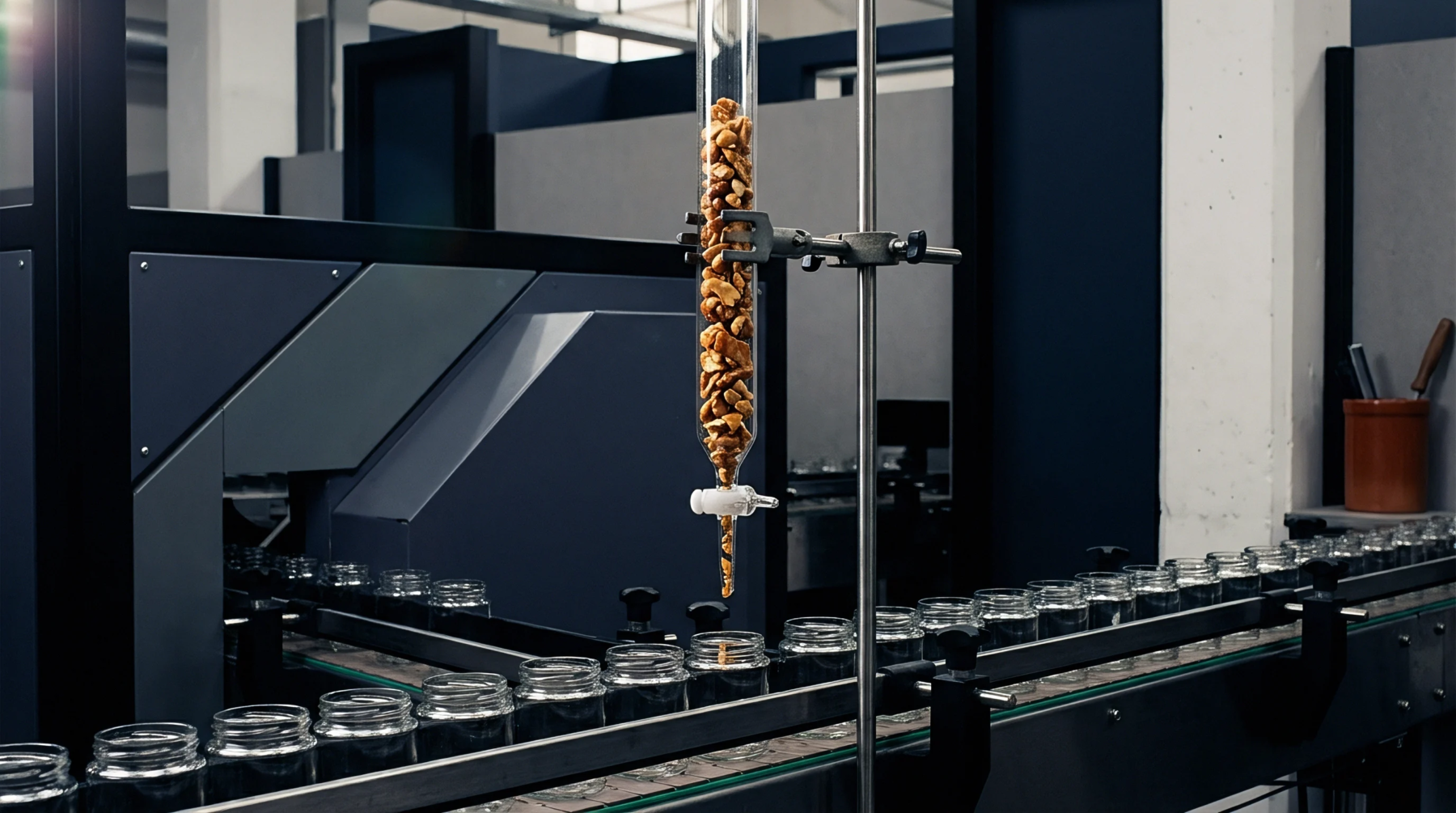
Diffusion Calculation
Migration kinetics describe how chemical substances move from packaging substrates into dry or fatty food matrices through contact. The piringer model quantifies this mass transfer by applying Fickian diffusion laws to polymer matrices where concentration gradients drive molecular movement over time. Internal parameters include the diffusion coefficient of the migrant and the partition coefficient between the packaging and the food simulant.
Polymer Permeability
Temperature increases accelerate the rate of migration by reducing the activation energy required for molecule transport through the polymer lattice. Variations in the crystallinity of plastic films block or permit pathways for additive transit based on the molecular size of the migrant. High density polymers with organized structures force longer migration routes than amorphous structures which allow faster movement.
Analytical results based on this approach determine compliance with safety regulations regarding heavy metals or monomer remnants in food contact materials.
Mathematical Constraint
Models rely on the assumption that the material remains homogeneous throughout the duration of the contact period. Predictions fail if the polymer suffers physical degradation or thermal stress that alters the matrix density during storage. Calculations assume ideal diffusion conditions rather than accounting for surface adsorption or chemical binding interactions.
Physical limits restrict the validity of these estimates when the food simulant interacts chemically with the packaging polymer surface.