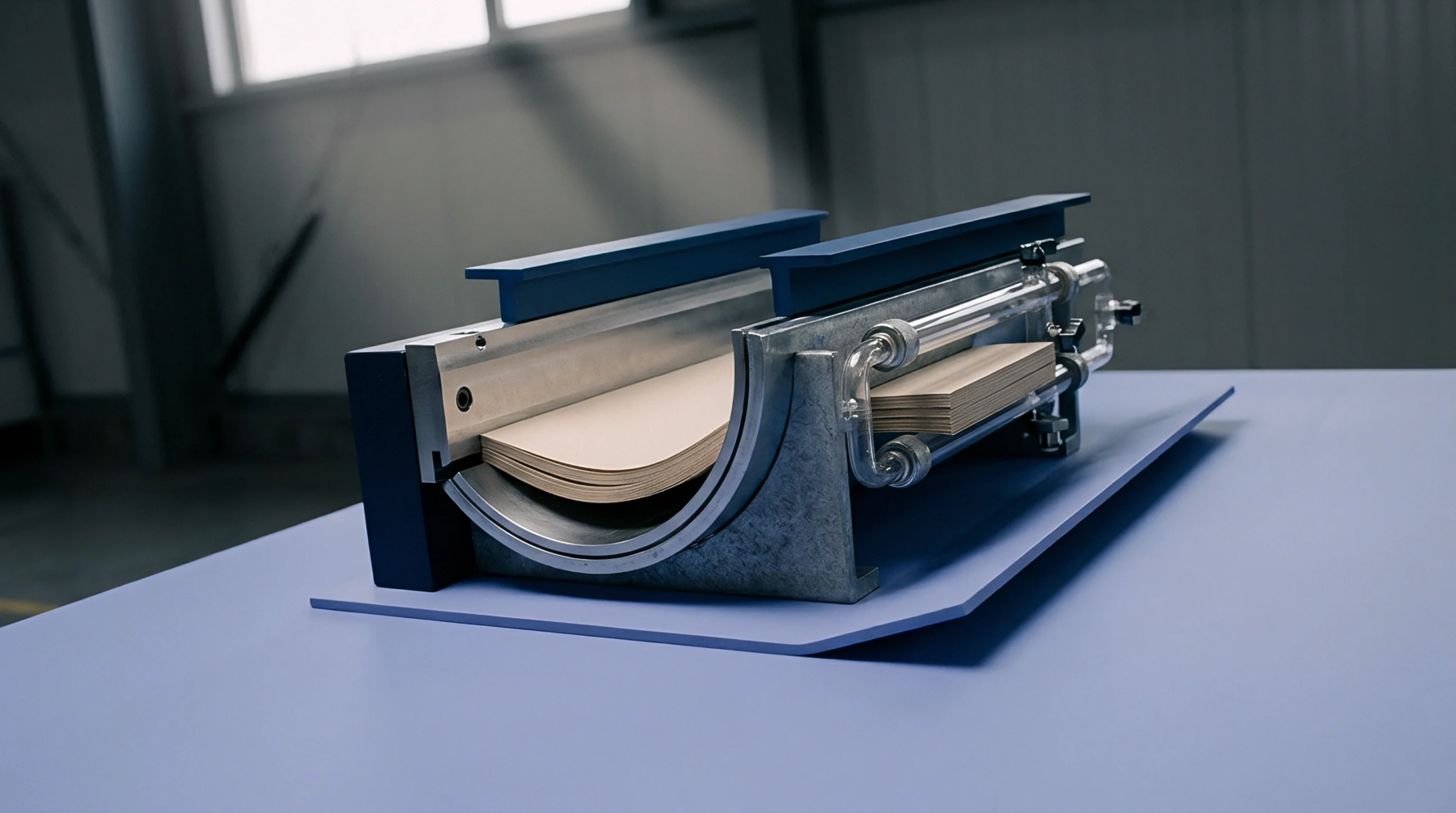
Bending Mechanics
The mathematical analysis of thin, flat structures subjected to perpendicular forces provides the foundation for predicting how paperboard panels deform under load. Utilizing plate bending theory allows packaging designers to calculate the deflection and stress distribution across a carton wall. This mechanical model assumes that the material behaves elastically and that its thickness is much smaller than its width.
Structural Analysis
Understanding the distribution of strain across a paperboard panel allows for the design of lighter and stronger packaging. In the application of plate bending theory, the multi-ply structure of the board is modeled to optimize the placement of high-strength fibers in the outer layers. This layered arrangement maximizes the stiffness of the panel while reducing the use of raw material in the center ply.
Material Limit
While the classical model works well for small deflections, it becomes less accurate when the board begins to crease or buckle. Plastic deformation of the cellulose fibers and the onset of delamination violate the assumptions of the elastic model. Advanced simulations must modify these equations to account for the non-linear behavior of paperboard under high stresses.
Engineers must use empirical correction factors to adjust the theoretical limits to match the actual performance of folding cartons on the production line.