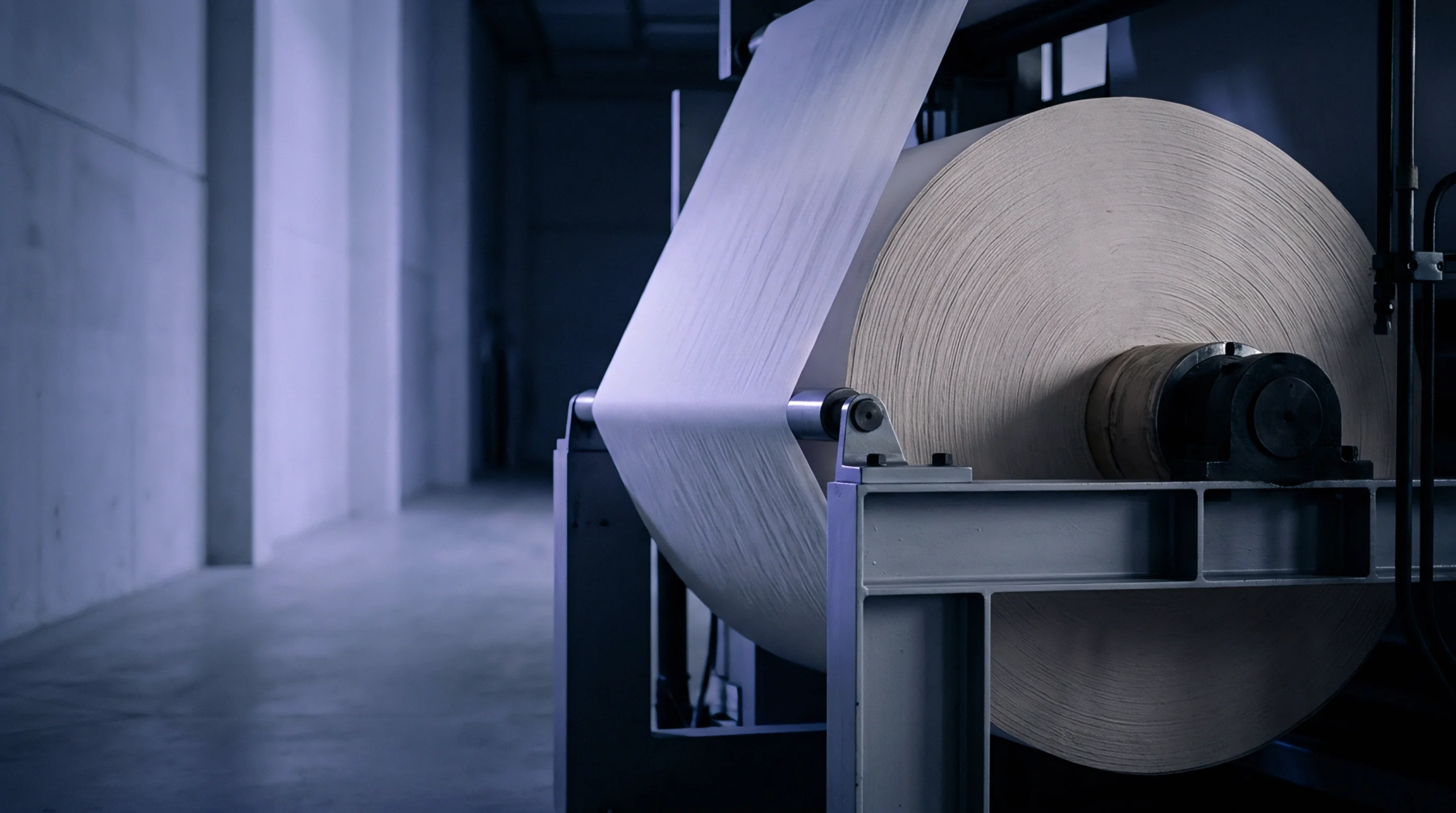
Lateral Distortion
Geometric deformation occurs in wound paper rolls when individual paper layers shift laterally along the axis of rotation. Material handling defines roll dishing as a convex or concave telescoping defect where the flat end face of a paper roll forms a dish-like surface during winding or transport. Physical distortion creates alignment problems during unwind operations.
Interlayer Friction
Winding operations store high axial and radial forces inside paper rolls through cumulative web tension. Uneven web caliper profiles, misaligned winding rolls, or sudden changes in winding tension create lateral force components across the paper width. When lateral forces exceed interlayer frictional resistance, paper layers slip relative to one another along the core axis.
High moisture content or low surface friction coatings reduce friction between web layers, accelerating lateral displacement under mechanical shock. Clamp truck operations applying excessive lateral pressure or sudden impacts during transit frequently trigger internal layer slippage. Dished rolls present distorted web paths, causing edge guide hunting, web tracking errors, and potential web breaks on continuous printing lines.
Handling Limitation
Visual inspection and straight-edge measurements quantify end-face deviation against converter acceptance criteria. Severe dish distortion prevents proper chuck engagement on unwind stands, requiring roll rejection or rewinding. Roll dishing represents a critical structural defect arising from improper winding tension profiles or rough transport handling.