Fibre Extension
Kraft papers and corrugated containerboards undergo measurable longitudinal stretching during high-speed converting and web-fed printing operations. Surface liner tensile strain tracks this exact elongation capacity before web breakage occurs under reel tension. Papermakers monitor the metric on standard strip testing equipment at standard atmospheric conditioning.
Converters rely on the resulting elongation percentage to prevent cracking during rotary die-cutting and box folding stages. Production lines running recycled fluting demand higher thresholds to absorb sudden nip pressure fluctuations without catastrophic web failure.
Web Mechanics
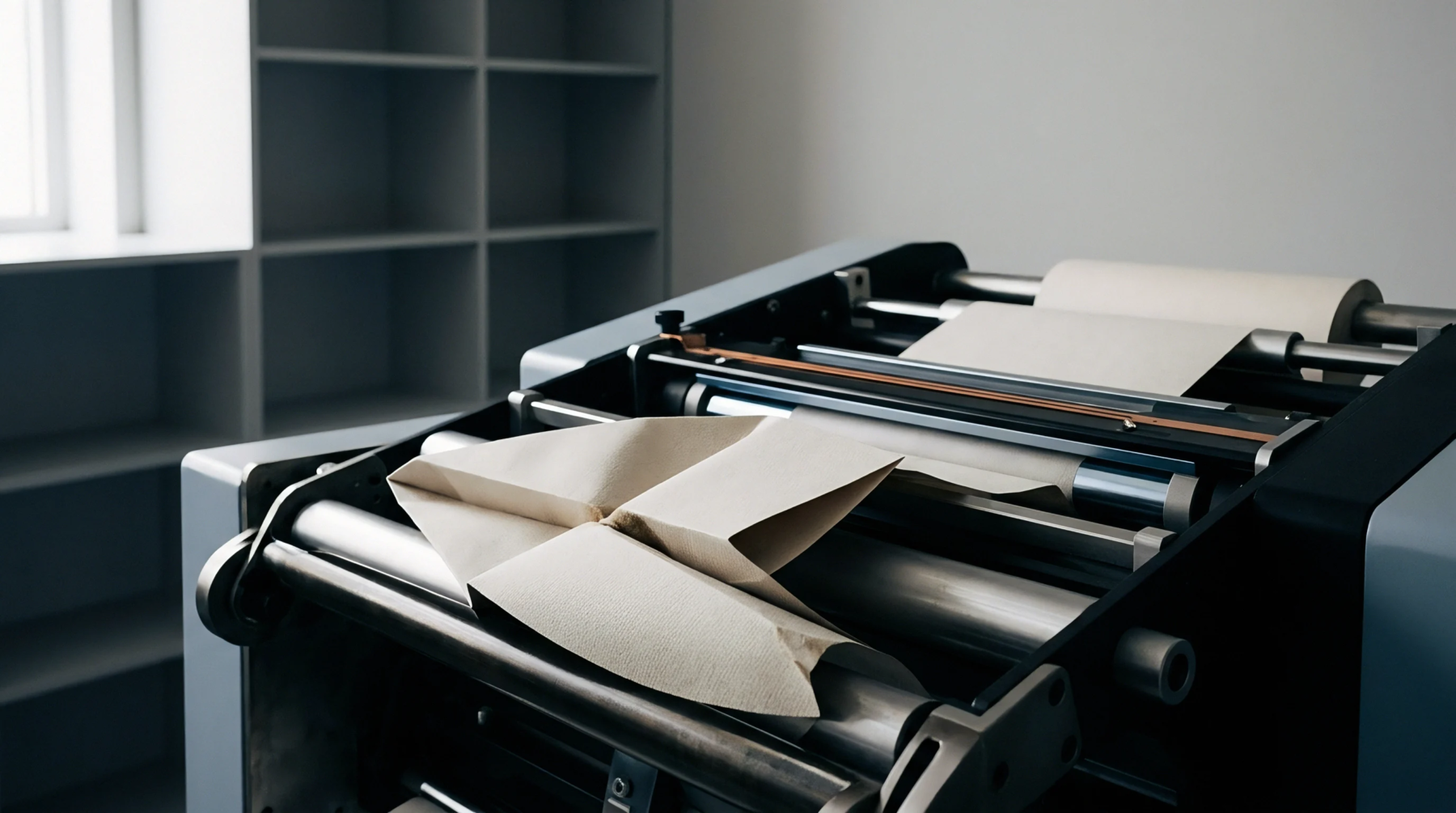
Rotary presses apply high mechanical stress across continuous paper webs during multi-color graphics registration. Reel unwinding units impart continuous longitudinal force that stretches the external liner layer past its elastic limit if nip synchronization drifts. Converting machinery operators adjust brake loads to keep elongation percentages within safe mill-specified tolerances.
High moisture levels in corrugated boards increase immediate stretch capacity while reducing overall tear resistance across cross-direction profiles. Tensile stiffness values correlate directly with fiber orientation angles set during wet end formation on the paper machine.
Failure Thresholds
Exceeding maximum elongation limits causes microscopic fiber tearing along the outer flute peaks of corrugated packaging boxes. Box compression strength drops significantly when surface liners suffer excessive stretching during adhesive application and board combination. Quality control laboratories test sample strips by applying progressive axial load until complete sample rupture happens.
Test results establish safe operational speeds for lithographic lamination presses handling heavy-weight containerboard substrates. Final structural integrity of stacked shipping containers depends entirely on maintaining proper elongation margins throughout every converting phase.