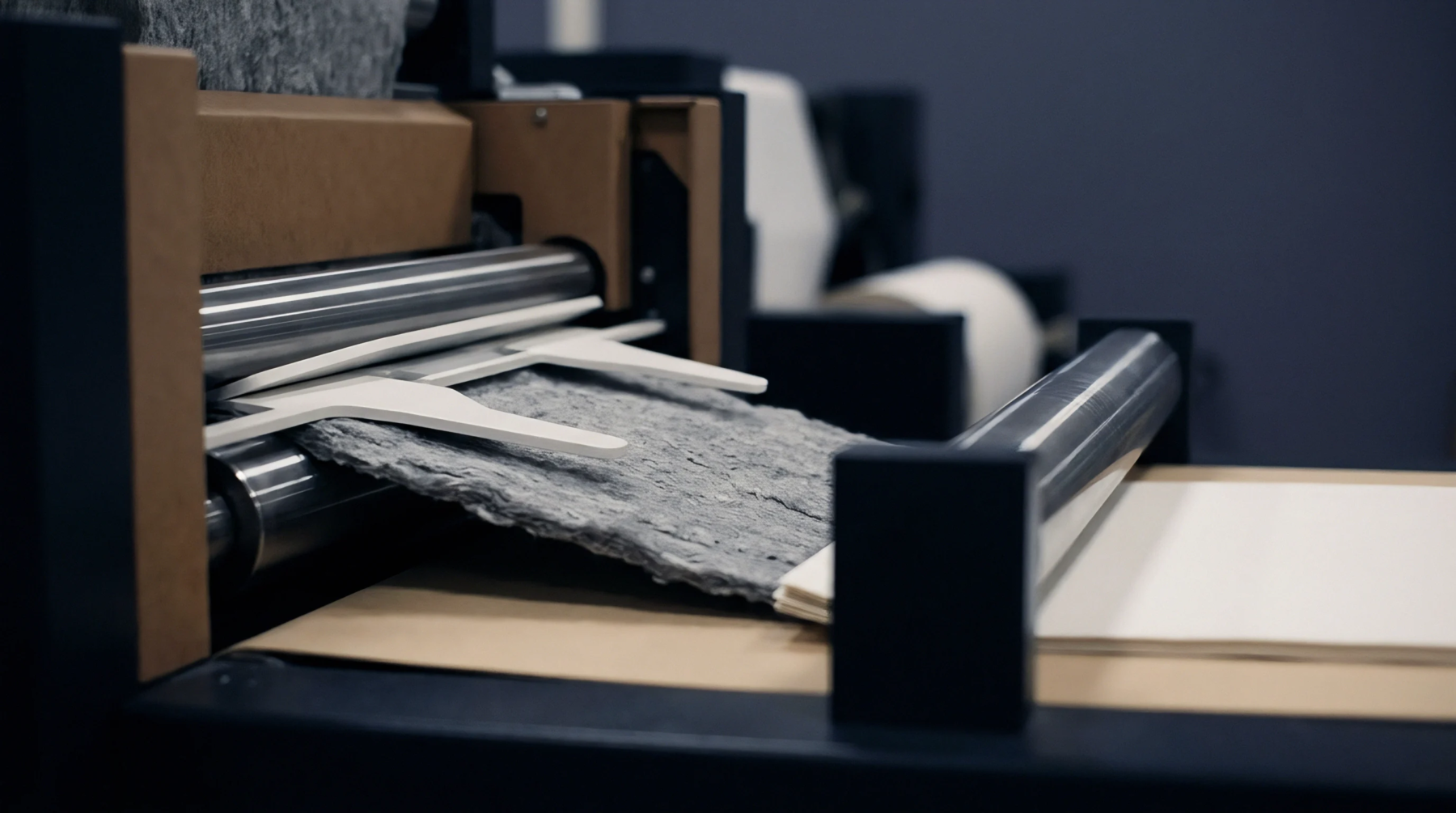
Interlayer Separation
Internal ply rupture describes the failure of paperboard or corrugated board where horizontal shear forces exceed the internal bond strength of the cellulose matrix. Vertex delamination specifically occurs when these forces concentrate at the point of maximum stress during creasing or folding. Moisture content shifts or improper sizing agent distribution often trigger the initial breakdown of fiber adhesion.
Manufacturers evaluate this defect using standardized internal bond testing to verify that the substrate withstands the mechanical strain of high speed converting lines.
Structural Integrity
Forces within a folding machine or a carton erecting station initiate the rupture when the bending radius fails to accommodate board thickness. Sudden deceleration of moving sheets generates an impact load that travels through the grain direction of the sheet. Stiff substrates with brittle binders suffer more frequent ruptures than flexible counterparts because the material resists the deformation required for sharp corner formation.
Correcting this fault involves adjusting the height of the creasing rule or modifying the depth of the counter channel to reduce the tension applied to the inner fibers.
Material Performance
Secondary effects appear as visible surface bubbling or complete separation of the paper plies that compromises the barrier properties of the final package. Compromised bond strength prevents the substrate from resisting external pressure during stacking or product filling. Reduced density in the board core creates a path for gas migration and moisture ingress that degrades the shelf life of sensitive contents.
Failure to control these internal conditions leads to unpredictable box performance regardless of the outer liner quality.