Polycaprolactone Polyurethane Laminating Adhesives under Dynamic Substrate Moisture Migration in High Barrier Retort Packaging
Polycaprolactone polyurethane laminating adhesives maintain bond integrity during high-temperature retort by reducing ester density and resisting hydrolysis.
Retort
Flex-Pack Sterilization Conditions
Thermal processing of flexible food pouches subjects laminating adhesives to extreme hydrothermal stress. Standard steam autoclave schedules drive temperatures to 121°C for 30 minutes, while aggressive cycles reach 131°C or 135°C for shorter durations under overpressure up to 3.5 bar. During these cycles, water vapor penetrates outer polymeric films, driving saturated steam into contact with the internal adhesive matrix.
Standard polyether or aromatic polyester polyurethane formulations undergo rapid ester hydrolysis or ether link cleavage, leading to interfacial failure. Polycaprolactone polyols supply exceptional hydrophobic resistance due to their unique crystalline morphology and reduced ester linkage frequency per unit chain length.
High barrier pouch architectures isolate food content through multi-layer structures combining mechanical strength, barrier properties, and thermal seal integrity. A standard high performance packaging specification pairs biaxially oriented polyethylene terephthalate outer films with aluminum foil or silicon oxide coatings, oriented polyamide strength layers, and cast polypropylene inner sealing films. The choice of film sequence dictates how water vapor migrates during heat treatment.
Polyamide layers absorb up to 8 percent moisture by weight when exposed to pressurized steam, acting as water reservoirs that feed moisture directly into adjacent adhesive lines during heating and cooling phases.
Exposing unpassivated aluminum foil to steam at 121°C for 30 minutes generates hydroxyl radicals that degrade bond strength below 1.5 N/15mm.
Barrier Foil and Polymer Architecture
Barrier layers prevent gas and moisture transfer into the packaged product, but they simultaneously trap migrating water within the laminate cross-section. Saturated vapor entering from the outer PET or OPA film side cannot pass through aluminum foil. Moisture accumulates at the adhesive interface facing the metal foil, creating localized vapor pressure spikes as temperatures peak.
The polyurethane network must retain elastic modulus and crosslink density while swollen with high temperature water.
| Structure Configuration | Adhesive Dry Coat Weight | Sterilization Schedule | Initial Peel Strength | Post Retort Peel Strength | Failure Location |
|---|---|---|---|---|---|
| 12µm PET / 9µm Alu / 15µm OPA / 70µm CPP | 4.2 g/m² | 121°C for 30 min | 5.8 N/15mm | 4.9 N/15mm | Cohesive in CPP |
| 12µm PET / 9µm Alu / 15µm OPA / 70µm CPP | 4.2 g/m² | 131°C for 45 min | 5.8 N/15mm | 4.1 N/15mm | Adhesive to Alu |
| 12µm SiOx-PET / 15µm OPA / 60µm CPP | 3.5 g/m² | 121°C for 30 min | 4.6 N/15mm | 3.8 N/15mm | Adhesive to SiOx |
| 15µm OPA / 9µm Alu / 70µm CPP | 4.5 g/m² | 135°C for 20 min | 6.1 N/15mm | 4.4 N/15mm | Cohesive in OPA |
Substrate surface energy dictates initial wet-out, while chemical crosslinking fixes long term moisture resistance. Corona or plasma treatment increases surface tension on polyolefin and polyester surfaces above 44 mN/m. When steam condensate reaches an under-cured or hydrolytically unstable adhesive layer, chemical bonds at the primer interface cleave, leading to full sheet delamination during pouch cooling.
Converters specifying lower grade polyols watch bond strengths drop below acceptable engineering thresholds, causing costly field recalls when pouches burst during distribution.

Polyester
Caprolactone Polyol Ring Opening Chemistry
Synthesis of polycaprolactone polyols proceeds via ring-opening polymerization of epsilon-caprolactone initiated by monomeric glycol molecules such as neopentyl glycol or diethylene glycol. Controlled ring opening yields linear, aliphatic polyester diols and triols with narrow molecular weight distributions and primary hydroxyl functionality. Polycaprolactone chains feature repeating five-methylene carbon units separated by ester linkages.
This structural configuration creates hydrophobic domains within the soft segment of the resulting polyurethane polymer.
Conventional polyester polyols synthesized from adipic acid, phthalic anhydride, and ethylene glycol contain high ester group concentrations along the backbone. Water molecules attack these ester groups through nucleophilic substitution, producing carboxylic acid end groups that autocatalyze further hydrolysis. Polycaprolactone exhibits significantly lower ester linkage concentration per unit molecular weight.
The extended hydrocarbon segments shield carboxyl groups from water attack, maintaining polymer backbone integrity under pressurized thermal stress.
Ester Linkage Density and Hydrolysis Mechanics
Quantifying hydrolysis kinetics requires calculating ester group concentration per kilogram of resin. A standard polyadipate diol derived from adipic acid and ethylene glycol possesses an ester linkage concentration of approximately 11.6 mol/kg. A polycaprolactone diol of equivalent molecular weight, such as a 2000 g/mol diol, exhibits an ester group concentration of approximately 8.7 mol/kg.
Lower ester density directly reduces the probability of water molecule collision with hydrolyzable sites.
Consider a worked chemical structure comparison between two solventborne polyurethane adhesive formulations applied at 4.0 g/m² dry coat weight. System A uses a standard polyadipate polyurethane cured with polymeric MDI. System B utilizes a polycaprolactone-based polyurethane cured with identical polymeric MDI at an NCO to OH stoichiometric ratio of 1.35.
Assuming complete crosslinking and exposure to 100 percent relative humidity at 121°C for 40 minutes, water absorption within System A reaches 3.2 percent by weight, triggering autocatalytic ester cleavage that degrades initial tensile strength by 58 percent. System B absorbs 1.1 percent water by weight under identical conditions, maintaining 87 percent of its original tensile strength due to crystalline phase separation and reduced polar site availability.
Higher hydrophobic crystallinity within polycaprolactone chains reduces water swelling during steam exposure.
Polycaprolactone polyurethanes form semi-crystalline domain structures upon solvent evaporation and initial network formation. Soft segments crystallize below 45°C, creating physical crosslinks that reinforce the covalent polyurethane network. When autoclaved, these crystalline regions melt, allowing soft segments to absorb thermal energy without undergoing polymer backbone degradation.
Upon cooling, domain phase separation recurs rapidly, restoring mechanical shear strength before pouches leave the processing facility.
Adhesive formulators often blame substrate oxidation levels when delamination occurs following thermal processing, claiming that corona decay on polyolefin films caused interfacial bond destruction rather than acknowledging hydrolytic breakdown of the polyol matrix.
Vapor
Polyamide Moisture Regain and Dynamic Flux
Outer substrate layers absorb environmental and process moisture, establishing dynamic vapor gradients across laminate interfaces. Biaxially oriented polyamide 6 absorbs up to 9.5 percent water by mass at saturation under atmospheric boiling conditions. Biaxially oriented polypropylene, conversely, exhibits water absorption below 0.01 percent.
When a PET/OPA/CPP pouch enters the steam retort, water vapor diffuses rapidly through the outer PET and OPA layers, encountering an impenetrable wall at the aluminum foil or a steep permeability reduction at the CPP interface.
Moisture accumulation at the internal adhesive layer creates transient liquid water deposits. If unreacted free isocyanate groups remain within the adhesive matrix during thermal treatment, water reacts instantly with aromatic or aliphatic NCO functionality. This reaction yields unstable carbamic acids that decompose into amine groups and carbon dioxide gas.
Trapped carbon dioxide expands rapidly under retort temperatures, generating microscopic gas bubbles that nucleate interfacial delamination channels.
Why Does Polyamide Moisture Regain Degrade Polyurethane Interfaces?
Water absorption within polyamide film causes significant dimensional swelling along both longitudinal and transverse orientation axes. As the OPA film swells, it exerts high shear forces on the adjacent polyurethane adhesive layer. Simultaneously, water molecules migrating through the OPA film enter the adhesive network, plasticizing the polyurethane soft segments and reducing glass transition temperature below ambient levels.
Interfacial degradation proceeds through several distinct thermodynamic and mechanical steps during and immediately after thermal processing:
- Hydrolytic cleavage occurs along ester and urethane linkages within the polyurethane soft segment, lowering overall molecular weight and network density.
- Plasticizer migration takes place as absorbed water acts as a low molecular weight solvent, decreasing adhesive shear modulus and creep resistance under thermal stress.
- Dimensional mismatch stress arises between the expanding OPA film and rigid aluminum foil, generating peel stresses along the adhesive interface.
- Interfacial hydration disrupts hydrogen bonds formed between polyurethane hydroxyl/urethane groups and the native oxide layer of aluminum foil.
- Gas pocket expansion results from water reaction with residual monomeric isocyanate compounds, creating macroscopic blisters across printed areas.
| Substrate Polymer Type | Thickness | Water Vapor Transmission Rate (38°C/90% RH) | Equilibrium Moisture Content (100% RH) | Thermal Expansion Coefficient |
|---|---|---|---|---|
| Biaxially Oriented PET | 12 µm | 25.0 g/m²·day | 0.8% | 1.5 × 10⁻⁵ /K |
| Biaxially Oriented PA6 | 15 µm | 160.0 g/m²·day | 8.5% | 8.0 × 10⁻⁵ /K |
| Cast Polypropylene | 70 µm | 1.2 g/m²·day | 0.01% | 11.0 × 10⁻⁵ /K |
| Aluminum Foil | 9 µm | 0.0 g/m²·day | 0.0% | 2.3 × 10⁻⁵ /K |
Managing substrate moisture migration demands precise stoichiometry adjustment during adhesive mixing. Formulators increase the isocyanate index slightly to account for water scavenged during curing, yet excessive isocyanate concentration increases matrix brittleness and raises residual primary aromatic amine risks.
A safe operational baseline matches polycaprolactone polyol molecular weight directly to expected thermal processing duration.
Proof

Peel Strength Testing Pre and Post Autoclave
Quality assurance protocols require testing bond integrity before and after simulated retort processing. Standard test methodology per ASTM F904 specifies 180 degree peel testing on 15 mm wide test strips drawn at 300 mm/min. Initial bond strengths for high barrier retort structures must exceed 5.0 N/15mm, or show un-laminatable film destruction where the polyolefin film tears before the adhesive line cleaves.
Post-sterilization testing occurs after pouches cool to 23°C and balance at 50 percent relative humidity for 24 hours. A pass condition demands retained peel strength above 3.5 N/15mm with zero visual indicators of delamination, creeping, or bubble formation along the sealed edges. Testing immediately out of the autoclave yields lower bond values due to elevated substrate moisture, recovering as moisture equilibrates.
Compliance with ASTM F1929 requires zero ink-to-adhesive channel dye penetration across 100 percent of heat seals following thermal processing.
Delamination Diagnostics and Moisture Bubbling
Failure analysis requires establishing the precise physical plane of delamination. Spectroscopic techniques such as Attenuated Total Reflectance Fourier Transform Infrared spectroscopy identify whether failure occurred cohesively within the adhesive matrix or adhesively at the foil or film interface.
Verification of post-sterilization bond integrity follows a strict laboratory sequence:
- Cut representative 15 mm wide test samples from flat pouch faces and heat-sealed edges using a precision twin-blade cutter.
- Measure baseline coat weight and solvent retention via gas chromatography to verify process compliance before thermal exposure.
- Subject sealed pouch specimens to steam autoclave cycles at 121°C under 2.1 bar pressure for 30 minutes.
- Remove specimens, wipe surface moisture, and record visual surface defects under 10x optical magnification.
- Condition test strips at 23°C and 50 percent relative humidity for 24 hours prior to mechanical testing.
- Clamp specimen legs into a tensile tester, running 180 degree peel mode at 300 mm/min to generate load-displacement curves.
- Expose peeled surfaces to infrared spectroscopy to confirm chemical bond failure mechanisms.
Non-destructive evaluation via ultrasonic acoustic microscopy reveals sub-surface micro-delamination before visual bubbles appear. Microscopic channels forming along printed ink boundaries indicate solvent retention or incompatibility between polycaprolactone polyurethanes and nitrocellulose-based printing inks.
Purchase specifications explicitly state that any lot exhibiting peel strength decay exceeding 30 percent post-retort undergoes immediate quarantine, shifting financial liability for converted reel stock directly back to the laminator.
Yield
Applied Coat Weight and Curing Room Kinetics
Coating weight selection strikes a delicate balance between material expenditure and mechanical durability. Applying polycaprolactone polyurethane adhesives at dry coat weights below 3.0 g/m² risks inadequate wetting across rough foil or printed film surfaces, producing micro-voids where water collects during autoclaving. Excessive application above 5.0 g/m² elevates adhesive costs, slows line speeds, and extends curing room dwell times needed to reach full crosslink density.
Solventborne polycaprolactone systems operating at 35 to 45 percent application solids yield uniform film build across smooth metal foils. Gravure cylinder selection dictates wet film thickness. A 70 lines per centimeter gravure roll with quadrangular cells delivers consistent 3.8 to 4.2 g/m² dry film weight when paired with an enclosed chamber doctor blade system operating at 250 meters per minute.
| Adhesive Class | Target Dry Weight | Running Line Speed | Curing Room Schedule | Raw Material Cost / 1000m² | Waste Percentage |
|---|---|---|---|---|---|
| Polycaprolactone PU (Solventborne) | 3.8 g/m² | 280 m/min | 40°C for 5 Days | € 28.50 | 1.8% |
| Polycaprolactone PU (Solventborne) | 4.5 g/m² | 220 m/min | 40°C for 5 Days | € 33.75 | 2.4% |
| Polycaprolactone PU (Solventless) | 2.8 g/m² | 350 m/min | 45°C for 3 Days | € 19.60 | 3.1% |
| Adipate Polyester PU (Solventborne) | 4.0 g/m² | 300 m/min | 40°C for 4 Days | € 22.00 | 1.5% |
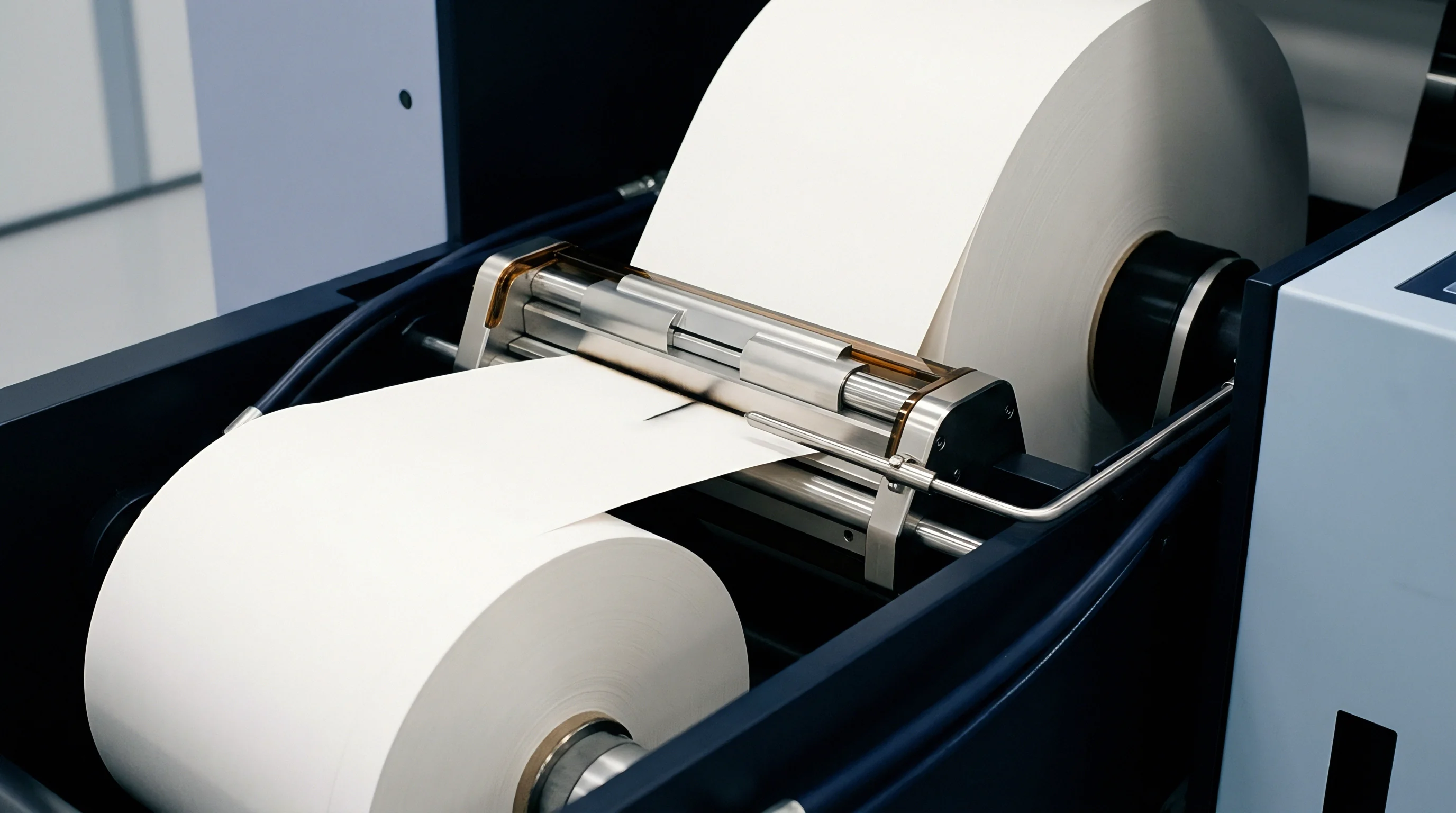
Thermal cure profiles govern production throughput and warehouse utilization. Polycaprolactone polyurethanes require controlled heating at 40°C to 50°C for 3 to 7 days to complete chain extension and crosslinking reactions between aliphatic polyols and aromatic isocyanates. Premature conversion of roll stock into pouches before full monomer conversion causes inter-layer slipping, poor heat seal resistance, and elevated chemical migration into food contents.
Converter Spoilage and Make Ready Economics
Make-ready waste consumes raw material margin during high speed converting setups. Adjusting web tension across four-layer laminations demands precise load cell control to prevent differential film stretching. Tension imbalance between OPA and CPP films causes post-cure curl, leading to pouch feeding failures on automatic filling and sealing lines.
Operational risk management requires strict adherence to converting parameters:
- Corona dosage targets must be maintained above 48 mN/m on polyolefin films to guarantee chemical anchoring of polycaprolactone primers.
- Exhaust ventilation rates inside drying tunnels require continuous monitoring to keep residual ethyl acetate solvent levels below 5.0 mg/m².
- NCO to OH stoichiometric ratios demand metering precision within 1.5 percent of target mix specifications on multi-component dosing units.
- Hot room temperature stability requires mapping within plus or minus 2.0°C to ensure uniform crosslinking throughout jumbo roll cores.
Calculated total cost per thousand square meters finished laminate balances raw material pricing against operational spoilage rates. A polycaprolactone formulation carries a 25 to 30 percent raw material price premium over standard adipate polyester adhesives. The premium is offset by preventing batch rejection during autoclave validation runs where failure costs exceed € 50,000 per thermal retort charge.
Determining whether solventless polycaprolactone systems can maintain adequate wetting on micro-embossed polyolefin films at line speeds above 400 meters per minute without generating air entrapment remains a point of continuous debate among equipment operators.

Docket

Primary Aromatic Amine Migration Mechanics
Regulatory frameworks governing food contact packaging establish strict migration limits for chemical species originating from laminating adhesives. Polyurethane adhesives based on aromatic isocyanates such as diphenylmethane diisocyanate (MDI) or toluene diisocyanate (TDI) form primary aromatic amines (PAA) upon reaction with water. During thermal retorting, moisture entering the adhesive matrix reacts with residual unreacted isocyanate monomers, yielding compounds like 4,4′-diaminodiphenylmethane.
European Regulation 10/2011 mandates that total primary aromatic amine migration into food simulant must remain below detection limits, specifically under 0.01 mg/kg of food for non-listed amines, with individual carcinogenic species restricted to 0.002 mg/kg. Compliance testing involves exposing pouch samples to 3 percent acetic acid or distilled water at 121°C for 2 hours in specialized migration cells, followed by Liquid Chromatography-Mass Spectrometry analysis.
Food Contact Compliance Dossier Requirements
Supply chain verification relies on accurate, legally binding documentation submitted prior to commercial production. Converting operations must obtain complete Declarations of Compliance from adhesive raw material manufacturers, confirming compliance with FDA 21 CFR 175.105 for indirect food additives and FDA 21 CFR 177.1390 for high temperature laminate structures.
An engineer-grade compliance dossier contains critical documentation elements:
- Declaration of Compliance stating adherence to EU Regulation 1935/2004 and Regulation 10/2011 for all constituent polymers and additives.
- Specific Migration Limit certificates detailing analytical test results for residual epsilon-caprolactone monomer and unreacted isocyanate species.
- Curing completion curves proving complete decay of active NCO groups below 0.01 meq/g prior to pouch conversion and food filling.
- Non-Intentionally Added Substances risk evaluations screening for degradation products formed during high temperature thermal sterilization.
Chemical safety management requires rigorous tracking of curing kinetics. Polycaprolactone polyurethane adhesives cured with aromatic isocyanates undergo decay monitoring via infrared spectroscopy, tracking the disappearance of the characteristic NCO peak at 2270 cm⁻¹. Converting facilities transfer roll stock out of hot rooms only when NCO absorbance falls below baseline calibration thresholds, ensuring complete conversion to stable polyurethane and polyurea networks before food contact occurs.