Quantifying Vacuum Metallized Layer Adhesion in Flexible Films
Quantifying vacuum metallized layer adhesion requires heat-seal peel testing under ASTM F904 or EAA protocols to measure force in N/15mm before lamination.

Chamber
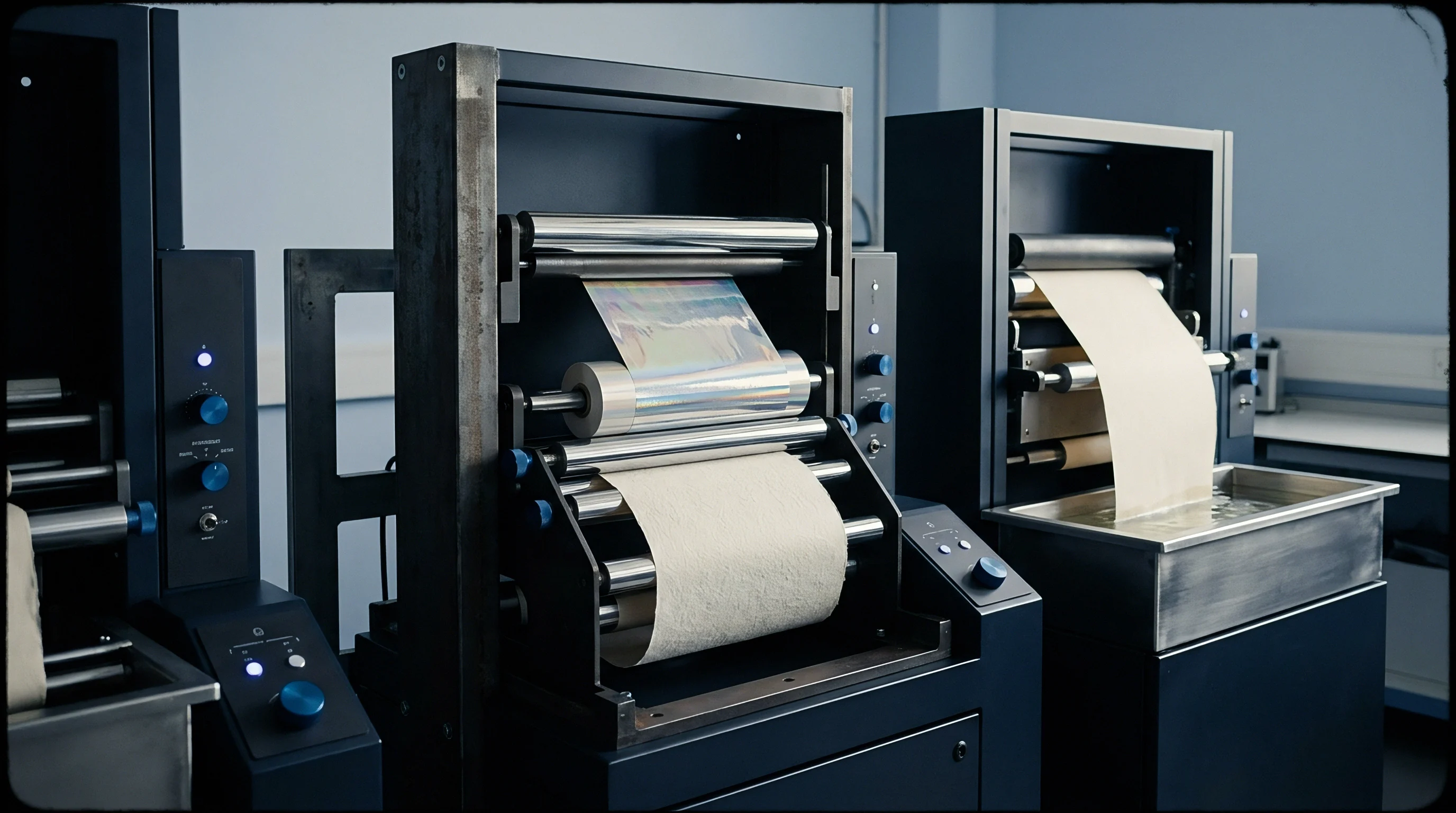
Vacuum deposition of aluminum onto flexible webs occurs at background pressures below 1e-4 mbar, where vaporized metal atoms strike the polymer carrier at thermal energies near 0.1 eV. Contact with the chill roll cools the energetic condensate instantly, taking it from an atomic gas to a solid metallic lattice within microseconds. Baseline surface free energy dictates how well these arriving aluminum atoms condense into a continuous, strongly adhered film rather than forming isolated, weakly bound clusters.
Unmodified polyolefin webs possess low surface energy, often between 30 and 34 dynes/cm, which yields poor atomic nucleation density. Industrial metallizers use resistance-heated ceramic boats operating near 1400 degrees Celsius to melt and vaporize high-purity aluminum wire continuously fed into the evaporation zone.
Integrated in-situ plasma pre-treatment transforms the incoming polymer surface before metal atoms arrive. Magnetron plasma units operating with argon or oxygen-nitrogen gas mixtures bombard the moving web with energetic ions, etching away low-molecular-weight contaminants and creating polar functional groups such as hydroxyl, carbonyl, and carboxyl radicals. These polar sites increase surface energy to levels exceeding 44 dynes/cm, providing active coordination sites for the condensing aluminum atoms.
The initial monolayer forms covalent and ionic donor-acceptor bonds with the functionalized polymer backbone, creating a transitional metal-oxide layer roughly 1 to 3 nanometers thick that bridges the organic substrate and the bulk metallic layer.
Aluminum layer adhesion values drop below 1.5 N/15mm when web surface energy falls under 38 dynes/cm prior to vacuum deposition.
Deposition thickness across the moving web is monitored using optical density measurements, with standard packaging grades running between 2.0 and 3.0 OD. An optical density of 2.2 corresponds to an aluminum layer thickness of approximately 40 nanometers, containing roughly 100 atomic layers. Thin deposits below 1.5 OD suffer from pinhole defects and poor continuity, while thick deposits above 3.5 OD accumulate internal tensile stress within the metallic lattice.
Excessive internal stress drives micro-cracking and spontaneous interfacial delamination during web rewinding. Maintaining tight control over web temperature, deposition rate, and vacuum pressure ensures an optimal balance between metal layer density and structural integrity.
Residual web moisture outgassing during high-speed metallizing cycles can lower initial nucleation density.


Peel
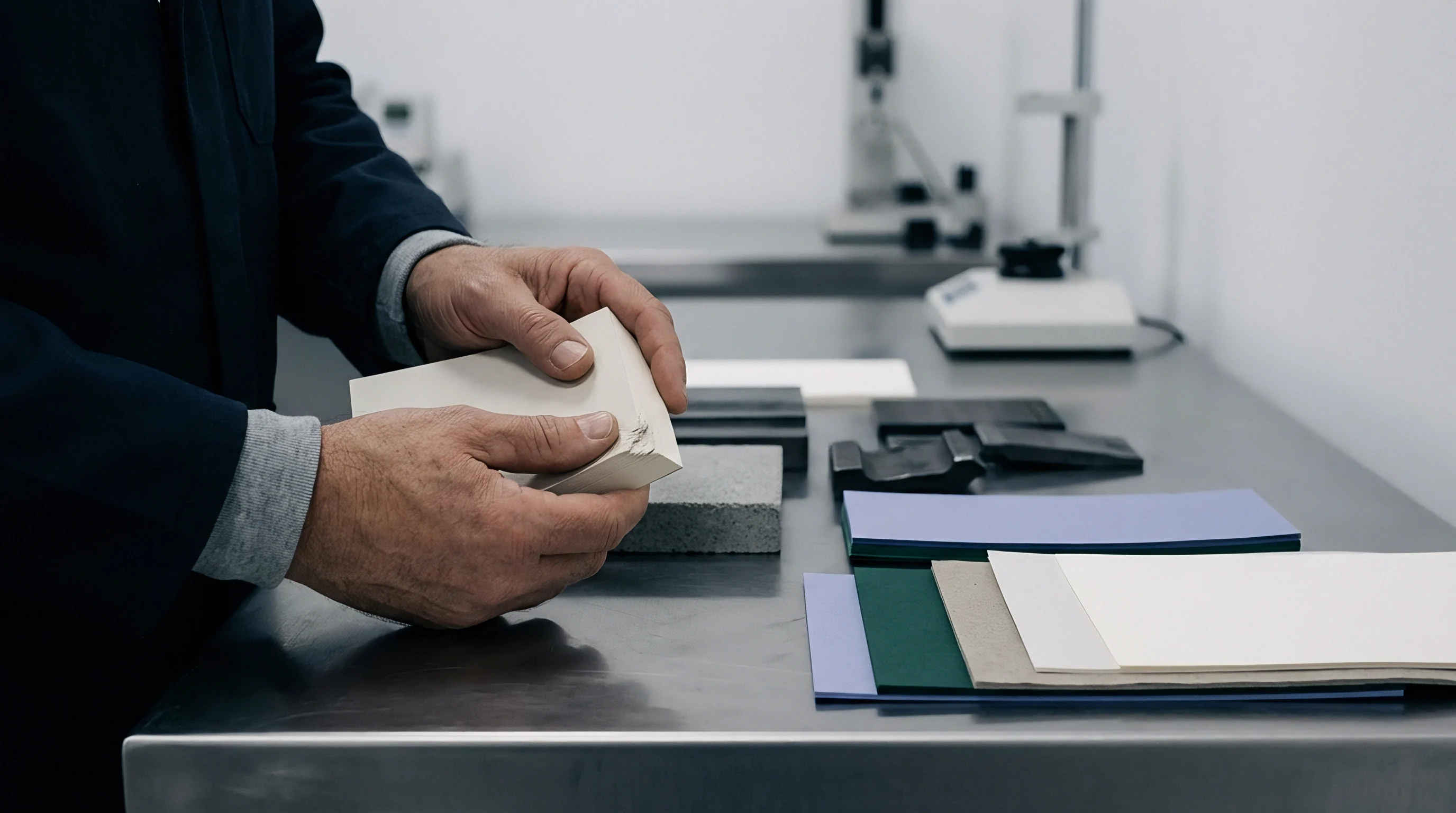
Quantifying atomic layer anchorage requires mechanical detachment tests that isolate the thin metal deposit from its backing film. Simple pressure-sensitive tape tests provide qualitative screening, while quantitative universal testing machines yield precise force displacement curves measured in Newtons per 15 millimeters. Variations in test angle, peel speed, backing stiffness, and pressure-sensitive adhesive properties introduce significant variance into measured bond strength figures.
Standardizing these testing variables allows converters to establish meaningful quality control thresholds across different substrate batches.

Tape Pull Testing Parameters
Tape pull protocols like AIMCAL TP-105-92 utilize pressure-sensitive tapes to assess metal transfer resistance. A specified length of tape, traditionally 3M 610 or Permacel P99, is applied to the metallized surface under a controlled 2 kg rubber roller pass to eliminate air bubbles. Pulling the tape rapidly at an angle of 90 degrees or 180 degrees assesses the structural integrity of the metal layer.
Standard scoring ranks metal transfer from Grade 1, representing severe metal removal exceeding 50 percent, to Grade 5, representing zero metal transfer. Tape tests serve as rapid bench checks during line make-ready, but they fail to generate numerical force data suitable for engineering calculations.
Standard supply contracts under AIMCAL TP-105-92 reject film lots showing greater than five percent metal pick-off during pressure-sensitive tape pulls.
Extrusion Lamination Heat Seal Isolation
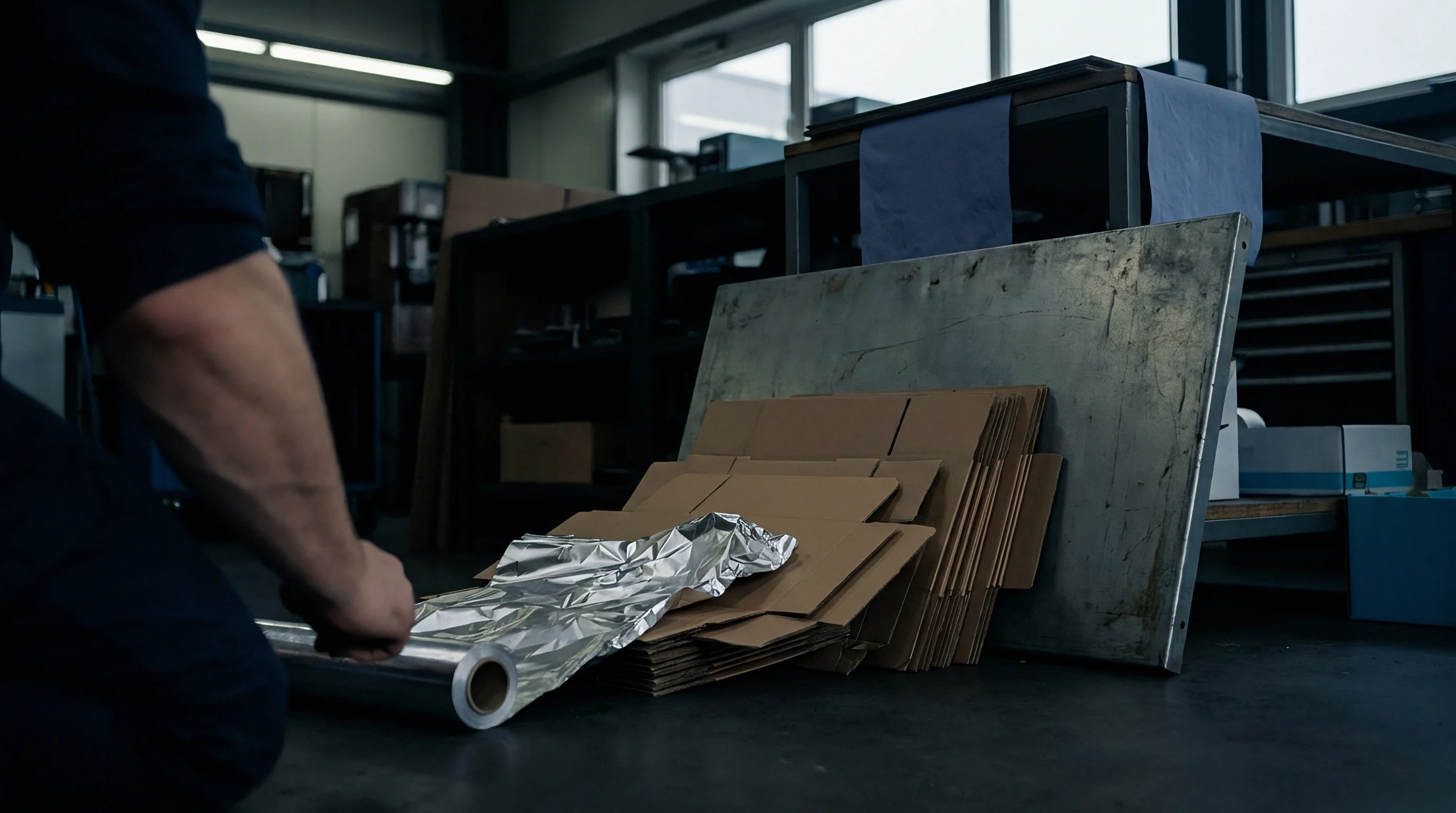
Quantitative adhesion measurement requires bonding a rigid or semi-rigid backing film to the metallized layer to enable mechanical peeling on a tensile tester. Thermal lamination using an Ethylene Acrylic Acid copolymer film creates a strong bond directly to the metal surface without solvent attack. Once sealed, a universal testing machine separates the substrate carrier film from the EAA backing at a constant speed of 300 mm/min while recording force values over a 50 mm peel distance.
The resulting average peel force reflects the true bond strength of the metallized layer system.
| Test Protocol | Peel Geometry | Adhesive / Backing Medium | Quantified Output | Primary Failure Mode Detected |
|---|---|---|---|---|
| AIMCAL TP-105-92 | 90 or 180 Degree Manual Pull | Pressure-Sensitive Tape (3M 610) | Visual Grade (1 to 5) | Low-level interfacial debonding |
| ASTM F2252 | 90 Degree Motorized Pull | High-Tack Precision Tape | Peel Force (N/15mm) | Shallow metal transfer defects |
| ASTM F904 | 180 Degree Tensile Separation | Solventless Polyurethane / PE | Peel Force (N/15mm) | Laminate delamination route |
| EAA Heat Seal Method | 180 Degree Mechanical Peel | EAA Film Heat-Sealed at 130°C | Peel Force (N/15mm) | True metallized layer bond strength |
Executing an EAA heat-seal peel test on a metallized web without damaging the carrier base follows a sequential laboratory workflow:
- Cut a 25mm by 150mm strip of metallized film along the transverse direction of the web.
- Heat-seal an Ethylene Acrylic Acid copolymer film to the metallized surface at 130 degrees Celsius under 0.3 MPa pressure for two seconds.
- Condition the sealed specimen at 23 degrees Celsius and 50 percent relative humidity for 24 hours.
- Mount the free tail of the carrier film into the upper grip of a universal testing machine and the EAA strip into the lower grip.
- Separate the grips at a constant speed of 300 millimeters per minute while recording the steady-state detachment force in Newtons per 15 millimeters.
Purchasing agreements specifying AIMCAL TP-105-92 require zero metal transfer to pressure-sensitive tape across ten random cross-web samples to grant lot acceptance.
Skin
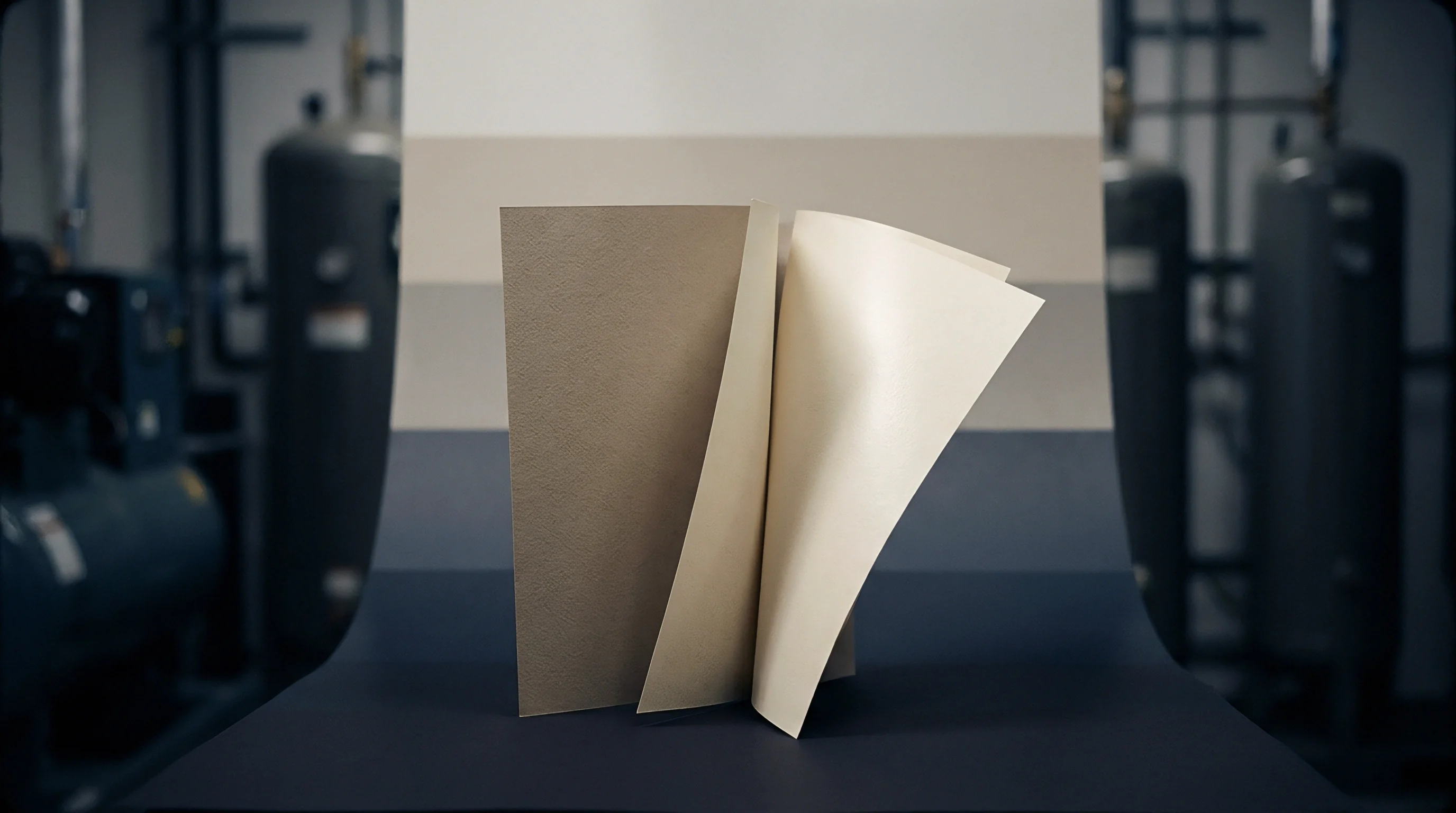
Polymer substrate coextrusion structures dictate whether mechanical failure occurs at the metal-film interface or within the soft surface layer of the base film. Modern flexible packaging films utilize coextruded multi-layer structures, such as a three-layer BOPP construction featuring a core polypropylene layer flanked by heat-sealable skin layers. When the bond strength between the vacuum-deposited aluminum oxide and the functionalized film surface exceeds the cohesive strength of the skin layer resin, tensile force tears the polymer skin apart.
Laboratory analysis of delaminated surfaces via electron microscopy identifies whether metal remains attached to the peeled tape or carries torn polymer fragments with it.

Why Does Corona Treatment Decay on Stored BOPP?
Corona discharge treatment on biaxially oriented polypropylene creates surface oxidation by generating ozone and polar functional groups. Over time, low-molecular-weight oxidized material generated during corona discharge migrates into the bulk polymer matrix or reorganizes away from the surface layer. Storage temperature, ambient humidity, and resin additive migration accelerate this dyne decay.
Film stored for extended periods prior to vacuum metallizing loses surface energy, falling from an initial 42 dynes/cm down to 36 dynes/cm, resulting in poor initial metal nucleation and reduced bond longevity.
| Substrate Resin Base | Pre-Treatment Type | Dyne Level (mN/m) | Adhesion Force (N/15mm) | Dominant Failure Typology |
|---|---|---|---|---|
| BOPP Standard Heat-Sealable | In-line Corona | 38 – 40 | 0.8 – 1.2 | Cohesive skin layer splitting |
| BOPP High-Crystallinity | In-Vacuum Argon Plasma | 44 – 48 | 2.0 – 3.2 | Clean aluminum debonding |
| BOPET Flame Treated | In-line Chemical Primer | 52 – 56 | 4.5 – 6.0 | Substrate carrier tearing |
| CPP Cast Polypropylene | Flame Treatment | 40 – 42 | 1.2 – 1.8 | Cohesive skin yield |
| BOPA Biaxial Nylon | In-Vacuum Nitrogen Plasma | 50 – 54 | 3.5 – 5.0 | Interfacial oxide fracture |

Polymer Substrate Coextrusion Dynamics
Biaxially oriented polyethylene terephthalate (BOPET) films offer higher dimensional stability and surface energy compared to polyolefins, reaching natural surface energy values near 44 dynes/cm. Chemical priming during BOPET film manufacturing applies an acrylic or polyester resin dispersion that creates a highly polar receiving bed for aluminum deposition. Metal adhesion forces on chemically primed BOPET routinely exceed 5.0 N/15mm, far outperforming standard flame or corona treated BOPP films.
The structural stiffness of PET prevents localized necking during mechanical peel testing, ensuring uniform stress distribution along the peeling front.
Higher plasma power density during vacuum deposition yields tighter atomic packing and superior bond longevity under thermal stress.
Whether low-molecular-weight oxidized species can be completely eliminated through in-vacuum plasma ablation without damaging heat-sealable polyolefin copolymers remains an open technical debate on high-speed converting lines.
Degradation
Downstream converting passes expose metallized flexible films to mechanical flexing, solvent exposure, and thermal curing cycles that weaken layer integrity. Secondary operations like solventless adhesive lamination, extrusion coating, and flexographic printing place significant shear and thermal stress on the thin metallic deposit. Gelbo flex testing according to ASTM F392 simulates repetitive mechanical manipulation during handling and transportation, demonstrating a direct correlation between metal adhesion loss and barrier degradation.

Flex Cracking and Barrier Loss Mechanics
Mechanical stress during web handling induces micro-cracking across the brittle aluminum lattice. Unlaminated metallized PET with an initial Water Vapor Transmission Rate (WVTR) of 0.5 g/m2/day can degrade to over 5.0 g/m2/day after 20 flex cycles if the metal adhesion force is below 1.5 N/15mm. Weak metal adhesion allows the metallic layer to shear away from the substrate during flexing, forming wide crack networks.
High adhesion forces constrain crack propagation, forcing the aluminum layer to deform synchronously with the underlying film substrate.
Polyolefin skin layers frequently rupture before the vacuum-deposited aluminum bond releases from the modified substrate surface.
Converting process stress manifests through distinct failure mechanisms during secondary handling:
- Interfacial Debonding occurs when solvent-based adhesives attack the aluminum oxide interface during long oven drying passes.
- Cohesive Skin Splitting happens when low-density polyolefin surface layers tear under high web tension during secondary rewinding.
- Micro-Cracking Shear develops when mechanical flexing causes structural fractures across the thin metallic deposit, destroying gas barrier values.
- Oxidative Hydrolysis emerges during prolonged storage of unlaminated reels in ambient environments exceeding 60 percent relative humidity.
Two-component polyurethane adhesives formulated with fast-reacting aromatic isocyanates preserve metallized barrier layers better than slow-curing aliphatic formulations.

Valuation
Packaging delamination claims hit balance sheets through scrap generation, rejected production runs, and extended line downtime. Specifying a metallized film with inadequate layer adhesion triggers catastrophic bond failure during pouch forming or thermal retort processes. A single defective lot of metallized film can compromise thousands of meters of multi-layer laminate, forcing complete rejection of finished packaging batches at customer filling facilities.

Worked Financial Sensitivity for Delamination Claims
Consider a converting run producing 500,000 flexible food pouches from a multi-layer structure consisting of 12-micron metallized PET laminated to 70-micron low-density polyethylene. Material inputs assume raw film costs of 0.04 USD per square meter for PET carrier web, 0.08 USD per square meter for PE sealant web, and 0.015 USD per square meter for solventless polyurethane adhesive. Standard operational waste allowance sits at 1.5 percent across a total order area of 100,000 square meters.
A low-adhesion metallized film lot exhibiting an adhesion force of 0.8 N/15mm causes widespread laminate delamination during pouch sealing, elevating scrap rates to 14.0 percent across the run.
Direct material loss expands from an expected base of 2,025 USD to 18,900 USD for the job docket. Machine downtime on the high-speed pouch-forming line adds 4,500 USD in unrecoverable overhead, while sorting and laboratory defect analysis cost an additional 1,200 USD. Total financial penalty incurred from the low-adhesion defect equals 22,575 USD, erasing the job’s target operating margin completely.
| Metal Adhesion Level (N/15mm) | Expected Scrap Rate (%) | Material Wasted Cost (USD) | Line Downtime Overhead (USD) | Net Financial Impact (USD) |
|---|---|---|---|---|
| Greater than 3.0 (Optimal) | 1.5% | 2,025 | 0 | 2,025 (Baseline) |
| 1.8 to 2.5 (Acceptable) | 3.0% | 4,050 | 500 | 4,550 |
| 1.0 to 1.5 (Marginal) | 7.5% | 10,125 | 2,000 | 12,125 |
| Less than 0.8 (Defective) | 14.0% | 18,900 | 4,500 | 23,400 |
Quality assurance protocols require strict qualification steps before mounting new metallized film lots on high-speed laminators:
- Verify Dyne Levels at the unwind station using certified dyne fluids or optical contact angle goniometry before mounting the reel.
- Audit Plasma Treatment Logs from the metallizing supplier to confirm power densities exceeded 1.5 Watts per square meter per minute during deposition.
- Execute EAA Peel Tests on sample rolls from every mill batch prior to committing adhesive lamination make-ready time.
- Inspect Barrier Values on gelbo-flexed samples to ensure oxygen transmission rates stay within target packaging thresholds.
Failing to validate metallized layer adhesion before high-speed solventless lamination results in complete batch rejection at the customer’s filling plant, triggering full material replacement costs and line downtime indemnities.
Dossier
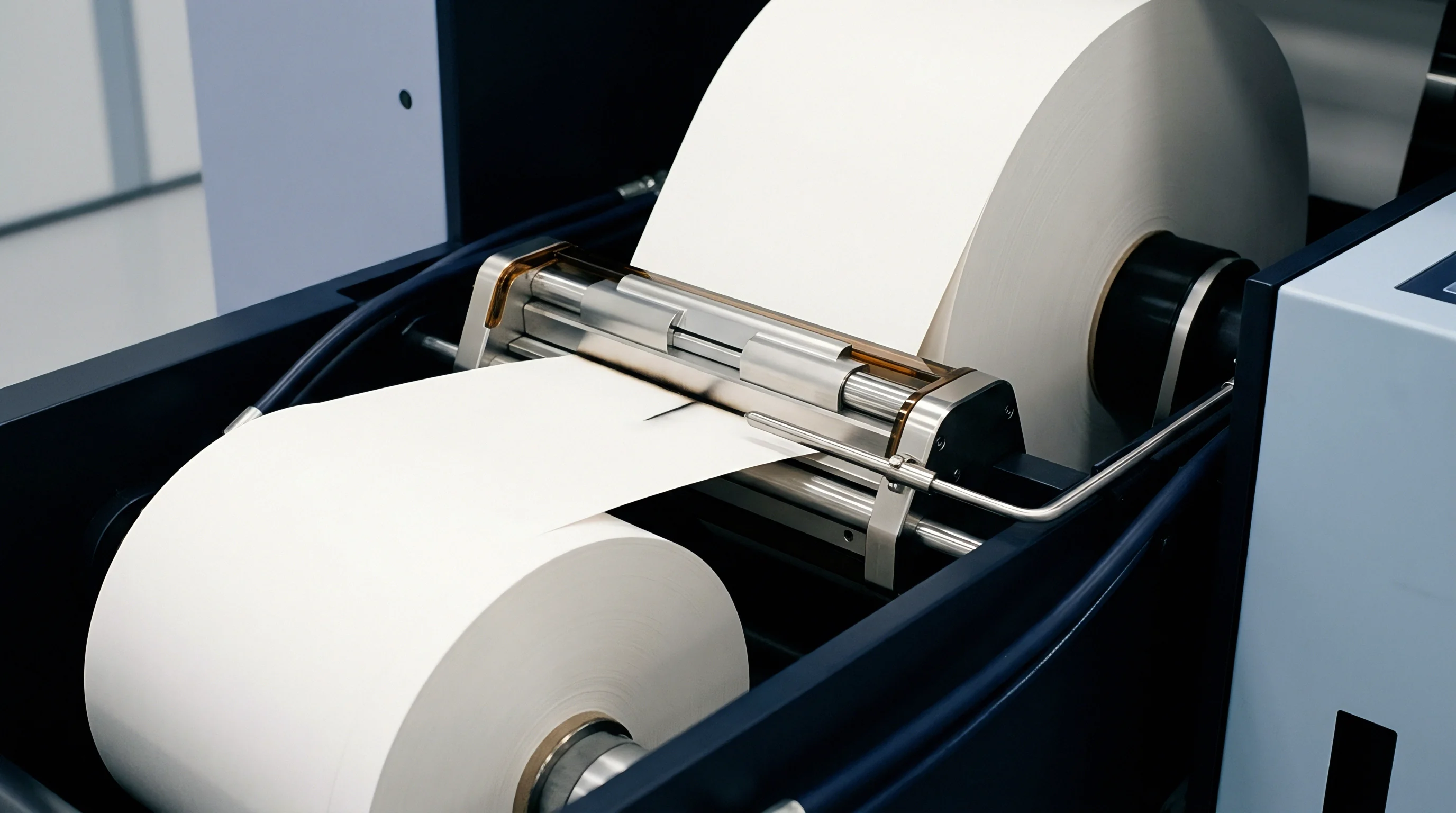
Comprehensive technical specifications establish clear boundary conditions for metallized substrate procurement and downstream lamination quality control. Quality control documentation must combine supplier process logs, lab test records, and Certificate of Analysis parameters into a unified traceability dossier. Defining standard test conditions ensures reproducible data between material suppliers, converters, and brand owners.
Certificate of Analysis Requirements
A complete Certificate of Analysis for vacuum metallized film includes critical physical and interfacial parameters verified per production reel. Essential data fields comprise base film thickness, optical density, cross-web dyne level, and quantified metal layer adhesion measured in Newtons per 15 millimeters using heat-seal detachment standards. Inclusion of in-vacuum plasma treatment verification parameters provides proof of optimal surface preparation during deposition.

Incoming Quality Verification
Quality control teams establish strict incoming inspection protocols that blend rapid dyne testing with quantitative tape pull force measurement. Reels passing initial bench checks proceed directly to the lamination line, where adhesive coat weight and tension settings are locked against the supplier’s technical parameters.