Viscoelastic Dispersion Barrier Film Relaxation Kinetics under High Speed Folding Die Actuation Rates
Aqueous dispersion barriers fracture when folding actuation time drops below polymer relaxation time, demanding wider crease channels and flexible latex shells.
Rate
High-speed folding cartons hit creasing and folding stations at line velocities between four and ten meters per second. Actuation of the folding die subjects the waterborne dispersion barrier to severe, localized deformation frequencies exceeding 1000 Hz. How this thin polymeric layer responds mechanically depends on the ratio between the polymer’s intrinsic macromolecular relaxation time and the die transit duration. When actuation occurs faster than internal chains can rearrange, the material turns into an elastic glassy regime, accumulating tensile stress without dissipative polymer flow.
Rotary creasing rules compress the mineral-pigmented latex layer within two milliseconds. Flatbed platen strokes execute deformation cycles across twenty to forty milliseconds, generating dynamic strain rates ranging from 100 to 5000 reciprocal seconds. Hydrophobic polymer blends containing styrene-butadiene, polyacrylate, or bio-polyesters exhibit distinct relaxation spectra.
If operational dwell sits below the primary alpha-relaxation threshold, mechanical energy channels into interfacial crazing.
Crease crack density increases fourfold when folding die impact time drops below eighty microseconds at twenty-three degrees Celsius.
Polymer relaxation kinetics follow time-temperature superposition principles, where glass transition temperature sets baseline segmental mobility for polymer chains under ambient factory conditions. High actuation velocities shift the effective glass transition point upward along the frequency axis. A dispersion barrier film formulated with an equilibrium glass transition temperature of five degrees Celsius behaves like brittle glass at twenty-five degrees Celsius when loaded at five hundred reciprocal seconds, causing crease line fractures to propagate along internal latex particle interfaces.
Maintaining barrier continuity requires polymer films to undergo plastic elongation without macroscopic rupture. Water vapor transmission rates, Cobb sixty values, and Kit grease resistance ratings degrade immediately upon localized film splitting. High conversion speeds prevent rapid molecular chain disentanglement, so applied mechanical work cannot convert to viscous heat dissipation before localized yield stress thresholds fail, turning intended clean folds into jagged leak pathways across carton flaps.
Rupture
Creasing tools force multi-ply coated paperboard into counter-matrix channels to build a hinge. The top dispersion barrier encounters sharp tensile elongation around the outer bend perimeter while compressive shear forces crush the underlying bleached sulfate or recycled fiber layers. Tensile elongation regularly exceeds eight percent along the outer shoulder of a standard ninety-degree fold.
Because raw dispersion barrier films demonstrate ultimate elongations below six percent at high strain rates, micro-fissuring initiates along the rule crown.
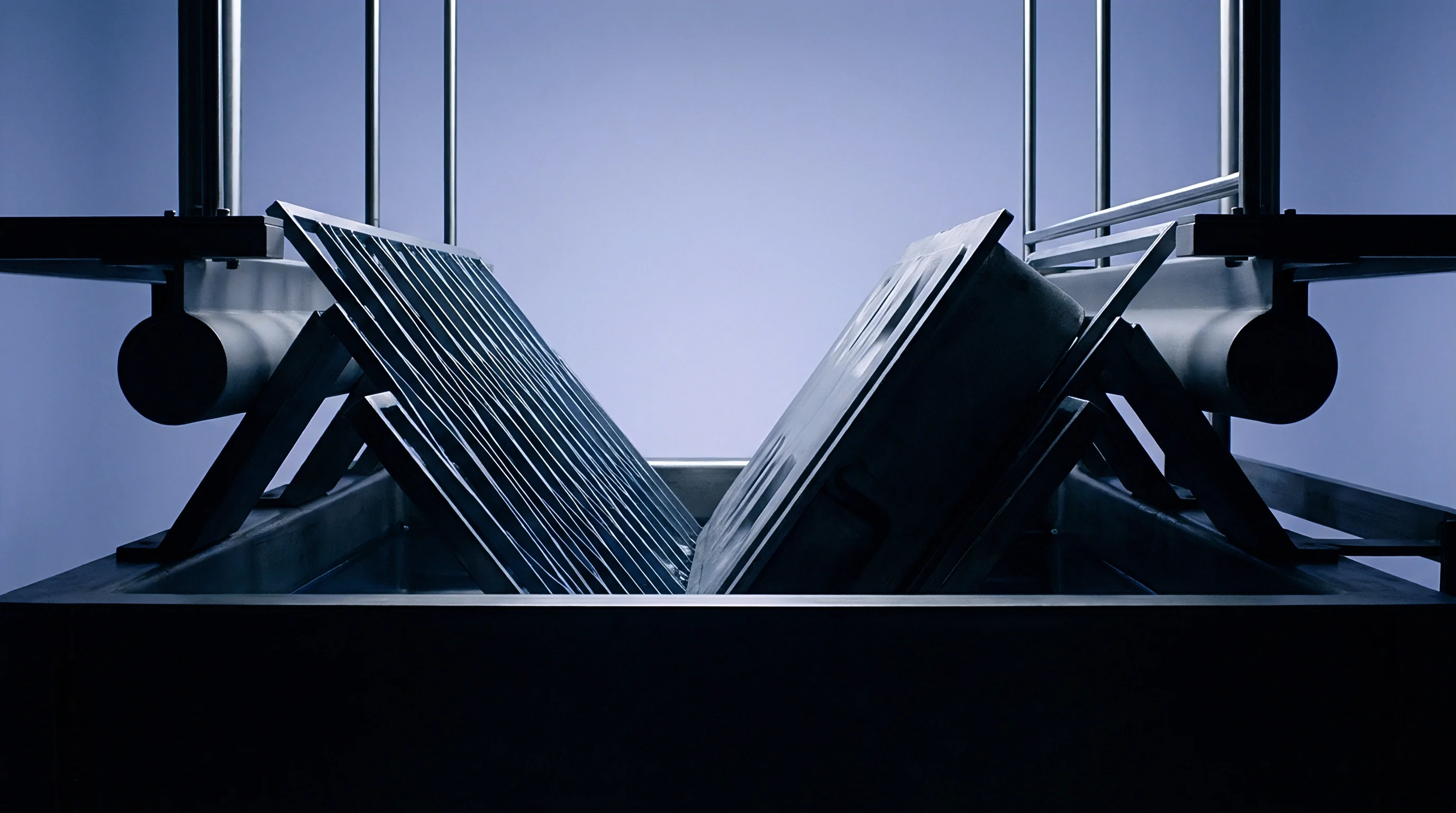
Mechanical Strain in the Bending Hinge
Delamination within paperboard plies cushions surface stress during proper scoring. High internal bond strength resists delamination, transferring unabated tensile strain directly into the surface coating. Mineral pigment particles within the dispersion compound create stress concentration nodes; while unfilled polymer binders stretch smoothly, barrier formulations containing thirty percent talc or kaolin clay display void nucleation at particle boundaries, creating pinholes across the folded ridge.
| Polymer Dispersion Base | Mean Relaxation Time (ms) | Actuation Strain Rate (1/s) | Tensile Yield (MPa) | Elongation At Break (%) | Post-Fold Cobb 1800s (g/m²) |
|---|---|---|---|---|---|
| Styrene-Acrylate Latex (Unfilled) | 1.2 | 150 | 14.2 | 18.5 | 1.8 |
| Styrene-Acrylate Latex (Unfilled) | 1.2 | 2200 | 38.6 | 4.1 | 42.5 |
| Styrene-Acrylate with 35% Talc | 4.8 | 150 | 19.5 | 8.2 | 2.4 |
| Styrene-Acrylate with 35% Talc | 4.8 | 2200 | 46.1 | 1.6 | 88.0 |
| Ethylene Acrylic Acid (EAA) | 0.4 | 150 | 11.0 | 35.0 | 0.9 |
| Ethylene Acrylic Acid (EAA) | 0.4 | 2200 | 24.3 | 11.4 | 3.1 |
| Polyhydroxybutyrate-co-valerate | 8.5 | 150 | 28.4 | 5.5 | 12.0 |
| Polyhydroxybutyrate-co-valerate | 8.5 | 2200 | 58.2 | 0.8 | 135.0 |
Pigment aspect ratios amplify strain localization. Platelet pigments align horizontally during blade or rod coating application, creating a tortuous diffusion path that repels moisture. This geometric alignment proves brittle during transverse bending.
High aspect ratio talc plates shear away from the surrounding polymer matrix when bent rapidly, coalescing into micro-channels between two and twenty micrometers wide. Liquid grease and water wick directly through these gaps into raw fiber channels.
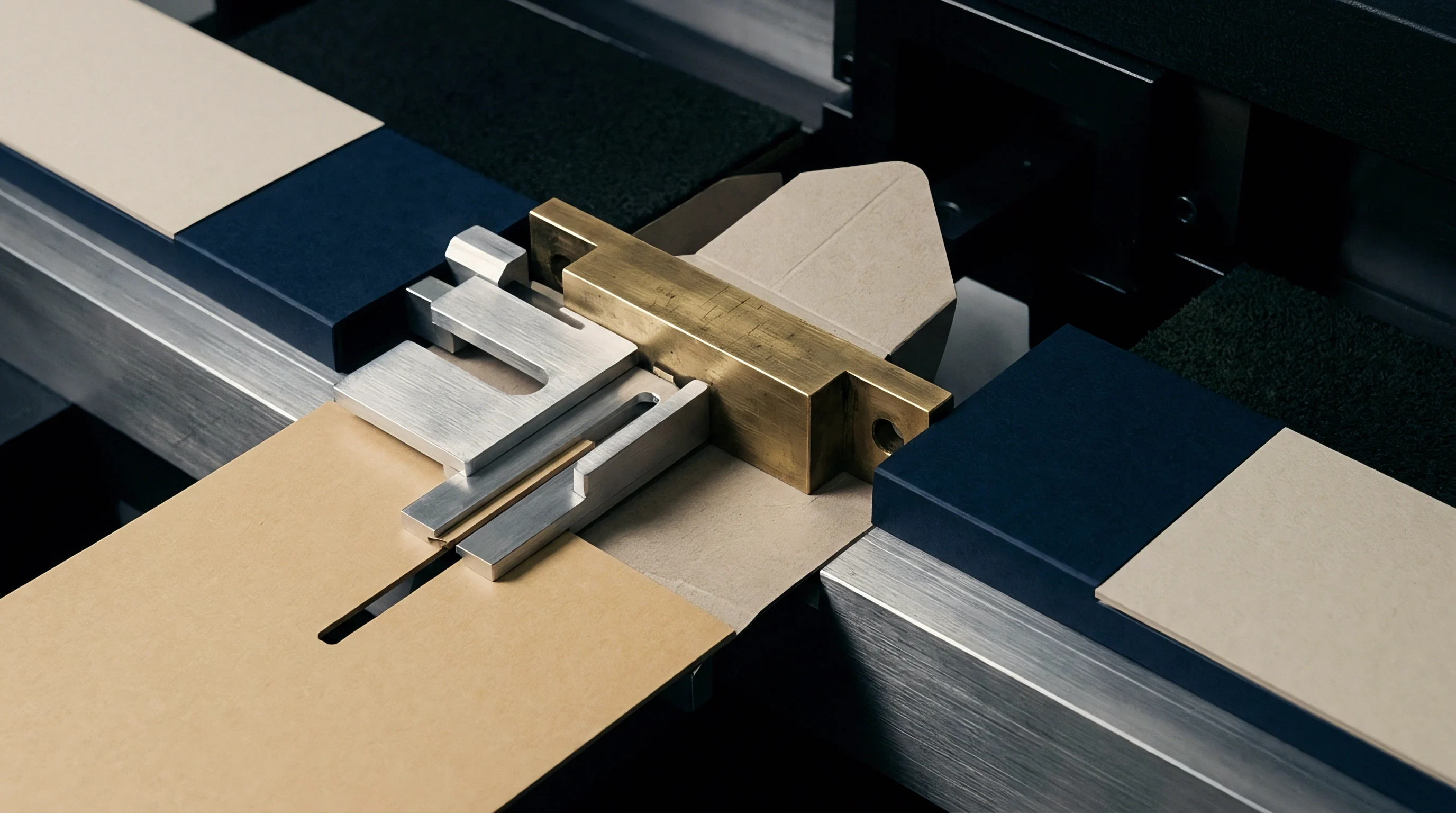
Crease Integrity across Fiber Directions
Bending parallel to the fiber grain direction concentrates tensile stress across fewer fiber bonds, whereas folding across the paper grain distributes bending strains over a broader radius. When carton flats fold parallel to machine direction on high-speed gluers, film rupture frequency climbs sharply. Running blanks cross-grain preserves barrier performance by spreading tensile strain over interlocking cellulosic networks, making flap layout choices decisive for package integrity.
Scored cartons that fail cross-directional stiffness specifications permit excessive corner bulging on high-speed tray-forming mandrels.
Crease cracking ruins moisture vapor transmission barriers. A flat carton blanket yielding an initial water vapor transmission rate of three grams per square meter per day under tropical conditions degrades to eighty grams per square meter per day after high-speed folding if the polymer film shatters along the scoreline. Standard DIN 55437 score line testing specifies that grease barrier continuity across creases must withstand thirty minutes of solvent exposure without bleed-through ~ a threshold cracked coatings breach within five seconds.
Resin
Synthesizing aqueous barrier dispersions demands precise control over copolymer microstructure. Monomer composition sets backbone chain stiffness and secondary relaxation pathways. Incorporating soft acrylic monomers like butyl acrylate or 2-ethylhexyl acrylate depresses the glass transition temperature, speeding up macromolecular motion.
Hard monomers like methyl methacrylate and styrene supply blocking resistance and water repellency, but lengthen chain relaxation times. Balancing these properties prevents blocking in the wound reel while avoiding brittleness inside the folding section.
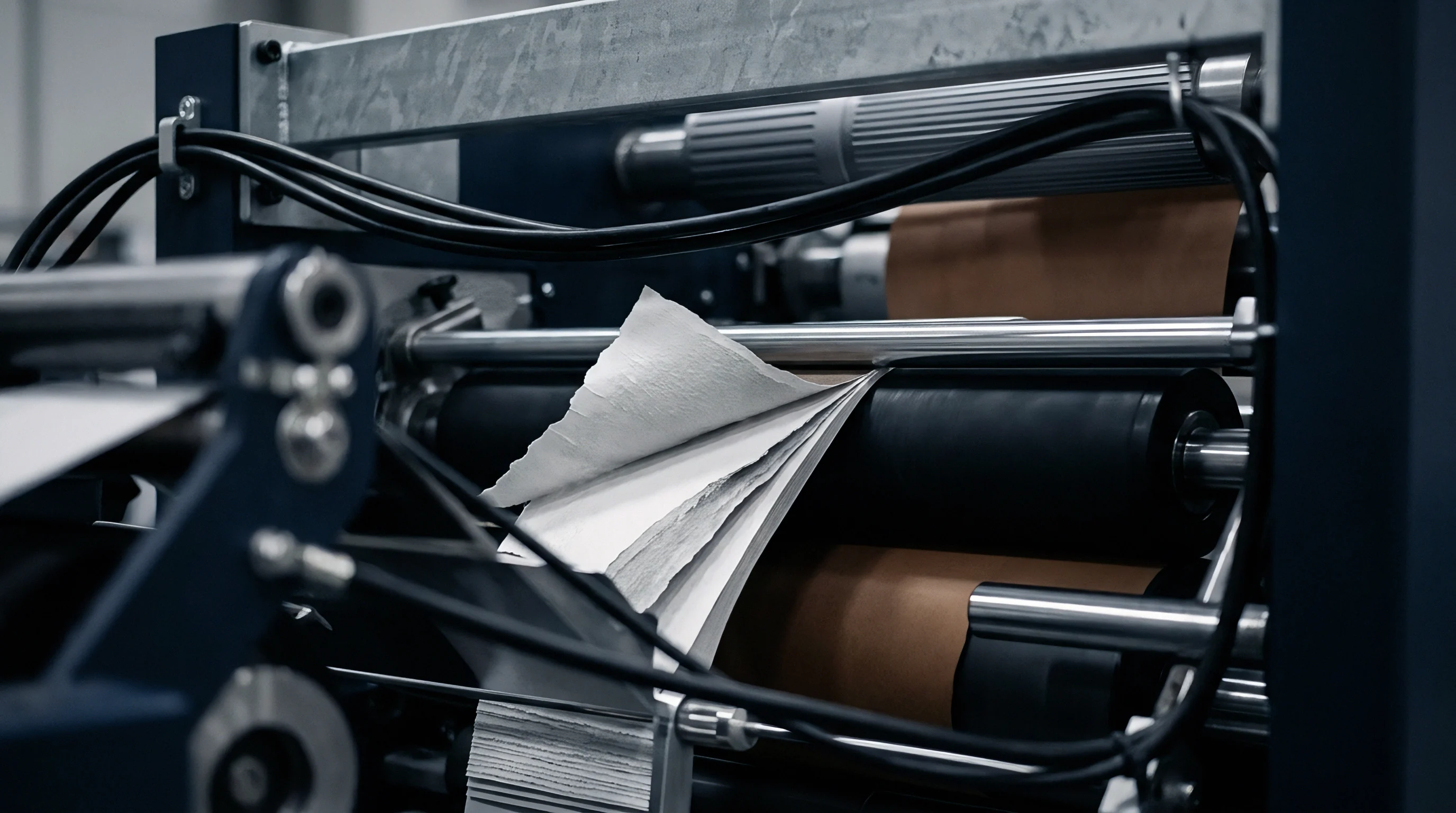
Core-Shell Particle Architecture
Emulsion polymerization produces structured latex particles engineered with distinct functional zones. A rigid, hydrophobic core provides anti-blocking characteristics during winding, while a ductile, low-transition shell promotes inter-particle coalescence and retains elongation capability under high strain rates. Thermal drying evaporates water, driving latex spheres into dense hexagonal packing before capillary pressure forces soft shells to deform, interdiffuse, and knit into continuous barrier matrices.
- Interdiffusion Depth across latex particle boundaries governs ultimate tensile cohesive strength under dynamic folding loads.
- Carboxylation Density on polymer shells affects colloidal stability, wet film rheology, and covalent adhesion to cellulosic fibers.
- Hydrophilic Surfactant Migration toward coating interfaces causes localized embrittlement and compromises moisture barrier performance.
- Pigment Volume Concentration must stay below critical thresholds to prevent particle crowding and premature cohesive delamination during high-speed scoring.
Particle boundary coalescence remains incomplete if drying tunnels operate with inadequate residence time. Incompletely fused latex shells separate instantly when hit by folding tools, producing cracks along original particle contours that expose bare fiber beneath. Slower drying profiles or infrared consolidation zones promote polymer chain reptation across particle boundaries, enhancing strain tolerance under high actuation rates.
External Plasticization Dynamics
Formulators lower dispersion film relaxation times by adding water-soluble polyols, citrate esters, or vegetable fatty acid derivatives. These low-molecular-weight additives intersperse between polymer chains, widening free volume and accelerating segmental adjustments so the film maintains flexible elongation during carton forming. Volatile plasticizers, however, migrate over time into paperboard fibers or evaporate inside drying tunnels, causing progressive embrittlement throughout warehouse storage.
Formulations containing migratory plasticizers lose thirty percent of initial fold elongation after forty-eight hours at sixty degrees Celsius.
Internal plasticization provides lasting relaxation stability. Chemically copolymerizing branched monomers directly into the polymer backbone eliminates migrant phase separation, as flexible side chains reduce steric hindrance without risk of volatilization or leaching. Converting lines process cartons six months after board production without noticeable increases in scoreline permeability, even where technical documentation specifies universal elasticity across high strain rates without softening during reel storage.

Anvil
Creasing tooling geometry dictates mechanical strain distributions across the coated board. Male creasing rules press paperboard into female counter-dies, compressing internal fiber structures while shaping the surface film. Steel creasing rules with rounded, polished profiles distribute shear loads across wider areas than square-edged rules, preventing tool sharpness from damaging the barrier surface.
A two-point rule with an accurately machined zero-point-seven-millimeter tip radius reduces localized strain compared to narrow one-point rules.
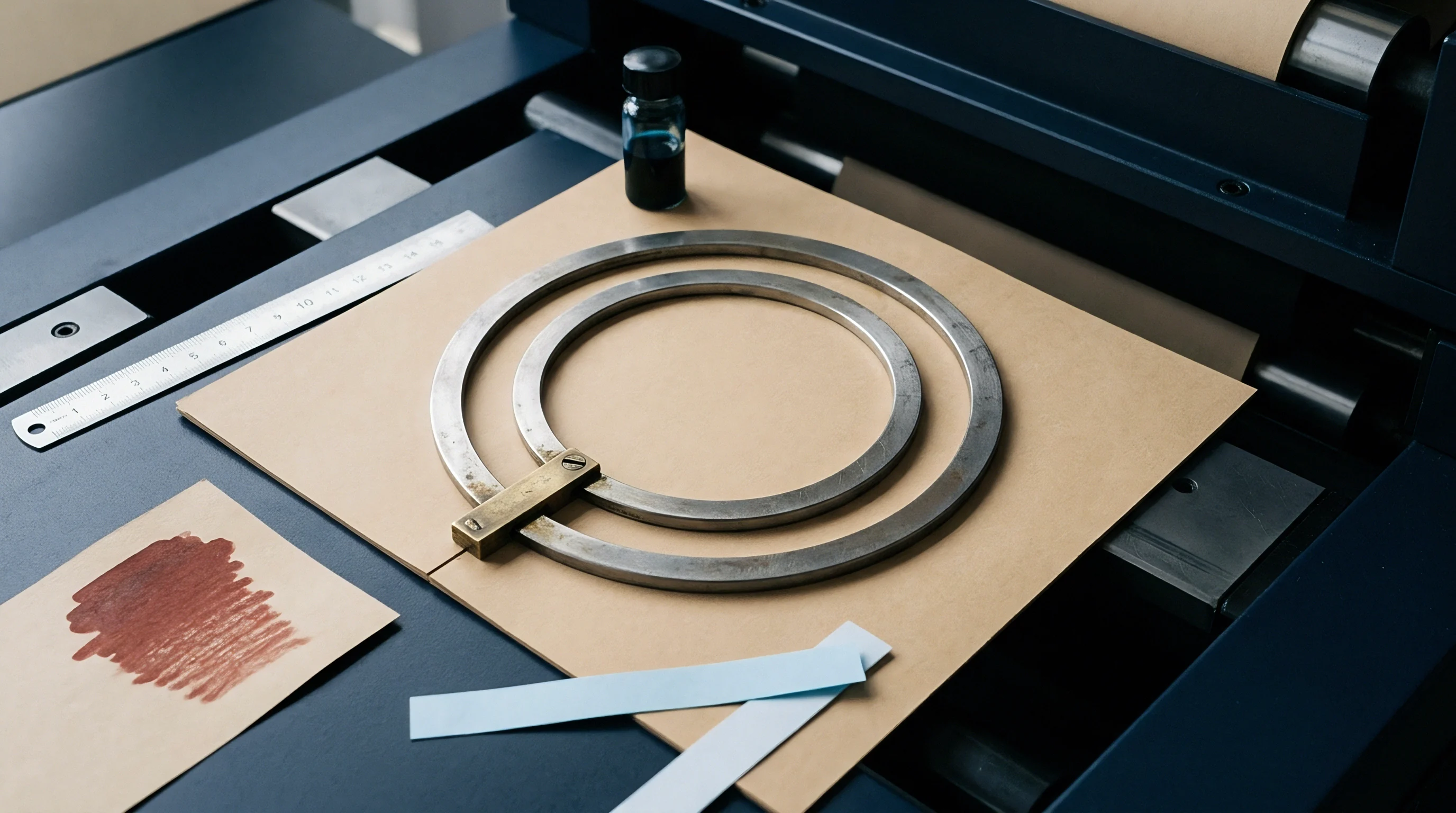
Counter Matrix Sizing and Clearance
Channel depth and channel width govern hinge formation mechanics: channel depth corresponds to board thickness minus rule indentation depth, while channel width follows established mechanical ratios based on paperboard caliper and rule thickness. Deviations from exact clearance formulas generate severe shear spikes that rupture dispersion films along the creasing shoulder.
| Board Caliper (mm) | Rule Thickness (pt) | Rule Tip Profile | Matrix Channel Width (mm) | Channel Depth (mm) | Crease Shear Margin (%) |
|---|---|---|---|---|---|
| 0.35 | 1.5 | Round (0.53 mm) | 1.15 | 0.25 | 12.4 |
| 0.40 | 2.0 | Round (0.71 mm) | 1.35 | 0.30 | 9.8 |
| 0.45 | 2.0 | Round (0.71 mm) | 1.50 | 0.35 | 8.1 |
| 0.50 | 2.0 | Round (0.71 mm) | 1.65 | 0.40 | 6.5 |
| 0.60 | 3.0 | Round (1.05 mm) | 2.05 | 0.48 | 4.2 |
Ejection rubber selection shapes sheet deceleration and separation dynamics. Dense polyurethane rubbers placed parallel to creasing rules clamp the coated board against counter-plates before rule contact occurs. Clamping stabilizes the board surface, eliminating lateral dragging across rule shoulders.
Sponge rubbers possessing low rebound resilience allow board slippage under dynamic impact, scouring the dispersion barrier and generating micro-tears before the creasing rule finishes its downward travel.
- Hardness Profiling requires installing sixty to seventy Shore A profile rubbers immediately adjacent to creasing rules to prevent sheet movement during scoring.
- Matrix Channel Alignment demands optical verification within fifty micrometers to avoid asymmetric hinge stretching that tears thin barrier coatings.
- Make-Ready Platen Shimming corrects uneven pressure distributions, preventing excessive penetration that crushes the fiber core and breaks surface layers.
- Rotary Die Clearance Calibration maintains consistent gap control within ten micrometers across the entire cylinder face to stabilize dynamic peak strain.
Rotary folding systems execute carton formation via dynamic folder belts and twisting plows. Belt speeds must synchronize precisely with carrier chains. Speed differentials abrade the hot barrier surface, generating frictional heat that softens low-transition films.
The softened coating picks off onto steel plows, creating bare spots, though friction-resistant fluoropolymer coatings on folding swords help preserve barrier continuity and prevent pickup.

Settlement
Crease line ruptures generate direct commercial fallout through discarded lots and extended line disputes. Brand owners buying functional folding cartons for liquid dairy, dry pet food, or chilled greasy foods reject deliveries showing wicking along folded edges. Standard polyethylene lamination tolerates aggressive die setups without pinholing, but transitioning to repulpable waterborne dispersions forces converters to operate within narrow mechanical process windows.
Waste figures multiply rapidly when tooling setups fail to account for strain-rate sensitivity.

Yield and Spoilage Realities
Make-ready waste climbs steeply when qualifying aqueous dispersion barriers on high-speed gluer lines. Press operators accustomed to resilient extruded plastics waste full pallets of board attempting to tune creasing depths by trial and error. Surface scoring checks require dye penetration testing, halting gluing equipment while samples undergo twenty-minute chemical exposure ~ a costly delay on lines running sixty thousand cartons per hour.
| Cost Component | Extruded LDPE (15 g/m²) | Aqueous Dispersion (12 g/m²) | Cost Differential (%) |
|---|---|---|---|
| Substrate and Coating Pass Cost | $8,400 | $10,200 | +21.4 |
| Make-Ready Tooling and Counterplates | $1,250 | $1,850 | +48.0 |
| Make-Ready Substrate Waste | $320 | $780 | +143.8 |
| Running Line Spoilage (Crease Rejects) | $180 | $640 | +255.6 |
| Producer Responsibility Fee (EU Modulated) | $1,450 | $320 | -77.9 |
| Total Converted Run Cost | $11,600 | $13,790 | +18.9 |
Extended producer responsibility schemes reward repulpable dispersion coatings with reduced municipal recycling fees. Extruded plastic laminates incur heavy tax surcharges under updated packaging waste directives, offsetting initial converting scrap expenses. Paper mills accept dispersion-coated offcuts directly into standard recycling pulpers without special screening equipment.
Broke repulping recoverability reaches ninety-six percent fiber yield, returning high-grade chemical pulp directly into production cycles.
Commercial contracts increasingly tie product acceptance to stringent crease dye penetration protocols. Standard specifications establish that no more than two cartons out of five hundred sampled units may show dye penetration exceeding one millimeter along folded edges. Fulfilling these clauses requires strict discipline across tool maintenance, raw material qualification, and line velocity control, though technical debate continues on whether ultra-high-speed packaging machines can run mineral-pigmented dispersion barriers without micro-cracking unless folding dies operate with active ultrasonic vibration or localized heat assistance.