Non-Linear Rheological Transitions and Dilatancy Boundaries in Ultra-High-Solids Paper Coating Emulsions
Formulating paper coatings above seventy percent solids triggers dilatant shear jamming, inducing blade streaks that ruin printing runnability.
Slurry
Formulations exceeding 68 percent dry solids by weight transform the fluid mechanics of the coater head. In high-solids paper coating suspensions, pigment particles of ground calcium carbonate and delaminated kaolin clay crowd into close proximity, leaving minimal free volume for the continuous aqueous phase. At resting states and low shear rates below 100 reciprocal seconds, steric stabilization from sodium polyacrylate dispersants and depletion flocculation from soluble co-binders dictate viscosity.
The suspension exhibits pronounced pseudoplastic thinning as resting networks disentangle. Once the web accelerates through the application zone toward blade metering at speeds above 1,200 metres per minute, shear rates exceed 106 reciprocal seconds. At that threshold, the physical distance between mineral particles falls below the thickness of their electrostatic double layers, altering momentum transfer across the fluid layer.
Papermakers push formulation solids toward 72 percent to reduce drying energy on gas-fired infrared and airborne flotation hoods. Removing water on the coater drying train demands substantial steam consumption and evaporative capacity. Evaporating water from a 65 percent solids slurry requires approximately 0.54 kilograms of steam per kilogram of dry coating applied, whereas operating at 71 percent solids drops this requirement to 0.41 kilograms.
The thermal efficiency gain allows machine speed increases of 12 to 18 percent without extending drying sections. This drying advantage introduces severe operational risk under the metering blade, where excessive packing density triggers sudden mechanical transitions.
Suspensions packed near their maximum hydrodynamic volume undergo catastrophic shear thickening when applied under rigid metering elements.
The transition from fluid flow to dilatant jamming depends on the packing fraction of the mineral pigment blend. Monodisperse spherical particles achieve random close packing at a volume fraction of approximately 0.64. Commercial pigment slurries bypass this barrier by blending coarse ground calcium carbonate with fine engineered kaolin platelets, creating polymodal particle size distributions that lift theoretical maximum packing toward 0.74.
Delaminated clays exhibit aspect ratios between 20:1 and 40:1, while steep-curve calcites maintain aspect ratios close to unity. Combining 70 parts fine calcium carbonate with 30 parts delaminated clay optimizes particle slip at intermediate shear rates while maintaining web coverage. Exceeding the critical volume fraction eliminates fluid lubrication, forcing direct mineral contact.
Blade coaters depend on an unbroken liquid lubrication film to separate the steel blade tip from the moving paper web. When an ultra-high-solids slurry enters the convergent nip formed by the blade bevel, hydrodynamic pressure rises steeply. If the local solids concentration rises through boundary dewatering into the base sheet, the suspension reaches its dilatancy boundary within the nip.
The fluid solidifies into an unyielding mineral wedge. Supplying mills commonly defend resulting coat-weight variations by asserting that incoming base-paper absorbency fluctuations destabilized an otherwise compliant slurry formulation.

Transition
Shear-induced restructuring within high-solids emulsions occurs across three distinct mechanical regimes. Below 1,000 reciprocal seconds, thermal Brownian motion dominates hydrodynamic forces, allowing dispersed particles to evade forced alignment. Between 104 and 500,000 reciprocal seconds, hydrodynamic drag overcomes Brownian diffusion, organizing particles into layered sliding planes that reduce apparent viscosity.
Viscosity curves recorded on capillary rheometers show steady pseudoplastic reduction across this window. As shear rates cross the critical boundary toward 106 reciprocal seconds, this ordered layered structure disintegrates into chaotic hydroclusters.
Why Does Particle Clustering Precipitate Dilatant Jamming?
Hydrodynamic lubrication stresses compress adjacent mineral particles into transient, non-equilibrium assemblies termed hydroclusters. These clusters increase the suspension’s local hydrodynamic volume, obstructing streamlines and forcing fluid out of interstitial voids. The shear stress response departs from the classical Ostwald-de Waele power law model, displaying a steep non-linear exponent.
Apparent viscosity surges by several orders of magnitude across an extremely narrow shear rate increment.
Rotational high-shear rheometry using pressurized couette geometry captures the onset of this transition before destructive jamming occurs on the production line. Measurements conducted according to TAPPI T 648 om-88 define flow behavior up to 40,000 reciprocal seconds using bob-and-cup geometry. Capillary viscometry using nitrogen-driven slit dies extends verification to 1.2 × 10⁶ reciprocal seconds, replicating blade-nip conditions.
Slit dies with pressure transducers spaced along the flow axis reveal the departure from Newtonian behavior, documenting wall slip and sudden localized shear thickening.
Capillary slit dies reveal non-linear stress spikes that benchtop rotational spindles miss completely.
The table below summarizes rheological transitions across four solids concentrations for a typical triple-coated woodfree top-coat emulsion containing 70 parts ultrafine ground calcium carbonate, 30 parts fine kaolin, 11 parts styrene-butadiene latex, and 0.8 parts carboxymethyl cellulose.
| Solids Content (% w/w) | Low-Shear Viscosity (mPa·s at 100 s⁻¹) | High-Shear Viscosity (mPa·s at 100,000 s⁻¹) | Critical Jamming Shear Rate (s⁻¹) | Power-Law Flow Index (n) |
|---|---|---|---|---|
| 66.0 | 1,420 | 48 | > 1,500,000 | 0.72 |
| 68.5 | 2,180 | 64 | 1,240,000 | 0.81 |
| 70.5 | 3,650 | 92 | 860,000 | 1.18 |
| 72.2 | 5,900 | 158 | 410,000 | 1.64 |
| Test methodology: Low-shear viscosity measured via ISO 2555 Brookfield RVT spindle 4; high-shear data and critical rates determined via high-pressure capillary rheometer equipped with 0.3 mm slit die. | ||||
The power-law flow index shifts above unity once dry solids exceed 70 percent, marking the entrance into dilatant behavior. When the exponent n surpasses 1.10, runnability on rigid bent-blade coaters deteriorates rapidly. Emulsion elasticity also influences this transition.
Carboxymethyl cellulose and synthetic associative thickeners build a viscoelastic network that retards dewatering, yet their relaxation times create normal stresses under rapid acceleration. These normal forces deflect metering blades, causing profile chatter across the machine direction. The open analytical question remains whether altering the latex shell morphology can suppress hydrocluster formation without sacrificing dry pick strength.

Blade
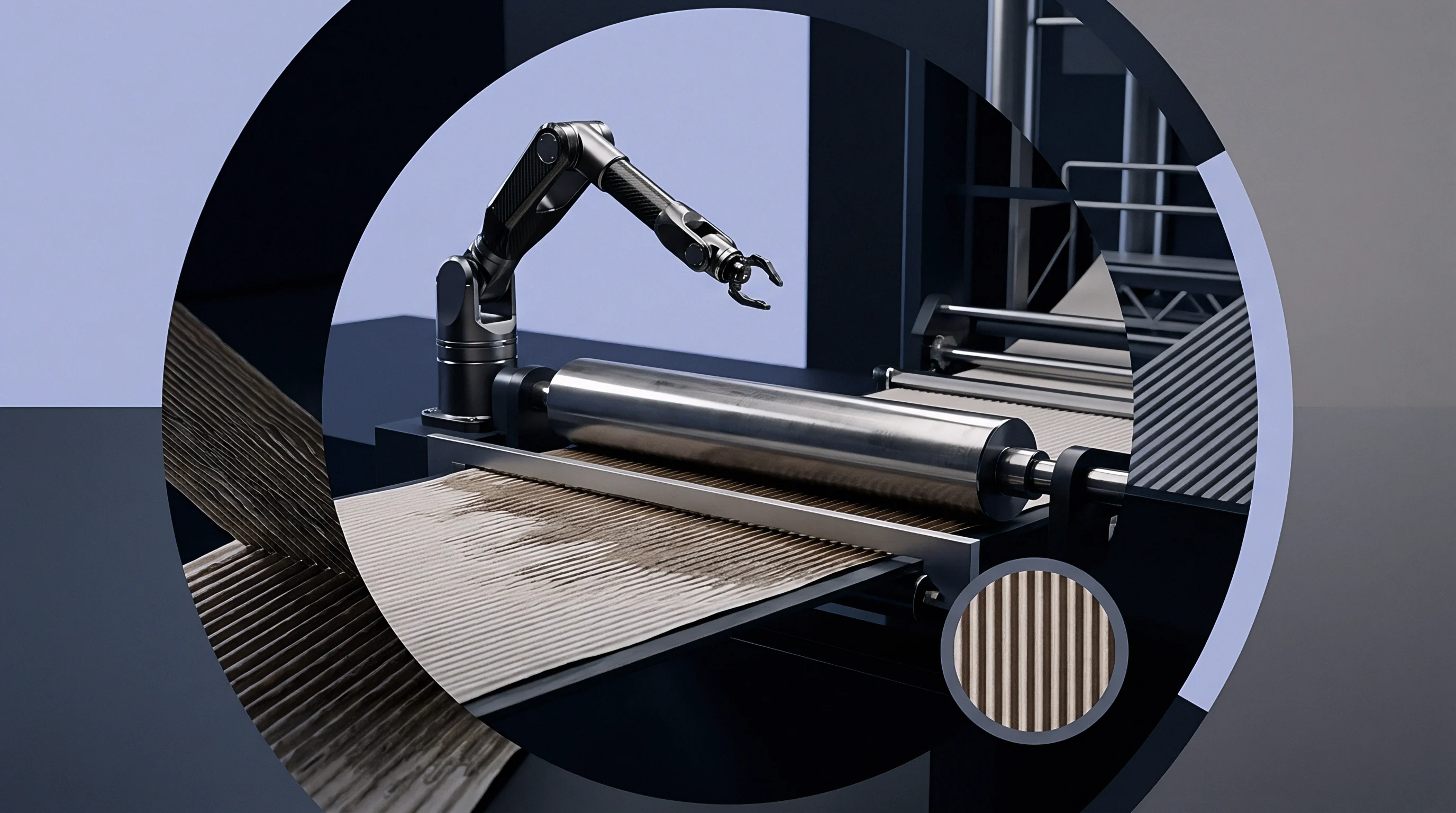
Mechanical metering assemblies experience extreme hydrodynamic lift when processing dilatant formulations. In bent-blade metering modes, the coater blade functions as an elastic cantilever beam clamped along its base, deflecting under fluid pressure generated within the convergent entry wedge. As slurry enters the gap, the mechanical reaction force balances against coater backing-roll compliance.
When the fluid experiences dilatant thickening, the sudden surge in apparent viscosity creates localized pressure peaks exceeding 3.5 megapascals at the blade tip. The blade lifts away from the base paper, destabilizing the coat-weight target.
Which Formulation Parameters Shift the Critical Shear Boundary?
Manipulating pigment aspect ratio and synthetic latex binder viscoelasticity adjusts the onset of dilatancy. Latex particles deform under shear, acting as compressible spacers between rigid mineral particles if their glass transition temperature remains appropriately matched to coater supply temperature. Ground calcium carbonate particles exhibit rigid contact mechanics.
Adding hollow plastic pigment spheres or bimodal latexes shifts critical shear thresholds upward, buffering the formulation against premature jamming.
Physical defects emerge immediately when the critical boundary falls below the operating shear rate of the metering blade:
- Blade bleeding stalagmites form behind the metering edge when dilatant paste accumulates, drying into hardened mineral stalactites that break off into the coating pan.
- Continuous coating streaks scratch across the freshly coated web as jammed particle aggregates lodge between the steel blade tip and the fibrous base paper.
- Coat weight spitting ejects tiny droplets of sheared emulsion onto the sheet downstream, creating distinct circular blemishes visible under low-angle illumination.
- Web break delamination tears the wet paper web inside the metering zone when shear stress exceeds base-sheet z-directional internal bond strength.
Metering pressures above 3.5 megapascals at 70 percent solids induce micro-tears across lightweight base sheets.
Base-sheet water absorbency directly shifts the dilatancy boundary during application. Standard test method ISO 535 Cobb measurements define water uptake over 60 seconds, but blade contact lasts fewer than 2 milliseconds. Dynamic penetration meters measuring ultrasonic attenuation show that porous woodfree base sheets extract between 3 and 7 grams of water per square metre from the wet emulsion during initial contact.
This rapid liquid drainage concentrates the boundary layer under the blade bevel. A coating delivered to the applicator roll at 69 percent solids can reach 73 percent solids within the metering nip. Localized dewatering triggers dilatant transition even when bulk tank rheology appears entirely compliant.
Operating a coater across this instability boundary destroys production economics. A single web break on an off-machine coater running at 1,400 metres per minute loses approximately 45 minutes of line availability, generating over two tonnes of unrecyclable wet broke and wasting expensive thermal drying energy across the coater basement.
Streak
Surface imperfections originating at the metering blade persist through supercalendering into sheet-fed offset and gravure pressrooms. Scratches caused by dilatant jamming displace pigment mass, leaving narrow tracks where base-sheet fibres remain unsealed. In offset printing units, fountain solution penetrates these open fissures, causing moisture-induced fibre swelling that weakens surface sizing.
Tacky lithographic inks pluck bare fibres from the coating furrow, contaminating blanket cylinders and forcing press stops for wash-ups every few thousand impressions. In rotogravure printing, blade scratches create missing dots because gravure cells fail to achieve uniform contact with the depressed surface trough.
Calendering lines cannot compress out these micro-scale troughs. A multinip calender running at 300 kilonewtons per metre line load and 180 degrees Celsius rolls over missing coating mass without rebuilding local density. Parker Print-Surf roughness measurements conducted under ISO 8791-4 at 1,000 kilopascals clamping pressure show severe roughness deviations along streaked tracks.
Undamaged coating zones register PPS roughness between 0.85 and 1.10 micrometres, while adjacent scratch troughs spike to 2.40 micrometres.
Finished coated surfaces must maintain Parker Print-Surf roughness below 1.20 micrometres under ISO 8791-4 testing.
Quality verification demands a systematic qualification sequence to validate formulation runnability before committing mill tonnage to production:
- Formulation solids verification tests every batch using microwave moisture analyzers calibrated against oven drying according to ISO 638, rejecting coatings drifting 0.5 percent above specification.
- High-shear capillary profiling subjects sample batches to nitrogen-driven slit capillary flow across shear rates extending from 100,000 to 1,200,000 reciprocal seconds, confirming absence of shear-thickening inflection.
- Dynamic dewatering evaluation tests suspension water-retention time using an AA-GWR pressure filtration cell under 0.5 bar air overpressure for 90 seconds, maintaining aqueous drainage below 45 grams per square metre.
- Blade profile inspection uses optical surface profilometry on recovered blade segments, identifying localized abrasive wear or polymer deposits before metal fatigue triggers catastrophic scoring.
Commercial purchase contracts protect buyers against latent blade defects by establishing rigorous acceptance criteria. Standard technical annexes stipulate that delivered coated paper lots showing more than two continuous longitudinal roughness anomalies per reel width fail compliance inspection, releasing the publisher from off-take commitments and transferring repulping losses back to the supplying mill.
Tonnage
Material balances and furnish calculations resolve the trade-off between formulation solids, coating stability, and converted sheet cost. A typical triple-coated folding boxboard or woodfree graphic sheet applies 24 grams per square metre of total mineral coating across both sides. The dry coat weight divides into a 12 grams per square metre pre-coat and a 12 grams per square metre top-coat.
While pre-coat slurries utilize coarse calcium carbonate running stably at 72 percent solids with broad particle distribution, top-coat formulations balance surface gloss, opacity, and rheological boundaries. Running the top-coat at 68.5 percent solids rather than 71.0 percent solids increases drying steam demand but eliminates dilatant streaks.
Consider a production run of 10,000 tonnes of 150 grams per square metre double-coated woodfree paper. Base paper represents 126 grams per square metre of sheet mass, furnished from bleached chemical kraft pulp. Coating solids represent 24 grams per square metre.
The total dry coating applied across the production lot equals 1,600 tonnes of mineral-binder composite. Slurry water volume directly governs energy expenditure across the dryer section.
| Solids Level (% w/w) | Total Wet Slurry Applied (Tonnes) | Water to Evaporate (Tonnes) | Steam Required (Tonnes Steam) | Gas Drying Cost (Delivered USD) | Defect Spoilage Rate (% Area) |
|---|---|---|---|---|---|
| 67.0 | 2,388 | 788 | 945 | 42,500 | 0.35 |
| 69.0 | 2,319 | 719 | 862 | 38,800 | 0.48 |
| 70.5 | 2,270 | 670 | 804 | 36,200 | 1.85 |
| 72.0 | 2,222 | 622 | 746 | 33,600 | 5.20 |
Pushing solids from 69.0 percent to 72.0 percent saves 5,200 dollars in drying gas across the 10,000-tonne order. However, dilatant micro-jamming elevates finished waste from 0.48 percent to 5.20 percent. The incremental broke generation equates to 472 tonnes of scrapped paperboard.
Value loss on pulped base sheet and lost coater capacity exceeds 330,000 dollars. Operating near the dilatancy boundary to pursue incremental drying savings compromises production yield.
Converting yield matters. Uncoated fibres cost less than formulated coatings per unit volume, but finished sheet integrity dictates client retention. Commercial buyers auditing mill qualifications monitor pigment dispersant dosages alongside target solids.
Excessive polyacrylate dispersant lowers low-shear viscosity while contracting the critical shear boundary, precipitating abrupt dilatancy when coater speed rises. Slurry stability survives when pigment volume concentration remains comfortably below the critical packing boundary.