Viscosity Control
Aqueous coating formulations rely on these chemical additives to establish targeted rheological profiles during high-speed application. Associative thickeners work by creating a hydrophobic network that interacts with both the latex particles and the water phase in a liquid coating. This dual action prevents pigment settling in storage while providing the shear thinning behavior required for smooth leveling across a substrate.
Printers demand specific rheology to avoid misting at high press speeds and to ensure that a thin film applies evenly without surface defects.
Application Dynamics
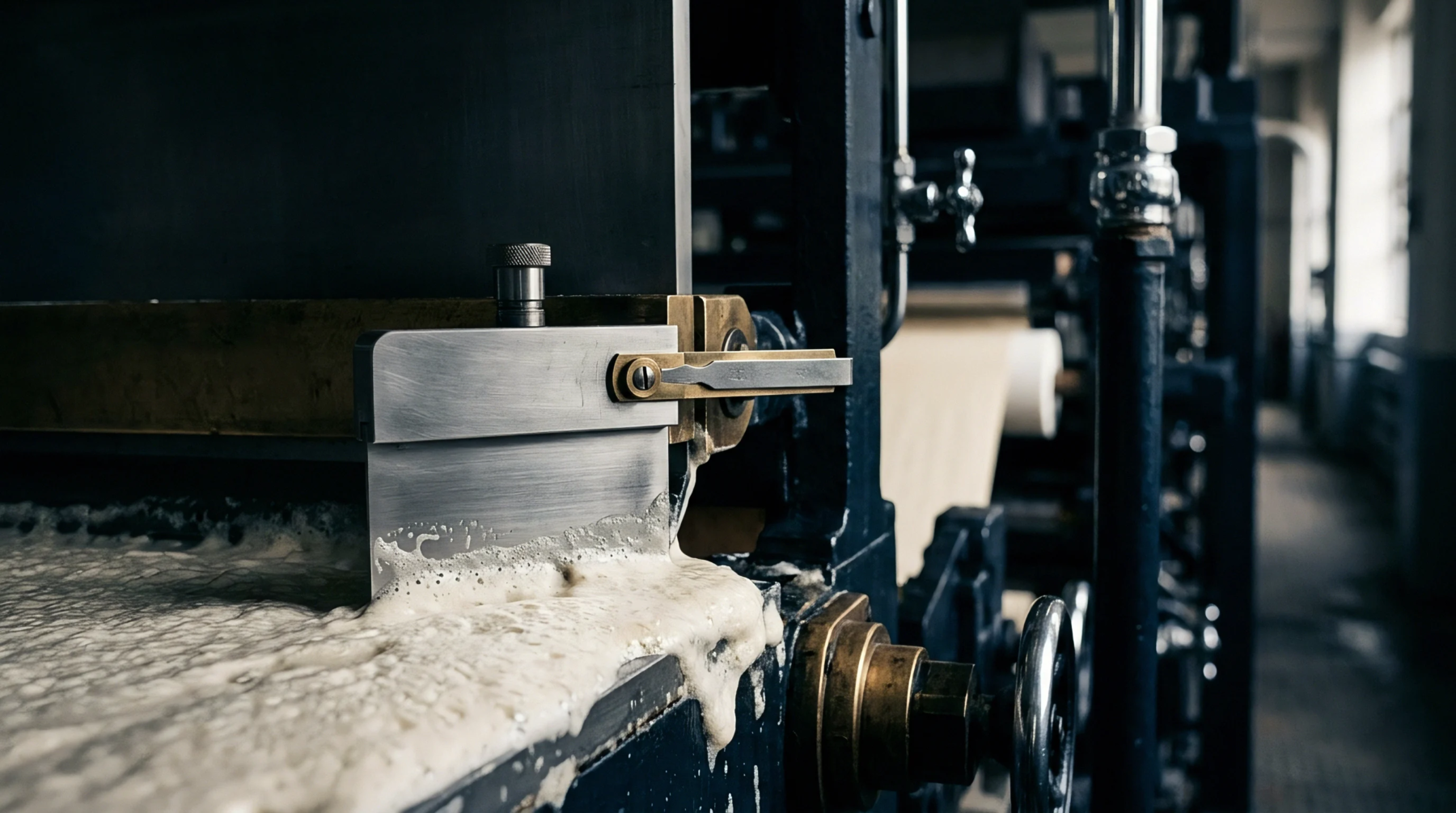
Manufacturers incorporate these polymers into starch or synthetic binder mixes to regulate flow during the metered size press step. Higher concentrations of these agents increase the film build on the surface, which aids in holding out the ink during later offset lithography. Coating units control the mechanical resistance of the fluid to ensure the blade or rod applies a consistent weight across the entire width of the web.
Careful dosage prevents an excessive increase in the yield stress, which otherwise creates orange peel texture or prevents the coating from filling the micro-porosity of the paper surface. Correct usage allows for a balanced response to the blade pressure during the transfer process.
Chemical Mechanism
Hydrophobic tail segments within these molecules adsorb onto the surface of the pigment particles or latex spheres. These hydrophobic junctions bridge individual particles to form a transient three-dimensional structure that resists deformation at low shear rates. Physical linkages detach when the coating passes through the narrow gap between the applicator roll and the paper, allowing the liquid to spread easily under high velocity.
Recovery of the network occurs almost instantaneously once the shear force drops, ensuring the film stays in position on the sheet. Performance of these molecules depends upon the balance between the hydrophobic character of the tail and the molecular weight of the hydrophilic backbone. The resulting structure provides superior stability against temperature fluctuations in the reservoir compared to traditional non-associative modifiers.