Mill Roll Pressure
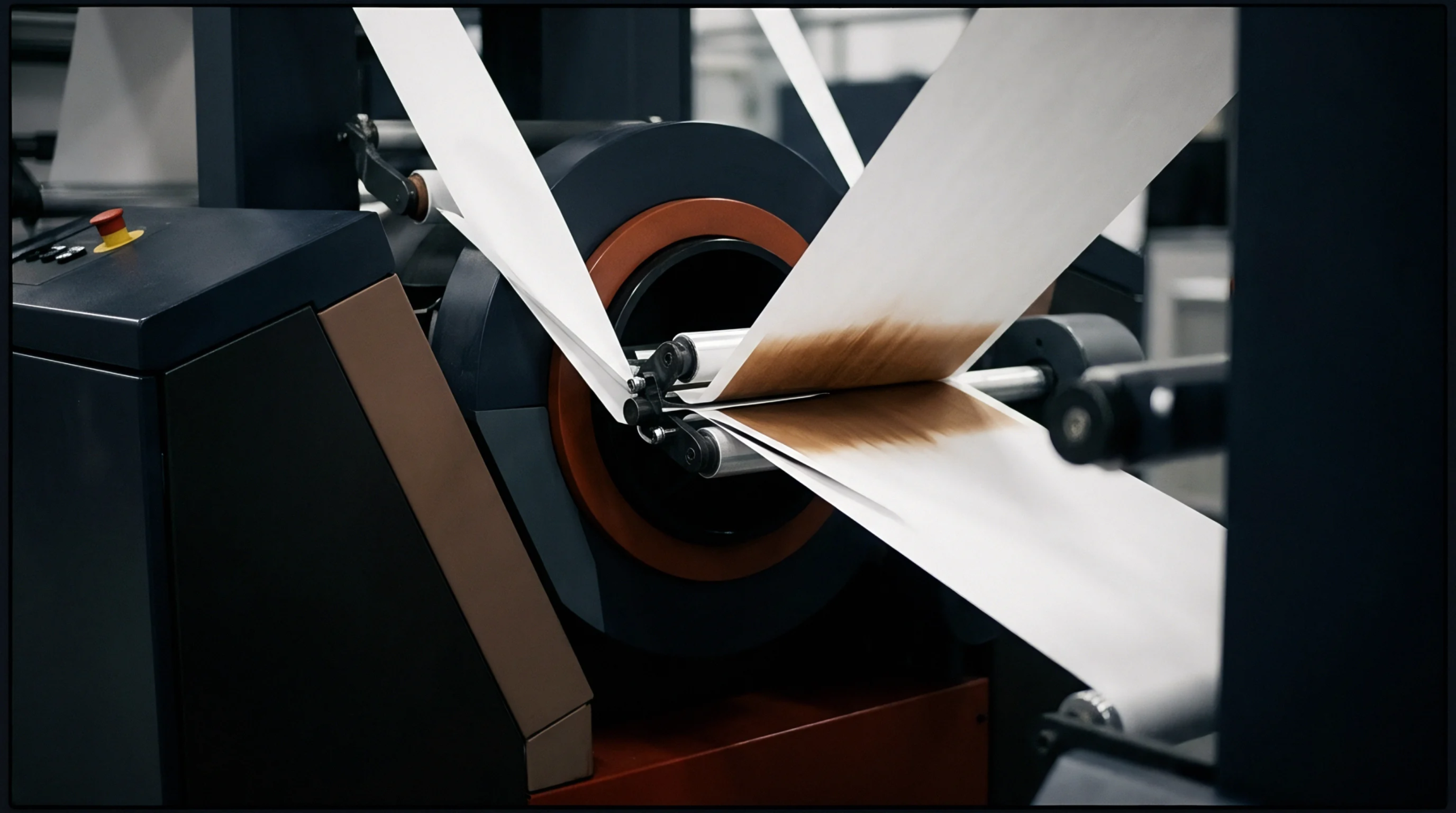
Mechanical adjustment of roll separation in paper production governs the final caliper and surface smoothness of a web before sheeting. Calender nip control maintains uniform thickness across the entire width of a moving sheet by applying precise hydraulic or pneumatic loading to opposing chilled cast iron rolls. Variations in incoming moisture or basis weight demand continuous micro-adjustments in pressure to prevent density gradients and subsequent converting failures during high-speed flexographic printing or folding carton creasing.
Edge relief profiles counter roll bending under heavy loads, ensuring the central portion of the web receives identical compaction to the outer lanes.
Surface Density
Uniform consolidation of cellulose fibres during final pressing alters porosity, ink absorption rates, and gloss development across coated publication grades. Calender nip control dictates the degree of air permeability reduction by forcing fibres into closer contact, directly influencing subsequent ink holdout on offset presses. Excessive pressure crushes internal void volumes, resulting in a brittle sheet prone to cracking along folding lines during packaging conversion.
Insufficient loading leaves micro-surface roughness that scatters light and reduces print contrast on high-end promotional collateral.
Hydraulic Response
Closed-loop actuator systems govern roll positioning through real-time feedback from continuous beta-transmission caliper gauges positioned immediately after the stack. Calender nip control relies on servo-valve adjustments responding within milliseconds to correct localized caliper deviations detected across the cross-machine direction. Hydraulic fluid temperature stabilization prevents viscosity changes that otherwise compromise the precision of roll separation adjustments during extended production runs.
Mechanical backlash within the loading linkages is neutralized by constant hydraulic pre-loading, maintaining stability under heavy thermal expansion conditions typical of supercalendering operations.