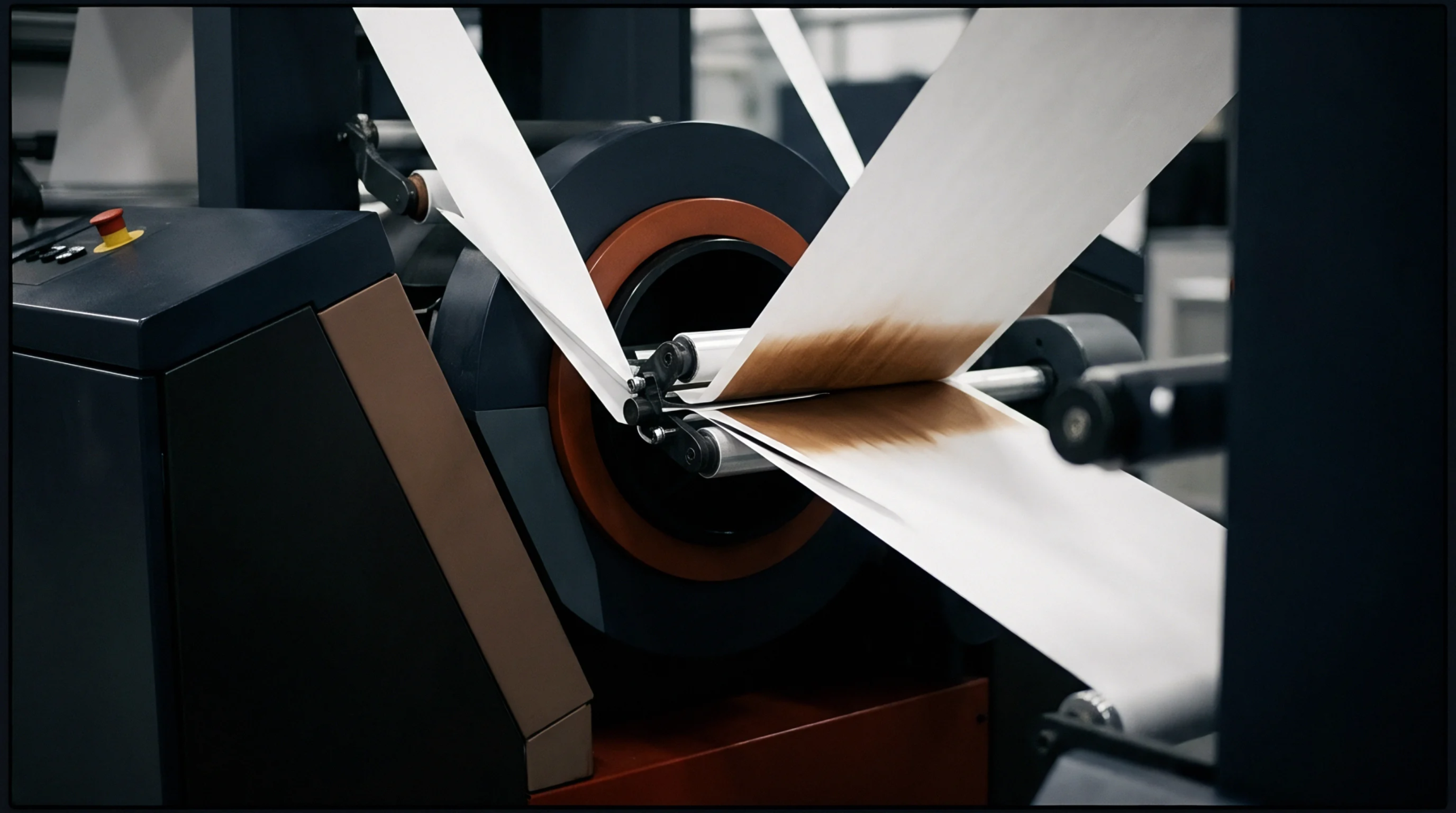
Substrate Oscillation
Mechanical resonance across a printing press web describes web flutter frequency. This metric defines the cycles per second at which a substrate vibrates while passing through unsupported spans between rollers. It marks the boundary where aerodynamic lift or tension instability overcomes the inertial resistance of the material.
Converters monitor these oscillations to prevent contact with drying equipment or registration drift. Excessive movement reduces dot gain consistency and causes ghosting patterns on the printed surface.
Stabilization Control
Air flow management within a drying tunnel alters the pressure differential acting on the web. Reducing the gap between the nozzle plate and the material surface helps dampen the amplitude of these vibrations. Engineers adjust blower output to force the substrate against the transport path or to create a cushion that stabilizes the run.
High tension levels shift the resonance points toward higher numbers, which removes the material from the dominant vibration bands caused by drive motor harmonics. Fixed idler rollers positioned at specific intervals break up the unsupported span to shift the frequency above the danger zone.
Tension Tolerance
Production equipment specifications establish the safe limit for web flutter frequency based on the caliper and stiffness of the substrate. Lightweight films or thin papers require greater stability because their low mass allows for rapid changes in vertical position under high speed conditions. Operators verify the integrity of these materials by calculating the natural frequency of the span during initial setup.
A web that operates at a frequency matching the mechanical vibration of the press frame risks catastrophic tearing. Consistent tension management ensures that the mechanical load stays within the elastic region of the paper or film throughout the entire run.