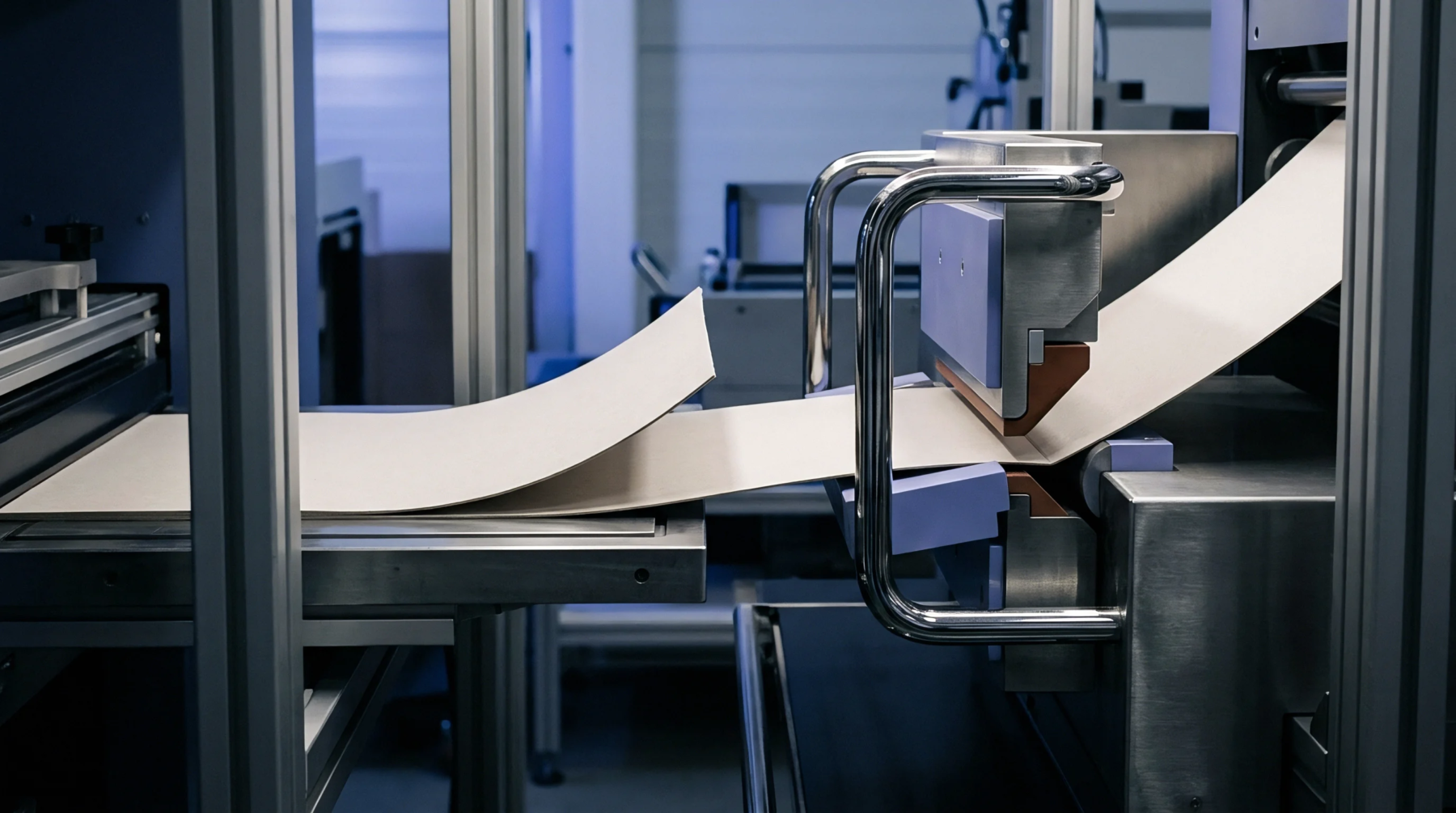
Automation Geometry
Automated web tensioning hardware maintains physical alignment across paper processing machinery by monitoring the topography of a substrate in real time. Closed loop flatness control executes constant adjustments to cooling and mechanical load inputs based on sensor feedback loops. These signals prevent localized stretching that occurs when thermal or mechanical stress creates non uniform sheet expansion.
Operators rely on the system to minimize waste during high speed converting operations where slight variations in tension cause registration drift or uneven print density.
Mechanical Feedback
Sensors positioned before the rewinder detect edge curl and center buckling by scanning the width of the sheet. Such instruments measure deviations against a target profile stored in the drive controller. When the system detects a variance, it adjusts the nozzle pressure or cooling air temperature to correct the profile before the product reaches the final winding station.
Stable output results from the speed of these adjustments which counteract moisture shifts or thermal gradients during the finishing phase.
Output Consistency
Uniform tension across the entire width of the web prevents defects in subsequent converting processes like die cutting or high resolution offset printing. Precise regulation ensures that the stock remains stable through shifts in mill environment conditions or variations in machine speed. Consistent geometry allows for narrower margins during automated filling operations.
Performance standards dictate that effective regulation eliminates the need for manual tension calibration during production runs.