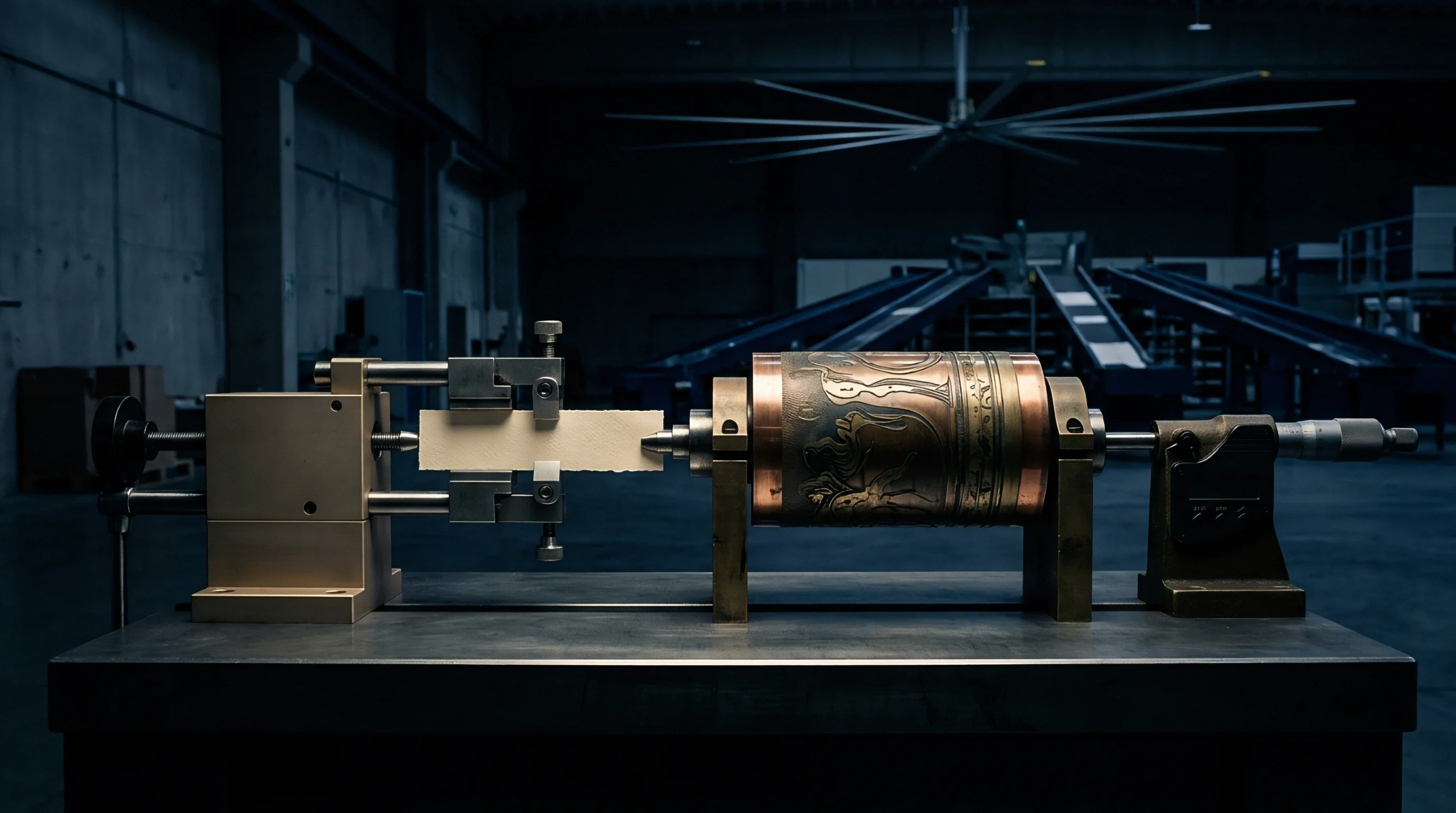
Tensile Response
Rapid acceleration and high-frequency cyclical tension deform paperboard webs as they travel through rotary die-cutters and folder-gluers. Industrial converting operations generate dynamic mechanical stress that alters the visco-elastic performance of cellulose fibres and internal starch bonding networks. Laboratory tensile instruments simulate these short-duration loads to measure transient elongation alongside modulus shifts.
Strain Accumulation
Mechanical energy imparted during rapid bending or nip passage distributes unevenly across the sheet thickness. High peak loads exceed the yield point of recycled fibre networks, causing localized delamination or micro-cracks inside the central plies of multiply folding boxboard. Subjecting paper substrates to dynamic mechanical stress at high web speeds reveals viscoelastic failure modes that static tensile testing fails to capture.
High-speed video cameras combined with laser speckle interferometers track real-time strain patterns across the web width during converting runs. When converting machinery operates near maximum rate, cycle frequency approaches the natural structural resonance of the packaging material, accelerating fibre fatigue. Papermakers adjust wet-end retention aids and refining intensity to reinforce inter-fibre bond density against dynamic shock loads.
Structural Relaxation
Post-converting recovery depends on the molecular relaxation time of native cellulose and added synthetic polymers. Web tension variations during reel changes induce transient creep that degrades register accuracy across multi-station printing presses.