Vertical Expansion
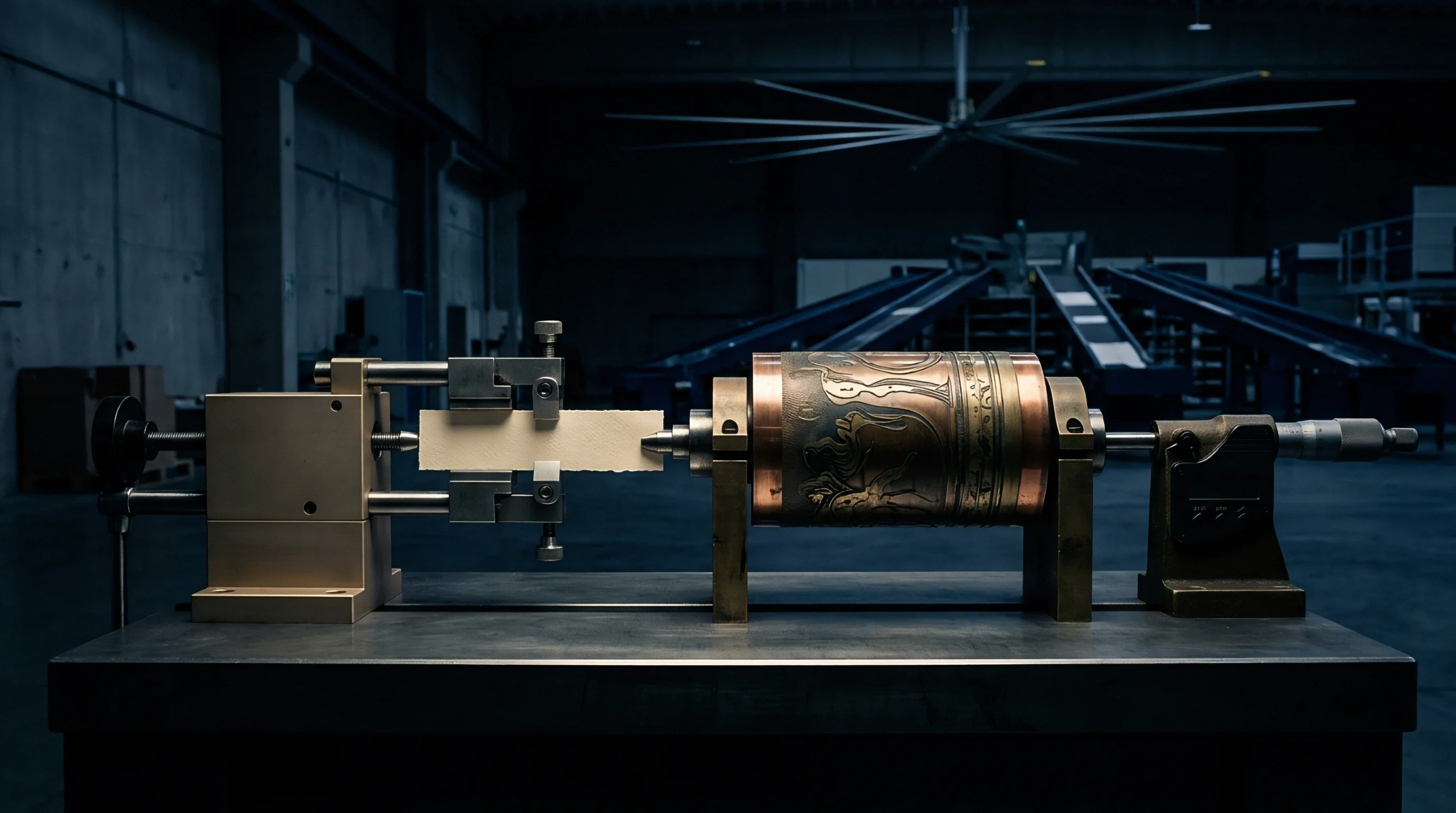
Mechanical displacement of the paper surface represents fiber rise during the coating process. This phenomenon occurs when wood fibers absorb moisture from the aqueous coating layer and swell against the binding matrix. Excessive movement results in a coarse surface profile that diminishes gloss uniformity and print quality.
Variations in fiber geometry and refining intensity determine the magnitude of this surface displacement across the web width.
Coating Interaction
Moisture transfer into the sheet structure happens during the application of aqueous mineral coatings. Liquid migrates through the porous substrate and causes immediate fiber swelling that disrupts the smooth interface between the paper and the coating. Press nip conditions regulate the compression of these raised fibers to flatten the resulting topography before the sheet enters the drying section.
Calendering intensity remains the primary control mechanism to manage this elevation of the substrate surface. High localized pressure during finishing cycles crushes the fiber peaks and compresses the coating layer to restore print smoothness.
Tolerance Management
Dimensional control over the surface profile preserves the integrity of the print surface under demanding coverage conditions. Printers define maximum roughness limits to prevent mottle or poor ink transfer during offset lithography. Papermakers adjust furnish composition and refining energy to minimize the potential for fiber displacement before coating application begins.
Proper control of the drying curve reduces the rate of moisture absorption and limits the extent of fiber movement. Precise moisture management during the converting phase ensures the substrate maintains dimensional stability for subsequent print runs.