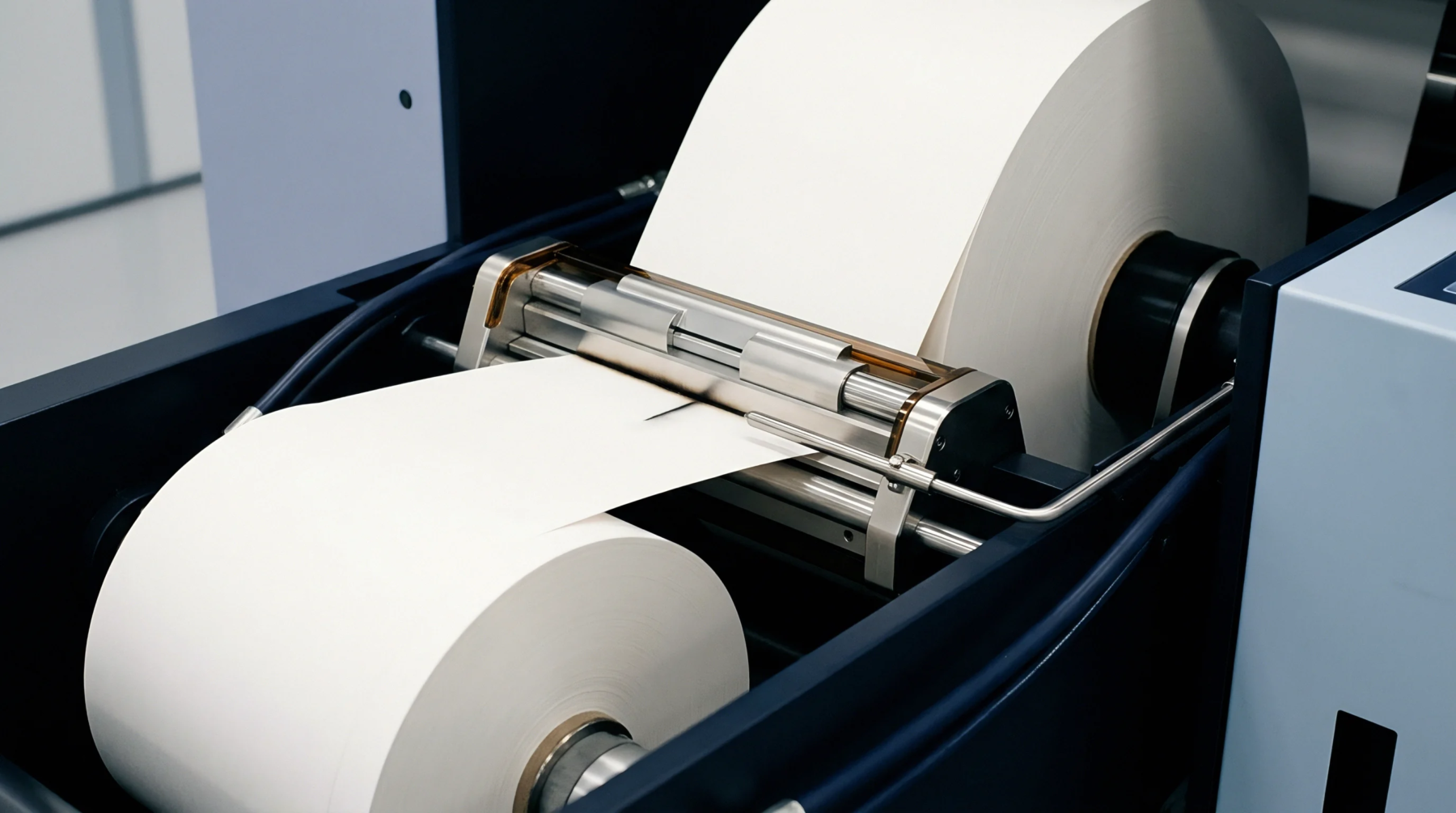
Coating Mechanism
Liquid polymers applied as a thin layer on paperboard create a barrier against moisture and grease. A functional dispersion coating is typically formulated with water-soluble or emulsion polymers that are applied using standard blade or rod coating heads. The liquid phase is subsequently evaporated in drying tunnels, leaving a consolidated film that adheres to the fibrous substrate.
This method allows high-speed application directly on the paper machine.
Barrier Functionality
Protection of the packaged food depends on the density and uniformity of the dry film. The functional dispersion coating prevents the migration of mineral oil hydrocarbons and water vapor through the paperboard. In addition to chemical resistance, the layer must maintain its integrity when the board is folded or creased during carton converting.
Any cracking in the coating during the creasing step exposes the underlying fibers and destroys the barrier. Chemists adjust the glass transition temperature of the polymer to prevent this cracking while avoiding block resistance problems in the paper roll.
Recyclability Benefit
Sustainable packaging initiatives drive the adoption of these aqueous barriers over laminated plastic films. When a board utilizes a functional dispersion coating, it can be easily repulped in standard recycling mills without specialized equipment. The polymer particles disperse in the water during repulping rather than forming sticky deposits on the paper machine screens.