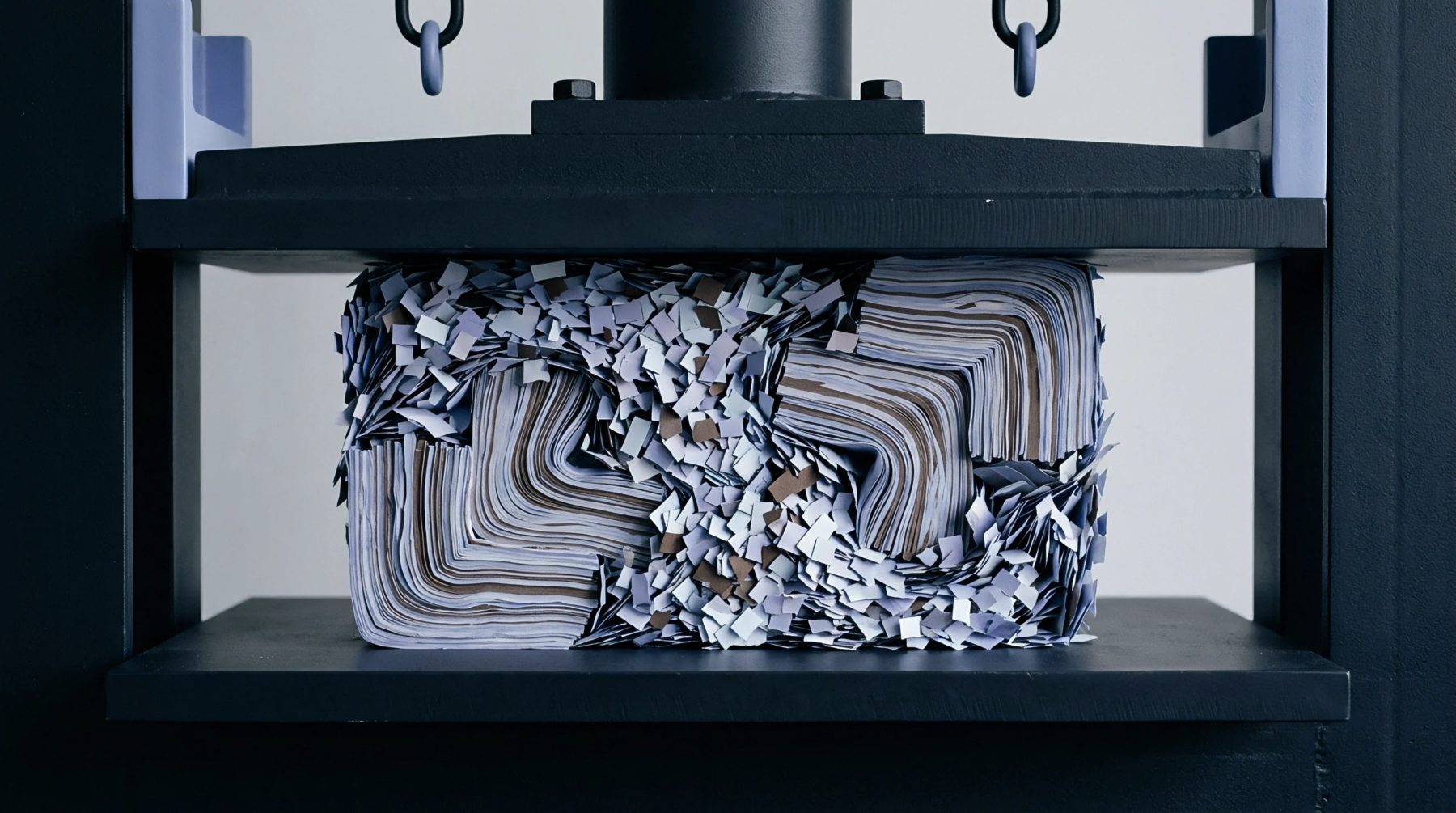
Secondary Fibre
Compressed industrial packaging waste consisting predominantly of post-industrial and commercial corrugated container scrap provides high-yield unbleached furnish for secondary papermaking. Classifying recovered material as a grade 305 scrap bale requires compliance with recognized recovered paper specifications such as the Institute of Scrap Recycling Industries standards for sorted corrugated containers. The material contains discarded corrugated boxes, sheets and boxboard cuttings with kraft, semi-chemical or recycled medium facings.
Stringent contamination ceilings govern the allowable proportion of non-paper materials, prohibitives and outthrows within each tied unit. Packaging mills feeding hydrapulpers rely on this standard furnish to produce recycled testliner and fluting media.
Bale Composition
Standardized procurement rules enforce strict limits on moisture, prohibitive contaminants and total non-corrugated outthrows. A typical grade 305 scrap bale must contain less than one percent prohibitive materials such as plastic films, glass, metals and wax-coated boards. Total outthrows, including folding carton chipboard, newsprint and chemical packaging bags, are restricted to under five percent of total bale mass.
High moisture content above standard commercial levels triggers invoice price penalties or outright consignment rejections at the mill receiving deck. Steel wire ties secure the compressed rectangular bales to withstand transport handling, forklift staging and intermodal shipping.
Repulping Performance
Recycled paperboard manufacturers depend on consistent secondary fibre quality to maintain paper machine drainage and finished sheet strength properties. Consuming furnish from a grade 305 scrap bale delivers long unbleached softwood fibres that support burst strength, ring crush resistance and short-span compression strength. Pulping systems utilize high-consistency rotors, coarse junk traps and multi-stage screening systems to isolate and eject rogue contaminants before pulp refining.
Excessive wax coatings or hot-melt adhesives generate micro-stickies that foul paper machine forming wires, dryer felts and press rolls. Proper sourcing and moisture auditing protect mill operations from fiber yield losses and unplanned maintenance shutdowns.