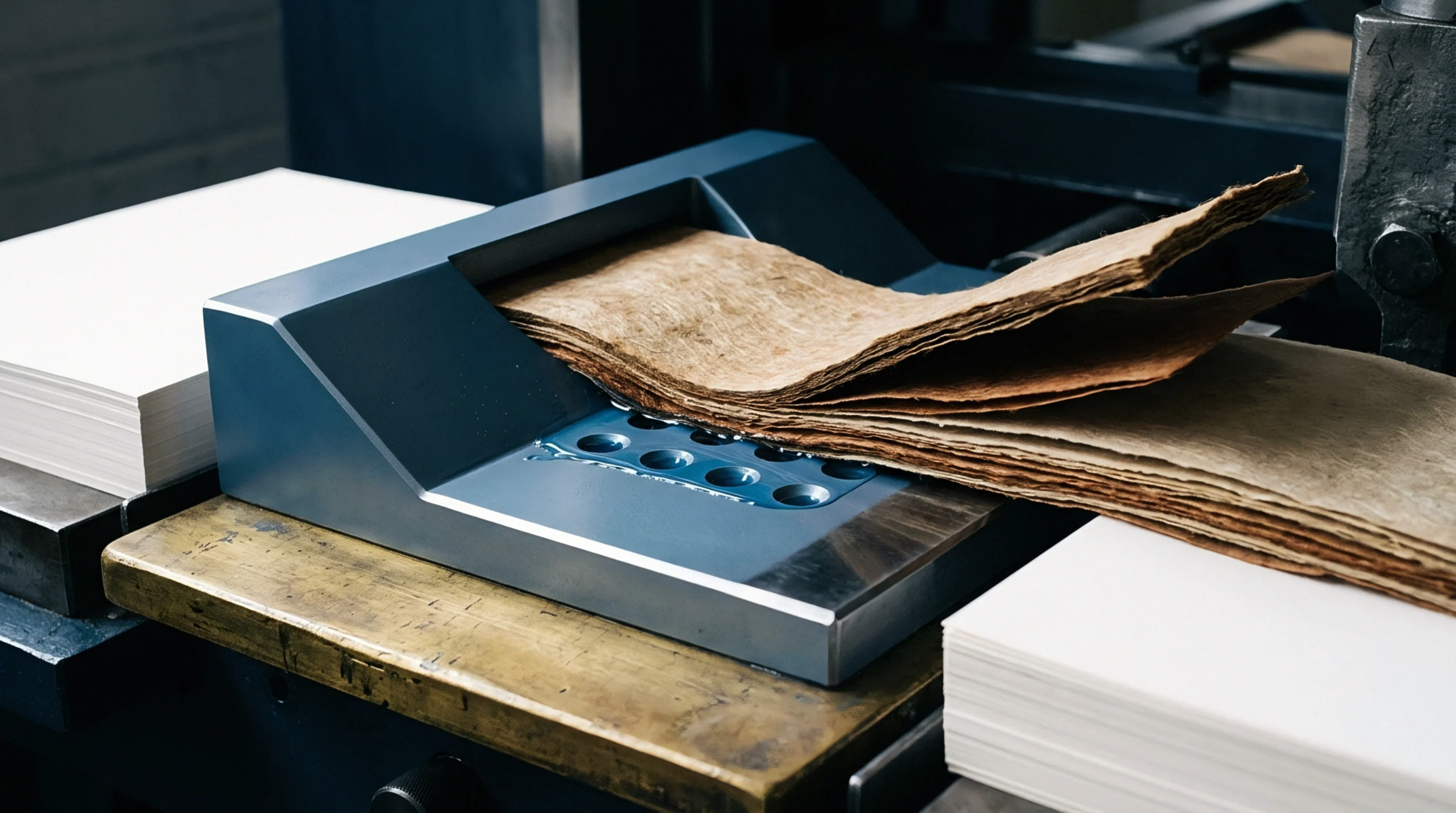
Pulp Blend
Inclusion of short-fibred deciduous wood pulp into a furnish primarily composed of long-fibred coniferous stock. Hardwood dilution alters the physical properties of the resulting sheet by filling the voids between larger softwood fibres. A smoother surface and higher opacity for the finished paper are the primary results.
Structural Impact
Blending these different fibre types allows a mill to balance surface quality with mechanical strength. While hardwood dilution improves printability and ink holdout, the process typically reduces the overall tear strength and folding endurance of the substrate. The short fibres provide more bonding sites which increases the internal bond strength but limits the flexibility of the web.
Careful control of the ratio ensures the sheet remains stable during high speed offset runs.
Economic Benefit
Purchasing departments monitor this ratio to take advantage of the lower price of hardwood market pulp compared to softwood varieties. Increasing the level of hardwood dilution can reduce the cost of the raw material mix without affecting the functional performance of certain grades. This strategy is common in the production of copy paper and folding boxboard where stiffness and bulk are more important than tensile strength.
Mills must adjust their refining energy to prevent the shorter fibres from washing through the wire during formation.