Mechanical Correction
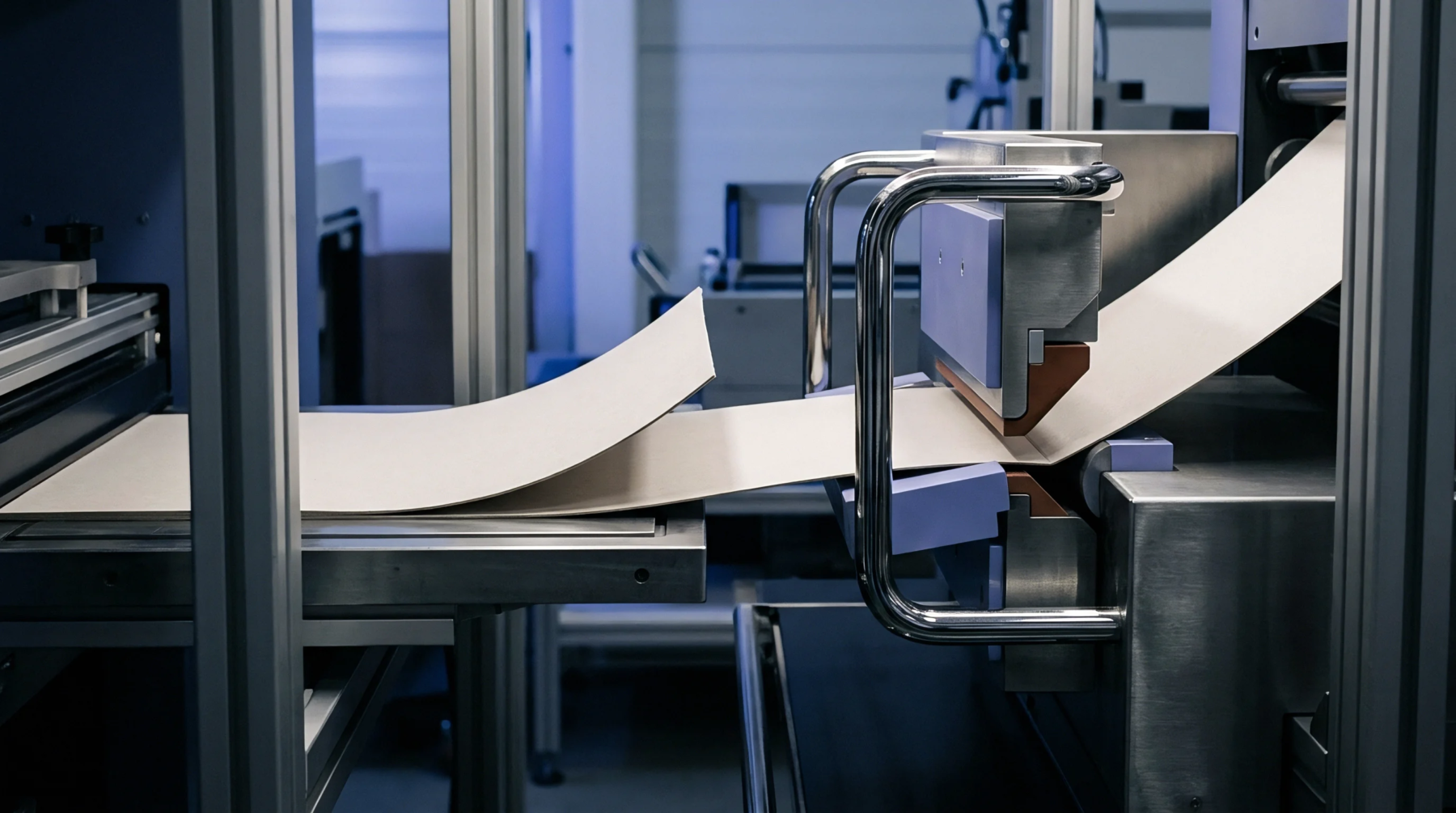
Web-fed printing presses utilize a tension-based apparatus to force paper back into a flat state after moisture and heat alter the moisture content during drying. Inline decurling happens through a series of counter-rotating rollers that introduce a reverse bend against the direction of the original curl. This mechanical action forces the cellulose fibres to relax their memory and prevents jams in downstream post-press finishing equipment.
High-speed folding and inserting machines require perfectly level substrates to maintain registration. Consistent output quality depends on the precision of the roller gap adjustment which dictates the severity of the counter-bend applied to the paper.
Thermal Interaction
Variations in ink coverage create differential moisture absorption across the sheet width, often causing sheets to pull away from a true plane. Inline decurling manages this distortion by applying a controlled arc that compensates for the stress imbalance. Converters adjust the contact pressure depending on the specific weight and grain direction of the stock currently running through the line.
Heavier substrates necessitate a greater deflection angle to overcome internal structural resistance compared to lightweight sheets that respond readily to minimal force. Sensors located at the exit gate monitor the flatness of the web and provide feedback to the actuators that dictate the final pressure settings for the assembly. Proper management of this variable reduces waste in high-volume production cycles where paper handling speeds exceed several hundred meters per minute.
Operational Boundary
Limits of performance exist where excessive tension introduces micro-cracks or weakens the surface strength of the coating layer during the bending process. Mechanical failure occurs if the radius of the rollers remains too tight for the tensile limit of the specific grade or grammage. Operators calibrate the assembly to a baseline that balances the need for flat transit with the physical integrity of the substrate.
Proper configuration ensures that finished stacks remain stable on pallets without edge rippling or curling in storage. Successful implementation maintains the structural fidelity of the sheet until it reaches the point of final use.