Standard Specification
Standardized testing frameworks define laboratory procedures for evaluating the permeability of paper and board substrates exposed to vegetable oils and animal fats. Published in multiple distinct parts, ISO 16532 grease resistance establishes reproducible exposure conditions using penetrants such as palm kernel oil and synthetic oleic acid. The specification delineates surface repellency from continuous barrier holdout by regulating contact times and contact pressures.
Its scope excludes porous saturating papers intended for fluid filtration.
Test Methodology
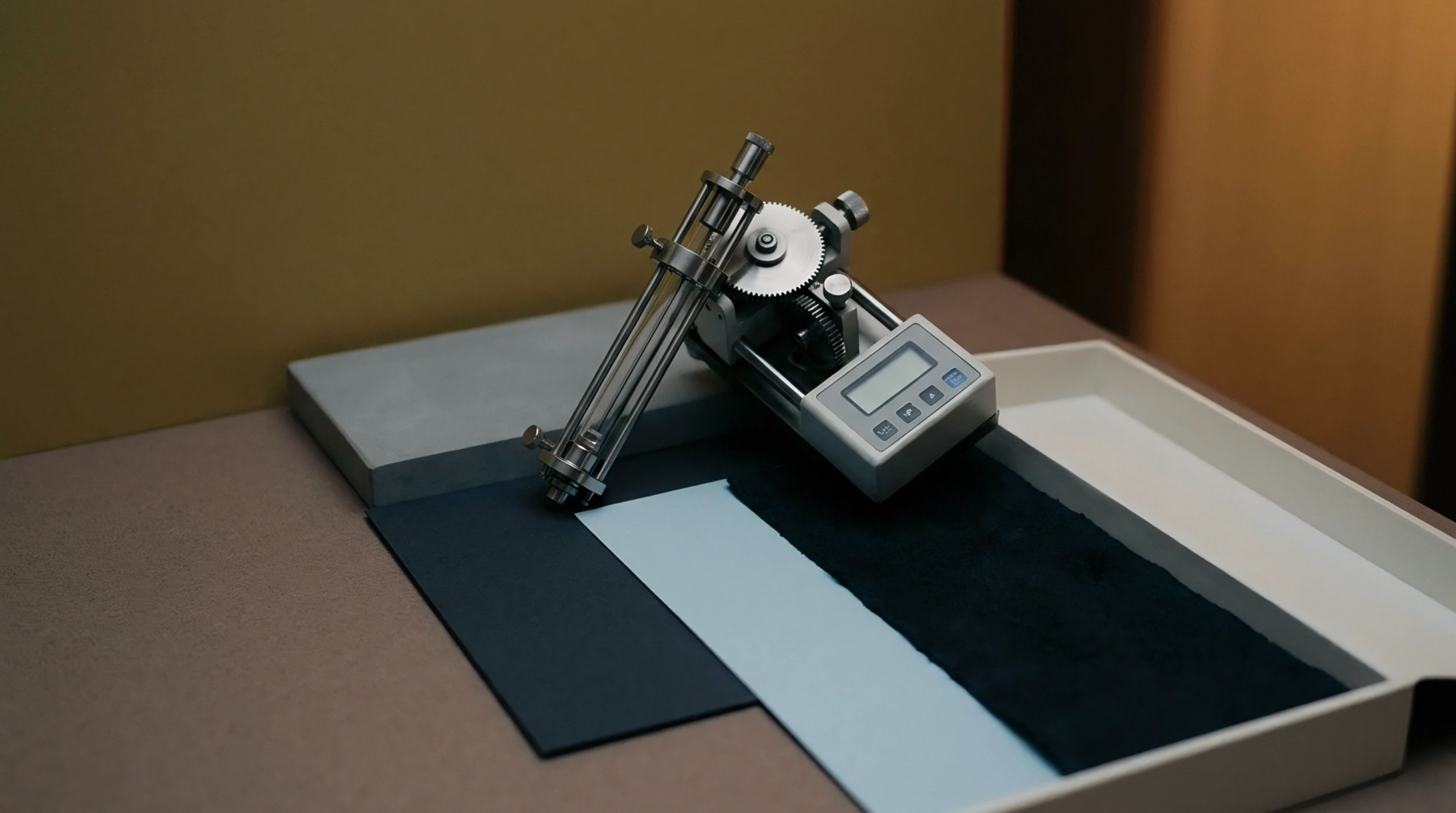
Laboratory protocols under this standard diverge between accelerated stain tests and weighted barrier penetration measurements. Part one applies specified oil drops against sheets held under defined thermal conditioning, tracking the duration until visual staining occurs on underlying absorbent pads. In parallel, part two measures surface absorbency via modified Cobb apparatus assemblies to calculate grease uptake per unit area.
Testing runs cease immediately once pinholes allow fluid migration through the sample caliper. Substrate temperature during testing remains held at twenty-three degrees Celsius unless elevated food-contact simulations require specific thermal modification.
Barrier Performance
Aqueous dispersion coatings and laminated bio-polymers depend on these test thresholds to verify barrier integrity across folded packaging blanks. Creasing samples according to standardized mechanical scoring protocols exposes weak zones where brittle barrier films crack under tension. When grease migrates through these fractures, ISO 16532 grease resistance scores drop from hours to seconds.
Converters specifying paperboard for fast-food packaging require values exceeding eighteen hundred seconds under part one to prevent oil penetration through carton seams during customer handling. Surface sizing agents such as alkyl ketene dimer provide partial repellency against short-term splashes but fail against extended fat exposure under pressure. Crosslinked polymer coatings maintain continuous pinhole-free films that satisfy the highest exposure tiers under the standard.