Softwood Fiber Length Effects on Paper Board Bending Resistance
Long softwood fibers maximize board bending resistance by increasing elastic modulus on outer plies while maintaining the caliper needed for flexural stiffness.
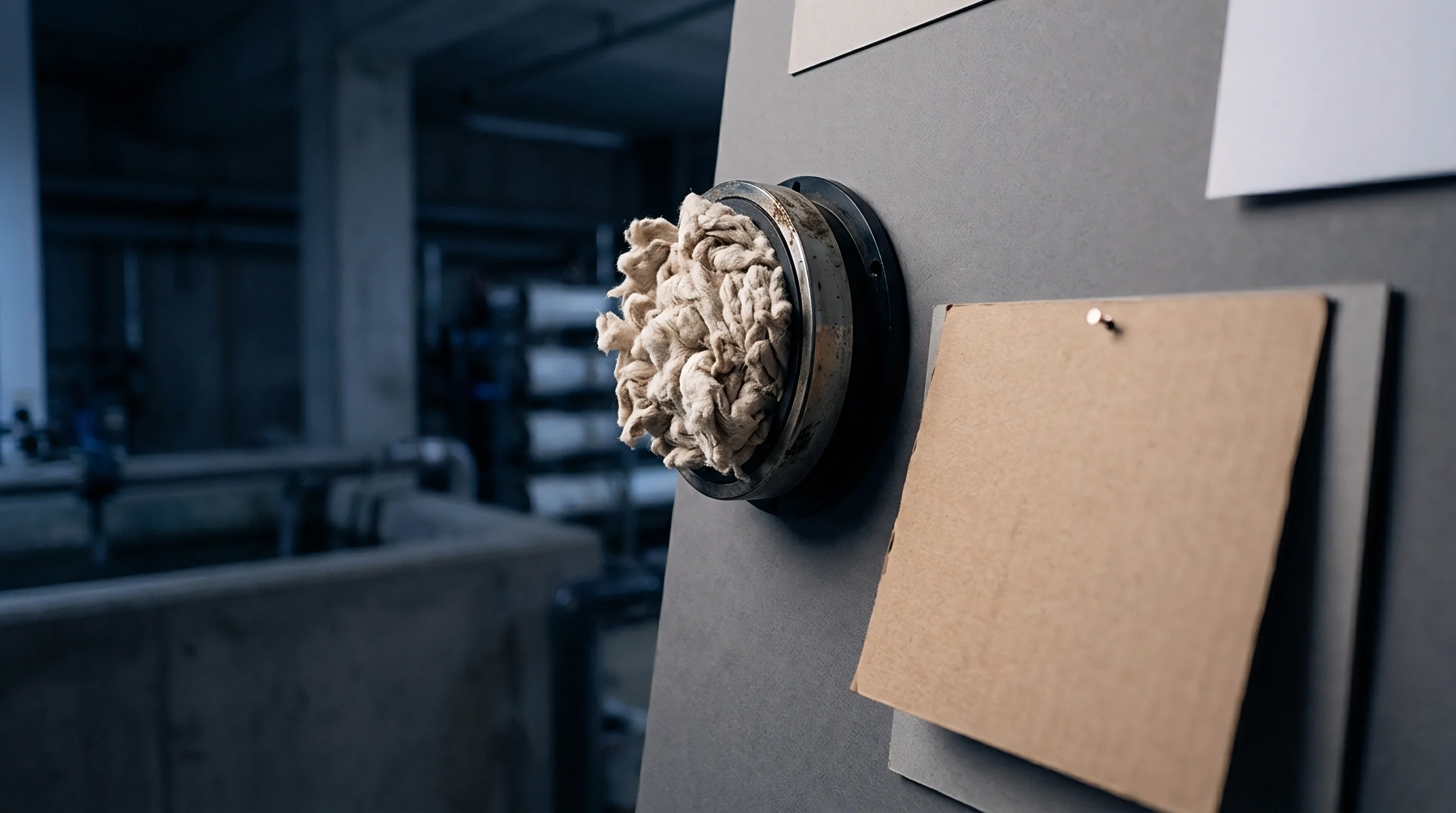

Beam
The load cell of an automated L&W bending tester clamps a 38-millimetre-wide strip of solid bleached sulphate board, conditioned under ISO 187 at 23 degrees Celsius and 50 percent relative humidity, before displacing the free edge through a 15-degree arc across a 50-millimetre span. The instrument records 410 millinewtons of bending resistance in the machine direction. When that same multi-ply sheet runs with a furnish swap in the outer plies, replacing northern bleached softwood kraft with eucalyptus kraft at identical grammage, the recorded value drops to 322 millinewtons.
That loss occurs without any change in overall sheet basis weight. The mechanical mechanism traces directly to the length and cell-wall geometry of the coniferous tracheid.
Bending resistance in paperboard functions mechanically as structural beam deflection. Classical engineering mechanics expresses board bending stiffness, denoted as S sub b, as the product of the sheet elastic modulus and its area moment of inertia. Because paperboard is formed as a layered planar web, that moment of inertia scales with the third power of thickness.
A converter purchasing board buys two distinct mechanical responses: the pure elastic modulus of the individual plies, governed by fiber orientation and network bonding, and the structural thickness separating those plies. Softwood fibers, specifically northern conifers such as Picea mariana and Pinus sylvestris, introduce tracheids averaging 2.5 to 3.5 millimetres in length. Deciduous hardwood fibers rarely exceed 1.1 millimetres.
A 20 percent loss in cross-direction bending resistance causes immediate high-speed cartoning line jams during high-pressure bottom flap closure.
The transmission of axial tension and compression during panel bending depends on stress transfer across inter-fiber hydrogen bonds. Longer softwood fibers develop more contact points per individual structural unit within the fiber network. When an external force acts normal to the board surface, the outermost fibrous layers bear the peak normal stresses.
The upper plane enters pure compression while the lower face stretches in tension. Long coniferous tracheids arrest crack initiation under tension and resist micro-buckling under compressive loads. Shorter fibers slip past one another at lower absolute strain levels, precipitating premature panel creasing and side-wall collapse under warehouse stacking.
Grammage reductions without structural failure demand maximum elastic performance from every gram of furnish. Sourcing directors who accept hardwood substitution on outer liner plies observe an immediate penalty: the carton converter must increase overall board caliper to compensate for lost modulus, inflating the metric tonnage required to yield a million folding cartons.
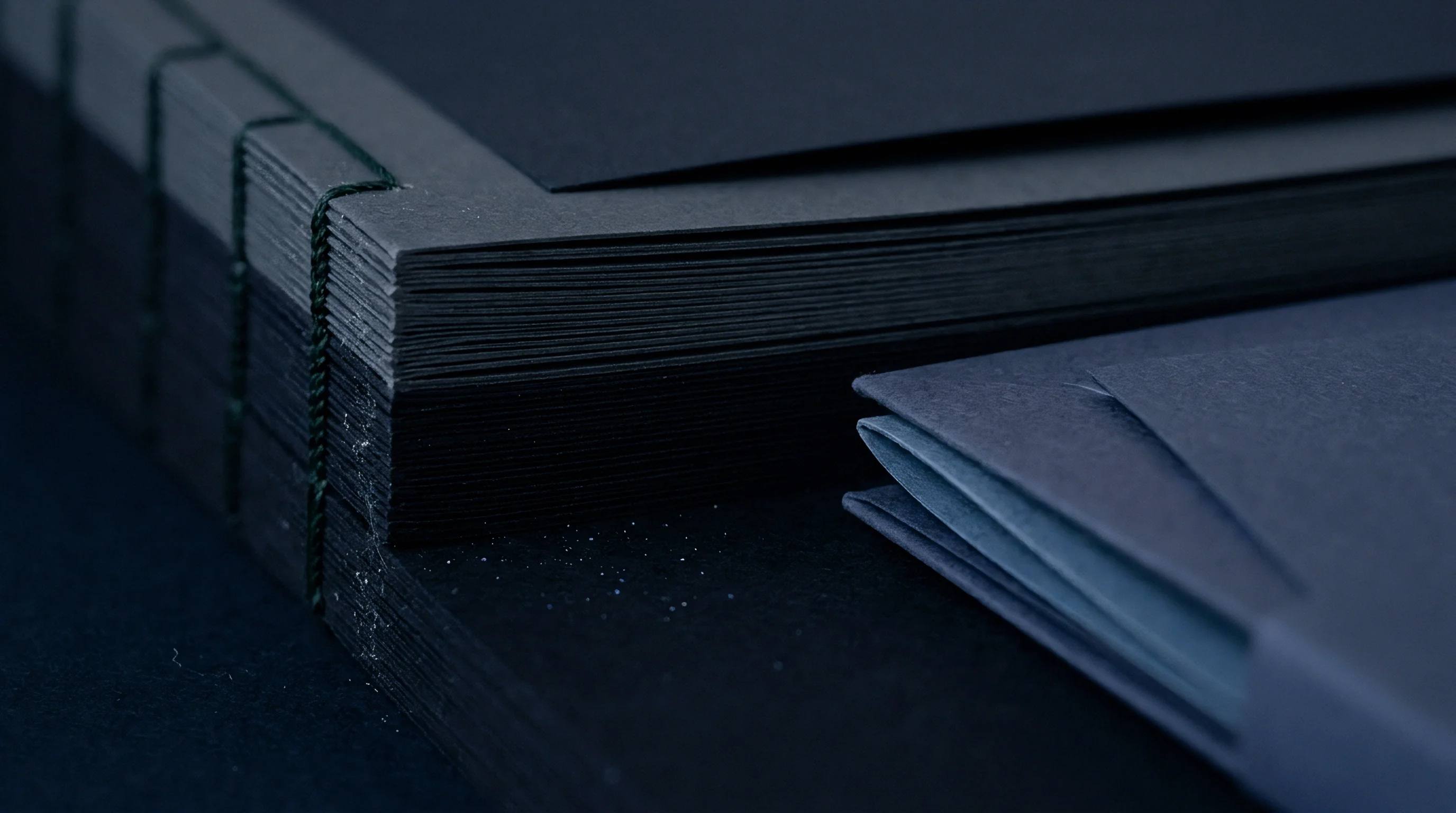
Tracheid
Coniferous tracheid dimensions govern both the sheet packing density and the stress distribution along the fiber axis. A typical Scandinavian spruce tracheid measures roughly 3.0 millimetres in weighted average fiber length, accompanied by a cell wall thickness of 3.5 to 5.0 micrometres and a fiber width of 30 micrometres. Southern pine species from the southeastern United States exhibit even larger coarse geometries, frequently reaching 3.5 to 4.5 millimetres in length with thick, rigid cell walls.
These geometric traits determine how the wet web consolidates on the forming wire and responds to mechanical press nip pressures.
Do Longer Tracheids Increase Elastic Modulus?
Direct tensile stiffness along the sheet plane correlates directly with the weighted average fiber length, designated as L sub w, measured via automated optical fractionators conforming to ISO 16065-1. The Page equation for paper tensile strength formalizes this link: as average fiber length increases, the relative bonded area required to develop full fiber strength decreases. Shorter fibers expend a higher proportion of their length within stress-transfer transition zones near their terminal ends, leaving less axial span to carry pure mechanical stress.
| Pulp Species Origin | Weighted Average Length (mm) | Coarseness (mg/100m) | Elastic Modulus MD (GPa) | Elastic Modulus CD (GPa) |
|---|---|---|---|---|
| Northern Bleached Softwood (NBSK) | 2.75 | 14.2 | 7.85 | 3.45 |
| Southern Bleached Softwood (SBSK) | 3.40 | 24.5 | 6.90 | 3.10 |
| Radiata Pine Kraft | 2.90 | 19.8 | 7.20 | 3.25 |
| Eucalyptus Hardwood Kraft (BEKP) | 0.85 | 8.6 | 5.40 | 2.35 |
| Birch Hardwood Kraft | 1.15 | 11.4 | 6.10 | 2.60 |
Coarseness introduces an opposing mechanical dynamic. Coarse southern pine fibers resist wet pressing compaction, generating high bulk and elevated thickness at the expense of bonded contact area. Fine northern softwood fibers collapse readily into dense ribbons during pressing and drying, maximizing specific bond strength.
The packaging engineer navigates this balance constantly. Northern softwood provides exceptional pure tensile and compressive modulus through dense bonding. Southern softwood delivers caliper preservation, raising the area moment of inertia.
The failure mode under bending loads differs sharply between these furnish selections. Paperboard subjected to two-point or four-point bending tests according to ISO 2493-1 exhibits compressive yield on the concave surface before tensile rupture on the convex skin. Long softwood tracheids display high compressive strength, delaying the formation of shear failure bands across the sheet matrix.
ISO 2493-1 specifies a 15-degree deflection angle across a 50-millimetre free clamping length for standard bending resistance determinations.
The converting floor detects morphology shifts instantly. When converting plants run high-speed blanking operations, boards deficient in long-fiber reinforcement produce ragged creasing lines and fractured top liners during 180-degree pre-breaking routines.
The mill sales representative claims the delivered board conforms to nominal Mullen burst ratings, while downplaying that fiber shortening reduced the machine-direction bending stiffness below the threshold needed for top-load pallet stability.
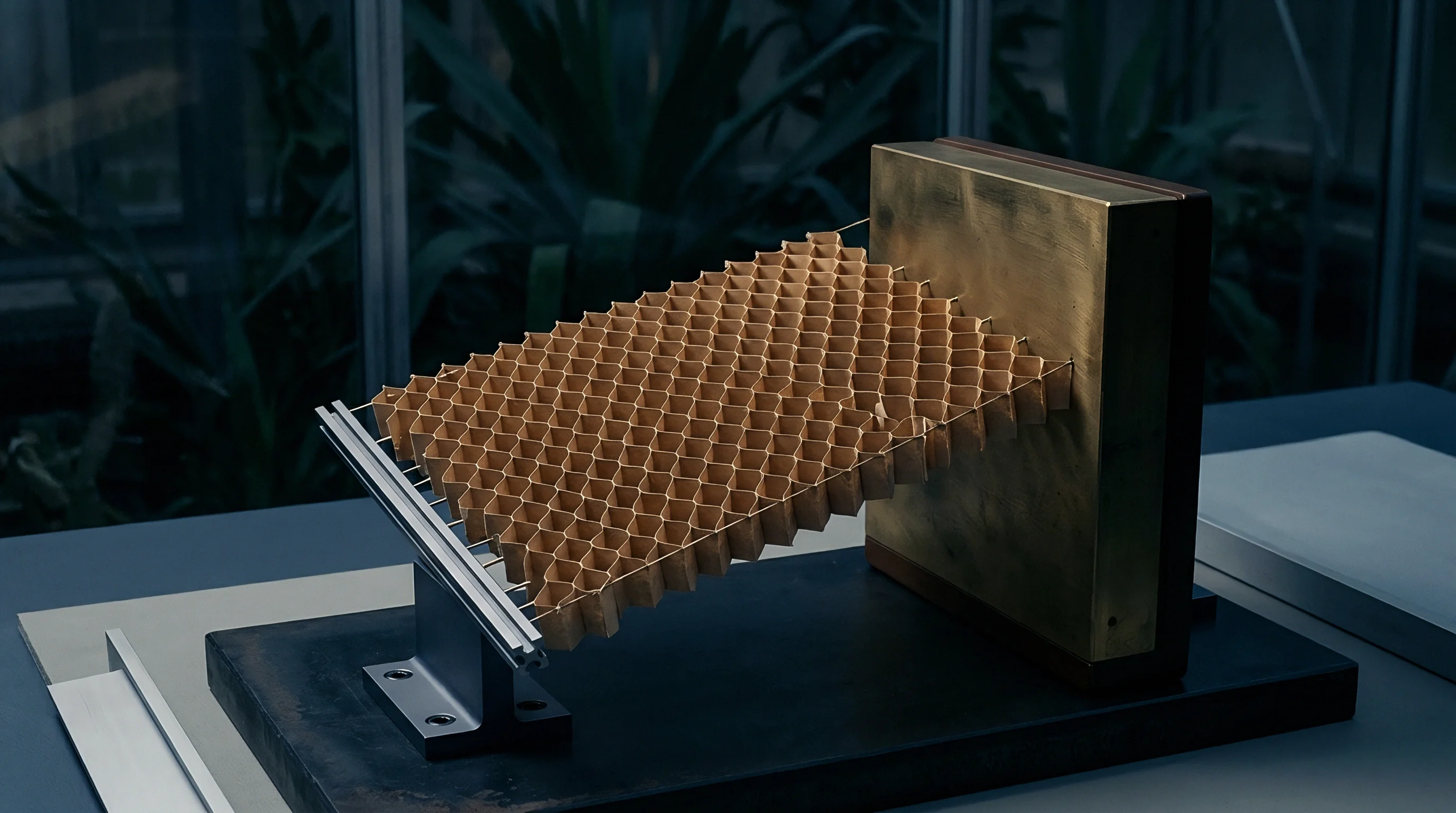
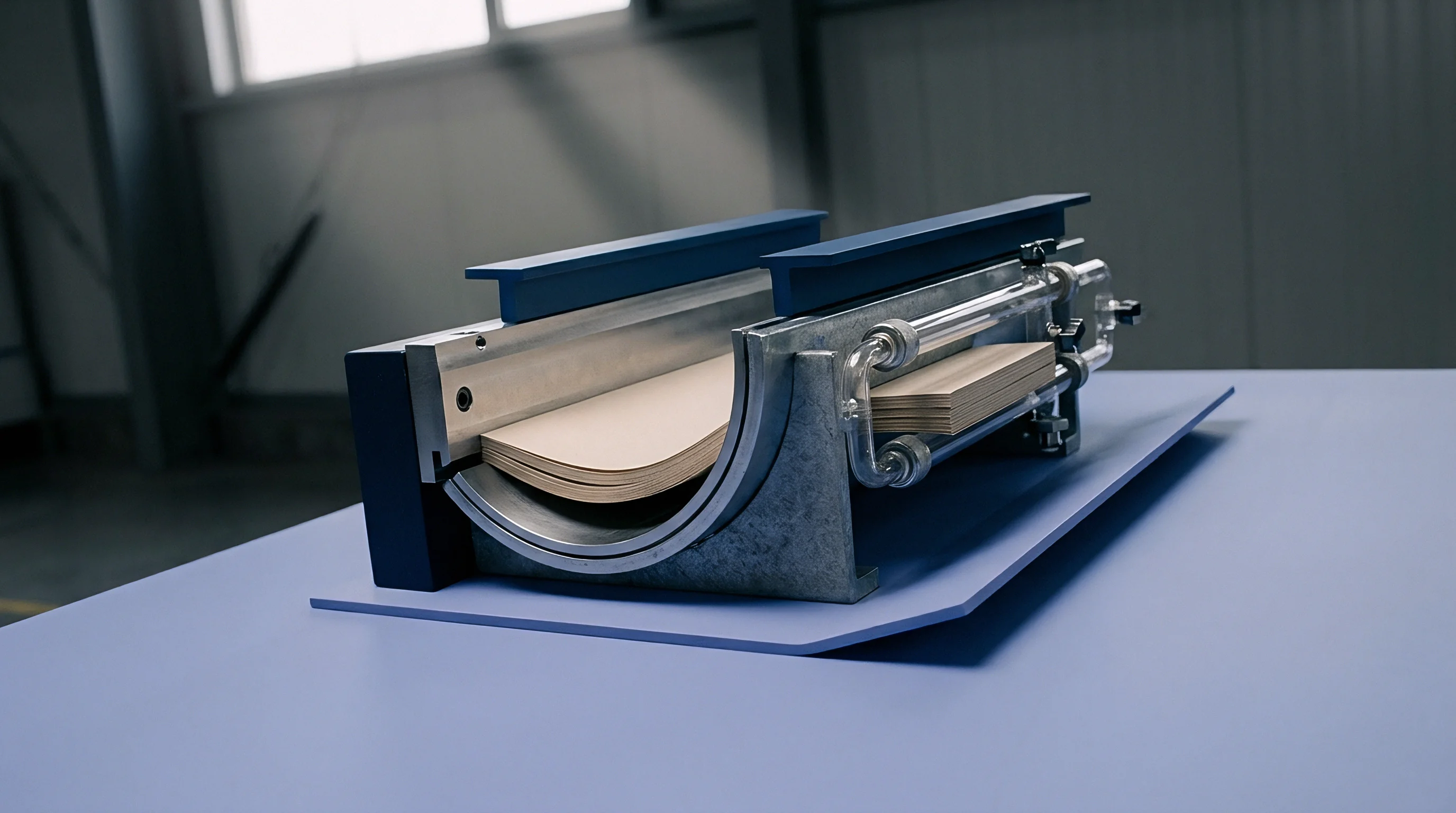
Stratum
Multi-ply paperboard architecture isolates distinct fiber classes within targeted sheet layers to maximize mechanical efficiency. Solid bleached board (SBB), folding boxboard (FBB), and white lined chipboard (WLC) exploit layered distribution principles. Because bending stress increases linearly from zero at the neutral plane to its maximum value at the top and bottom surfaces, furnish placement is decisive.
Outer plies require high tensile and compressive stiffness. The middle core exists primarily to sustain thickness, acting like the shear web of an I-beam.
Which Plies Dictate Resistance under Load?
Placement of long softwood fibers in the outer liners produces the highest possible bending resistance per gram of total sheet weight. Hardwood fibers, groundwood, or recycled mechanical pulps serve effectively inside the core plies where normal bending stresses remain negligible.
Consider the structural consequence of furnish allocation. Retaining bleached softwood kraft in outer plies comprising 25 percent of the total board grammage maintains outer-skin tensile modulus. The core ply can then incorporate high-yield chemi-thermomechanical pulp (CTMP) or deinked recovered fiber to maintain thickness.
If a mill shifts softwood fibers from the liner into the center plies to ease surface printing roughness specifications, structural bending resistance drops precipitously.
| Construction Profile | Top Liner Furnish (60 gsm) | Core Furnish (180 gsm) | Bottom Liner Furnish (60 gsm) | Caliper (µm) | Bending Resistance MD (mN) |
|---|---|---|---|---|---|
| Structural FBB | 100% NBSK | 100% CTMP | 100% NBSK | 460 | 540 |
| Compromised FBB | 100% Hardwood Kraft | 100% CTMP | 100% Hardwood Kraft | 455 | 415 |
| Homogeneous SBB | NBSK / BEKP Blend | NBSK / BEKP Blend | NBSK / BEKP Blend | 380 | 335 |
| Standard WLC | 100% Bleached Kraft | 100% Mixed Waste Core | 100% Recycled Kraft | 410 | 290 |
| Data reflects laboratory sheet formations pressed at 400 kPa and conditioned at standard 23/50 laboratory atmospheres. | |||||
The tabulated figures reveal why folding boxboard with CTMP middle plies outperforms solid bleached board in bending resistance at identical grammage. High-yield mechanical pulp creates exceptional structural bulk. NBSK outer layers act as rigid structural flanges.
That synergy creates an efficient flexural cross section.
The shear resistance of the interface separating these strata prevents early delamination under dynamic bending. Softwood fibers contribute substantially to internal bond strength, measured by the Scott Bond test according to TAPPI T 569. When boards bend, shear stresses peak at the neutral axis.
Inadequate long-fiber entanglements between the liner plies and core layers lead to catastrophic z-directional cleavage before maximum bending resistance is reached.
Placing long-fiber softwood kraft on exterior surfaces maximizes flexural rigidity while economizing total virgin furnish consumption.
Standard packaging procurement agreements stipulate that bending stiffness properties must adhere to ISO 2493-1 tolerances of plus or minus five percent across delivered rolls, invalidating supplier shipments that fail this threshold following unannounced furnish downgrades.
Refining
Mechanical refining alters raw softwood tracheids through fibrillation, fiber shortening, and swelling. Delivered virgin pulp passes through rotating refiner discs fitted with cast metal bars separated by gaps measuring 0.15 to 0.50 millimetres. The specific edge load, expressed in watt-seconds per metre, governs whether the bars fibrillate the fiber wall or slice the tracheid into short fragments.
Mills running softwood furnishes for packaging grades operate at low specific edge loads between 1.5 and 2.5 J/m. High edge loads cut the tracheids indiscriminately.
Stock preparation choices induce distinct physical transformations across the fibrous network:
- Internal fibrillation loosens the rigid coaxial cell-wall lamellae, increasing fiber flexibility and promoting consolidation under press nips.
- External fibrillation peels back outer wall fibrils, raising specific surface area to create more contact sites for hydrogen bonding.
- Tracheid shortening reduces average fiber length, lowering drainage rates on the wire while compromising the ultimate tear and bending metrics.
- Fines generation increases water retention value, producing a denser sheet that sacrifices flexural thickness for tensile strength.
Excessive refining degrades board bending resistance by attacking board caliper. As Schopper-Riegler wetness climbs past 30 degrees SR, the fibers collapse completely during drying. The resulting sheet exhibits elevated tensile modulus, yet the dramatic drop in thickness reduces the area moment of inertia.
Because bending resistance depends cubically on thickness and linearly on modulus, a ten percent loss in sheet caliper requires a thirty-three percent increase in elastic modulus merely to maintain parity.
Consider a stock preparation worked calculation for an outer-ply liner furnish targeting maximum flexural rigidity. A mill refines Scandinavian softwood kraft from an incoming freeness of 720 Canadian Standard Freeness down to 550 CSF. This treatment raises the elastic modulus of the ply from 5.8 GPa to 7.9 GPa, representing a 36 percent gain.
Sheet density rises concurrently from 620 kg/m³ to 710 kg/m³. For a constant 70 gsm liner ply, the thickness compresses from 112.9 micrometres down to 98.6 micrometres. The resulting contribution to outer-fiber bending capacity changes by a net factor of 1.05.
Pushing refining further to 400 CSF increases modulus to 8.4 GPa but collapses thickness to 88.0 micrometres, yielding a net factor of 0.94. The over-refined furnish now delivers inferior bending performance despite higher tensile test readings.
Recycling loops accelerate this destruction. Secondary fiber plants using recycled corrugated containers or folding cartons handle tracheids that were already cut during initial converting and further degraded in repulping. Fiber length analyzer data shows recovered softwood fibers shortening from 2.8 millimetres to below 1.6 millimetres over four recycling cycles.
The recycled web cannot re-establish the elastic network necessary to resist carton bulging during automated vertical product filing.
Can advanced low-intensity enzymatic refining pre-treatments prevent tracheid cutting while achieving sufficient inter-fiber bonding at elevated machine run speeds?

Deflection
The real performance test occurs on the packaging line and inside the pallet distribution warehouse. When heavy corrugated shipping cases or individual folding cartons bear static compressive loads, board bending resistance determines box compression test (BCT) survival. McKee formulas for carton top-load capacity link container compression strength directly to edge crush test (ECT) values and machine-direction and cross-direction bending stiffness.
Softwood fiber length drives both variables.
Warehouse failure patterns trace back to specific mechanical deficiencies within the board furnish:
- Panel creep collapse begins when cartons under sustained vertical load develop out-of-plane bulging along sidewall zones lacking sufficient cross-direction bending resistance.
- Crease blowout occurs during glue-sealing when board with brittle, short-fiber outer plies ruptures at the scoring hinge rather than rolling cleanly.
- Flap spring-back happens on high-speed cartoning machines when low-modulus furnish lacks the elastic force needed to hold hot-melt adhesive points during rapid compression discharge.
Quality assurance programs must specify three discrete checks during goods-in auditing: machine-direction and cross-direction bending resistance via ISO 2493-1, weighted average fiber length via ISO 16065-1, and single-sheet thickness using dead-weight micrometer procedures under ISO 534. Relying solely on basis weight permits mills to ship furnish substitutions that undermine mechanical carton integrity without detection on digital floor scales.
A board furnish lacking sufficient long softwood fibers requires higher basis weight to match the panel stiffness of an optimized multi-ply design.
Cost consequences are immediate. Substituting virgin softwood plies with cheaper recycled furnish or unrefined hardwood forces packaging engineers to specify a 350 gsm board where a 280 gsm multi-ply virgin sheet previously met all stacking protocols. The extra 70 grams per square metre translates into roughly 25 percent greater metric tonnage purchases annually for identical package output, along with increased freight and packaging waste compliance fees across target sales regions.
Maintain virgin long softwood fibers on structural board skins to preserve carton geometry under real mechanical loads.