Thickness Measurement
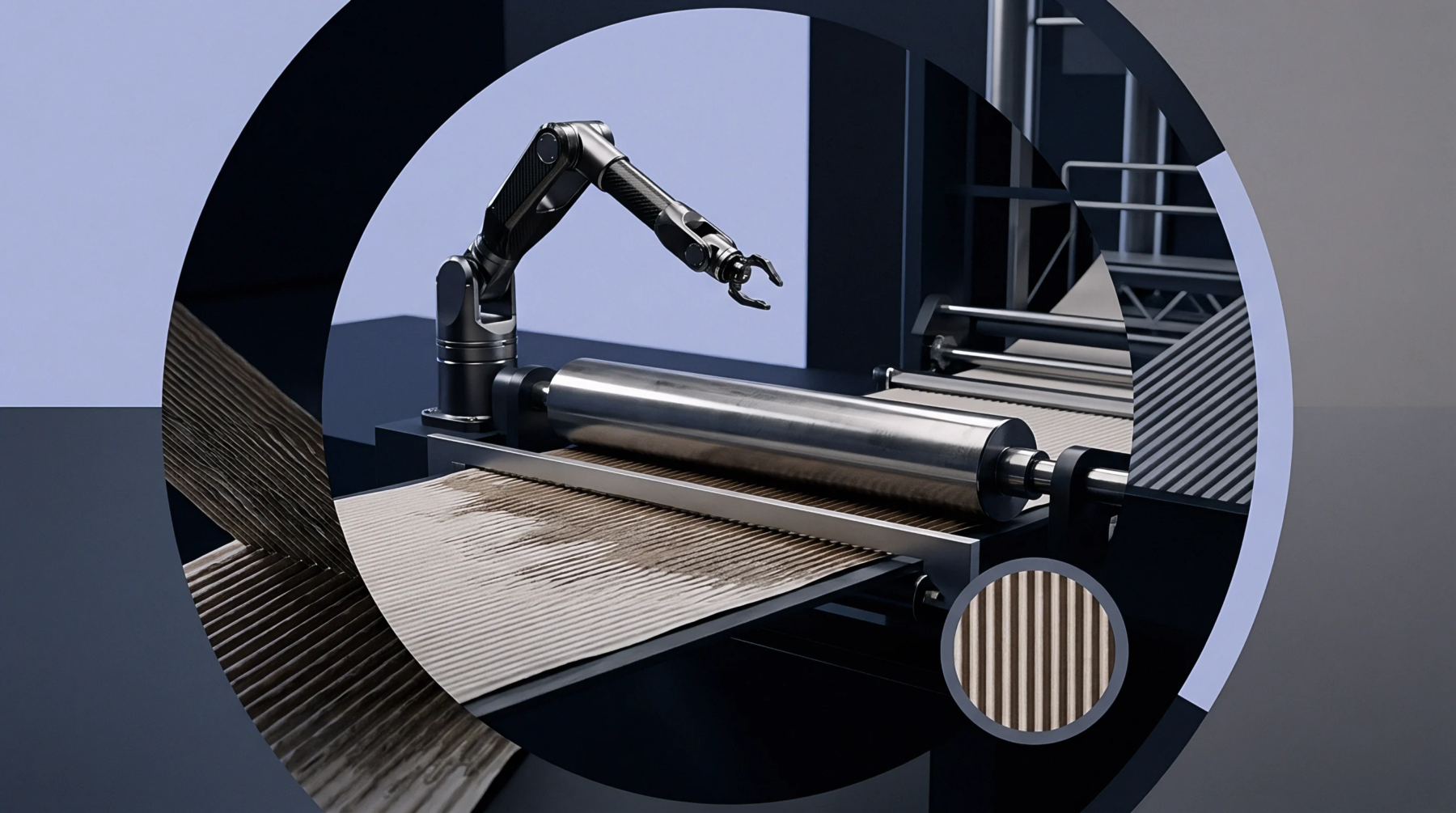
A precision optical gauge determines the thickness of a moving paperboard sheet without making physical contact with the material. By utilizing a laser triangulation caliper, the sensor projects laser beams onto the top and bottom surfaces of the moving web to calculate the distance between them. This approach avoids sheet marking or tearing, allowing for continuous caliper tracking on high speed production lines.
The measurement is effective across all grades of paperboard but requires stable web positioning to prevent errors from sheet flutter.
Optical Triangulation
The sensor heads project a laser spot onto the surface of the paper, and the reflected light is focused onto a digital camera array. As the surface moves closer or further away from the sensor head, the position of the reflected spot on the camera sensor shifts. Calculating these coordinate shifts yields the exact distance of each sensor from the paperboard surfaces.
By combining the distance measurements from both opposing sensors, the system determines the true thickness of the sheet. High frequency measurements filter out high speed web vibrations to ensure sub-micron accuracy.
Surface Correction
Variations in surface roughness and paper brightness can alter the intensity of the reflected laser light. Advanced algorithms compensate for these changes to prevent measurement drift during production. This ensures stable caliper data for quality control across different paperboard grades.