Hardness Calibration
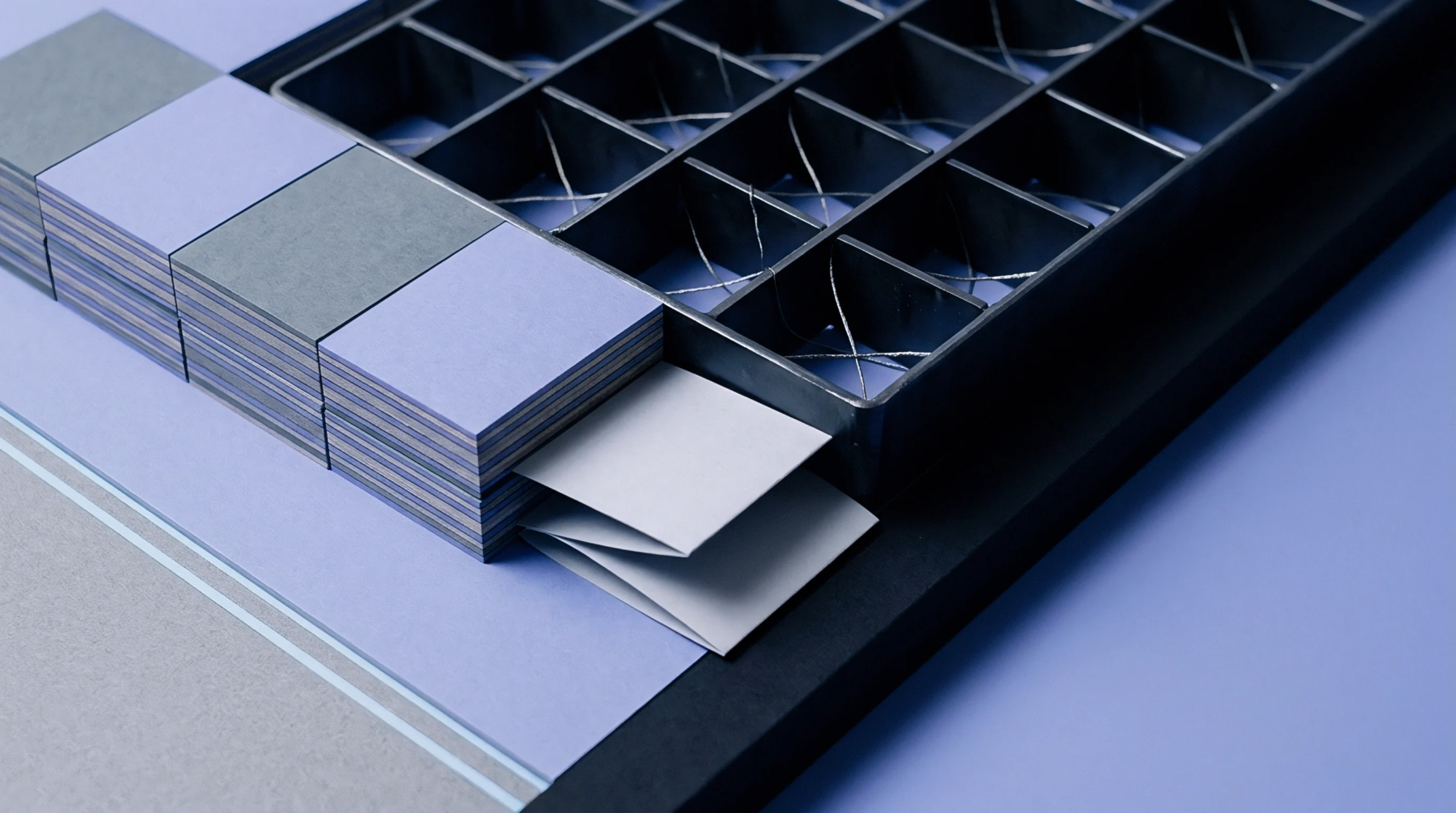
High density polymer blocks stabilize the pressure profile across a flatbed die cutting assembly to ensure uniform force distribution during the strike. A resin counter plate prevents substrate deformation by providing an exact physical mimic of the creasing rule topography. These components distribute tonnage equally across the entire sheet surface to stop localized fiber fracture.
Accurate engagement requires matching the plate height to the specific depth of the counter channel.
Production Tolerance
Manufacturers produce these units from thermoset materials that resist compression fatigue throughout long conversion runs. The resin counter plate maintains dimensional stability under the repeated impact of high speed mechanical presses. Such consistency allows for tighter register between the embossed feature and the printed image.
Variation in material thickness across the plate surface ruins the precision of the fold. Engineers specify these plates when the substrate requires a delicate touch to avoid surface cracking or unwanted score lines.
Die Interface
Precise alignment between the male rule and the female cavity dictates the longevity of the folding performance. The resin counter plate transfers force from the bottom platen directly to the board to create a clean crease without damaging the outer coating. Improper installation of this hardware leads to inconsistent scoring depths or premature fatigue of the cutting rule itself.
Correct settings extend the operational life of the entire tooling package. Heavy pressure cycles eventually wear the edges of the channel, requiring a new plate to return the system to peak functional accuracy.