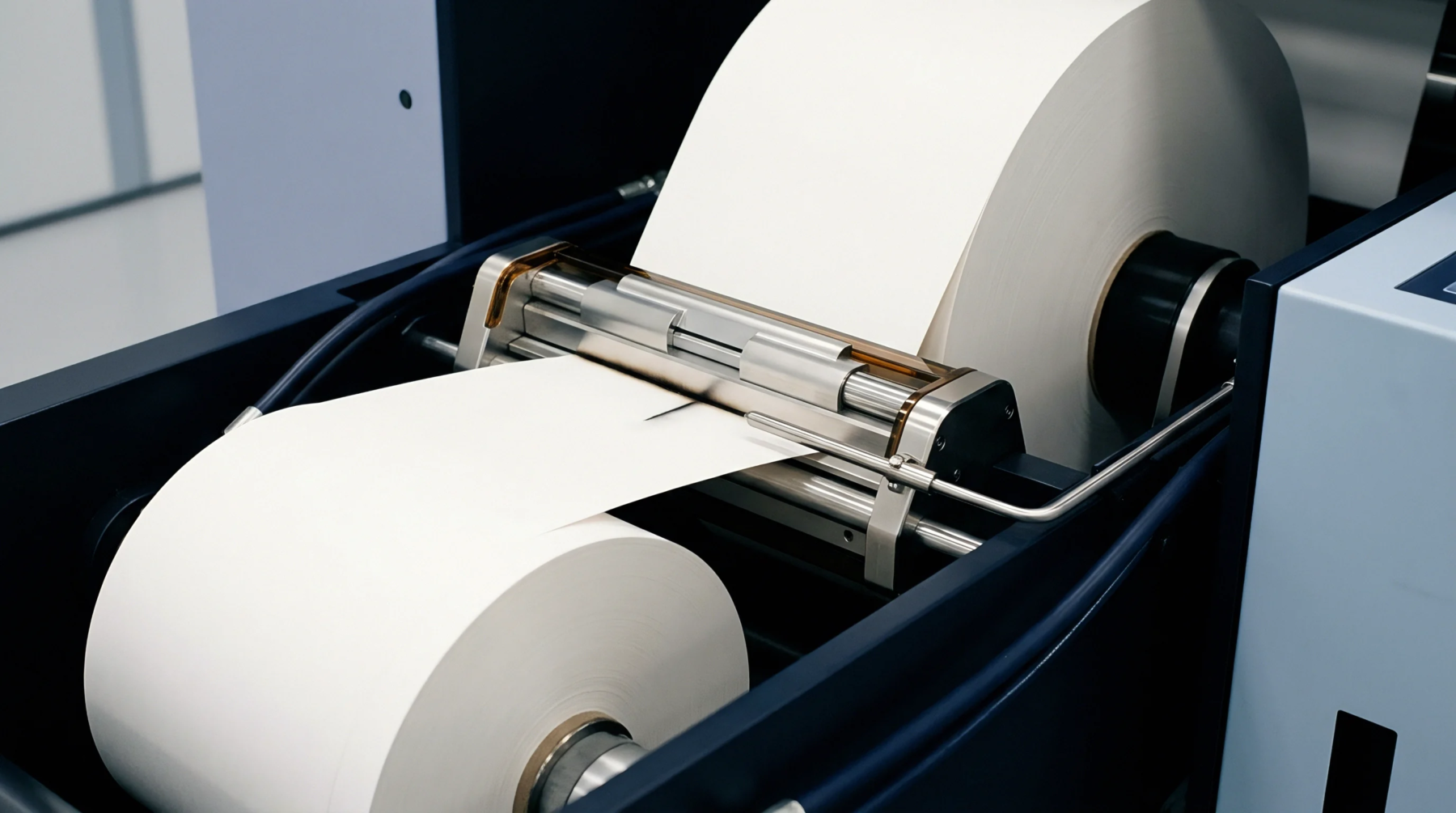
Finishing Process
An industrial machine that unwinds large parent rolls of paperboard and cuts them into narrower rolls before winding them onto individual cores prepares stock for converters and printers. The secondary slitter winder operates at the final stage of mill processing, where it refines roll structure and resolves defects introduced during primary winding. This machinery controls roll hardness, tension, and edge quality to ensure the material performs reliably on downstream printing presses.
Tension Control
Advanced drive systems adjust the speed of the winding drums and the unwind brake to maintain a constant tension profile as the roll diameter changes. When tension is too high, the paperboard stretches and may burst, while low tension leads to loose rolls that sag or dislodge during transport. By adjusting the nip pressure of the rider roll, the machine prevents air from being trapped between the paper layers.
The winder also utilizes curved spreader rolls to keep the slit webs separated and prevent interleaving.
Web Guidance
Aligning the incoming sheet with the slitting knives is necessary to avoid trim waste and ensure uniform roll widths. Automatic edge guides continuously adjust the lateral position of the unwind stand to compensate for any unevenness in the parent roll.