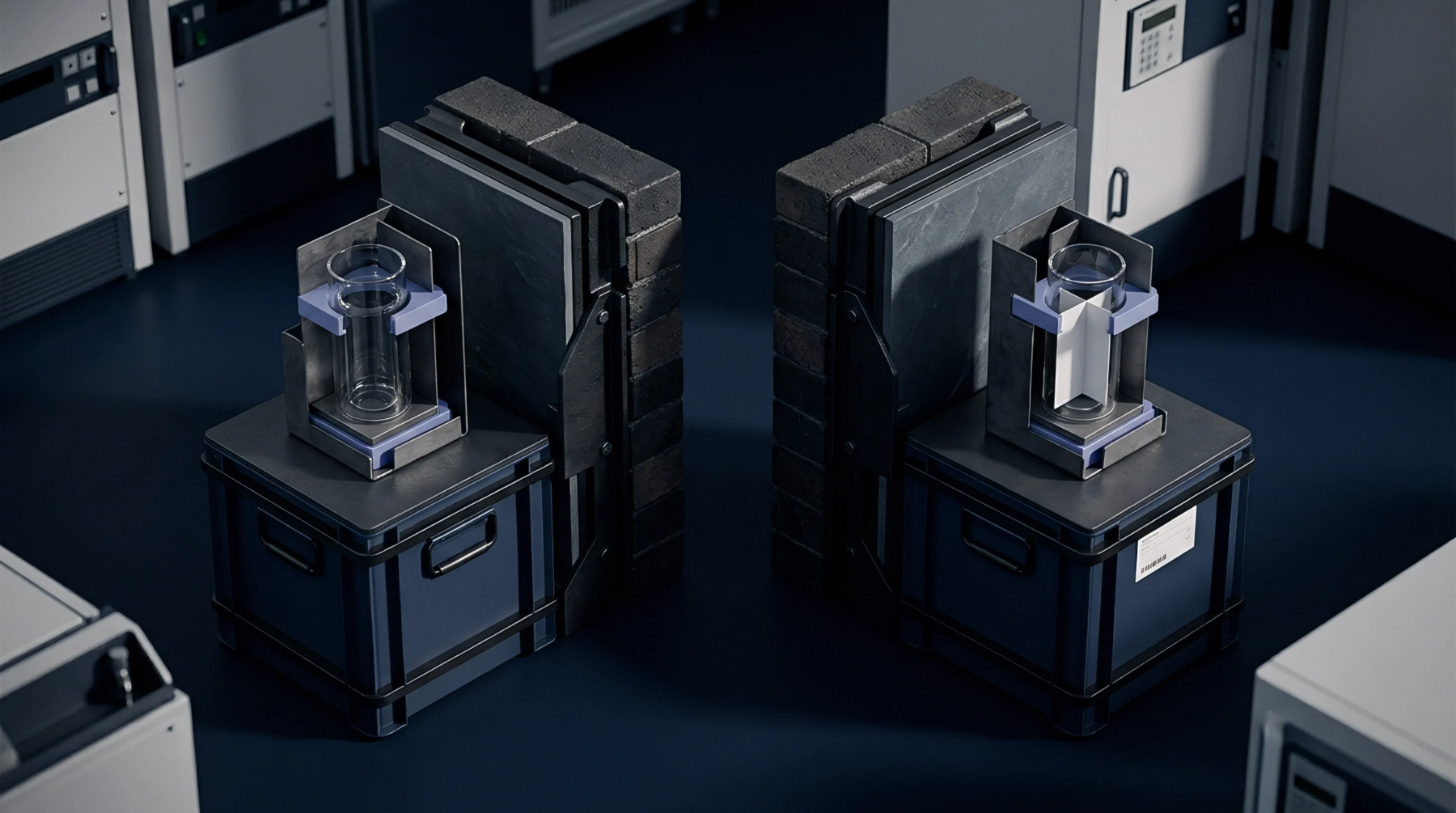
Headspace Gas Chromatography Analysis of Unreacted Acrylate Monomers
Residual acrylate monomer testing via static headspace gas chromatography quantifies unreacted species to verify food contact safety compliance.
A thermodynamic steady state established between non-volatile matrix phases and an enclosed gas volume governs the distribution of mobile volatile molecules prior to analytical sampling. Static headspace equilibrium occurs inside hermetically sealed containers where volatile compounds partition between condensed substrates, such as coated packaging boards, and the remaining gaseous space under constant temperature and pressure. Volatile organic solvents, residual monomers, and odour-generating degradation products migrate outward from fibrous matrices until the chemical potential of each volatile species balances across phase boundaries.
Once thermodynamic equilibrium settles, the partial pressure and gaseous concentration of every target analyte reflect its absolute abundance within the underlying packaging sample. Analytical instrumentation extracts a representative gas aliquot from this equilibrated vapour for chromatographic quantification. This closed condition requires sufficient heating duration and breaks down if container seals permit pressure leaks or if thermal degradation creates new chemical species.
Chemical partitioning within sealed sampling vials follows Henry’s law, dictated by compound-specific partition coefficients. When analysts place printed paperboard specimens into sealed glass vials inside heating ovens, thermal energy drives volatile species out from dense cellulosic fibres and crosslinked overprint varnishes. Polar solvents like ethanol exhibit low partition coefficients in non-polar matrices, vaporising quickly into the headspace, while long-chain hydrocarbons partition less readily into the gas phase.
Incubation temperatures require precise calibration, generally balancing between seventy and one hundred degrees Celsius, to maximise volatile desorption without inducing pyrolytic breakdown of starch coatings or lignocellulose networks. Moisture trapped within paperboard fibres desorbs alongside organic volatiles, elevating total vial pressure and altering equilibrium kinetics unless analysts apply matrix matching standards. Vial incubation times must allow complete chemical equilibration across all sample phases before gas extraction needles penetrate the septum.
Packaging converters utilise closed equilibration testing to confirm that finished board products remain free of organoleptic defects. Confectionery and dairy packaging specifications impose strict limits on trace volatile chemistries to prevent off-odours and taste degradation in sensitive food products. Sealed vial testing isolates residual flexographic solvents, acrylic diluents, and oxidation products like hexanal that arise from rancid vegetable oils used in printing inks.
Technicians establish standard testing conditions, heating board samples for specified durations to generate repeatable gas phase profiles for automated chromatography systems. The resulting headspace data inform press operators when to raise inter-station dryer temperatures or lower printing speeds to eliminate residual solvent retention before final reel slitting. Verifying static headspace equilibrium ensures accurate baseline quantification of volatile contaminants across commercial carton production runs.
Residual acrylate monomer testing via static headspace gas chromatography quantifies unreacted species to verify food contact safety compliance.
Expertise is a utility, not a secret. sentiention™ publishes its working knowledge as open reference: intelligence layer covering the materials it sources, the markets it enters, and the reference that serves both.