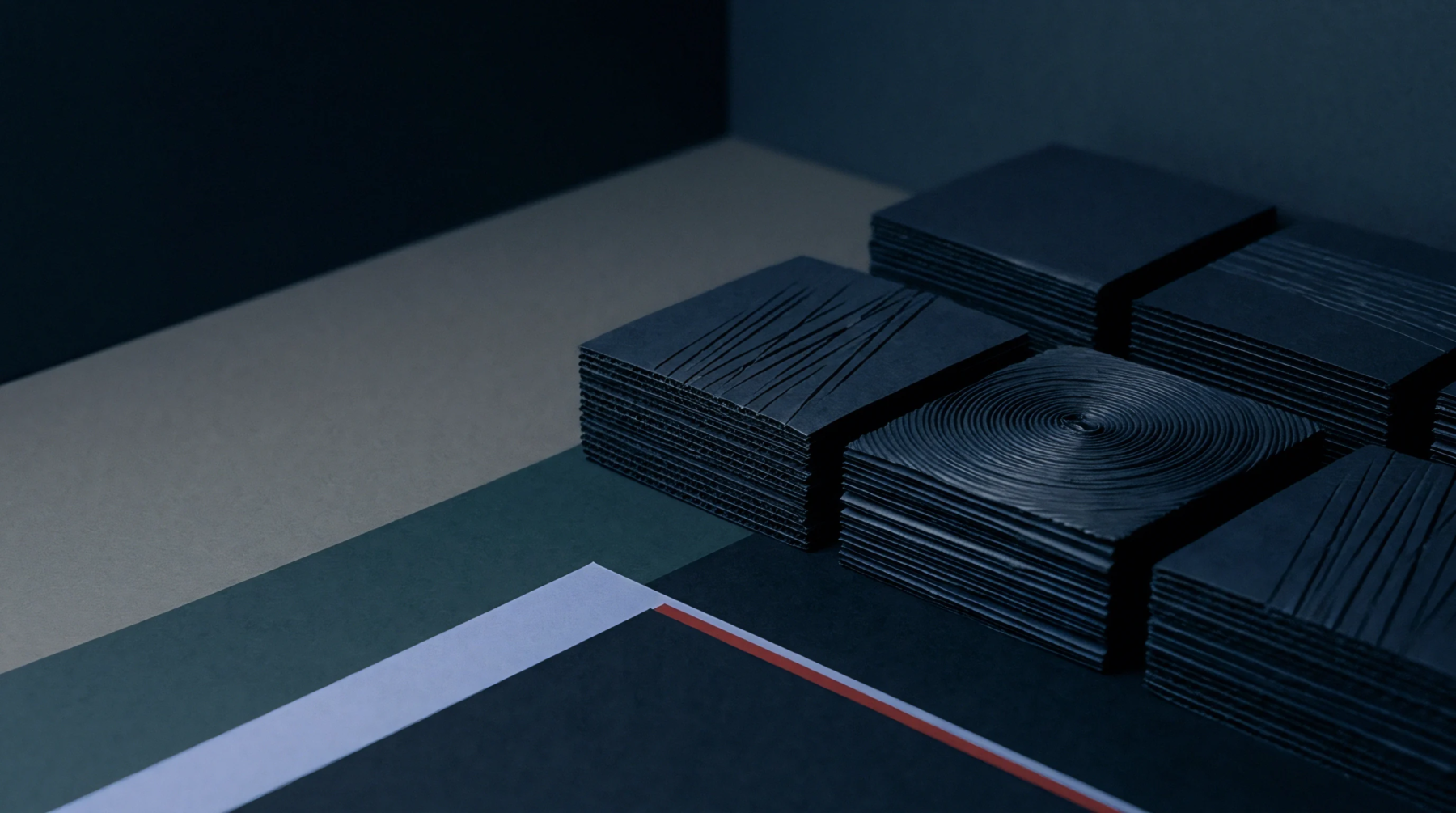
Load Bearing
Ability of a finished package to maintain its shape and protect its contents under specified stress conditions ensures product safety throughout the supply chain. In the context of paperboard, structural integrity refers to the combined effect of compression strength, stiffness, score quality and joint security. This attribute prevents the box from crushing when pallets are stacked in high racks.
This value identifies the physical durability of the entire unit in its finished form.
Design Factor
Geometry of the container influences how force is distributed through the walls. While the basis weight of the paper is relevant, the structural integrity of the design relies on the vertical alignment of the corners. If the manufacturer uses a poor adhesive or an incorrect crease depth, the corners will buckle prematurely.
Engineers use the McKee formula to estimate the top load capacity based on the edge crush test and the perimeter of the box.
Degradation Cause
Environmental exposure often compromises the strength of the cellulose fibres. When humidity rises, the structural integrity of the paperboard decreases because the water molecules weaken the hydrogen bonds. This softening leads to sagging and eventual failure of the stack.
Protective coatings or moisture barriers can help maintain the strength in damp conditions.