Analytical Protocol Requirements for Food Contact Paper Barrier Migration Testing
Paper barrier migration testing requires verified simulant selection, GC-MS detection, functional barrier evaluation, and complete compliance dossiers.

Conditions
Qualifying food-contact paper analytically means setting exposure parameters that mirror real mass transfer into actual food. Unlike synthetic polymers, paper lacks uniform isotropic density. Its porous cellulosic matrix absorbs liquid and diffuses vapor at the same time, which complicates standard plastic migration protocols.
Laboratories adapt standard EN 1186 and Council of Europe recommendations for paper matrices. Poor parameter choices degrade the paper structure during exposure, producing flawed migration numbers that fall apart under regulatory review.
Simulant Selection Principles
Paper interacts with liquid and dry media quite differently from rigid plastics. Fatty simulants like vegetable oil soak into uncoated fibers by capillary action, swelling the fiber network until the matrix collapses. Protocols avoid this by substituting modified polyphenylene oxide ~ Tenax ~ as a dry simulant for dry and fatty foods.
Tenax functions as a sink for volatile and semi-volatile migrants while keeping the cellulosic structure intact. For aqueous and acidic contact, 3 percent acetic acid and 10 percent ethanol remain the standard liquid simulants in single-side testing cells.
Mass transfer dictates compliance. When testing papers meant for alcoholic drinks or aqueous fatty emulsions, 95 percent ethanol or iso-octane are used as substitutes. The solvent choice changes how the substrate swells; iso-octane extraction runs on shorter timelines because the solvent penetrates polyolefin barrier layers rapidly.
Contact modes must be chosen carefully to prevent edge absorption. Submerging unsealed swatches directly into liquid extracts compounds from cut edges and inflates migrant yields. Single-side cells restrict exposure to the food-contact surface, keeping diffusion dynamics realistic.

Thermal Exposure Matrices
Testing protocols set temperature and exposure times based on how the packaging will actually be stored and used. Long-term ambient contact translates to 10 days at 40 degrees Celsius in Tenax or liquid simulants. Hot-fill and warm applications use 70 degrees Celsius for 2 hours, while microwave and bake-in packaging require testing up to 175 degrees Celsius with Tenax.
Pushing past the glass transition temperature of a functional coating during accelerated testing causes structural relaxation that never happens in real shelf conditions.
Surface-to-volume calculations translate raw mass into regulatory concentrations. European compliance models rely on a standard ratio of 6 square decimeters of packaging per 1 kilogram of food, though real formats ~ especially small sachets or dry food cartons ~ run much higher surface-to-mass ratios. Reports typically give results in milligrams per square decimeter alongside figures converted to milligrams per kilogram of food for the specific geometry.
| Simulant Type | Physical State | Standard Test Method | Temperature and Duration | Target Migrant Classes |
|---|---|---|---|---|
| Modified Poly(phenylene oxide) | Porous Solid Powder | EN 14338 / EN 1186-13 | 40°C for 10 days / 60°C for 10 days | Mineral oils (MOSH/MOAH), plasticizers, photoinitiators |
| 95% Ethanol | Liquid Solvent | EN 1186-14 (Substitute) | 20°C for 4 hours / 40°C for 10 days | Low-polarity synthetic oligomers, resin acids, additives |
| Iso-octane | Volatile Organic Solvent | EN 1186-14 (Substitute) | 20°C for 30 minutes / 40°C for 2 days | Non-polar functional barrier components, wax fractions |
| 3% Acetic Acid | Aqueous Acidic Solution | EN 1186-3 (Single-side) | 40°C for 10 days / 70°C for 2 hours | Heavy metals, primary aromatic amines, wet-strength agents |
| Distilled Water | Pure Aqueous Liquid | EN 645 / EN 1186-3 | 23°C for 24 hours / 40°C for 10 days | Water-soluble starch degradation products, formaldehyde |
Choosing a liquid simulant for an aqueous barrier paperboard that undergoes surface dispersion produces artificially high extraction figures, often triggering unnecessary re-engineering.


Detection
Quantifying volatile and non-volatile migrants from paper structures requires high-resolution chromatography. Gas chromatography paired with flame ionization detection or mass spectrometry isolates hydrophobic compounds, while liquid chromatography with tandem mass spectrometry handles polar, non-volatile species. Gravimetric residue testing offers a rough initial screening, but specific migration analysis is needed to identify individual compounds bound by toxicological limits.

Chromatographic Separation Workflows
Separating target migrants from complex pulp extracts relies on combined gas and liquid phase methods. Coupling liquid chromatography directly to gas chromatography allows precise measurement of mineral oil saturated hydrocarbons (MOSH) and mineral oil aromatic hydrocarbons (MOAH) under EN 16995. The LC step splits extracts by polarity into saturated and aromatic fractions, feeding them straight into GC columns to map carbon number distributions.
Flame ionization detectors then quantify the total chromatographic humps across specific ranges, typically C10 to C35.
Standardized extraction using poly(2,6-diphenyl-p-phenylene oxide) at 60 degrees Celsius for 10 days establishes an upper boundary of 0.5 milligrams per kilogram food for mineral oil aromatic hydrocarbons.
Take a practical evaluation of a 350 grams per square meter recycled paperboard with a 15 micrometer dispersion coating meant for dry cereal. Working against a target limit of 0.5 milligrams per kilogram of food for C16 to C35 mineral oil aromatic hydrocarbons, a 1 square decimeter sample is exposed to 4 grams of Tenax for 10 days at 40 degrees Celsius. Extracting the Tenax with hexane and running coupled LC-GC gives a peak area equal to 1.2 micrograms of total aromatic hydrocarbons.
Converted at the standard 6 square decimeters per 1 kilogram of food ratio, that translates to a migration level of 0.72 milligrams per kilogram ~ exceeding the legal threshold and indicating barrier failure under test conditions.

Mineral Oil Hydrocarbon Quantification
Recycled fibers regularly carry saturated and aromatic hydrocarbons from residual inks and adhesives. Protocols call for clean-up through activated silica gel columns to strip out natural biogenic compounds like plant waxes and terpenes, which elute in the same window as mineral oils. Skipping this clean-up leads to false positives that misidentify natural wood constituents as synthetic oil contamination.
- Solvent Extraction Purity relies on high-purity chromatographic solvents verified through blank runs to avoid baseline noise in trace analysis.
- Internal Standard Addition incorporates markers like bicyclohexyl and cholestane to track recovery rates across extraction steps.
- Silica Gel Fractionation separates natural biogenic olefins from petroleum aromatics before gas chromatography.
- Limit of Quantitation Verification verifies sensitivity down to 0.1 milligrams per kilogram of food across target substance groups.
Clean extraction cells prevent artifacts, while photometric and mass spectrometers need calibration against certified reference materials to stay consistent across test batches. PFAS compounds, historically added for grease resistance, require dedicated LC-MS/MS protocols with strict background contamination controls built into the instrument fluid lines.
Background gas chromatography peaks arise from natural wood resins as well as residual converting solvents.
Clamp
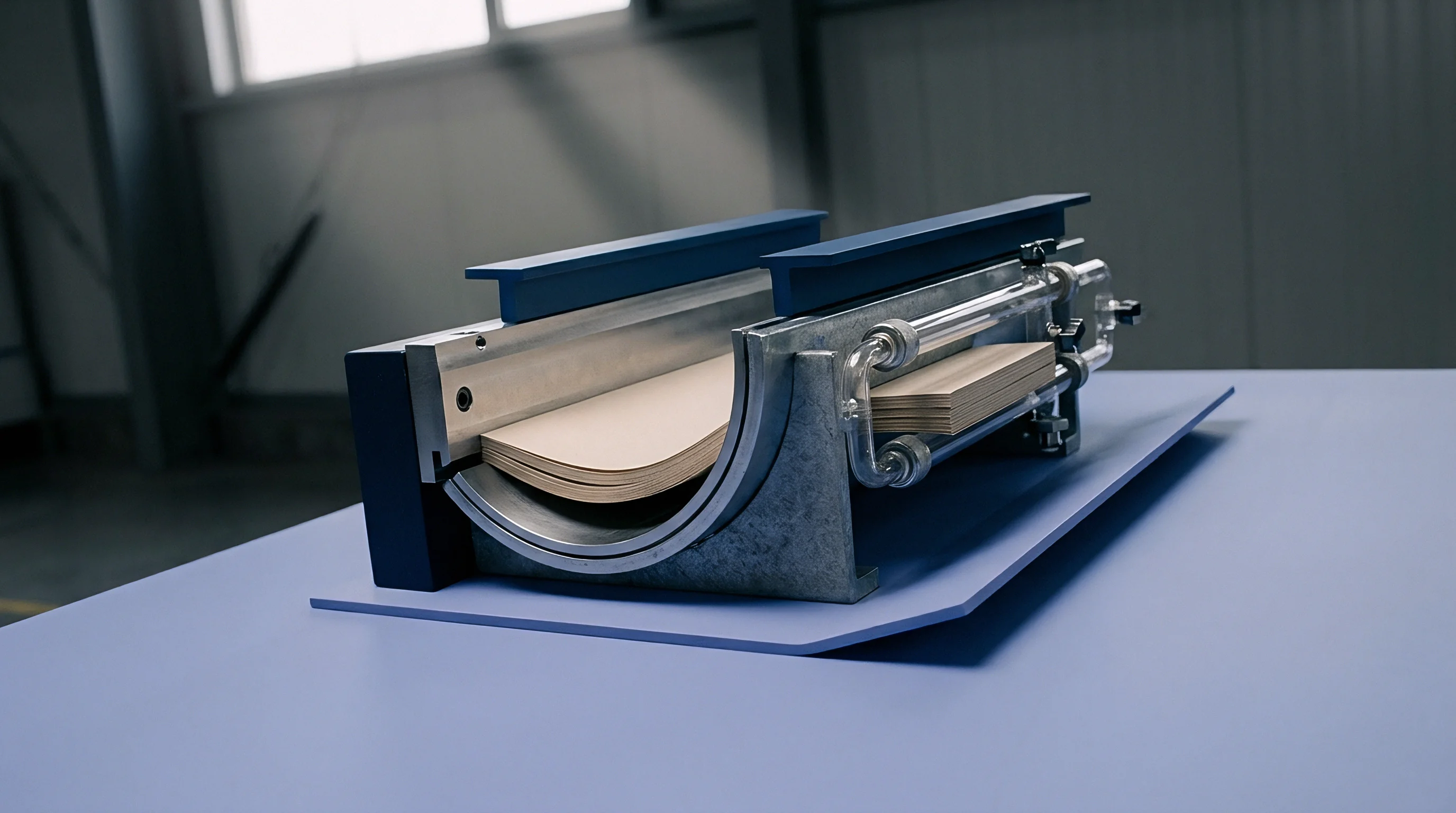
Evaluating barrier continuity requires mounting paperboard samples in specialized analytical cells that isolate the contact surface. These cells use stainless steel rings, fluoroelastomer gaskets, and mechanical screws to clamp specimens tightly against simulant chambers. Any edge leakage ruins the migration data, so clamping pressure must stay even around the perimeter to seal against liquids without crushing fragile coatings.

Does Accelerated Migration Testing Predict Real Storage Times?
Elevated temperatures compress long storage periods into workable laboratory schedules. Using Arrhenius activation energy equations, laboratories equate 10 days at 60 degrees Celsius with up to two years of ambient storage at 20 degrees Celsius. However, heating above the glass transition point alters polymer morphology, boosting chain mobility and creating artificial free volume that makes migrant diffusion appear faster than it actually is in real use.
Omitting test cell surface-to-volume ratio scaling under EN 1186 invalidates the migration report for custom package geometries.
Pinhole frequency dictates how long a barrier holds. Thin coatings applied by dispersion or extrusion often harbor microscopic voids, cracks, or fiber inclusions that compromise integrity. Accelerated testing includes liquid dye penetration tests or isopropyl alcohol absorption profiling before exposure, catching physical defects that permit direct convective transport and bypass theoretical diffusion models.

Lag Time Evaluation Mechanisms
Functional barriers delay chemical breakthrough by adding physical resistance inside the polymer layer. The lag time parameter tracks how long a migrating compound takes to cross the barrier thickness and reach steady-state transfer into the food space. Because polymer density controls diffusion speed, tracking lag time requires periodic sampling of the recipient phase through headspace gas analysis or serial simulant extraction.
- Mount the coated paperboard swatch in a dual-chamber analytical cell with the barrier facing the collection chamber.
- Introduce the target migrant solution into the donor chamber at a controlled temperature.
- Sample the collection atmosphere or solvent at set intervals to measure migrant concentration.
- Plot cumulative mass transfer against elapsed time to identify the exact breakthrough point.
- Calculate the effective diffusion coefficient from the barrier thickness and observed lag time.
Standard EN 14338 Clause 5.3 requires quantifying edge migration separately, forcing converters to seal cut box margins during testing.

Discrepancy
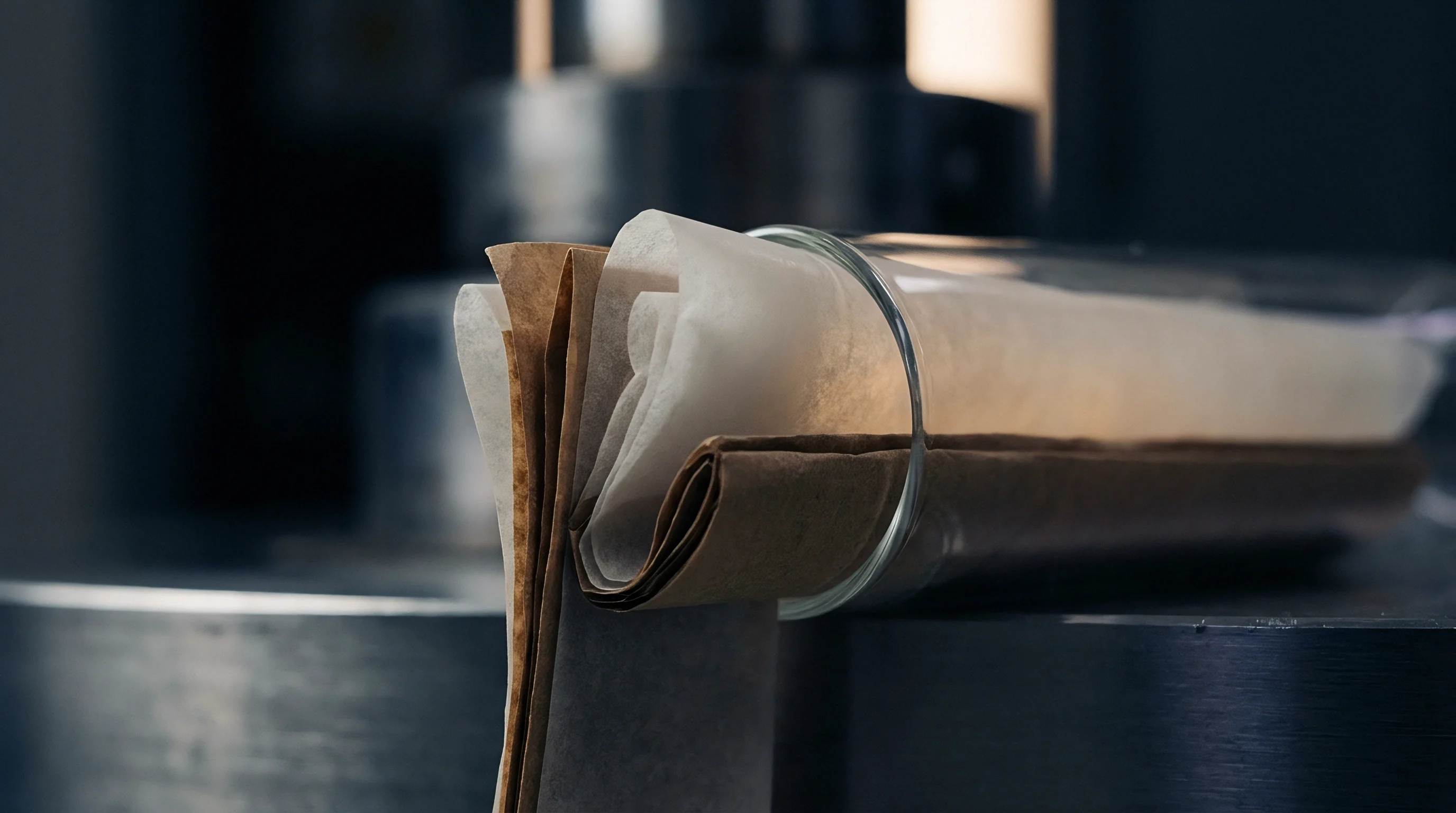
Analytical results from identical paperboard samples frequently vary across independent laboratories. This scatter stems from subtle differences in simulant preparation, cell geometry, baseline integration settings, and sample conditioning. Because paper absorbs moisture from surrounding air, changing weight and pore dimensions during equilibration, protocols mandate strict conditioning at 23 degrees Celsius and 50 percent relative humidity under standard EN 20187 before weighing and extraction.

Matrix Interference Hazards
Natural wood constituents like resin acids and phytosterols elute alongside synthetic targets during gas chromatography, while lignin residues mimic synthetic hydrocarbons. Softwoods processed across Scandinavian mills carry varying resin acid profiles depending on harvest season and sapwood content. These natural shifts alter GC background spectra and generate noise between identical production runs, causing recovery limits to fluctuate.
Blank samples help isolate background peaks. Laboratories run unexposed simulants and uncoated raw fiber to establish proper baseline subtractions. The standard detection limit of 0.5 milligrams per kilogram for mineral oil aromatic hydrocarbons relies on GC-FID following solid-phase clean-up, but baseline noise from low-grade recycled fiber can push that effective threshold to 1.5 milligrams per kilogram.
Similarly, while standard surface-to-volume scaling assumes 6 square decimeters per kilogram based on a conventional one-liter box, applying real pouch dimensions with higher surface-to-mass ratios increases calculated migration values by up to 40 percent.
Recycled fiber furnish requires solvent blanks from unprinted raw stock to distinguish pulp-derived terpenes from external barrier penetrants.
Inter-laboratory variation in quantifying PFAS from aqueous paper extracts reaches 35 percent in published round-robin trials, leaving compliance margins blurred. Given that variance, buyers often specify barrier formulations designed for half the statutory threshold to ensure passing results across different labs. Misidentifying natural plant compounds as synthetic migrants leads to false positives that trigger unnecessary upgrades to full film lamination.

Inter-Laboratory Variance Drivers
Equipment configuration creates measurable shifts in data. Differences in GC injection liners, column wear, and carrier gas flow rates alter compound recovery rates. Standardized protocols use surrogate recovery standards to check extraction efficiency before finalizing quantitative reports.
| Analyte Class | Extraction Solvent | Baseline Noise Origin | Inter-Laboratory CV % | Practical Quantitation Limit |
|---|---|---|---|---|
| Mineral Oil Hydrocarbons (MOSH) | Hexane / Ethanol | Sizing agents, biogenic waxes | 18% to 25% | 0.5 mg/kg food |
| Mineral Oil Hydrocarbons (MOAH) | Hexane / Ethanol | Resin acids, printing inks | 22% to 32% | 0.15 mg/kg food |
| Photoinitiators (Benzophenone) | Acetonitrile | UV ink overspray, ambient air | 12% to 15% | 0.05 mg/kg food |
| Fluorinated Compounds (PFAS) | Methanol (Methanol-d4) | PTFE labware, water supply | 28% to 35% | 1.0 µg/kg food |
| Primary Aromatic Amines | 3% Acetic Acid | Azo dye degradation, wet strength | 15% to 20% | 0.002 mg/kg food |
| CV % indicates coefficient of variation derived from inter-laboratory proficiency studies using accredited EN ISO/IEC 17025 facilities. | ||||
- Cellular Edge Penetration occurs when simulant bypasses barrier layers through unsealed sample edges in liquid immersion tests.
- Solvent Swelling Degradation alters polymer coating density under accelerated testing, giving false readings of barrier failure.
- Thermal Degradation Artifacts form when high temperatures break down native starch or resin additives into volatile fragments.
- Incomplete Baseline Separation obscures specific migrant peaks beneath broad, unresolved complex mixture humps.
Whether high-temperature, short-duration extraction accurately reflects long-term mass transfer from dispersion coatings stored in sub-zero freezers over two years remains an open question.

Receipt
Securing customs entry and regulatory clearance requires full documentation linking analytical results to finished packaging items. A test report by itself is not enough; brand owners and buyers must compile compliance dossiers containing raw test data, accredited lab certificates, chemical inventories of raw materials, and legally binding declarations. Missing documentation halts pallet movement at the border.

Declaration Dossier Architecture
Declarations of compliance bridge raw material chemical profiles and finished packaging under Regulation EC 1935/2004 Article 16. Technical dossiers map every input ~ pulp furnish, internal sizing, wet-strength resins, barrier coatings, and inks ~ against applicable toxicological limits. Converters update these declarations whenever substrate suppliers alter their raw material formulations.
Border health authorities hold shipments carrying blanket compliance statements that lack chemical specific migration data for functional barrier layers.
Customs inspectors reject incomplete documentation. Border enforcement checks that declarations cite specific laboratory reports from facilities accredited under EN ISO/IEC 17025. Broad supplier statements claiming food-grade compliance without attached migration reports regularly fail import qualification gates.

Customs Verification Gates
Import authorities audit technical files against published chemical thresholds. Failing to produce verifiable analytical proof of migration compliance leads to shipment holds, forced warehousing, and mandatory re-export or destruction. Because importers of record carry full legal liability, audit-ready technical files are essential before clearance.
| Food Contact Category | Substrate Configuration | Required Analytical Standard | Mandatory Dossier Deliverables | Regulatory Risk Area |
|---|---|---|---|---|
| Dry Ambient Food Packaging | Recycled Board + Functional Barrier | EN 14338 / EN 16995 | MOSH/MOAH migration report, Tenax breakthrough validation, DoC | Mineral oil breakthrough from recycled core |
| Fatty / Chilled Pack | Virgin Pulp + Dispersion Coat | EN 1186-14 (Iso-octane) | Specific migration of acrylic oligomers, heavy metals, DoC | Pinholes causing oil penetration and barrier softening |
| High-Temperature Bake-in | Virgin Paperboard + PET Lamination | EN 1186-13 (Tenax 175°C) | Thermal degradation volatility spectrum, overall migration, DoC | Polymer cracking and adhesive component release |
| Liquid / Acidic Beverage | Barrier Board + Polyolefin Layer | EN 1186-3 (3% Acetic Acid) | Primary aromatic amine screen, formaldehyde extraction, DoC | Cross-linking agent leaching into acidic liquid |
A compliance declaration holds up under audit only when every listed constituent maps directly back to a matching laboratory report.