Crosslinked Microfibrillar Cellulose Coating Moisture Sorption Mechanisms
Chemical crosslinking limits microfibrillar cellulose swelling and suppresses moisture sorption, retaining water vapor barrier properties under high relative humidity.
Bond
Water molecule uptake in microfibrillar cellulose coatings depends heavily on the spatial distribution of accessible hydroxyl groups within the native glucan polymers. In an unmodified microfibrillar matrix, intermolecular hydrogen bridges form a dynamic, moisture-sensitive network. Atmospheric water vapor penetrates this structure by breaking cellulose-to-cellulose linkages and establishing competitive cellulose-to-water interactions.
Microfibrils push apart under swelling pressure as relative humidity climbs, expanding interstitial free volume and opening high-permeability pathways across the film thickness.

GAB Isotherm Dynamics in Cellulose Nanofibrils
Water sorption behavior across cellulose nanofibrillar coatings follows the Guggenheim-Anderson-de Boer model rather than classical Langmuir monolayer kinetics. The model quantifies sorption using three distinct thermodynamic variables: monolayer moisture capacity, the Guggenheim constant reflecting primary binding energy at specific sorption sites, and the multilayer sorption factor. Unmodified microfibrillar cellulose exhibits a monolayer moisture value between 0.050 and 0.065 grams of water per gram of dry polymer at 23 degrees Celsius.
Crosslinking alters these thermodynamic parameters by consuming free hydroxyl groups and constraining the mechanical flexibility of the fibril network.
Covalent crosslinking shifts the sorption isotherm by altering both the primary monolayer capacity and the multilayer build-up coefficient. When citric acid undergoes thermal esterification with cellulose hydroxyls, the accessible surface hydroxyl density decreases. Water disrupts unmodified fibril networks.
The crosslinked structural matrix resists dimensional expansion, which suppresses the accumulation of clustered water molecules in the secondary sorption regime. High humidity accelerates barrier decay.
Covalent ester linkages replace weak hydrogen bonds within the nanofibril lattice to slow moisture diffusion.
Thermodynamics of Water Vapor Adsorption
The differential enthalpy of adsorption provides direct insight into how crosslinks modify water binding energy. At low relative humidity below 20 percent, water molecules bind to primary sorption sites with high differential heats of adsorption, often exceeding 55 kilojoules per mole. As relative humidity increases toward 80 percent, the adsorption enthalpy decays toward the latent heat of vaporization of pure liquid water, measured at 44 kilojoules per mole at 25 degrees Celsius.
Crosslinked microfibrillar matrices exhibit a steeper reduction in secondary binding enthalpy. The rigid spatial constraint imposed by covalent bridges prevents the structural restructuring required to accommodate multi-layer water clusters.
| Coating Formulation | GAB Monolayer Capacity (g/g) | Guggenheim Constant C | Multilayer Factor K | Cobb 60 Value (g/m²) | WVTR 23°C/50% RH (g/m²/day) | WVTR 38°C/90% RH (g/m²/day) |
|---|---|---|---|---|---|---|
| Unmodified Microfibrillar Cellulose | 0.062 | 18.4 | 0.89 | 42.5 | 12.5 | 480.0 |
| Citric Acid (6 wt% + SHP Catalyst) | 0.041 | 11.2 | 0.74 | 8.2 | 2.1 | 65.0 |
| Ammonium Zirconium Carbonate (5 wt%) | 0.046 | 13.8 | 0.78 | 11.4 | 3.4 | 110.0 |
| Polyamide-Epichlorohydrin (3 wt%) | 0.049 | 14.5 | 0.81 | 14.1 | 4.0 | 145.0 |
| Glyoxal Crosslinked (4 wt%) | 0.043 | 12.1 | 0.76 | 9.8 | 2.8 | 88.0 |
Whether lower crosslink conversion rates at the coating interface promote localized moisture clustering during long-term storage remains an open question for non-destructive imaging methods.
Reagents
Chemical crosslinking of microfibrillar cellulose relies on reactive polyfunctional molecules capable of forming stable covalent bridges between adjacent glucan chains. The selection of chemical bridge agents determines both moisture sorption kinetics and regulatory compliance for packaging intended for food contact. Dicarboxylic acids, polycarboxylic acids, metal chelates, and epichlorohydrin-based resins represent the principal chemical classes evaluated on commercial coater lines.
Covalent Network Synthesis and Catalysis
Polycarboxylic acids react with cellulose hydroxyl groups via a two-step anhydride intermediate mechanism. Citric acid requires thermal activation between 140 and 170 degrees Celsius alongside a sodium hypophosphite catalyst to drive esterification. The reaction forms cyclic anhydride intermediates that condense with hydroxyl positions on cellulose C2, C3, or C6 carbons.
Crosslink density determines swelling resistance. Thermal curing drives ester bond formation. Excessive catalyst application degrades base sheet mechanical strength through localized acid hydrolysis of the cellulose chains.
Ammonium zirconium carbonate operates through a distinct coordination mechanism. During web drying, ammonia and carbon dioxide volatilize, leaving zirconium cations to form coordination complexes with carboxyl and hydroxyl groups on the microfibril surface. This reaction proceeds rapidly at web temperatures above 80 degrees Celsius, avoiding the high thermal energy demands of carboxylic acid esterification.
Hydrophilic matrices absorb liquid water rapidly. Unreacted carboxylic acid lowers pH.
BfR Recommendation XXXVI limits total extractable formaldehyde to 15 milligrams per kilogram of dry paper, revoking market access for non-compliant lots.
Residual Monomer Limits and Migration Verification
Food contact verification requires detailed analytical testing of extractable chemical species from crosslinked matrices. Regulation EU 10/2011 and BfR Recommendation XXXVI establish strict Specific Migration Limits for residual crosslinking agents and their reaction byproducts. Polyamide-epichlorohydrin resins carry stringent limits regarding 1,3-dichloro-2-propanol and 3-chloro-1,2-propanediol, both quantified via gas chromatography with electron capture detection.
Epichlorohydrin residuals mandate tight testing. Free formaldehyde triggers automatic rejection.
Failure modes in crosslinked coating networks stem directly from thermal processing errors and stoichiometric imbalances during slurry preparation:
- Thermal Over-Curing Degradation occurs when coater dryer temperatures exceed 170 degrees Celsius, breaking glucosidic bonds and causing yellowing alongside severe embrittlement of the base paperboard.
- Incomplete Esterification Penetration results from web dwelling times under 2 seconds, leaving unreacted polycarboxylic acid groups that act as hydrophilic moisture traps inside the inner coating layer.
- Catalyst Hydrolysis Volatility arises when excess sodium hypophosphite destabilizes slurry pH below 3.0, initiating premature resin aggregation in the coater supply pan.
- Migration Limit Exceedance takes place when high doses of residual dialdehydes leach into aqueous or acidic food simulants above statutory detection limits.
| Reagent Chemical Class | Curing Web Temp (°C) | Catalyst Required | Target Migration Species | EU Food Contact Limit | Primary Risk Factor |
|---|---|---|---|---|---|
| Citric Acid / BTCA | 150 – 165 | Sodium Hypophosphite | Citric acid / SHP ions | 60 mg/kg food (overall) | Fiber acid hydrolysis |
| Ammonium Zirconium Carbonate | 80 – 105 | None (Thermal volatization) | Soluble Zirconium | 0.05 mg/kg food (SML) | Coater pan precipitation |
| Polyamide-Epichlorohydrin | 90 – 120 | None | 1,3-DCP and 3-MCPD | 12 ppb (3-MCPD SML) | Carcinogenic byproduct migration |
| Glyoxal / Dialdehydes | 110 – 130 | Magnesium Chloride | Free Glyoxal / Formaldehyde | 5.0 mg/kg food (SML) | High residual monomer extraction |
Using unverified crosslinking formulas risks immediate product recall, total inventory forfeiture, and civil liability under European food contact framework regulations.
Pore
Water transport across dense microfibrillar films follows a multi-stage process involving surface adsorption, matrix expansion, and concentration-dependent diffusion. Microfibrillar cellulose coatings create tortuous mass transfer routes by laying down overlapping ribbon-like fibrils. Covalent crosslinking restricts the micro-brownian motion of fibril segments, maintaining tortuosity even under elevated moisture partial pressures.
Fickian Transport and Plasticization Thresholds
At relative humidity levels below 50 percent, water transport in crosslinked microfibrillar cellulose follows standard Fickian kinetics. The diffusion coefficient remains relatively constant, bounded between 1.0 x 10⁻¹³ and 5.0 x 10⁻¹³ square meters per second. Water molecules occupy primary sorption sites without altering the global spatial arrangement of the polymer chains.
Sorption isotherms shift at high humidity.
When relative humidity exceeds 65 percent, water acts as a powerful plasticizer within the cellulosics. Sorption shifts from Fickian diffusion to anomalous or non-Fickian transport. The glass transition temperature of the amorphous cellulose domains drops from over 150 degrees Celsius down to ambient room temperatures.
Water molecules force structural relaxation of the polymer network, accelerating diffusion rates by up to two orders of magnitude in unmodified films.
Can Covalent Crosslinks Prevent Moisture Swelling at Extreme Humidity?
Crosslinking restricts plasticization-induced swelling by establishing permanent molecular anchor points. These covalent ties prevent glucan chain separation under osmotic swelling pressure. Below 75 percent relative humidity, a crosslinked film limits interstitial void growth, suppressing capillary condensation within sub-5-nanometer structural channels.
Water clustering demands adjacent free space; crosslinks compress the available void volume.
Water vapour transmission rate increases by a factor of four when relative humidity shifts from 50 percent to 80 percent at 23 degrees Celsius.
At relative humidity levels above 85 percent, even crosslinked networks experience performance degradation. Swelling pressure eventually stretches covalent bond angles, allowing localized water condensation within larger mesopores. Gravimetric Vapor Sorption testing shows that while unmodified cellulose absorbs over 30 percent moisture by weight at 90 percent relative humidity, a optimized citric-acid-crosslinked film caps total sorption at 14 percent by weight under identical conditioning.
Coating mills frequently attribute high humidity barrier failure to base sheet surface roughness variations rather than incomplete chemical crosslinking across the dry film volume.

Proof
Compliance dossiers for cellulose barrier coatings require verified analytical data covering chemical residue migration, end-of-life disintegrability, and fiber origin. A technical file lacking explicit standard test reports creates severe exposure during customs audits and enforcement inspections. Verification demands clean migration files.
Paper buyers require complete documentation chains before approving finished packaging specifications.
End-of-Life Recyclability and Disintegration Qualification
The European Packaging and Packaging Waste Regulation mandates strict recyclability targets and design-for-recycling criteria. Microfibrillar cellulose barrier coatings must disintegrate during standard hydrapulper operations without leaving un-pulped flakes. Recyclers demand pulper disintegration evidence.
Excessive crosslink density creates water-insoluble films that resist fiber liberation, failing the CEPI repulpability protocol standard.
Industrial compostability under EN 13432 demands complete biological disintegration within 12 weeks alongside final biodegradation into carbon dioxide, water, and biomass within 6 months. High crosslink density impedes enzymatic cleavage by cellulase enzymes. Balancing chemical crosslinking is essential: the matrix must resist water vapor transmission during package shelf life while disintegrating rapidly upon entering industrial composting streams.
Qualifying a crosslinked microfibrillar cellulose coating for commercial food packaging compliance follows a strict sequence of analytical testing and documentation procedures:
- Obtain certified mill test reports confirming dry coat weight uniformity and crosslink conversion efficiency across the manufacturing run.
- Execute overall migration testing in food simulants A, B, and D2 according to EN 1186 at 40 degrees Celsius for ten days exposure.
- Quantify specific migration of residual crosslinkers and catalysts using gas chromatography coupled with mass spectrometry.
- Perform repulpability testing under the CEPI standard method to confirm coarse reject levels remain below fifteen percent by weight.
- Verify chain-of-custody documentation under FSC-STD-40-004 to substantiate sustainable fiber origin claims.
- Compile analytical findings into a formal Declaration of Compliance signed by the authorized regulatory officer.
A higher crosslink density reduces microfibrillar swelling but restricts repulpability during industrial paper recycling.
Chain of Custody and Substrate Traceability
Fiber source verification forms the foundational gate for packaging compliance. Claiming sustainable cellulose origins without valid FSC or PEFC chain-of-custody certification exposes importers to immediate enforcement action under the EU Deforestation Regulation. The scope code on the mill certificate must cover microfibrillar cellulose pulp grades explicitly; generic paperboard certificates do not cover specialized barrier treatments applied off-machine.
Section 4.2 of standard supply contracts assigns all financial liability for customs delays and destruction costs to the packaging converter when specific migration reports fail to match declared lot numbers.
Yield
Translating laboratory microfibrillar cellulose formulations to high-speed paperboard coater operations requires strict control over slurry solids, suspension viscosity, and thermal drying profiles. Microfibrillar cellulose slurries exhibit strong shear-thinning behavior, where apparent viscosity drops dramatically under high coater blade shear rates. Coater operators adjust formulation parameters to balance liquid runnability against final dry barrier performance.

Coater Operational Limits and Coat Weight Economics
Slurry solids content directly impacts drying energy intensity and landed production costs. Unmodified microfibrillar cellulose suspensions become unpumpable above 3.0 percent dry solids due to extensive hydrogen bonding between suspended fibrils. Chemical pretreatments and partial enzymatic hydrolysis raise slurry solids to between 8.0 and 12.0 percent, reducing water evaporation loads in the coater drying section.
Landed cost scales with dry coat weight. Barrier coatings fail under mechanical creasing.
Dry coat weight selection balances moisture protection against unit material cost. A dry coat weight of 3.0 grams per square meter provides adequate grease resistance but fails moisture barrier specifications under high relative humidity. Increasing dry coat weight to 8.0 grams per square meter lowers water vapor transmission rates significantly, but doubles coater thermal energy consumption during the crosslinking cure phase.
| Coat Weight (gsm dry) | Crosslinker Dose (wt%) | Coater Speed (m/min) | Drying Energy (kWh/tonne) | WVTR 38°C/90% RH (g/m²/day) | Added Coating Cost (€/1000 m²) |
|---|---|---|---|---|---|
| 2.5 | 4.0 (Citric Acid) | 950 | 180 | 210.0 | 14.20 |
| 5.0 | 4.0 (Citric Acid) | 800 | 310 | 65.0 | 28.40 |
| 7.5 | 6.0 (Citric Acid) | 650 | 480 | 22.0 | 45.80 |
| 10.0 | 6.0 (Citric Acid) | 500 | 640 | 18.5 | 61.10 |
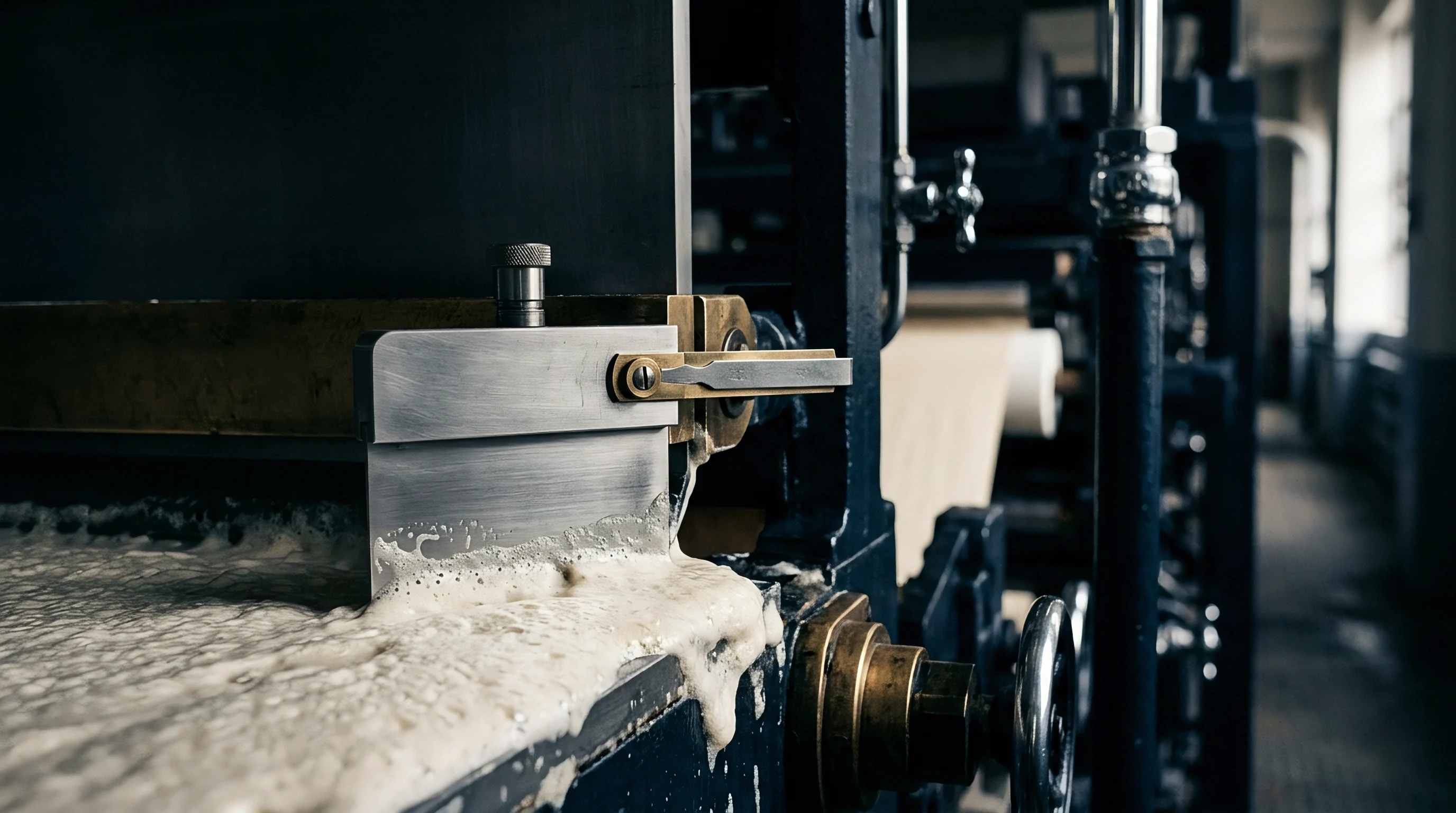
Coater Line Specification Checklist
Verifying coater capability before initiating commercial production prevents catastrophic web breaks, coating streaks, and under-cured barrier lots:
- Slurry Rheology Range requires dynamic viscosity to stay below 1200 millipascal-seconds at high shear to ensure smooth blade leveling.
- Drying Temperature Profile must sustain a web temperature of 150 degrees Celsius for at least 2.5 seconds to achieve full esterification.
- Base Sheet Porosity Match limits air permeance to over 200 Gurley seconds to prevent excessive coating suspension sink-in.
- Wet Pick-up Mass Control holds application variance within plus or minus 0.3 grams per square meter across the full deckle width.
Thicker barrier coatings increase material costs and drying energy without guaranteeing proportional improvements in high-humidity moisture protection.