Microfibrillated Cellulose Dynamic Sorption Isotherm Fundamentals
Dynamic vapor sorption isotherms reveal monolayer binding limits and moisture-induced plasticization thresholds that dictate nanocellulose packaging barrier performance.

Fibril
Cellulosic nanomaterials interact with atmospheric water through surface adsorption and internal absorption mechanisms driven by hydrogen bonding site availability. Microfibrillated cellulose processing exposes high specific surface areas, typically ranging from 100 to 250 square meters per gram, exposing thousands of accessible primary and secondary hydroxyl groups per square nanometer. Water molecules attach to free hydroxyls.
Amorphous cellulose swells rapidly. The arrangement of C2, C3, and C6 hydroxyl groups along the glucan chains dictates the initial monolayer formation during moisture uptake, establishing the fundamental boundary for all barrier applications.
Hydroxyl Accessibility and Surface Area Mechanics
Delamination of wood pulp fibers into nanoscale elements increases the total surface area by two orders of magnitude compared to unrefined chemical pulp. Chemical refining and mechanical shearing expose amorphous domains where water molecules bind without structural hindrance. Crystalline I-beta microfibril cores remain largely impermeable to water vapor, forcing moisture sorption into accessible surface surfaces and disordered amorphous regions.
Dynamic vapor sorption instruments quantify this surface activity by measuring mass changes under controlled relative humidity steps. Free hydroxyl density governs the primary monolayer adsorption capacity, which establishes the baseline for swelling behavior and physical dimensional changes in thin coatings.
The specific surface area of refined nanocellulose directly dictates its initial moisture sorption rate regardless of fiber origin.

Monolayer Sorption on Cellulosic Nanostructures
At low relative humidity levels between 0 percent and 20 percent, water molecules form a tightly bound monolayer across accessible cellulosic surfaces via double hydrogen bonds. Moisture reorganizes the nanocellulose matrix. Unbound water reduces barrier density.
This monolayer water exhibits reduced thermodynamic mobility, effectively acting as an integral component of the solid polymer structure. As the relative humidity rises above 20 percent, secondary water layers condense onto the primary monolayer through water-water hydrogen bonds, initiating localized plasticization. The transition from monolayer adsorption to multilayer sorption marks the point where mechanical modulus degradation and barrier performance decay begin.
Microfibrillated networks respond to environmental water through specific thermodynamic physical stages:
- Monolayer Binding site occupancy occurs rapidly at relative humidity values below 20 percent, locking water molecules into rigid hydrogen-bonded positions.
- Multilayer Sorption develops between 20 percent and 60 percent relative humidity, introducing clustered water molecules that increase segmental polymer chain mobility.
- Capillary Condensation fills nanoscale voids between individual fibrils above 60 percent relative humidity, expanding the network and creating continuous liquid-like transport channels.
- Matrix Plasticization softening reduces tensile strength while increasing vapor permeation rates by orders of magnitude at high ambient moisture levels.
Surface hydroxyl availability remains the governing factor in raw nanocellulose moisture adsorption behavior.


Isotherm
Gravimetric analysis of water vapor sorption profiles provides the empirical base for predicting barrier performance under variable atmospheric storage environments. Dynamic vapor sorption instruments expose nanocellulose films to stepped relative humidity profiles at constant temperatures, recording equilibrium moisture content at each equilibrium plateau. Adsorption and desorption curves do not overlap, demonstrating marked thermodynamic hysteresis.
Hysteresis locks absorbed water in place. Drying fails to collapse every pore. The hysteresis gap represents structural reorganization within the fibril network, where hydrogen bonds disrupted during moisture uptake fail to reform in identical configurations during drying.

Gravimetric Sorption Analysis and Hysteresis Profiles
Continuous automated microbalances track sample mass variations within controlled microenvironments to produce exact sorption and desorption isotherms. The experimental procedure holds temperature constant at 23 degrees Celsius while stepping relative humidity from 0 percent to 95 percent in 5 percent or 10 percent increments. Mass equilibrium at each step requires mass change over time to drop below 0.002 percent per minute for a sustained 10-minute window.
Microfibrillated cellulose exhibits a classic Type II IUPAC sorption isotherm, characterized by an initial upward curve at low humidity, a linear region across intermediate levels, and an exponential upward turn as capillary condensation takes over above 70 percent relative humidity.
Microfibrillated cellulose films conditioned at 23 degrees Celsius and 80 percent relative humidity achieve an equilibrium moisture content of 14.8 dry-weight percent compared to 8.2 percent at 50 percent relative humidity under ASTM E104 conditioning protocols.
Guggenheim Anderson De Boer Model Parameterization
Parameterization of dynamic sorption data using the Guggenheim-Anderson-de Boer equation enables accurate prediction of equilibrium moisture content across broad water activity ranges. The mathematical expression models sorbed water as monolayer content, monolayer thermal properties, and multilayer thermal properties. Fitting experimental gravimetric data to this model yields the monolayer moisture capacity parameter, which defines the absolute mass of water required to cover accessible sorption sites.
Variations in processing intensity, such as mechanical pass count or chemical pretreatment via carboxymethylation or TEMPO-mediated oxidation, alter these model parameters predictably.
| Substrate Grade | Specific Surface Area (m2/g) | EMC at 30 percent RH (percent) | EMC at 50 percent RH (percent) | EMC at 80 percent RH (percent) | GAB Monolayer Capacity (g/100g) | Hysteresis Index at 50 percent RH |
|---|---|---|---|---|---|---|
| 2.4 | 4.1 | 6.5 | 11.2 | 3.8 | 0.08 | |
| 145.0 | 5.8 | 8.6 | 15.1 | 5.2 | 0.14 | |
| 210.0 | 7.2 | 10.9 | 19.4 | 6.7 | 0.21 | |
| 240.0 | 8.5 | 12.4 | 22.8 | 7.9 | 0.26 |
How does the permanent structural rearrangement during the initial drying cycle alter the maximum sorptive capacity of re-wetted microfibrillated coatings?


Transit
Barrier coatings constructed from microfibrillated cellulose undergo dramatic physical transformations when exposed to fluctuating temperature and relative humidity profiles during ocean freight or tropical storage. Permeation accelerates as humidity rises. High vapor flux destroys shelf life.
Water vapor transmission rate values measured at standard laboratory conditions of 23 degrees Celsius and 50 percent relative humidity fail to reflect barrier performance under tropical shipping environments specified at 38 degrees Celsius and 90 percent relative humidity. As water molecules sorb into the network, the plasticizing effect depresses the glass transition temperature of amorphous cellulose regions below ambient storage conditions, transforming the dense barrier matrix into a porous, flexible network.
What Triggers Accelerated Vapor Permeation in Coated Board?
Continuous moisture sorption breaks intra-fibrillar hydrogen bonds, expanding the inter-fibril free volume and opening micro-channels for rapid vapor diffusion. Water vapor transmission rates through pure microfibrillated cellulose coatings increase non-linearly above 60 percent relative humidity. At low humidity, tortuous path diffusion through crystalline domains maintains high barrier effectiveness.
When ambient humidity exceeds the threshold where capillary condensation occurs inside the micro-pores, water transport transitions from slow gas-phase diffusion to rapid liquid-phase capillary flux. This transition compromises both moisture barrier properties and oxygen barrier performance, as dissolved oxygen diffuses orders of magnitude faster through water-saturated pores than through dry crystalline networks.
Packaging engineers track failure mechanisms across transportation cycles through defined chronological phases:
- Step 1 Initial Sorption Phase occurs inside transit containers as ambient relative humidity rises, causing rapid surface monolayer moisture binding without immediate structural dimensional shifts.
- Step 2 Plasticization Onset occurs when sorbed moisture exceeds 8 dry-weight percent, softening amorphous cellulose domains and lowering the elastic modulus of the coating layer.
- Step 3 Network Swelling opens inter-fibrillar spaces, increasing the effective diffusion coefficient of water vapor through the barrier layer by up to two orders of magnitude.
- Step 4 Delamination Exposure occurs under combined mechanical vibration and high internal moisture levels, severing the bond between the cellulosic coating and the underlying paperboard substrate.

Glass Transition Shifts under Swelling Conditions
The addition of water to dry cellulose reduces its glass transition temperature from over 200 degrees Celsius down to ambient room temperatures. Dry nanocellulose acts as a rigid glass with excellent gas barrier characteristics. As sorbed water content reaches 12 to 15 percent, the mobility of glucan polymer chains increases substantially.
The coating transitions into a rubbery state where free volume increases, permitting uninhibited diffusion of gaseous permeants. Crosslinking agents like glyoxal, polyamidoamine-epichlorohydrin, or zirconium compounds restrict chain mobility, maintaining structural integrity under elevated relative humidity conditions.
| Coating Formulation Type | Test Condition (Temp / RH) | WVTR (g/m2/24h) ASTM F1249 | OTR (cm3/m2/24h/bar) DIN 53380-3 | Delamination Risk Level |
|---|---|---|---|---|
| 23°C / 50 percent RH | 12.5 | 1.2 | Low | |
| 38°C / 90 percent RH | 1450.0 | 850.0 | Severe | |
| 23°C / 50 percent RH | 8.1 | 0.4 | Low | |
| 38°C / 90 percent RH | 210.0 | 45.0 | Moderate | |
| 38°C / 90 percent RH | 68.0 | 120.0 | Low |
Compliance clauses in primary supply contracts mandate that packaging barrier declarations state both the test relative humidity and the specific moisture content of the substrate at the precise time of verification.
Failure to specify environmental exposure boundaries in packaging contracts leaves buyers vulnerable to catastrophic product shelf-life collapse during tropical transit.


Purity
Chemical modification and additive incorporation designed to control moisture sorption isotherms impact regulatory compliance for direct food contact packaging. Extractables migrate into aqueous simulants. Raw nanocellulose suspensions require wet-strength resins, crosslinking agents, and sizing chemicals to prevent structural collapse in humid environments.
Regulation EC 1935/2004 and Recommendation XXXVI of the German Federal Institute for Risk Assessment establish strict limits on residual chemical components, extractable fraction limits, and specific migration boundaries. Functional performance enhancements aimed at moisture resistance cannot compromise chemical purity verification.
Wet Strength Additives and Chemical Crosslinking Limits
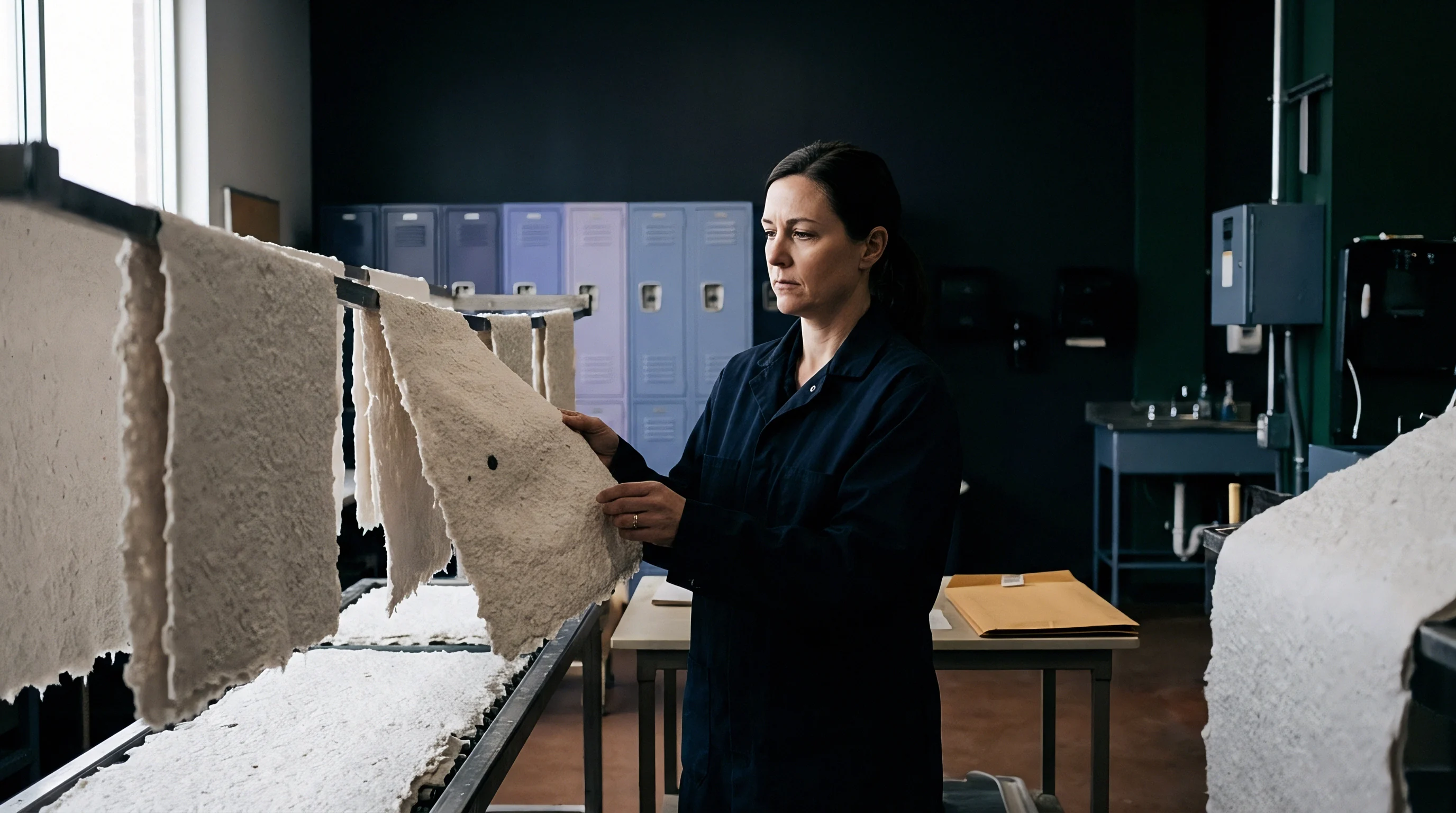
Polyamidoamine-epichlorohydrin resins enhance wet tensile strength by forming water-insoluble covalent networks around cellulosic microfibrils. Recommendation XXXVI restricts total epichlorohydrin-based resin additions to a maximum of 1.5 percent dry weight based on finished fiber mass. Epichlorohydrin hydrolysis byproducts, specifically 1,3-dichloro-2-propanol and 3-monochloro-1,2-propanediol, undergo strict analytical testing via gas chromatography-mass spectrometry.
Cold and hot water extraction testing according to standards EN 645 and EN 647 verifies that residual organochlorine levels remain below mandated safety limits. Glyoxal crosslinking reduces free hydroxyls. Glyoxal crosslinkers face a specific migration limit of 5 milligrams per kilogram of food simulant under EU Regulation 10/2011 standard guidelines.
Chemical crosslinking treatments designed to suppress moisture sorption isotherms alter the toxicological profile of paperboard packaging, requiring dedicated migration testing for every modified formulation.
Extractable Fraction Testing for Food Contact Compliance
Food contact verification requires analytical testing across multiple food simulants matching intended end-use applications. Simulant A models aqueous foods, Simulant B evaluates acidic environments, and Simulant D2 assesses fatty food contact exposure. Total immersion migration testing under standard conditions OM2 (4 hours at 60 degrees Celsius) or OM3 (2 hours at 70 degrees Celsius) quantifies non-volatile matter transfer from the nanocellulose barrier into food products.
Unmodified microfibrillated cellulose exhibits low overall migration values. Synthetic crosslinking aids, residual surfactants, and chemical sizing agents introduce low-molecular-weight fractions that readily transfer into aqueous and fatty simulants under elevated contact temperatures.
Suppliers frequently state that nanocellulose coatings consist purely of natural wood fiber, omitting the synthetic wet-strength agents, biocides, and crosslinkers required to make the barrier stable against moisture uptake.


Recovery
End-of-life qualification under current European packaging legislation requires balancing water resistance against repulpability and material recycling efficiency. Recyclability hinges on fiber release. The European Packaging and Packaging Waste Regulation sets target thresholds for material recycling efficiency, requiring fiber-based structures to yield at least 80 percent usable fiber by weight in standard papermaking repulping operations by 2030, ascending to Grade A performance targets above 95 percent.
Heavily crosslinked or hydrophobic-modified nanocellulose barriers that successfully suppress moisture vapor sorption often resist fiber dispersion in hydrapulpers, generating un-defibered flakes that lower recycling yield scores.

Repulpability Metrics and Fiber Recovery Yields
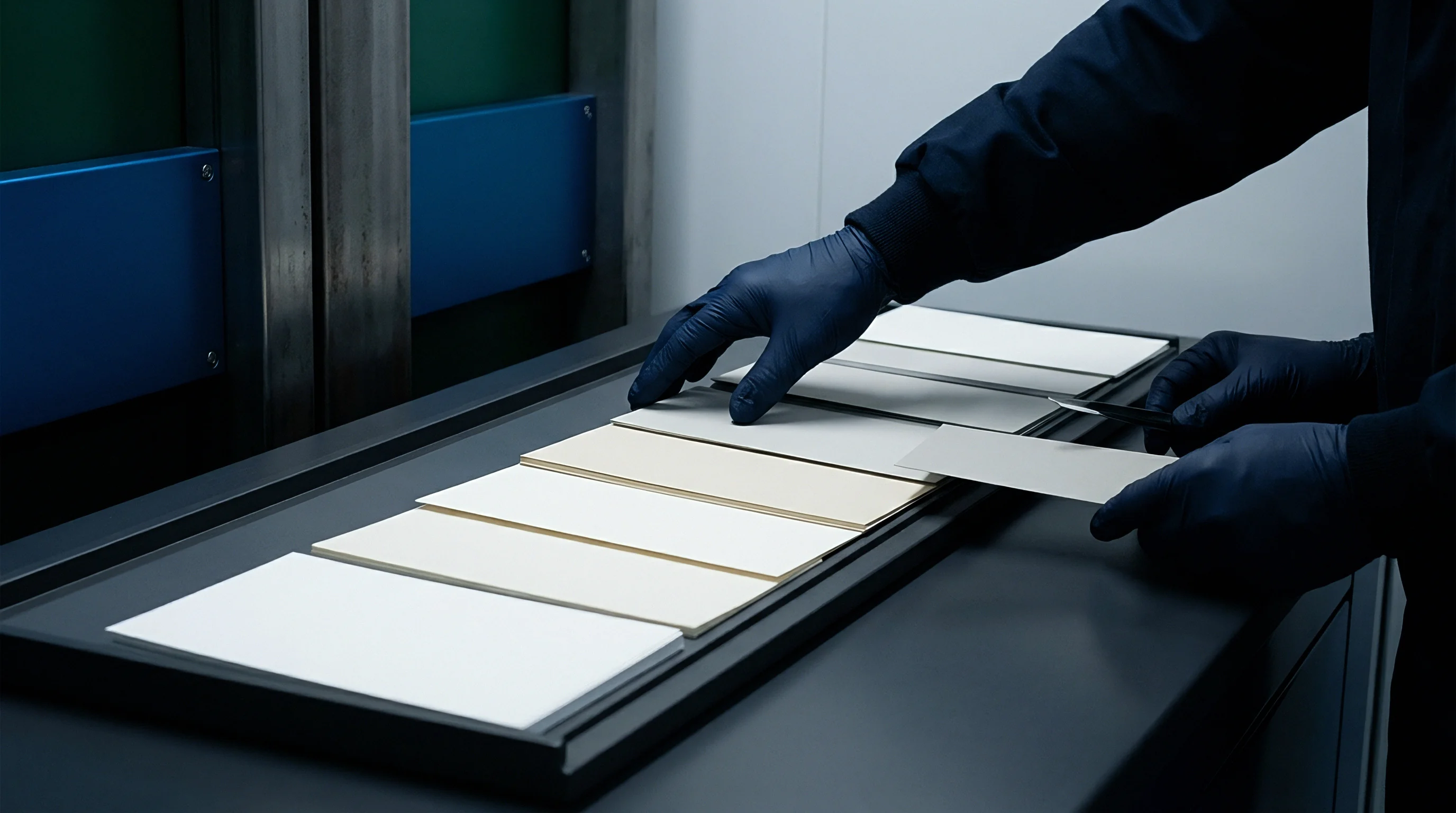
Testing according to the CEPI Recyclability Test Method or PTS-RH 021/97 evaluates the ease with which a packaging substrate breaks down into individual fibers under standard mechanical agitation. Packaging samples undergo pulping at 40 degrees Celsius for 10 minutes at 2.5 percent consistency. The resulting slurry passes through a 150-micrometer slotted screen to separate accept fibers from coarse reject flakes.
Unmodified microfibrillated cellulose coatings disperse completely, passing cleanly through screening units. Highly crosslinked structures resist fiber separation, generating macro-stickies and water-resistant flakes that clog papermaking wires and earn low recyclability performance scores under producer responsibility fee structures.
Engineers evaluate end-of-life performance using a strict compliance checklist:
- Fiber Yield Threshold verification requires proving an accept fiber recovery rate exceeding 85 percent dry mass following standard 10-minute pulping procedures under CENELEC rules.
- Screening Reject Allocation measures non-defibered coating flakes retained on a 150-micrometer screen, capping allowable rejected mass at 5 percent of total package dry weight.
- Disintegration Rate Verification under EN 13432 evaluates organic recovery, requiring 90 percent physical disintegration through a 2-millimeter sieve within 12 weeks of industrial composting exposure.
- Ecotoxicity Screen Testing confirms that degradation products from chemical crosslinkers introduce zero heavy metals or phytotoxic residues into finished compost soil matrices.
Disintegration Verification under Industrial Composting Standards
Where high moisture environments render mechanical recycling impractical, industrial compostability offers an alternative compliance pathway under EN 13432. Microfibrillated cellulose degrades rapidly under aerobic composting conditions due to enzyme accessibility by cellulolytic microorganisms. Thermophilic composting conditions at 58 degrees Celsius and high moisture content trigger rapid enzymatic hydrolysis of glycosidic bonds.
Dynamic sorption isotherms directly influence biodegradation kinetics; higher equilibrium moisture content accelerates fungal and bacterial colonization. Chemical crosslinkers that retard water absorption simultaneously slow down microbial enzyme attack, extending the time required to meet the 12-week physical disintegration threshold.
Standard EN 13430 Clause 4.3 mandates that any packaging material claiming recyclability demonstrate defibering capability without producing insoluble chemical agglomerates that disrupt commercial paper machine operations.
Ledger
Commercial transactions for microfibrillated cellulose barrier board depend on precise mass balance accounting adjusted for dynamic moisture content at delivery. Excess water inflates the invoice. Pulp yield dictates commercial value.
Tolerances define acceptable moisture limits. Paperboard substrates absorb atmospheric moisture during storage, changing total roll mass without adding structural fiber value. Sourcing agreements state base purchase prices on an absolute dry-weight basis or a standardized 6 percent air-dry moisture content.
Discrepancies between invoice weights and dry-fiber mass result in substantial financial losses on high-volume converting lines.
Moisture Adjusted Billing and Dry Weight Accounting
Commercial lot acceptance protocols rely on oven-dry mass determinations performed according to ISO 287 on sample cores taken across the full width of delivered rolls. The measured moisture percentage adjusts the billable weight using standard contractual equations. If delivered board carries 9 percent moisture against a target baseline specification of 6 percent, the buyer pays for 3 percent excess water weight unless mass adjustment clauses operate automatically at receiving docks.
Customs officials reject uncertified declarations. High-barrier nanocellulose coatings add economic value only when dry coat weight, crosslinking density, and baseline moisture content remain within strict contractual tolerance bands.
| Delivered Moisture Content (ISO 287) | Commercial Weight Adjustment Factor | Price Penalty per Metric Ton (€) | Action Threshold at Receiving Dock |
|---|---|---|---|
| 1.000 (No Adjustment) | 0.00 | Accept Shipment Unconditionally | |
| Standard Air-Dry Equivalent | 0.00 | Accept Shipment Unconditionally | |
| Mass Credit Adjustment (-1.5 percent) | 25.00 | Issue Automatic Billing Credit Note | |
| Mass Credit Adjustment (-3.0 percent) | 75.00 | Retain Lot for Technical Audit Verification | |
| Full Lot Rejection Option | Full Freight Chargeback | Reject Pallets and Issue Formal Carrier Dispute |
Contractual Acceptance Boundaries for Humidity Sensitive Lots
Technical specifications attached to raw material purchase orders set binding performance boundaries for moisture sorption characteristics, coating uniformity, and barrier longevity. Standard procurement dossiers require suppliers to present batch verification certificates demonstrating compliance with agreed physical parameters prior to release from converting facilities.
Complete compliance files rely on six essential verification documents:
- Gravimetric Isotherm Certificate documenting monolayer moisture capacity and GAB fit parameters for the specific coating batch.
- Water Vapor Permeability Report validating transmission rates at both standard 23°C/50% RH and elevated 38°C/90% RH conditioning states.
- Chemical Inventory Declaration listing all wet-strength additives, crosslinking resins, and surfactants alongside their respective CAS numbers.
- Food Contact Conformity File presenting specific migration limits and cold/hot water extractable test reports under BfR XXXVI standards.
- Recyclability Assessment Report confirming defibering yield scores exceeding 85 percent under standard CEPI pulping test standards.
- Certificate of Analysis detailing delivered roll mass, oven-dry fiber content, and cross-direction moisture profiles verified at shipping gates.
Verification of moisture content upon arrival protects packaging converters against paying raw material prices for absorbed atmospheric water while ensuring barrier integrity across downstream printing and laminating operations.