Microfibrillated Cellulose Moisture Sorption Mechanics in Fiber Packaging
Microfibrillated cellulose barrier integrity relies on controlling moisture-induced plasticization through chemical crosslinking to pass EN 13430 recyclability audits.

Hygroscope
Cellulosic materials interact dynamically with atmospheric water vapor. Refining wood fibers down to nanoscale dimensions expands surface area from approximately 1 square meter per gram to over 100 square meters per gram, exposing millions of free hydroxyl groups previously locked inside the crystalline core of native fiber walls. This hydroxyl accessibility drives the equilibrium moisture content of microfibrillated cellulose films, turning what would be a standard paper coating into an active moisture sink at high relative humidity.
Thermodynamic Isotherms and Sorption Hysteresis
Moisture binding in fine cellulosic networks follows a sigmoidal profile classified as a Type II isotherm. At relative humidity below 20 percent, water molecules bond directly to accessible hydroxyl sites through single-site hydrogen bonding to form a tightly bound monolayer. Between 20 and 65 percent relative humidity, secondary water layers build on the monolayer through water-water hydrogen bonds.
Above 70 percent relative humidity, capillary condensation takes over as liquid water fills the nanoporous voids between adjacent microfibrils.
ISO 12571 specifies climate conditioning at 23 degrees Celsius and 50 percent relative humidity to establish baseline sorption equilibrium across fiber substrates.
Moisture gain during sorption does not follow the same path as moisture loss during desorption; desorption curves sit systematically higher, creating the phenomenon known as sorption hysteresis. As the nanocellulose matrix dries and collapses, exposed hydroxyl groups bond with adjacent cellulose chains through hornification. When re-exposed to moisture, many of those hydrogen bonds stay closed, reducing available sorption capacity in subsequent humidity cycles.
Which Sorption Models Map Microfibrillated Network Hysteresis?
Describing moisture uptake mathematically in ultra-fine fiber layers relies heavily on the Guggenheim-Anderson-de Boer equation. The GAB model extends classic Brunauer-Emmett-Teller theory by introducing a second energy parameter for the state of multilayer water relative to bulk liquid water. Fitting experimental sorption data to the GAB equation yields the monolayer moisture capacity, which for un-derivatized microfibrillated cellulose typically measures between 0.05 and 0.08 grams of water per gram of dry cellulose at room temperature.
- Monolayer adsorption phase Direct hydrogen bonding of single water molecules to accessible surface hydroxyls dominates at relative humidity levels under 20 percent.
- Multilayer condensation threshold Cooperative water-water cluster formation expands the amorphous volume between microfibrils between 20 and 70 percent relative humidity.
- Capillary moisture trapping Liquid water fills inter-fibrillar pores smaller than 50 nanometers via Kelvin capillary condensation at humidity levels exceeding 70 percent.
- Amorphous domain swelling Water molecules push adjacent cellulose chains apart, softening the polymer matrix and lowering its glass transition temperature below ambient levels.
Alternative formulations like the Halsey and Henderson models describe moisture uptake at extreme relative humidity ranges but break down near the monolayer boundary. While the GAB equation accurately models sorption isotherms up to 85 percent relative humidity, the exact physical mechanism controlling the transition from constrained multilayer water to free capillary water inside 5-nanometer pores remains disputed among cellulose physicists.
Barrier
Gas permeation through dense cellulosic sheets depends directly on the concentration of sorbed water within the amorphous regions. Dry nanocellulose forms an intricate hydrogen-bonded network with extremely low free volume, creating an effective tortuous path against non-polar gases like oxygen and nitrogen. Sorbed water acts as an internal plasticizer, breaking inter-chain hydrogen bonds, increasing chain mobility, and opening physical pathways for gas diffusion.

Gas Transmission Mechanics under Relative Humidity Gradients
Dry nanocellulose films exhibit tight crystalline packing that yields oxygen transmission rates below 1 cubic centimeter per square meter per 24 hours at 0 percent relative humidity. As environmental moisture climbs, sorbed water forces the microfibrillar network to swell. At 50 percent relative humidity, oxygen transmission increases by an order of magnitude.
By 85 percent relative humidity, water content inside the film exceeds 15 percent by weight, pushing oxygen permeability past 500 cubic centimeters per square meter per 24 hours.
Water vapor transmission rate follows a different pattern. Because water molecules dissolve directly into the hydrophilic nanocellulose matrix and transport via concentration-driven diffusion, microfibrillated coatings provide minimal resistance to moisture passage unless chemically modified or blended with hydrophobic co-polymers.
Hydrophobic crosslinking of microfibrillated coatings maintains low oxygen permeability under elevated humidity by preventing polymer matrix swelling.
The table below compares barrier performance indicators for standard packaging substrates and microfibrillated cellulose treatments under contrasting ambient storage conditions.
| Substrate Description | OTR at 50% RH (cm³/m²·day) | OTR at 85% RH (cm³/m²·day) | WVTR at 50% RH (g/m²·day) | WVTR at 85% RH (g/m²·day) | Grease Rating (Kit) |
|---|---|---|---|---|---|
| 15,000 | 18,000 | 450.0 | 820.0 | 0 | |
| 2,200 | 2,400 | 4.5 | 12.0 | 12 | |
| 1.2 | 480.0 | 180.0 | 520.0 | 12 | |
| 2.5 | 18.0 | 15.0 | 42.0 | 12 |
Maintaining oxygen barrier integrity in humid supply chains requires keeping the internal moisture content of the nanocellulose layer below the threshold where matrix plasticization initiates.

Fibre
Delignified wood pulp undergoes intense mechanical shear inside disk refiners or high-pressure homogenizers to liberate microfibrils from primary and secondary cell walls. This mechanical action cleaves the outer wall layers, exposing internal microfibrillar bundles with high specific surface area. Processing demands substantial electrical energy, often exceeding 1,000 kilowatt-hours per tonne of dry pulp unless enzymatic or chemical pre-treatments are applied beforehand.
Functionalization Pathways and Surface Chemistry Modulation
Chemical pre-treatments alter hydroxyl availability on raw pulp fibers before mechanical disintegration. TEMPO-mediated oxidation introduces negatively charged carboxylate groups at the C6 position of glucose units, creating electrostatic repulsion between adjacent microfibrils that lowers the energy required for delamination. TEMPO-oxidized fibers yield nanocellulose suspensions of high clarity and uniform width, though sodium carboxylate groups enhance hydrophilic sorption, leaving the resulting films more sensitive to ambient moisture uptake than pristine un-derivatized fibers.
Enzymatic pre-treatment uses endoglucanases to selectively hydrolyze amorphous cellulose regions, preserving crystalline domains while easing mechanical delamination. Microfibrils produced this way retain high aspect ratios and lower carboxyl densities, yielding superior wet strength and lower sorption capacity in humid conditions.

Processability and Dewatering Energy Penalties
Refined suspensions retain vast volumes of water due to their high swelling capacity. Water Retention Value measures the mass of water retained by a wet pulp cake after centrifugation at 3,000 g: native kraft pulp exhibits a Water Retention Value of approximately 1.2 grams of water per gram of fiber, whereas microfibrillated cellulose suspensions routinely exceed 4.5 grams of water per gram of fiber.
- Carboxyl content threshold Charge density measured via conductometric titration indicates the degree of ionic chemical functionalization and prospective moisture sensitivity.
- Fibrillation yield percentage Gravimetric separation under centrifugation quantifies the fraction of material successfully converted to nanoscale diameters below 100 nanometers.
- Residual hemicellulose fraction High hemicellulose levels increase water uptake rates due to the amorphous structure and accessible hydroxyl groups of xylan polymers.
- Rheological viscosity index Low-shear Brookfield viscosity measurements confirm network formation and predict runnability during slot-die or curtain-coating applications.
High water retention imposes severe dewatering penalties when microfibrillated cellulose is added directly to wet-end pulp furnishes. Wet-end addition slows vacuum box drainage, restricts press section water extraction, and increases steam drying energy consumption. Coat-weight limitations on paper machines arise because microfibrillated slurry solids cannot exceed 3 percent without causing severe pipe clogging and pump cavitation.
Shelf
Paperboard packaging stored in unconditioned warehouses experiences dynamic mechanical loading while exchanging moisture with ambient air. Sorption mechanics dictate how quickly water molecules penetrate the fiber wall, plasticizing internal amorphous cellulose and hemicellulose. As moisture accumulates inside the package wall, the elastic modulus of individual fibers drops sharply, compromising structural rigidity across the entire container.

Box Compression Loss and Cyclic Humidity Mechanics
Structural failure in stacked corrugated containers stems from mechanosorptive creep, which occurs when paperboard experiences simultaneous mechanical stress and fluctuating relative humidity. Under constant humidity, paper creeps slowly under static compressive load; under cyclic relative humidity, compressive deformation accelerates dramatically, leading to package collapse at loads far below static design limits.
The table below outlines compressive failure timelines and moisture accumulation metrics for corrugated containers reinforced with microfibrillated additives subjected to static loading under cyclic environmental storage.
| Container Reinforcement Type | Initial BCT Strength (kN) | Moisture Content at 50% RH (%) | Moisture Content at 90% RH (%) | Time to Failure under Load (Hours) |
|---|---|---|---|---|
| 2.4 | 7.2 | 14.8 | 48 | |
| 2.9 | 7.5 | 15.2 | 72 | |
| 3.4 | 7.8 | 15.9 | 110 | |
| 3.1 | 8.4 | 17.1 | 35 |

Food Contact Compliance and Extractable Chemical Fractions
Packaging materials intended for direct contact with food must meet strict safety limits covering substance transfer. European Regulation EC 1935/2004 demands that packaging materials do not transfer constituents to food in quantities that endanger human health. Under German BfR Recommendation XXXVI and XXXVI/3 covering paper and board for food contact, raw pulps and functional additives must undergo rigorous extraction testing using cold and hot water solvents, iso-octane, and modified polyphenylene oxide (Tenax).
Tenax extraction testing per EN 14338 confirms overall migration from modified microfibrillated cellulose barrier coatings remains below 10 milligrams per square decimeter at 40 degrees Celsius for 10 days.
Microfibrillated cellulose slurry additives containing residual chemical catalysts, such as TEMPO reagents, crosslinkers, or wet-strength resins, present compliance risks if unreacted fractions migrate into fatty or aqueous foods.
Selecting an improperly crosslinked microfibrillated coating for high-humidity food packaging leads to rapid barrier failure, wet-strength loss, product spoiling, and immediate batch rejection by retail buyers.
Audit
Documentary proof verifying raw material origin forms the first hurdle during packaging qualification. Chain of custody schemes track forest-derived materials through processing streams to verify that cellulose feedstocks stem from sustainably managed forests. FSC-STD-40-004 and PEFC ST 2002 establish formal control systems ~ including transfer, percentage, and credit mechanisms ~ that convert forest inventory into audited claims on commercial packaging products.
Chain of Custody and Bio-Based Carbon Verification
Traceability frameworks track wood fiber from certified forests through pulping, fibrillation, and converting processes. When microfibrillated cellulose is produced from agricultural residues or non-wood pulps, verification shifts toward bio-based carbon content analysis. ASTM D6866 utilizes radiocarbon dating to determine the precise fraction of modern fossil-free carbon versus petroleum-derived synthetic polymers in complex barrier blends.
A high bio-based carbon rating does not automatically grant compostability or recyclability status. Compliance files require independent physical verification for each specific end-of-life pathway claimed on the package design.
End-of-Life Packaging Classification and Standard Protocols
Circular economy directives establish rigorous criteria for packaging recovery claims. Industrial compostability claims require compliance with EN 13432 standards: the material must disintegrate below 2 millimeters particle size within 12 weeks of composting and achieve 90 percent biodegradation into carbon dioxide within 180 days.
- Collect mill chemical inventory manifests and safety data sheets for all additives used during microfibrillated slurry production.
- Submit finished substrate samples to an accredited testing facility for disintegrability screening under EN 13432 conditions.
- Perform repulpability yield testing using standard wet disintegration procedures defined in ISO 5263 to measure micro-sticky formation.
- Measure bio-based carbon fraction utilizing accelerator mass spectrometry according to ASTM D6866 standards.
- Assemble the complete technical dossier including FSC or PEFC chain of custody transfer documentation before commercial dispatch.
EN 13430 establishes that packaging materials claiming mechanical recyclability must demonstrate complete disintegration and fiber separation without generating non-dispersible micro-stickies during hydrapulping.
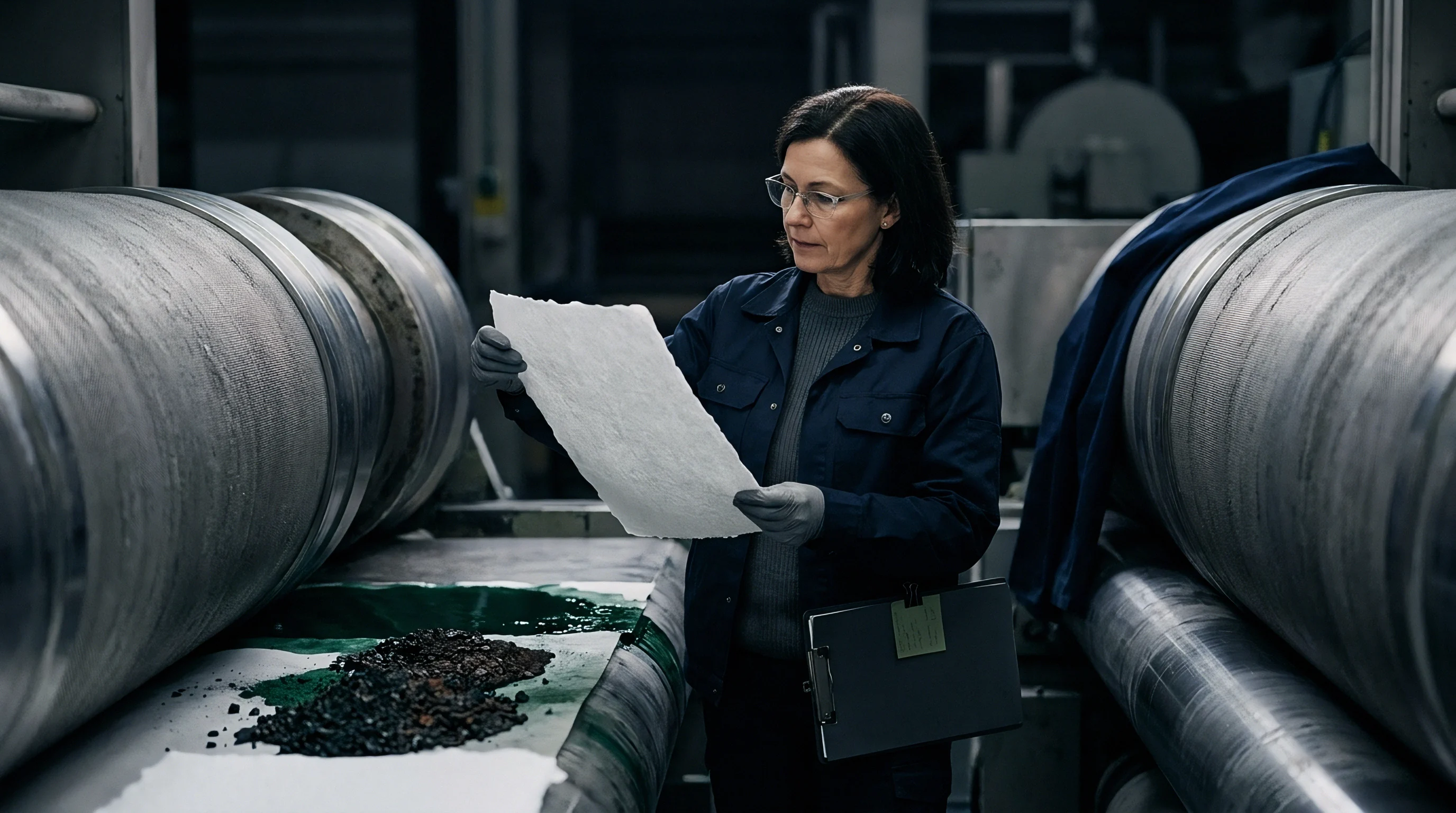
Repulpability testing protocols, such as Cepi laboratory methods or PTS-RH 021/97, evaluate how microfibrillated coatings behave during standard paper recycling operations. If heavily crosslinked or insoluble microfibrillated films form sticky agglomerates that clog screen plates, the package fails recyclability audits regardless of its biological origin.
According to clause 6.3 of PEFC ST 2002, a certified claim applied to a finished packaging batch becomes invalid if any entity in the supply chain fails to maintain an active certificate code covering the precise product group traded.

Clause
Commercial agreements covering bio-based packaging materials require clear technical specifications and explicit liability allocation clauses. When purchasing microfibrillated cellulose-coated paperboard, supply contracts must define precise moisture sorption limits, barrier performance windows, and physical strength tolerances under named relative humidity conditions.
Customs Classification and Tariff Duty Tariffs
Cross-border entry procedures demand precise Harmonized System classification codes for chemically modified nanocellulose shipments. Importing microfibrillated cellulose slurry or modified fiber suspensions under incorrect tariff headings leads to immediate customs holds and financial penalties. Pure mechanical pulps enter under HS Chapter 47 as pulp of wood, whereas TEMPO-oxidized or carboxymethylated cellulose feedstocks land under HS 3912 as cellulose and its chemical derivatives, triggering different import duty rates, chemical safety registration obligations under REACH regulations, and storage fees during customs holds.

Packaging and Packaging Waste Regulation Compliance and Contractual Exposure
European environmental legislation penalizes non-recyclable packaging formats through eco-modulation fee structures under Extended Producer Responsibility schemes. The Packaging and Packaging Waste Regulation mandates strict recyclability design targets, ranking packaging performance into distinct grades. Microfibrillated cellulose coatings that preserve full repulpability allow paper packaging to attain Grade A or B status, avoiding heavy financial surcharges at national compliance borders.
Financial exposure mounts quickly when suppliers fail to supply verifiable analytical reports, forcing brand owners to bear full liability for incorrect recyclability declarations under market surveillance scrutiny.