Managing Paper Substrates and Barrier Coating Conversions under PPWR
PPWR compliance requires paper substrates with barrier coatings to achieve 95% fiber recovery in Cepi v2 testing to secure Class A recyclability status.


Mandate
European regulatory frameworks governing packaging waste force a structural realignment across paper substrate converting operations. The European Union Packaging and Packaging Waste Regulation creates statutory targets for recyclability, material composition, and chemical compliance that eliminate decorative or non-functional barrier claims. Packaging converters and brand owners face strict criteria: every packaging component must enter an established recycling stream without impairing processing infrastructure or output quality.
Paper and paperboard packaging must achieve a minimum mass fraction of cellulosic fiber to maintain classification within paper recycling streams rather than composite or plastic streams.
Fibre mass fractions dictate compliance. Under the statutory Design for Recycling criteria, packaging designs receive performance classifications based on their repulpability yield and suitability for standard paper mill deinking and repulping assets. Products falling below eighty percent recyclability by mass face outright commercial bans across member states by 2030, while structures falling between eighty and ninety-five percent incur severe eco-modulation fee surcharges under national Extended Producer Responsibility schemes.
European Union packaging rules establish that composite structures containing less than ninety-five percent fiber by weight face mandatory design modification or classification under non-paper waste streams by 2030.
Transitioning from traditional extruded polyolefins to thin-film aqueous dispersions or bio-based barrier polymers requires immediate technical validation. A paper substrate coated with five grams per square meter of low-density polyethylene on a two-hundred-gram board delivers an active cellulosic mass fraction of ninety-seven point five percent. However, if repulpability testing reveals that the polyolefin film forms insoluble fragments that clog mill screening equipment, the entire pack design receives a failing grade regardless of its high fiber ratio.
Compliance is measured by both physical material balance and processing behavior inside recycling assets.
The regulatory schedule imposes binding milestones that eliminate delay strategies. By January 2030, all paper packaging placed on the European market must demonstrate recyclability at scale, supported by verified laboratory evidence using harmonized testing standards. Packaging lines operating with legacy coating chemistries risk sudden import rejections, customs holds, and inventory write-downs.
Importers of record carry full statutory responsibility for demonstrating that imported packaging formats meet European performance grades before customs clearance.
Failing to adjust coating formulations before statutory deadlines forces converters into emergency re-tooling, rendering legacy stock non-compliant and unsellable across European single-market territories.

Pulp
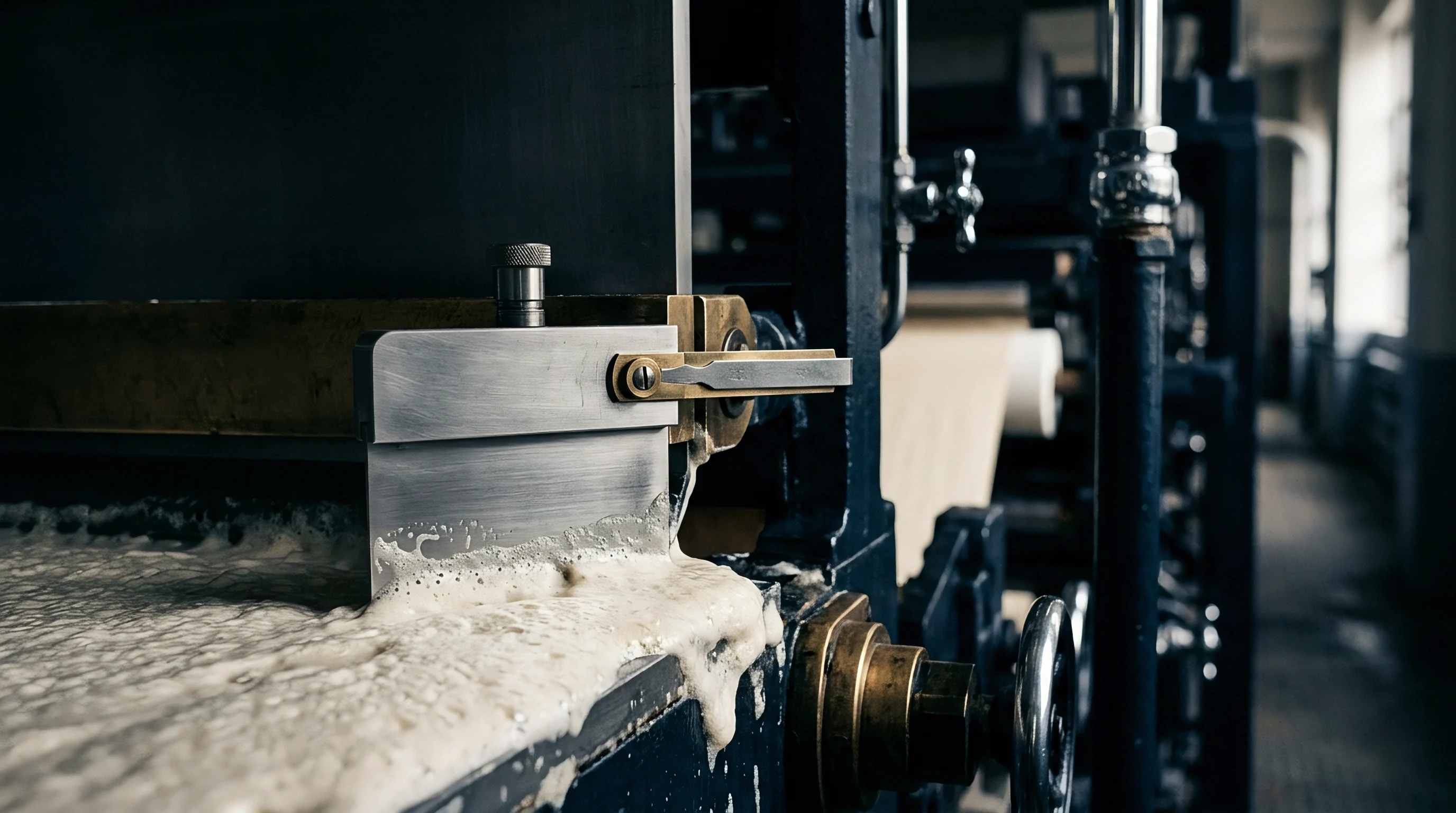
Base sheet architecture dictates how barrier formulations interact with raw cellulosic matrix structures. Achieving gas, liquid, or grease resistance using minimal coat weights demands tight control over substrate physical properties. A porous, open base paper absorbs liquid barrier formulations into its Z-direction matrix, wasting active chemistry, increasing drying energy costs, and compromising film continuity.
Uncoated kraft provides high strength. Conversely, highly beaten fibers with superior surface smoothness create a closed sheet that supports uniform pinhole-free barrier deposition at coat weights down to two grams per square meter.
Fiber selection determines both mechanical strength and chemical receptivity. Bleached chemical pulps offer high surface energy and low extractives content, promoting adhesion for polar dispersion coatings. Unbleached kraft pulps carry higher lignin concentrations, altering surface wetting dynamics and requiring adjusted corona treatment parameters or specialized primer coats.
Recycled fiber grades contain short fibers, residual filler materials, and mineral oils, which create baseline contamination risks and variable surface energy profiles that disrupt barrier film formation.
Surface porosity governs liquid absorption. To evaluate base paper suitability for aqueous dispersion or extrusion coating, converters execute a structured physical evaluation sequence:
- Measure smooth-surface air resistance using ISO 5636-5 Gurley porosity instruments, requiring a minimum baseline threshold of one hundred Gurley seconds per hundred milliliters of air for thin-film aqueous coating applications.
- Determine surface water absorption characteristics via ISO 535 Cobb 60 tests to confirm that sizing levels restrict liquid uptake below twenty-five grams per square meter before coating application.
- Inspect surface topography using Parker Print-Surf roughness testing under one megapascal clamping pressure to guarantee values below three micrometers.
- Validate substrate surface energy with test inks according to ISO 8296, establishing a baseline of at least forty-four dynes per centimeter for aqueous dispersion wetting.
- Perform cross-direction and machine-direction tensile strength evaluations under ISO 1924-2 to ensure the sheet survives web tension forces during high-speed coater drying tunnels.
Drying dynamics during coating conversion alter substrate dimensions. Hydrophilic paper fibers expand when exposed to aqueous dispersions, creating web curl and localized stress concentrations that fracture fragile barrier layers during inline drying. High-velocity hot-air drying hoods must operate alongside infrared temperature zones to evaporate solvent carriers without boiling the coating film.
Micro-blisters in the barrier layer degrade water vapor transmission resistance and create paths for grease migration.
Smooth, dense sheet surfaces minimize barrier polymer uptake while maintaining maximum mechanical bond strength at the coating interface.

Polymer
Synthetic and bio-derived surface coatings provide the barrier performance required to replace conventional foil laminates. Extrusion polyolefins dominate historical converting lines. Low-density polyethylene and polypropylene deliver exceptional moisture vapor protection and hot-tack heat sealing at low cost.
However, their insolubility during cold-water pulp disintegration creates persistent screening fragments known as macro-stickies, forcing a transition toward repulpable dispersions and biodegradable polymers.

Barrier Chemistry Performance and Application Thresholds
Extrusion resins and aqueous liquid systems occupy distinct operating windows on high-speed converting lines. Water-based acrylic dispersions, polyvinyl alcohol, ethyl vinyl alcohol, and polyhydroxyalkanoates offer varying balances of grease resistance, moisture protection, and repulpability. Polyvinyl alcohol supplies outstanding oxygen and grease barriers but suffers catastrophic loss of barrier properties under high relative humidity unless cross-linked or over-coated with hydrophobic polymers.
| Barrier Chemistry | Application Method | Coat Weight (gsm) | WVTR (g/m²/day at 23°C/85% RH) | Kit Value (Grease) | Cepi v2 Repulpability Status |
|---|---|---|---|---|---|
| Low-Density Polyethylene | Extrusion Coating | 12 to 25 | 1.5 to 3.0 | 12 | Conditional Pass (Requires Screening) |
| Aqueous Acrylic Dispersion | Blade / Rod Coater | 4 to 8 | 5.0 to 12.0 | 8 to 11 | Pass (High Fiber Yield) |
| Polyvinyl Alcohol (PVOH) | Flexo / Gravure | 2 to 5 | 100.0 (Hydrophilic) | 12 | Pass (Fully Soluble) |
| Polyhydroxyalkanoates (PHA) | Extrusion Coating | 10 to 20 | 4.0 to 8.0 | 10 | Pass (Compostable / Repulpable) |
| Metallized Vapor Deposition | Vacuum Chamber | 0.05 to 0.1 | 0.5 to 2.0 | 12 | Pass (Minimal Mass Impact) |
Pinholes compromise barrier integrity. Achieving a continuous barrier film requires controlled rheology and surface tension matching between the liquid polymer and the base paper. Defoamers, wetting agents, and rheology modifiers stabilize coating pans, but excessive surfactant additions lower grease resistance and increase chemical migration risk into packed foodstuffs.
Aqueous dispersion coatings applied below three grams per square meter maintain ninety-eight percent repulpability yields under standard mechanical disintegration at forty degrees Celsius.

Are Water Dispersions Compatible with Mill Dewatering?
Aqueous acrylic and styrene-butadiene formulations create colloidal suspension challenges during industrial hydrapulping cycles. Microscopic polymer particles that detach from fibers during repulping pass through mechanical screen plates, accumulating in mill process water loops. Chemical re-agglomeration occurs when water temperature or pH changes, causing tacky deposits on paper machine drying cylinders and wires.
Coating selection involves resolving distinct processing failure modes on converting and repulping equipment:
- Blocking in Jumbo Reels ~ High surface tack in thermoplastic dispersion coatings causes adjacent paper layers to fuse during high-pressure reel winding, destroying the substrate upon unwinding.
- Heat-Seal Delamination ~ Insufficient polymer interdiffusion during short sealing dwell times leads to seam separation under automatic box-filling stresses.
- Micro-Cracking at Fold Creases ~ Rigid polymer barrier films fracture along package scoring lines, dropping grease and water vapor resistance by up to two orders of magnitude.
- Colloidal Stickies Accumulation ~ Finely dispersed polymer particles resist flotation deinking and water treatment clarification, fouling mill recycling water lines.
Coating suppliers frequently attribute barrier breakdowns and heat-seal failures to unannounced moisture fluctuations in the underlying base paper.


Bench
Analytical verification establishes whether a barrier-coated packaging stock complies with recyclability and food-contact rules. Standardized laboratory testing validates that converted structures meet structural performance targets while passing environmental end-of-life qualifications. Testing procedures must reproduce industrial recycling pulping conditions and food storage environments with exact control over mechanical shear, pH, temperature, and chemical simulants.

Standardized Repulpability and Recyclability Test Protocols
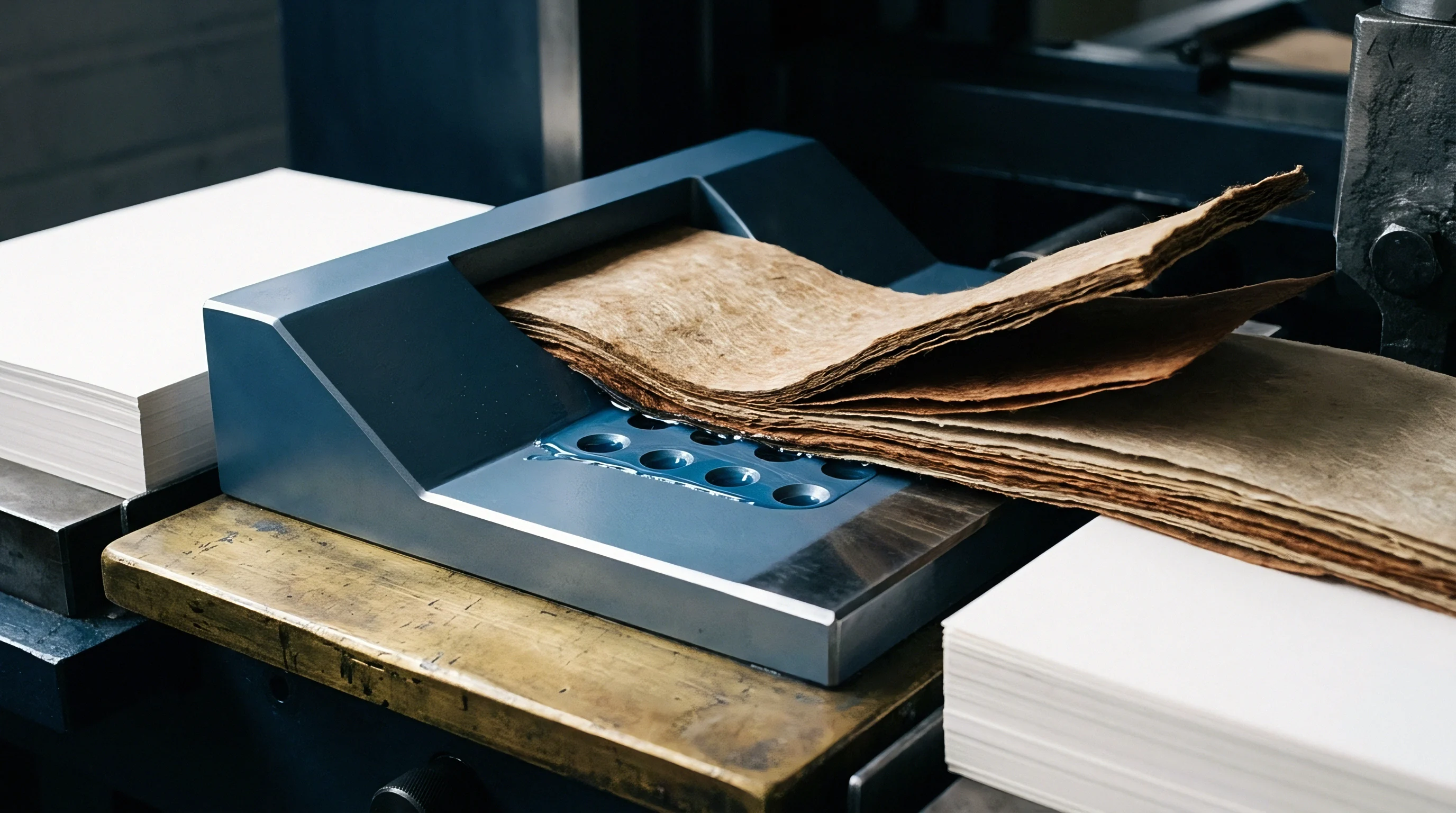
Laboratory disintegrators evaluate how fast coated sheet matrices disintegrate under standardized shear stress. Protocols established by Cepi, ATICELCA, and the PTS method define mechanical agitation parameters, pulp consistency, and temperature cycles to measure coarse reject percentages and fiber flakes. Test samples undergo disintegration at zero point five to sixteen percent pulp consistency, followed by screening through slotted plates with zero point one five millimeter aperture widths.
| Standard Designation | Target Performance Property | Test Conditions & Parameter Control | Passing Criterion | Regulatory Impact |
|---|---|---|---|---|
| Cepi Recyclability v2 | Fiber Repulpability & Stickies | 40°C, pH 7, 20-min disintegration, 0.15 mm screen | Mass fraction fiber yield ≥ 90% | Class A / B Recyclability Rating |
| EN 1186-3 | Overall Food Contact Migration | 10% Ethanol, 3% Acetic Acid, 10 days at 40°C | Overall migration | Regulation EU 1935/2004 Compliance |
| EN 14338 / Tenax | Volatile / Semi-Volatile Organic Transport | Modified Polyphenylene Oxide, 10 days at 60°C | Specific migration within statutory SMLs | BfR Recommendation XXXVI Protection |
| TAPPI T 559 (Kit Test) | Surface Grease Resistance | Aggressive castor oil / toluene solvent mixture scale 1-12 | No dark spots or staining at specified Kit level | Barrier Continuity Verification |
Shear stress breaks polymer networks. Repulping assessments evaluate not only coarse fiber yield but also macro-sticky formation. Macro-stickies are tacky particles retained on a zero point one five millimeter slotted screen, whereas micro-stickies pass through the screen and contaminate filtrate water.
Conversion formulations that generate high macro-sticky counts fail recycling qualifications due to their operational costs for recovery mills.
Migration testing conducted with dry food simulants offers zero statutory coverage for packaging intended to contact oily or liquid food matrices.
Chemical Migration Dynamics and Food Contact Safety
Substrate barriers retard liquid and vapor phase transfer of organic compounds into food products. Functional barrier layers must prevent the migration of mineral oil saturated hydrocarbons and mineral oil aromatic hydrocarbons originating from recycled pulp fibers or printing inks. Analytical testing utilizes gas chromatography coupled with flame ionization detection following extraction with hexane and ethanol mixtures to quantify migration levels down to fractions of a milligram per kilogram of food simulant.
Test simulants replicate actual food contact conditions under strict time and temperature exposures. Tenax models dry fatty food contact, while liquid simulants evaluate aqueous and acidic food storage. To ensure regulatory conformity across converting operations, laboratory testing protocols follow a strict validation sequence:
- Screening Baseline Substrates ~ Conduct gas chromatography testing on raw base stock to quantify volatile baseline contaminants prior to coating application.
- Pinholes and Film Continuity Verification ~ Perform stain tests using dyed solvent solutions to detect surface voids, cracks, and micro-pinholes in applied barrier layers.
- Extraction Testing for Migratables ~ Expose coated samples to food simulants EN 1186 for overall migration and EN 13130 for specific monomer and additive migration testing.
- Accelerated Shelf-Life Permeation ~ Measure water vapor transmission rates under ASTM F1249 at thirty-eight degrees Celsius and ninety percent relative humidity to model tropical storage failure rates.
Industry laboratories continue to debate whether cold water extraction methods accurately project microplastic release rates during industrial pulp repulping.


Registry
Documentation chains validate environmental and safety claims when shipments move across national frontiers. A raw material declaration or an unverified marketing seal carries zero legal weight during customs inspections or market surveillance audits. Every claim printed on packaging stock requires backing by a complete, traceable compliance file that links the chemical composition of the coating to the fiber harvest location and the final converting plant batch.

Chain of Custody Integration and Claim Transfer Mechanisms
Wood-derived fiber sourcing demands continuous tracking from forest management units through paper converting operations. FSC and PEFC certification schemes operate using transfer, percentage, or credit systems to verify virgin and recycled fiber contents. Under the FSC-STD-40-004 framework, certified claims move through delivery notes and invoices carrying unique certificate codes verified against public registers.
Transfer systems require that certified material remains physically segregated or tracked per batch, maintaining a direct one-to-one claim chain. Percentage systems allow certified and uncertified fibers to mix, applying a percentage claim on outgoing products equal to the inputs verified during the production claim period. Credit systems allow converters to claim a portion of their output as certified based on input credits accumulated within strict twelve-month accounting ledgers.
Chain of custody tracking prevents illegal wood inputs. An uncertified converting line breaks the legal chain of custody, rendering certified paper from an audited mill fully uncertified on the finished packaging product. Buyers who print certified logos without holding valid converter-level chain of custody certificates face trademark infringement claims, customs holds, and public product recall notices.

Technical Dossier Assembly and Declarations of Compliance
Regulatory authorities inspect composite packaging files to verify that every layer meets health and environmental threshold parameters. Technical dossiers must contain declarations of compliance for food contact under Framework Regulation EC 1935/2004, detailed chemical constituent lists, heavy metal analysis under 94/62/EC confirming concentrations below one hundred parts per million, and lab evidence supporting recyclability under EN 13430.
To compile an audit-ready technical dossier, packaging converters assemble a comprehensive documentation package:
- Include complete chemical identity details for all barrier additives, monomer residues, and cross-linking agents, accompanied by safety data sheets and specific migration limits.
- Attach official food contact Declarations of Compliance from raw material suppliers, explicit about direct food contact conditions, maximum operating temperatures, and simulant scope limits.
- Insert accredited laboratory test reports validating overall and specific migration limits, repulpability yield figures, and heavy metal concentrations executed within twenty-four months.
- Provide chain of custody certificates covering all virgin and recycled cellulosic fibers, complete with active registration numbers checked against scheme databases.
- Document internal quality management system protocols used during conversion to prevent batch-to-batch contamination or unauthorized chemical substitutions.
Customs inspectors reject incomplete files. Importers who rely on generalized supplier statements without underlying laboratory test reports bear full legal liability for customs delays, fines, and mandatory destruction orders for non-compliant inventory.
Standard supplier compliance clauses now stipulate that missing food contact declarations or invalid chain of custody codes trigger immediate buyer cancellation rights without financial penalty.


Tariff
Extended producer responsibility schemes tie financial levies directly to the material composition and recyclability performance of paper packaging. Under national eco-modulation structures across European states, packaging is classified into performance bands that determine the per-tonne statutory fee payable by the brand owner or importer. Substrates engineered for high repulpability yields receive baseline or discounted fee schedules, whereas composite structures with difficult-to-separate coatings face steep fee surcharges.

Eco-Modulation Fee Structures and Financial Penalties
National recovery entities calculate compliance fees based on recyclability performance classes assigned to each pack design. A high-yield paper pack scoring Grade A under design-for-recycling standards incurs standard baseline fees. Lower grades incur multiplying factors that compound packaging operating costs across high-volume consumer goods categories.
| Performance Grade | Cellulosic Yield (% Mass Fraction) | Barrier Separation Behavior | EPR Fee Modulation Multiplier | Market Access Status |
|---|---|---|---|---|
| Grade A | ≥ 95% | Complete fiber detachment, zero stickies | 0.8x to 1.0x (Baseline / Discount) | Unrestricted full single market access |
| Grade B | 90% to 94% | High yield, minor non-cellulosic residue | 1.2x to 1.5x (Moderate Surcharge) | Unrestricted full single market access |
| Grade C | 80% to 89% | Partial fiber recovery, requires extra screening | 2.0x to 3.0x (Heavy Surcharge) | Restricted access / mandatory redesign by 2030 |
| Grade D | Severe sticky formation, excessive screen rejects | 4.0x to 5.0x (Maximum Penalty) | Phase-out target / statutory sales ban by 2030 |
Fee multipliers penalize non-recyclable barriers. An importer shipping ten thousand tonnes of packaging coated with non-repulpable polyolefins risks paying triple the baseline EPR rates, adding millions of euros in unrecoverable annual distribution costs. Design choices made during coating selection directly govern corporate packaging tax liabilities.

Commercial Risk Allocation in Converter Supply Contracts
Cross-border packaging procurement demands explicit contractual language covering non-compliance risks and import delays. Converting contracts must address potential regulatory updates, shifting recyclability testing methodologies, and unexpected customs detentions. When a converting line substitutes barrier resins or base paper suppliers without re-validating recyclability and food contact parameters, legal and financial exposure escalates rapidly.
Material composition determines border clearance. Importers write precise warranty and indemnification terms into supply contracts to allocate financial risks. Clauses must define financial remedies if delivered packaging fails laboratory audits or receives lower recyclability grades than specified in purchase orders, resulting in higher EPR fee bands or customs holds.
Brokers and brand owners who establish clear liability boundaries within converting contracts protect their operating margins against shifting regulatory surcharges at border customs checkpoints.