Quantifying Deinking Fractionation Drift in Secondary Fiber Verification Audits
Deinking fractionation alters fiber length distributions and ash content, requiring physical batch verification to prevent invalid chain-of-custody claims.

Mesh
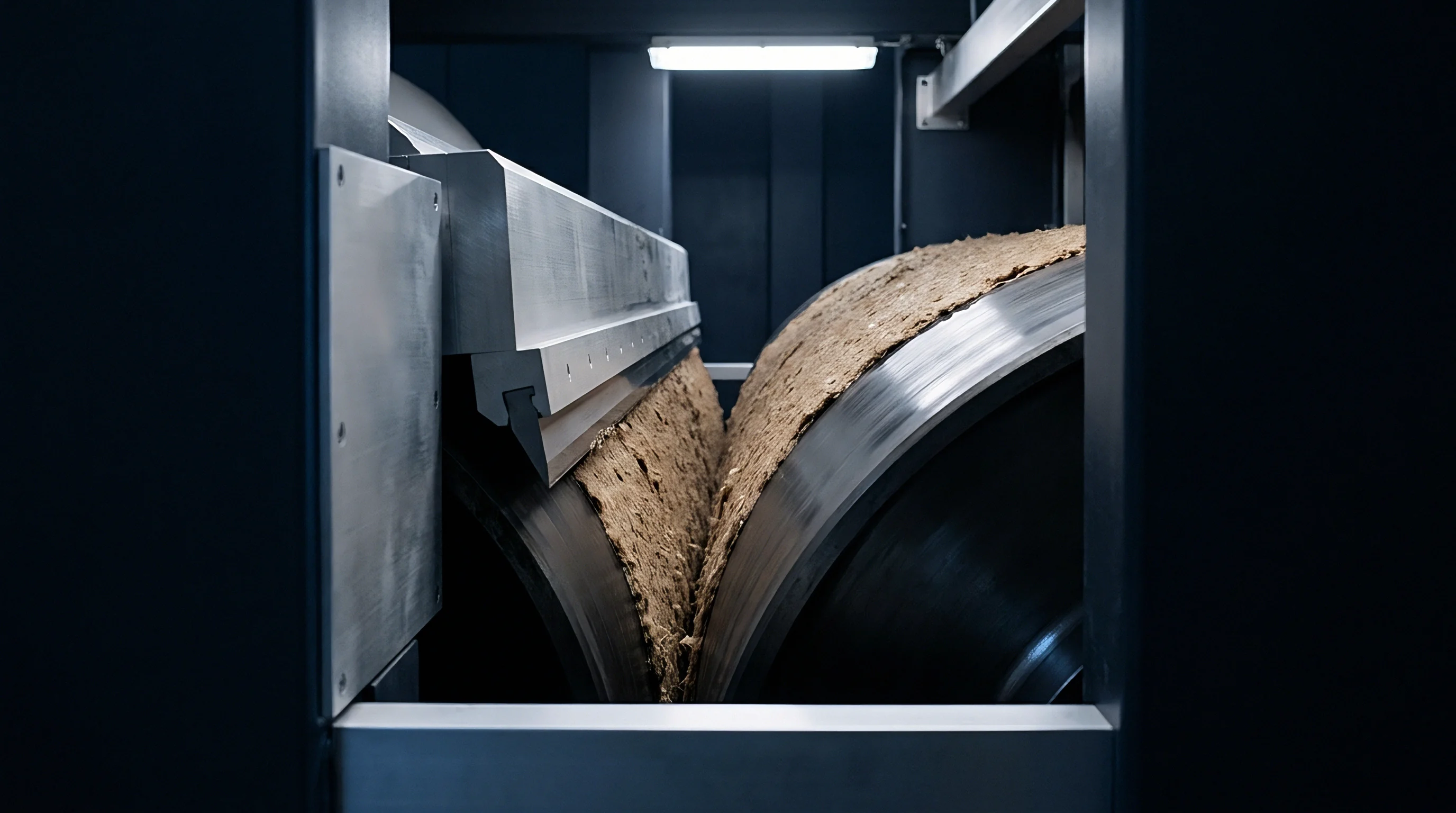
Pressure screens in secondary fiber recycling plants separate pulp slurries into distinct morphological fractions. The process relies on physical slot dimensions and fluid pressure differentials to divide incoming recovered furnish into long-fiber accepts and short-fiber or fines rejects. During deinking operations, this mechanical separation causes significant drift in fiber length distribution, ash concentration, and residual ink concentration between process streams.
Verification audits that evaluate secondary fiber content by relying solely on total dry mass inputs fail to detect structural shifts in pulp quality and fiber distribution across unit operations.
Mass balance errors invalidate compliance files. When secondary fiber pulp passes through a 0.12 millimeter wedge wire screen basket, long coniferous softwood fibers stay above the aperture size while short hardwood fibers and parenchyma cells pass into the accept stream. Mechanical fractionation changes the physical constitution of the pulp, producing two streams with distinct papermaking capabilities from a single input bale batch.
In a audit context, quantifying this morphological drift requires measuring length-weighted fiber length according to ISO 16065-1 alongside fines content determination under ISO 16065-2.
Continuous pressure screening at 0.12 mm slot width shifts average length-weighted fiber length from 1.42 mm in feed pulp to 1.88 mm in the long-fiber fraction stream.

Mechanical Fiber Separation Dynamics
Slot width geometry inside pressure screening baskets governs the passage rate of individual pulp elements. Narrow slot apertures ranging from 0.10 millimeters to 0.15 millimeters impose strict steric hindrances on long, flexible cellulosic structures. Fiber orientation relative to the aperture plane determines passage probability during each fluid pulse generated by the internal rotor.
- Aperture slot width selection dictates the cut-off threshold for fiber length and shive removal efficiency, where slots under 0.12 millimeters reject fibers longer than 2.0 millimeters at twice the rate of short fibers.
- Rotor tip speed variation between 15 and 25 meters per second generates hydrodynamic pressure pulses that fluidize the fiber mat, altering the passage ratio of long to short fibers.
- Volumetric reject rate settings control the mass ratio of the accept and reject streams, directly influencing the concentration of fines retained in the accept fraction.
- Feed consistency adjustments between 1.0 percent and 2.5 percent solids shift the hydrodynamic viscosity, altering fiber-fiber network interlocks and modifying particle passage selectivity.
Screen basket wear accelerates fiber loss. As slot edges round over months of continuous operation, hydrodynamic drag changes and the fractionation efficiency decreases. An auditor inspecting a plant operating with worn screening media will observe reduced morphological separation despite identical operational setpoints on the control panel.

Hydrodynamic Shear and Aperture Passage
Rotor speeds ranging from 15 to 25 meters per second create strong fluid pulses across the basket face. These high-frequency suction and pressure waves prevent basket blinding while applying shear forces that realign suspended fibers. Flexible fibers align with fluid streamlines and flex through narrow apertures, whereas stiff, coarse fibers remain in the reject flow.
| Process Stream | Length-Weighted Fiber Length (mm) | Fines Content by Area (%) | Ash Content at 525°C (%) | Coarse Fiber Fraction (>2.0 mm %) |
|---|---|---|---|---|
| Raw Feed Furnish | 1.42 | 18.5 | 12.4 | 22.1 |
| Long Fiber Accept | 1.88 | 8.2 | 4.1 | 38.6 |
| Short Fiber Reject | 0.94 | 31.6 | 21.8 | 4.2 |
Mill operators routinely attribute fraction-weighted morphological variance to unavoidable incoming baled furnish heterogeneity rather than deliberate system bypass.


Flotation
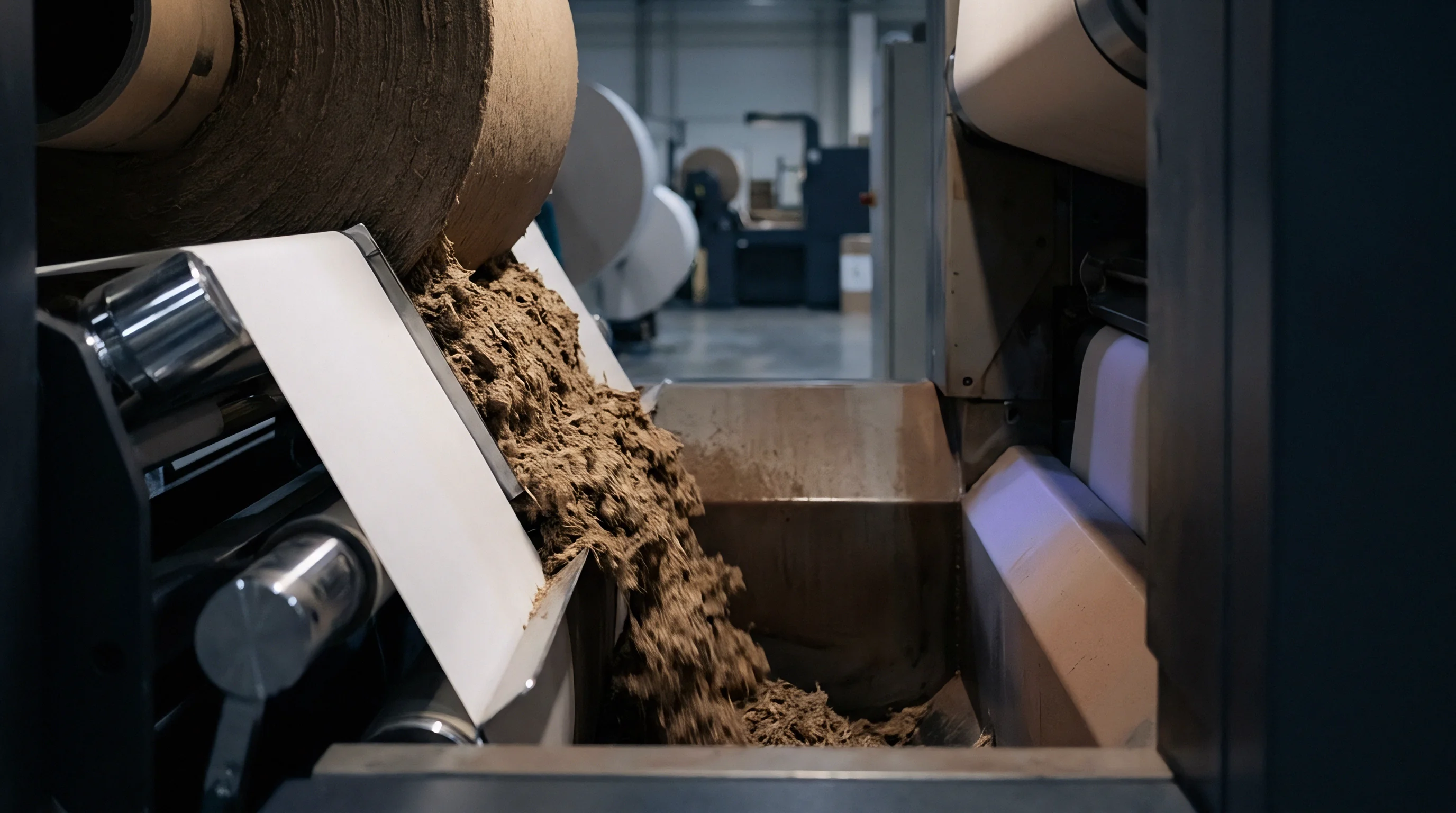
Selective froth separation removes hydrophobic particles from repulped secondary fibers. In flotation deinking cells, air bubbles injected at gas-to-liquid ratios between 10 percent and 25 percent attach to ink particles rendered hydrophobic by fatty acid collector chemistries. The buoyant froth rises to the cell surface and is mechanically skimmed off into a reject header.
Fiber morphological elements partition unevenly during this process, with fines and mineral fillers being entrained into the foam reject alongside ink pigment particles.

Surface Chemistry and Bubble Attachment
Fatty acid sodium soaps act as collector reagents in deinking systems. These surfactant molecules adsorb onto offset, flexographic, and rotogravure ink particles, creating a hydrophobic outer shell. When air bubbles contact these treated ink agglomerates within a 20 to 50 micrometer diameter range, surface energy differentials drive bubble-particle attachment.
Cellulosic fibers remain hydrophilic due to hydroxyl groups on their surfaces, staying suspended in the aqueous pulp phase.
ISO 22754 measurement of effective residual ink concentration at 950 nanometer wavelength exposes ink enrichment in fines fractions that invalidates basic optical brightness declarations.
High reject rates reduce chemical yield. Fine fiber fragments possess high specific surface area, accelerating surfactant consumption per unit mass. Consequently, flotation deinking cells remove a disproportionate mass of cellulosic fines alongside ink, shifting the particle size distribution of the accept stream toward longer fiber classes.

Residual Ink Distribution and Fines Entrainment
Sub-micron ink particles adhere to fine cellulosic fragments during pulping. During flotation separation, these ink-laden fines enter the froth phase through mechanical water entrainment rather than hydrophobic attachment. Measuring Effective Residual Ink Concentration (ERIC) according to ISO 22754 at a 950 nanometer wavelength reveals how ink particles partition between long fibers and fine fragments.
- Froth reject skimming volume excessive removal rates extract up to 15 percent of total dry fiber mass as reject, concentrating longer fibers in the cell accept stream.
- Surfactant overdosing excessive collector concentration reduces surface tension below 45 millinewtons per meter, causing bubble collapse and re-entraining ink back into the accept pulp slurry.
- Bubble size distribution drift larger air bubbles over 2.5 millimeters diameter decrease collision efficiency for sub-10 micrometer ink particles while increasing hydraulic entrainment of fines.
- Agitator shear dissipation local velocity gradients exceeding 1000 reciprocal seconds detach ink particles from air bubbles, lowering flotation selectivity and altering yield balances.
Optical brightness measurements performed under ISO 2470 fail to detect specific ink accumulation in fine fiber fractions. Spectrophotometric analysis at 950 nanometers is necessary to isolate ink absorption effects from fluorescent whitening agents or lignin color bodies. The degree to which online NIR spectroscopy can differentiate systemic flotation cell efficiency loss from true raw material furnish contamination without stopping the deinking line remains unproven.


Partition
Quantitative analysis of secondary pulp fraction streams relies on physical length classification methods. Fractionation changes the statistical distribution parameters of fiber populations. Determining mass balance across deinking systems requires accounting for changes in length-weighted fiber length, numerical fiber count, and mineral ash content simultaneously.

Why Does Screen Accept Stream Bias Fiber Length?
Hydrodynamic drag forces acting on flexible cellulosic filaments scale non-linearly with particle length. Longer fibers experience higher bending moments under shear flow, causing them to align parallel to screen aperture boundaries. Short fibers and spherical parenchyma cells do not undergo bending orientation, allowing them to pass freely through screen slots under standard fluid pressure drops.
Fiber length determines sheet tensile strength. Standard length metrics mask morphological drift. A pulp sample exhibiting an unchanged arithmetical average fiber length can contain drastically altered length-weighted distributions if both long fibers and fines are lost concurrently during flotation and screening.
| Operational Scenario | Overall Mass Yield (%) | Length-Weighted Fiber Length L_w (mm) | Ash Content ISO 1762 (%) | Fines Content ISO 16065-2 (%) | Residual Ink (ERIC ppm) |
|---|---|---|---|---|---|
| Baseline Operation | 88.5 | 1.52 | 8.5 | 14.2 | 120 |
| High Screening Intensity | 76.2 | 1.91 | 3.2 | 6.1 | 65 |
| High Flotation Reject Flow | 81.0 | 1.64 | 4.8 | 8.9 | 42 |

Statistical Metrics for Fiber Distribution Mass Balances
Automated optical analyzers measure thousands of individual wet pulp elements per second under ISO 16065-1. These instruments calculate multiple distribution moments to characterize fiber populations accurately. Comparing arithmetic average length to length-weighted and weight-weighted averages reveals skewness in the morphological distribution caused by deinking unit operations.
High rotor tip speeds in pressure screens select for longer fibers while driving mineral fillers into the underflow reject.
Audit dossiers demand raw test reports. Verifying pulp furnish claims requires executing a structured four-stage physical sampling protocol across the plant circuit.
- Collect slurry samples simultaneously at primary screen feed, accept, and reject sampling valves under steady-state operating conditions.
- Dewater samples immediately using rapid vacuum filtration to prevent biological degradation or chemical precipitation of dissolved solids.
- Determine total dry solids content under ISO 638 and perform ash content analysis at 525°C according to ISO 1762 to separate organic fiber mass from mineral fillers.
- Analyze wet pulp samples on an ISO 16065-1 compliant optical analyzer to quantify length-weighted fiber length distributions and fines percentages by area.
Adjusting screen dilution water without recalibrating fiber length analyzers guarantees auditing errors during secondary fiber content verifications.

Reconciliation
Mass credit accounting under chain of custody schemes assumes uniform material characteristics across outputs. Certification systems such as FSC-STD-40-004 and PEFC ST 2002 permit mills to track certified inputs using physical separation, percentage allocation, or credit accounts. When a deinking facility fractionates incoming secondary fiber into two distinct output streams, standard accounting models break down because physical fiber mass no longer matches certified claims distribution.
Fines pass through slotted pressure baskets. Consider a worked audit calculation for a secondary fiber deinking plant processing 100 air-dry metric tonnes of recovered paper input certified as 100% Recycled. Input material contains 12 percent mineral ash, 16 percent cellulosic fines, and 72 percent long and short structural fibers, yielding 72 tonnes of usable structural fiber.
The deinking plant runs high-intensity mechanical screening and flotation, generating 75 tonnes of long-fiber pulp accept stream and 15 tonnes of short-fiber/fines reject material, with 10 tonnes lost as dissolved organic matter and flotation slag.
Invoices require verified percentage allocations. If the mill assigns the entire 100-tonne input credit to the 75 tonnes of long-fiber accept pulp, it inflates the functional recycled credit density of that premium grade. Conversely, selling the 15 tonnes of short-fiber reject material into cartonboard filler layers under the same certified percentage credit double-counts physical recycled volume.
The long-fiber fraction gained structural performance through the mass loss of short fibers and fillers, creating a quality drift that standard mass-balance accounting sheets fail to reflect.
Physical fractionation creates two distinct pulps from one certified input bale lot, breaking single-furnish percentage calculations.

Chain of Custody Volume Allocation
FSC and PEFC standards allow percentage and credit accounting systems for mixed inputs. The credit system enables a mill to claim a portion of its output as 100% Certified based on the mass of certified input material received. Physical fractionation disrupts this logic by decoupling mass from physical performance.
Physical fiber tests expose paper fraud. When a mill converts 100 tonnes of certified 70% Recycled baled paper through a fractionating deinking line, it produces 60 tonnes of prime deinked market pulp and 25 tonnes of low-grade sludge reject. Allocating certified credits solely based on output mass ignores the removal of uncertified fines and filler minerals during deinking.

Credit Bank Accounting under Mass Separation
Pulp mills processing recovered paper frequently generate multiple output grades from a single input bale batch. Credit accounts must track total dry fiber solids while accounting for conversion yields across each process stage. Yield losses in flotation deinking range from 8 percent to 22 percent depending on ink loading and filler content.
Uncertified fraction streams fail customs checks. Clause 6.3 of FSC-STD-40-004 requires separate claim groups for outputs with distinct physical properties, stripping single-certificate status from fractionated pulp streams.

Discrepancy
Discrepancies between physical pulp characteristics and certified invoice declarations create regulatory liabilities. Packaging compliance codes, including the European Union Packaging and Packaging Waste Regulation, mandate verifiable recycled content claims backed by documented analytical testing. Importers, brand owners, and converters face border delays and financial penalties when secondary fiber claims fail laboratory verification.
Flotation cells concentrate uninked mineral fillers. Auditing secondary fiber verification files requires comparing paper sheet fiber morphology against declared mill pulping records. When custom officers or regulatory auditors sample finished packaging materials, laboratory tests can identify whether declared 100% recycled content consists of prime long-fiber fractions or un-deinked mechanical waste.
| Verification Gap | Regulatory and Commercial Risk | Verification Test Method | Financial Consequences |
|---|---|---|---|
| Undeclared Fiber Fractionation | Loss of FSC/PEFC chain-of-custody claim integrity | ISO 16065-1 fiber length analysis | Certificate suspension and product recall |
| ERIC Value Discrepancy | Rejection of food-contact compliance declarations | ISO 22754 / TAPPI T568 spectrophotometry | Customs import hold and batch destruction |
| Inaccurate Recycled Content Mass Balance | Non-compliance with EU PPWR mandatory minimums | ISO 1762 Ash and TAPPI T233 classification | EPR fee surcharges and administrative fines |
Audit Dossier Requirements for Processed Fiber
Verification protocols for recycled content declarations mandate traceable lab test evidence. Compliance dossiers must contain verifiable analytical documentation covering every batch delivered across international borders.
- Representative fiber morphology reports verifying length-weighted fiber length distributions and fines percentages under ISO 16065 test standards.
- Chemical purity certificates confirming heavy metals, mineral oil hydrocarbons, and residual surfactant levels comply with Regulation 1935/2004 requirements.
- Mass balance reconciliation ledgers connecting input waste paper grade codes (EN 643) to output certified pulp volume claims.
- Deinking efficiency test records documenting ERIC values, ISO brightness levels, and residual ink counts across unit operations.
- Chain of custody certificate scopes verifying that the mill’s certified claim limits explicitly include physical fractionation operations.
Importers bear ultimate tax exposure risks. False declarations of recycled content lead to severe regulatory scrutiny under national eco-modulation tariff structures. Misclassifying fractionated short-fiber rejects as prime recycled furnish triggers customs seizure, re-imposition of full virgin pulp tariffs, and immediate delisting from regulatory recycled-content registries.