Quantifying Heavy Metal Leaching Risks and Microbial Inhibition in Municipal Anaerobic Packaging Digestion
Verify packaging via anaerobic inhibition testing per ISO 13641 to prevent toxic ionic metal release and subsequent digester failure.
Inoculum
Municipal wet anaerobic digesters operating at 37 degrees Celsius tolerate total heavy metal concentrations in incoming dry solids up to 1200 milligrams per kilogram before biogas yields drop. Paper packaging entering source-separated organic streams introduces copper from phthalocyanine pigments, zinc from crosslinkers in waterborne coatings, and trace chromium from flexographic inks. Standard EN 13432 sets explicit upper limits on total elemental content in packaging intended for biological recovery, yet total digestion assays fail to measure the soluble, bioavailable ionic fraction that disrupts the bacterial consortium.
Methanotrophic and acetoclastic archaea exhibit sensitivity to free divalent cations dissolved in the pore liquor. Soluble zinc inhibits acetate conversion at concentrations exceeding 15 milligrams per liter in wet digester mash. Copper arrests acidogenesis at 8 milligrams per liter.
Packaging stock carrying certified compliance with dry-weight compostability criteria can release ionic metal pulses during mechanical maceration and wet pulping, depressing methane generation long before reaching the regulatory threshold for bulk compost.
Under mesophilic conditions, copper concentrations exceeding 8 milligrams per liter in liquid digester liquor suppress biogas production by half within forty-eight hours.
The qualification file for printed or coated food packaging requires wet leaching validation under anaerobic conditions rather than passive reliance on elemental dissolution caps. Test house certifications citing total digestion via nitric acid microwave digestion (EN 14582 or ISO 17294) document compliance for digestate disposal. They fail to predict digester stability during residence times between twenty and forty days.
Soluble Fraction Partitioning
Metals embedded in packaging fiber partition across liquid and solid phases according to slurry pH, sulfide availability, and volatile fatty acid accumulation. Cellulose fibers degrade rapidly, releasing bound inorganic compounds into the anaerobic medium. Dissolved organic carbon and carbonate species complex with divalent metal ions, reducing immediate cellular uptake.
Acid accumulation caused by hydraulic overload drops digester pH from 7.4 to 6.2, dissolving metal carbonates and releasing free ionic zinc and copper directly into the bacterial suspension.
Batch tests run in serum bottles per ISO 11734 establish the specific methanogenic activity of anaerobic sludge exposed to packaging extracts. Mill chemists quantify this through biomethane potential assays where milled packaging samples mix with municipal sewage inoculum at a thirty to one chemical oxygen demand ratio. Gas chromatography monitors methane output over thirty days.
When the cumulative methane production falls ten percent below an unamended cellulose control, microbial inhibition has occurred.
Testing protocols that use deionized water extraction miss the aggressive chelation driven by volatile fatty acids present in municipal slurries. Laboratory verification demands anaerobic leachate testing conducted with synthetic or pasteurized digestate liquor at representative temperatures.

Sludge
Anaerobic digestion facilities treat municipal solid waste through continuous stirred-tank reactors or high-solids plug-flow systems. Biogas output pays for operational overhead. A facility accepting fiber-based take-away packaging, coated cartonboard, and compostable produce trays relies on predictable biogas yields.
When incoming packaging materials leach inhibitory chemicals, the acetoclastic methanogens suffer immediate metabolic arrest.
Methanothrix and Methanosarcina populations convert acetate into methane and carbon dioxide. These organisms demonstrate the slowest doubling times in the digester ecosystem, often requiring three to seven days for cell division. Free nickel, lead, and cadmium ions cross the microbial cell membrane through magnesium transport pathways, inactivating essential sulfhydryl groups on coenzyme M methyltransferase.
| Element | EN 13432 Solid Limit (mg/kg) | Free Ion Liquid IC50 (mg/L) | Typical Digester Background (mg/kg) | Primary Packaging Source |
|---|---|---|---|---|
| Zinc (Zn) | 150.0 | 15.0 | 85.0 | Barrier crosslinkers and synthetic adhesives |
| Copper (Cu) | 50.0 | 8.0 | 28.0 | Phthalocyanine blue and green inks |
| Nickel (Ni) | 25.0 | 12.0 | 14.0 | Catalytic curing agents in silicone releases |
| Cadmium (Cd) | 0.5 | 0.8 | 0.3 | Inorganic yellow pigments and stabilizers |
| Lead (Pb) | 50.0 | 3.5 | 12.0 | Recycled fiber contamination and mineral fillers |
Laboratory technicians identify inhibition by measuring specific methanogenic activity. Volatile fatty acids accumulate as acidogens continue producing acetic, propionic, and butyric acids while methanogens fail to consume them. Digester souring follows.
Acidity dissolves precipitate metal sulfides, accelerating inhibition in a cascading failure loop.
The standard EN 14046 test measures aerobic biodegradability under controlled composting conditions. Aerobic composting creates humic substances that immobilize heavy metals into stable organic complexes. Anaerobic digestion operates in a reducing environment.
Insoluble ferric oxides reduce to soluble ferrous forms, and organic complexes disintegrate under enzymatic hydrolysis, freeing bound inorganic elements into the aqueous matrix.
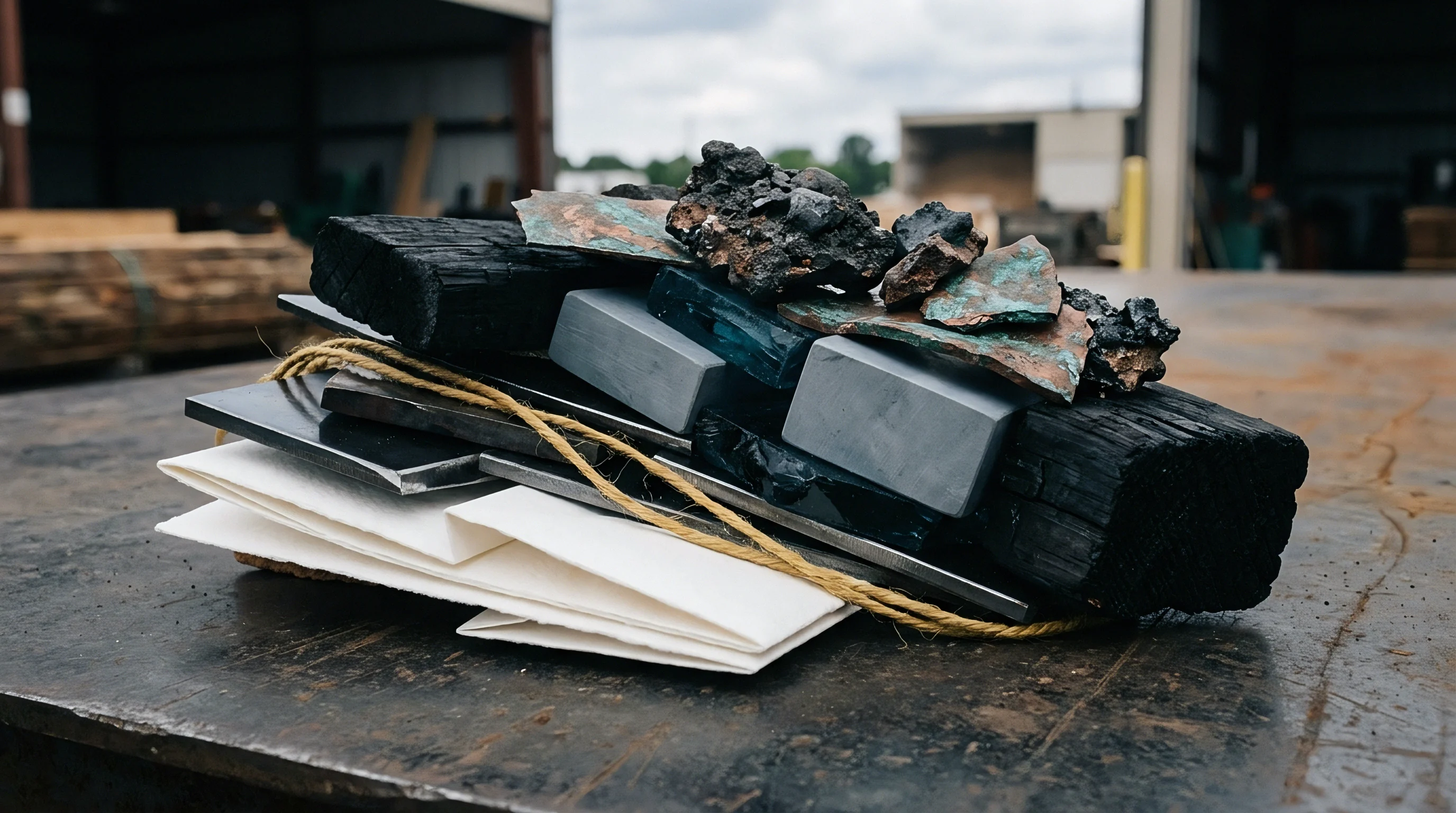
Are Aerobic Compostability Certificates Protective for Anaerobic Systems?
The assumption that an industrial composting certificate guarantees anaerobic process safety creates immediate exposure for municipal operators. EN 13432 evaluates ecotoxicity in mature compost using plant growth trials with barley and cress. It contains zero requirements evaluating anaerobic methanogenic toxicity.
Packaging converters presenting industrial compostability certification to municipal wet digesters misrepresent the biological suitability of their material.
Compostability certificates conforming to EN 13432 certify compliance with aerobic biodegradation and mature compost ecotoxicity without validating methanogenic consortium survival.
Feedstock specifications for municipal wet digesters demand testing against ISO 13641, which screens anaerobic microbial inhibition via biogas inhibition assays. Sourcing directors buying coated kraft stock or barrier-lined board for food service packaging must confirm whether client waste streams route to dry composting tunnels or wet anaerobic tanks. The distinction determines whether the packaging operates as a clean carbon source or an enzymatic poison.


Digester
Mathematical quantification of leaching kinetics requires evaluating the mass balance of paper packaging across the reactor hydraulic retention time. A typical municipal wet digester operates at twenty days hydraulic retention time with ten percent total solids. Paper packaging represents between five and fifteen percent of incoming dry matter in urban organic collection systems.
Consider a continuous stirred reactor receiving 100 tonnes per day of wet source-separated food waste at fifteen percent total solids. This delivers fifteen tonnes of dry matter daily. Packaging comprises ten percent of dry solids, equal to 1.5 tonnes per day.
If a poly-coated paperboard contains 120 milligrams per kilogram of zinc originating from its barrier emulsion, the digester receives 180 grams of zinc daily from the fiber stream alone.
Equilibrium leaching depends on sulfide complexation. Municipal sewage sludge and food waste contain dissolved sulfates. Sulfate-reducing bacteria generate hydrogen sulfide, precipitating metal ions as insoluble sulfides with solubility product constants below ten to the minus twenty.
Packaging containing sulfur-chelating biopolymers or low-sulfur food waste upsets this precipitation mechanism.

Leaching Rate Calculations
Leaching follows non-steady diffusion kinetics governed by Fickian transport through swollen cellulosic matrices. When coated board is sheared in a municipal pulper, surface area expands four hundred percent. Aqueous extractants penetrate the exposed fiber edges within forty minutes.
- Substrate shredding produces particle sizes between ten and twenty millimeters, exposing internal laminate interfaces directly to microbial enzymes.
- Hydrolytic wetting saturates the fiber matrix, displacing bound metal ions into the surrounding water within six hours of contact.
- Biological depolymerization breaks down cellulose chains, destroying the hydrogen bonding that physically entraps pigment particles.
- Equilibrium partitioning distributes free ions between solid biomass flocs and the bulk aqueous phase based on ambient pH and redox potential.
A testing laboratory evaluates this release curve using batch leaching reactors under controlled anaerobic gas headspace containing sixty percent methane and forty percent carbon dioxide. Aliquots drawn at intervals of four, twelve, twenty-four, and seventy-two hours isolate the dissolution kinetics. Inductively coupled plasma mass spectrometry quantifies elemental concentrations in membrane-filtered liquid fractions.
Metal release correlates with fiber fibrillation. Uncoated recycled paperboard releases up to eighty percent of its trace copper content within twenty-four hours due to rapid fiber breakdown. Sizing agents, wet-strength polyamidoamine-epichlorohydrin resins, and bio-polyester coatings retard water penetration, delaying leaching until the tenth day.
This delayed pulse coincides with the peak of volatile fatty acid release, maximizing toxic impact on Methanosarcina colonies when the system possesses its lowest chemical buffering capacity.


Digestate
Digestate leaving municipal reactors undergoes solid-liquid separation. The liquid fraction recirculates or undergoes nitrogen removal before sewer discharge. The solid digestate cake faces land application as fertilizer or soil conditioner under strict agricultural purity standards.
Toxic elements entering through food packaging remain in this residual stream.
European Union Fertilising Products Regulation 2019/1009 fixes stringent upper limits for contaminants in organic soil improvers derived from digested municipal waste. Packaging materials that pass initial input checks can concentrate metals in the final cake beyond marketable thresholds. Volatile solids destroy during methanogenesis, reducing total mass by forty to sixty percent while total metal masses remain constant.
| Contaminant Element | EU 2019/1009 Cake Limit (mg/kg dry) | Feedstock Baseline (mg/kg dry) | Permissible Packaging Load (mg/kg) | Concentration Multiplier |
|---|---|---|---|---|
| Cadmium (Cd) | 1.5 | 0.4 | 0.6 | 2.1x |
| Copper (Cu) | 300.0 | 75.0 | 180.0 | 1.9x |
| Nickel (Ni) | 50.0 | 18.0 | 35.0 | 2.2x |
| Lead (Pb) | 120.0 | 25.0 | 60.0 | 2.0x |
| Zinc (Zn) | 800.0 | 220.0 | 450.0 | 1.8x |
Trace elements that do not inhibit methanogenic fermentation still breach agricultural return criteria. A packaging board grade containing 100 milligrams per kilogram of lead complies with the EN 13432 packaging threshold of 50 milligrams per kilogram? No. The packaging standard allows fifty milligrams per kilogram.
If the baseline food waste contains twenty-five milligrams per kilogram, and sixty percent of volatile solids convert to biogas, the resulting digestate cake exhibits fifty-five milligrams of lead per kilogram. Addition of packaging containing near-limit quantities drives digestate into hazardous waste disposal classification.
Land application bans carry severe financial consequences for facility operators. Certified organic farms reject digestate containing synthetic residues or elevated zinc loads. Municipal operators monitor delivery dockets, tracing contamination back to commercial waste generators and their packaging specifications.
Digestate Heavy Metal Mass Balance
Calculating the true contaminant liability requires auditing the chemical ledger of all printing auxiliaries. Pigment manufacturers sometimes use extender clays containing natural traces of arsenic and cadmium. Waterborne acrylic inks substituted for offset inks avoid aromatic solvents while introducing soluble zinc carbonate complexes.
- Pigment purity certificates verifying trace element composition below fifty parts per million for all primary colors and black formulations.
- Wet strength additive disclosures confirming absence of heavy metal crosslinkers or organohalogen preservatives.
- Recycled fiber batch screening documenting mineral oil, lead, and cadmium levels across incoming baled feedstock.
- Batch anaerobic digestibility declarations detailing methane production curves and volatile fatty acid generation profiles over twenty-one days.
The packaging buyer must audit the chemical footprint of inks, barriers, and sizing agents. Mill compliance files must contain complete inductively coupled plasma mass spectrometry analysis of finished converted articles, not just virgin baseboards.

Settlement
Legal exposure settles on the entity that places non-compliant packaging into commercial distribution. Under national Extended Producer Responsibility frameworks aligned with the European Packaging and Packaging Waste Regulation, producers pay modulated eco-contributions based on verified circular recyclability. Packaging designed for organic recycling that disrupts municipal treatment facilities triggers penalty fee bands, loss of certification, and mandatory product recalls.
Digestion facility operators pursue civil restitution when reactor souring occurs. Restoring an inhibited 2000-cubic-meter anaerobic digester requires terminating feed intake, flaring off-specification sour gas, injecting lime for pH adjustment, and trucking in fresh active sludge from an external wastewater facility. Costs routinely exceed two hundred thousand euros per incident, excluding lost green energy tariffs.
Commercial purchase contracts must assign biological failure indemnity to converters whose supplied materials cause documented methanogenic inhibition in licensed municipal reactors.
When environmental regulators sample agricultural digestate and identify heavy metal concentrations exceeding legal application limits, regional waste agencies revoke the processing facility permits. The facility redirects digestate cake to municipal solid waste incineration at gate fees between one hundred twenty and two hundred euros per tonne. The operator seeks indemnification from the commercial brand whose packaging carried unsupported biological recovery claims.

Contractual Allocation of Treatment Risk
Brand procurement contracts demand precise warranty wording addressing biological processing behavior. Relying on generic statements of compostability leaves the buyer exposed to downstream operator claims. Commercial agreements require converters to warrant compliance with biological process stability standards under realistic waste facility conditions.
A robust supply covenant mandates supplier participation in accredited batch validation schemes. Converter warranties must guarantee that delivered lots match tested prototypes in both total chemical composition and leaching performance. When base paper mills alter sizing agents or ink suppliers reformulate pigments without notification, the buyer faces immediate border and retail exposure.
Customs officials verifying packaging declarations under international green claims regulations review technical construction dossiers. Packaging labeled with composting logos lacking underlying anaerobic inhibition testing risks commercial impoundment at import terminals. Compliance officers demand complete laboratory documentation proving that every structural layer, coating, and printing system biodegrades without leaching toxic substances into municipal recovery infrastructure.
The standard procurement contract changes fundamentally when buyer specifications incorporate the operational requirements of municipal biological reactors. Failure to verify liquid-phase metal leaching leaves the packaging buyer holding ultimate legal and financial liability for failed municipal digestion cycles.