Recovered Fiber Testing for Deforestation Free Packaging Compliance
Proving deforestation exemption for recycled packaging requires microscopic and chemical fiber testing to defend secondary furnish claims against border holds.


Scope
European Regulation EU 2023/1115 mandates strict geolocation traceability down to individual plot boundaries for all virgin wood fiber entering supply chains that feed market entries within the European Union. Products manufactured entirely from recovered fiber, including post-consumer waste paperboard and pre-consumer converting scrap, sit under an explicit exemption clause within Article 3. That exemption removes the requirement to produce plot-level geographic coordinates for the tree harvest sites.
It introduces a separate analytical burden: the party placing the material on the market carries legal responsibility for proving that zero unverified virgin fiber has been blended into the recycled slurry.
The operational liability shifts immediately from forestry mapping to laboratory verification. Containerboard, folding boxboard, and molded pulp packaging declared as one hundred percent recycled often draw from complex global waste streams where post-consumer bales contain mixed inputs. If a mill blends undocumented virgin kraft pulp to boost burst strength or internal bond values without executing full deforestation due diligence for those virgin trees, the entire batch loses exemption status.
Customs authorities and national competent bodies inspect imported packaging shipments using physical fiber testing to detect undeclared virgin softwood or hardwood fibers within secondary pulp lots.
Non-compliance with Article 3 of Regulation EU 2023/1115 results in immediate rejection of the customs declaration and mandatory port side quarantine.
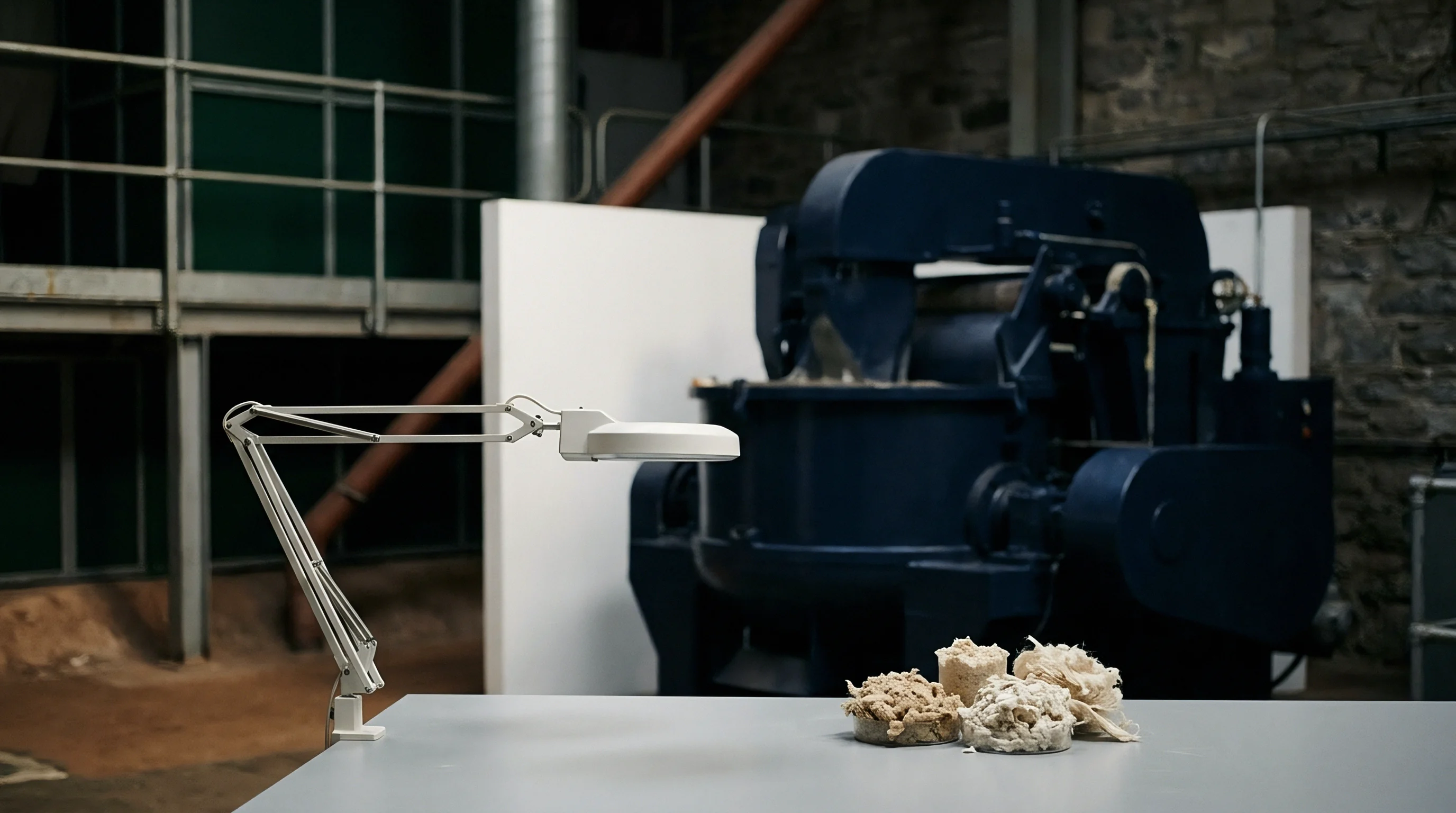
Deforestation Regulations and Recycled Exemption Boundaries
Regulatory frameworks categorizes secondary fiber by its origin within the production cycle. Post-consumer materials consist of paper and board collected after end-use fulfillment, such as discarded corrugated boxes, printed newsprint, and office waste. Pre-consumer materials encompass dry converting offcuts, printer waste, and mill broke that has passed beyond the primary pulping stage.
Both categories qualify for the exemption provided they contain no newly harvested virgin timber that bypasses due diligence statements.
Disputes emerge when mills utilize market pulp derived from sawmill residues alongside recovered paper. Sawmill offcuts rank as virgin wood inputs under timber regulations. Blending ten percent virgin softwood kraft into a secondary fiber furnish to achieve specified ring crush test targets requires complete plot-level tracing for those sawmill logs.
Omitting those coordinates while claiming full recycled status constitutes a commercial breach and an regulatory infraction at port entry points.

Documentary Exposure in Fiber Blend Claims
Chain of custody certificates issued under third-party certification schemes track material flows through credit, percentage, or transfer accounting models. A certificate scope carrying an FSC Recycled or PEFC Recycled claim confirms that book-entry balance records were audited annually. It does not provide physical proof of the exact fiber distribution inside a specific pallet delivered to a converting plant.
Importers facing border audits must present laboratory test reports alongside commercial shipping documents. Customs officers do not rely on invoice declarations alone when checking secondary pulp shipments from high-risk origins. A failure to substantiate a one hundred percent recovered fiber claim with scientific testing exposes the buyer of record to administrative fines, shipment confiscation, and compulsory market withdrawals.
- Documentary Misalignment occurs when supplier invoices specify recycled status while customs entry declarations list tariff codes associated with primary virgin pulps.
- Unverified Credit Transfers happen when mills allocate recycled credit balances to physical orders that contain high ratios of primary virgin fibers.
- Contaminated Waste Inputs surface when imported secondary waste bales contain unsorted virgin mechanical pulp fractions above threshold limits.
- Missing Laboratory Proof leaves packaging buyers unable to counter competent authority enforcement actions during random border sampling checks.
Suppliers frequently defend discrepancies by stating that certified credit system accounting permits physical fiber mixing provided the net ledger balance remains zero at the close of the auditing period.


Morphology
Automated optical image analysis evaluates thousands of individual fibers in a suspended aqueous sample to quantify physical dimensions and structural degradation. Secondary fibers undergo mechanical shear, chemical refining, and drying cycles during their initial conversion and subsequent repulping. These mechanical events leave distinct physical signatures on the cell structures that separate secondary pulp from primary virgin material.
Virgin pulps display intact cell walls, uniform lumen diameters, and smooth surface structures consistent with primary chemical pulping. Recycled fibers show pronounced physical wear, including high kink counts, micro-compressions along the fiber length, split cell walls, and shortened mean length distributions. Measuring these morphological variables establishes a baseline index used to confirm whether a pulp batch originated from virgin wood or recovered waste streams.

Automated Optical Fiber Analyzers and Structural Metrics
Modern laboratory instrumentation, such as MorFi and Kajaani optical analyzers, measures fiber length distributions from two hundred micrometers up to ten millimeters. The instrument pumps a diluted fiber suspension through a narrow glass flow cell while high-speed digital cameras capture images under polarized light illumination. Computer algorithms calculate mean length, width, coarseness, and fines percentage across tens of thousands of fibers per minute.
Coarseness represents fiber mass per unit length, expressed in milligrams per hundred meters. Primary virgin softwood fibers exhibit high coarseness values, typically ranging from fifteen to twenty-five milligrams per hundred meters, depending on species and latewood content. Recycled softwood fibers demonstrate reduced coarseness due to surface fibrillation and structural wall peeling during successive repulping operations.
Fines content, defined as fragments shorter than two hundred micrometers, increases dramatically in secondary pulps as fiber ends break off under mechanical stress.

Deformation Markers and Secondary Processing Fines
Drying cycles induce irreversible structural collapse within the internal pore architecture of paper fibers. This phenomenon, termed hornification, reduces cell wall flexibility and locks the lumen in a flattened state. Polarized light microscopy combined with automated image analysis detects this lumen collapse across secondary fiber samples.
Micro-compressions and dislocations along the longitudinal axis of the fiber wall mark secondary mechanical processing. Primary chemical pulps straight out of a digester display low kink indices, whereas recycled fibers show high kink indices due to repeated mechanical refining and pumping through high-consistency stock pumps. Quantification of these deformation markers allows testing facilities to verify secondary fiber presence and estimate the extent of previous mechanical handling.
Secondary fibers subjected to multiple repulping cycles exhibit shortened lumens and fibrillated ends under polarized light.
Repeated repulping progressively degrades fiber length until structural wall integrity collapses completely under load.
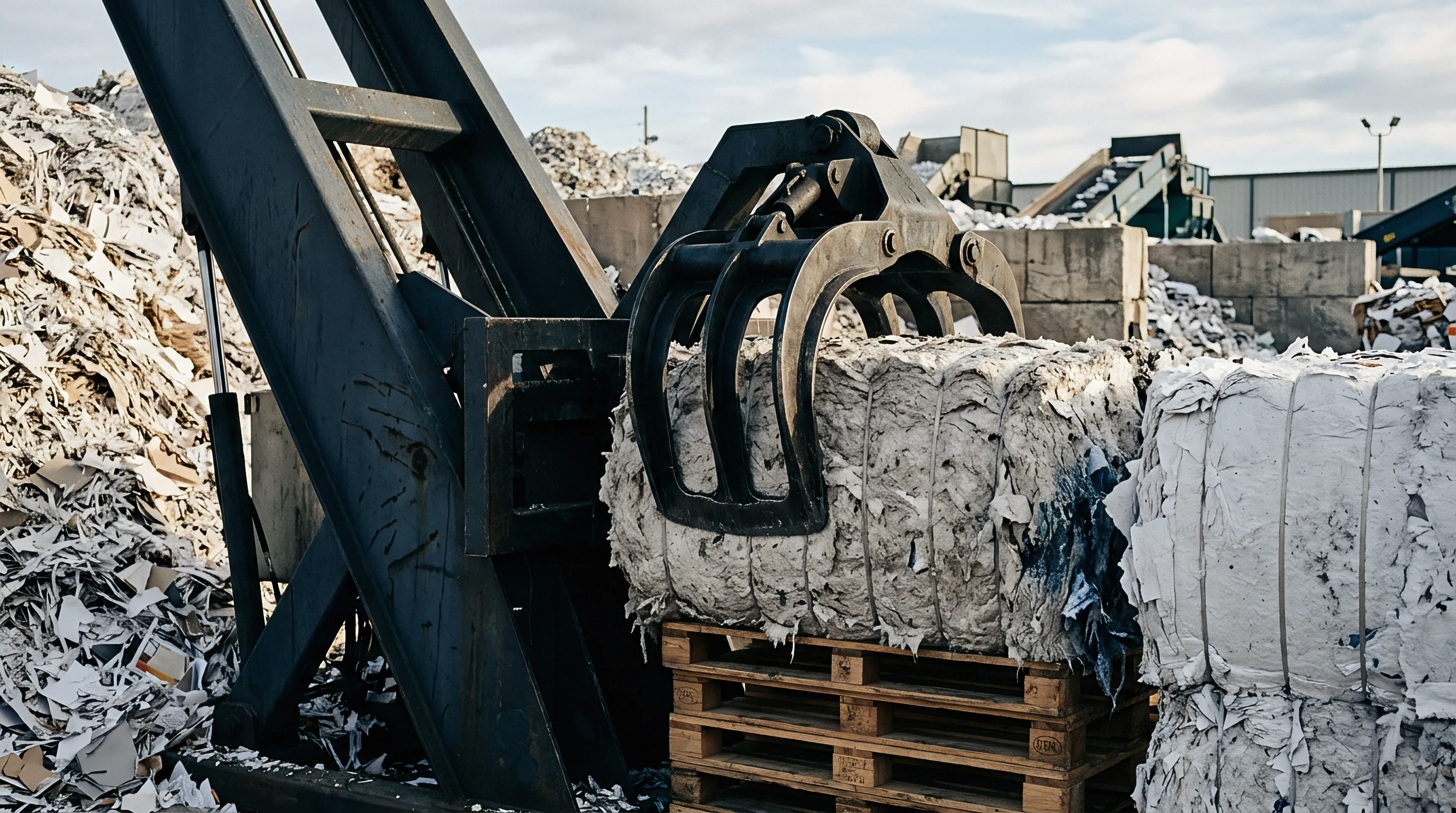

Stain
Chemical staining combined with optical microscopy remains the foundational standard for qualitative and quantitative fiber furnish analysis. Standards detailed in ISO 9184-1 through ISO 9184-7 govern sample preparation, reagent formulation, optical measurement, and fiber counting procedures. Exposing fiber samples to specific chemical color indicators yields instantaneous visual differentiation between pulping processes and raw material origins.
Microscopic inspection under brightfield illumination reveals cellular features unique to specific botanical classes. Softwood tracheids feature distinct cross-field pitting patterns, such as window-like pits in Scots pine or bordered pits in Douglas fir. Hardwood pulps contain vessel elements with perforation plates that confirm broadleaf tree species.
Observing these anatomical markers allows wood anatomists to verify species origins against regional deforestation risk profiles.
Microscopic Identification Protocols under ISO Standards
Standard ISO 9184-3 defines the preparation and application of Graff C-stain, a complex aqueous solution containing aluminum chloride, calcium chloride, zinc chloride, iodine, and potassium iodide. When applied to a dried fiber specimen mounted on a glass slide, Graff C-stain produces specific color reactions based on residual lignin content and carbohydrate structure.
Unbleached chemical kraft fibers turn a distinctive yellow-brown color under Graff C-stain due to moderate residual lignin presence. Bleached chemical kraft pulps react to produce light blue or violet-blue hues, signaling complete delignification. Mechanical pulps, rich in native lignin, turn bright yellow.
Secondary fiber furnish yields a heterochromatic field of view, displaying an array of yellow, blue, red, and brown fibers within a single microscopic slide prep.
Does Optical Fiber Analysis Quantify Mechanical Pulp Contamination?
Quantifying mechanical pulp contamination in packaging grades requires calculating color-differentiated fiber counts across multiple fields of view. The testing analyst slides the specimen across a mechanical stage, counting every fiber crossing a fixed crosshair grid line until reaching a minimum sample count of five hundred fibers. Each fiber category is multiplied by its standardized weight factor to convert optical counts into percentage mass values.
| Reagent Name | Chemical Composition | Target Fiber Class | Color Response |
|---|---|---|---|
| Graff C-Stain | Aluminum, calcium, zinc chlorides with iodine | Unbleached vs Bleached Kraft and Mechanical | Yellow-brown (unbleached), Blue-violet (bleached), Yellow (mechanical) |
| Herzberg Stain | Zinc chloride and aqueous iodine solution | Rag, Chemical Wood, and Mechanical Pulps | Pink-red (rag), Blue-violet (chemical), Yellow (mechanical) |
| Lofton-Merritt | Malachite green and basic fuchsin dyes | Unbleached Softwood Kraft vs Sulfite | Blue-green (kraft), Purple-red (sulfite) |
| Sellers Stain | Fluorescein sodium salt and methylene blue | Bleached Softwood vs Hardwood Kraft | Bright green (softwood), Deep blue (hardwood) |
Herzberg stain, governed by ISO 9184-4, relies on zinc chloride and iodine to separate rag fibers from wood pulps. Rag fibers containing high alpha-cellulose turn deep red-pink, chemical wood pulps turn blue-violet, and groundwood pulps turn yellow. Utilizing complementary stain formulations on duplicate slide preparations resolves ambiguous color responses in heavily refined secondary stocks.
Can automated color spectrometry replace the human analyst when counting stained fiber mixtures under high magnification?

Lignin
Chemical analysis provides quantitative verification of fiber pulping history by measuring residual macromolecular components. Lignin content serves as a primary marker distinguishing chemical virgin pulps from mechanical pulps and secondary recovered stocks. Chemical pulping methods dissolve the middle lamella to remove lignin, leaving pulps with residual lignin levels below five percent by mass.
Mechanical pulping retains virtually all native lignin present in the original timber logs.
Secondary containerboard grades often combine unbleached kraft secondary fibers with post-consumer boxboard waste containing groundwood pulps. Determining the exact ratio of chemical pulp to mechanical pulp requires standardized chemical digestion techniques. Kappa number testing, standardized under ISO 302, measures the volume of potassium permanganate solution consumed by a dry pulp sample under controlled temperature and reaction duration conditions.

Chemical Assays and Residual Content Measurement
Testing under ISO 302 involves reacting five grams of moisture-free pulp with a standard hundred-millimolar potassium permanganate solution at twenty degrees Celsius for ten minutes. Acidification with sulfuric acid followed by titration against sodium thiosulfate determines the unreacted permanganate volume. The resulting Kappa number correlates directly with residual lignin content across chemical and semi-chemical pulps.
Virgin unbleached softwood kraft pulps used in high-performance linerboards typically exhibit Kappa numbers between thirty-five and seventy. Secondary fibers sourced from old corrugated containers display lower and highly variable Kappa numbers, usually ranging from eighteen to thirty-five, due to the dilution effect of bleached fibers, fillers, and starches present in mixed post-consumer waste streams. Secondary stocks containing undeclared mechanical pulp inclusions produce elevated Kappa values that deviate from expected chemical pulp baselines.
Mass Percentage Calculations via Fiber Weight Factors
Converting optical fiber counts into accurate dry mass percentages requires applying standardized weight factors, denoted as F-factors. Different wood species and pulping processes yield fibers with vastly different coarseness values. Counting a hundred pine fibers and a hundred birch fibers without applying weight factors introduces severe mass errors because pine fibers carry significantly more mass per unit length than birch fibers.
Standard ISO 9184-1 establishes baseline F-factors calibrated against unbleached softwood chemical pulp set at a reference value of 1.00. High-density hardwoods carry F-factors below 1.00, while coarse mechanical pulps carry values above 1.50. Analysts multiply the counted fiber frequency by the species-specific F-factor to calculate corrected mass proportions.
Consider a laboratory trial evaluating a forty-tonne consignment of imported testliner declared as one hundred percent secondary fiber. The microscopic examination across five hundred counted fibers yields three distinct fiber populations: three hundred unbleached softwood chemical fibers, one hundred bleached hardwood chemical fibers, and one hundred unbleached softwood mechanical fibers.
The calculation applies standard weight factors: unbleached softwood chemical receives an F-factor of 1.00; bleached hardwood chemical receives an F-factor of 0.60; unbleached softwood mechanical receives an F-factor of 1.40. Multiplying counted frequencies by respective factors produces adjusted mass units: three hundred multiplied by 1.00 equals 300; one hundred multiplied by 0.60 equals 60; one hundred multiplied by 1.40 equals 140. Summing these values yields a total adjusted mass factor of 500 units.
Dividing individual mass units by the total factor calculates dry mass percentages: unbleached softwood chemical comprises sixty percent of the mass; bleached hardwood chemical accounts for twelve percent; unbleached softwood mechanical represents twenty-eight percent. The presence of twenty-eight percent mechanical pulp by mass indicates either heavy inclusion of groundwood post-consumer waste or undeclared virgin mechanical pulp additions. If the supplier claimed the product consisted exclusively of chemical secondary packaging waste, the twenty-eight percent mechanical figure invalidates the supply declaration.
| Test Parameter | Standard Designation | Target Measurement | Detection Capability |
|---|---|---|---|
| Kappa Number | ISO 302 / TAPPI T 236 | Permanganate consumption by residual lignin | Differentiates chemical pulps (low) from mechanical pulps (high) |
| Ash Content at 525 °C | ISO 1762 / TAPPI T 211 | Inorganic filler residue (calcium carbonate, kaolin) | Identifies post-consumer recycled content via mineral filler loading |
| Pyrolysis-GC/MS | ASTM D3452 modification | Synthetic polymer and resin degradation products | Detects wet-strength resins, binders, and plastic laminates |
| Thermogravimetric Analysis | ISO 11358-1 | Mass loss curves under thermal decomposition | Quantifies organic fiber versus inorganic pigment fractions |
Executing chemical assays without verifying species-specific weight factors yields mass calculations that fail under regulatory scrutiny during administrative appeals.
- Chemical Screening Protocol ~ Obtain representative pulp samples from three distinct locations within the consignment package.
- Permanganate Titration ~ Measure residual lignin via ISO 302 to confirm pulping process classification.
- Ash Determination ~ Furnace samples at five hundred twenty-five degrees Celsius to measure inorganic filler levels.
- Pyrolysis Analysis ~ Subject insoluble residues to gas chromatography to detect synthetic adhesive contamination.
Relying on uncalibrated weight factors during fiber mass calculations distorts mechanical pulp percentages and leads to false non-compliance declarations at port checkpoints.


Sampling
Validating large consignments of paper and board requires rigorous statistical sampling protocols to ensure laboratory test specimens accurately reflect the entire production run. Standard ISO 186 defines the procedure for drawing representative samples from units of paper, board, or pulp. Extracting test pieces without adhering to randomized spatial distribution patterns invalidates laboratory reports during border dispute proceedings.
A single paper machine reel can weigh upwards of thirty tonnes and span six meters in width. Secondary fiber distribution within a reel varies across the cross-machine direction and along the machine direction due to stock chest stratification and chest turnover dynamics. Testing personnel must sample multiple reels across diverse production intervals to establish statistically valid compliance profiles for full shipping lots.
Batch Representative Protocols and Statistical Verification
Determining the number of packaging units to sample under ISO 186 depends on the total lot size. For lots containing up to one hundred units, five units are selected. For lots ranging from one hundred to five hundred units, five percent of the total units are sampled.
When a lot exceeds five hundred units, the sample size equals the square root of the total unit count rounded up to the nearest whole integer.
Extracting test pieces involves discarding the outermost five layers of a reel to eliminate surface contamination, moisture absorption, and physical handling damage. Technicians cut full-width strips across the machine direction, taking care to mark top side and wire side orientation. Samples are immediately sealed in vapor-barrier bags to maintain baseline moisture levels prior to laboratory conditioning at twenty-three degrees Celsius and fifty percent relative humidity under ISO 187.
A fiber count of five hundred particles under ISO 9184-1 yields a ninety-five percent statistical confidence limit for furnish composition.
Chain of Custody Reconciliation and Credit Account Scopes
Documentary audit trails under chain of custody systems rely on mass balance reconciliations. Certified mills maintain credit accounts where physical inputs of certified virgin pulp or post-consumer recovered paper generate volume credits. These credits are subsequently assigned to specific outgoing sales orders.
A mill operating a credit system may legally produce a packaging batch containing uncertified virgin fiber, provided sufficient credit balance exists in its accounting ledger.
Physical laboratory testing of a packaging batch produced under a credit system can reveal uncertified virgin softwood fibers despite the shipment carrying a valid FSC Recycled or PEFC Recycled claim on paper. This divergence between physical reality and documentary accounting creates severe exposure under deforestation regulations. Deforestation enforcement authorities judge compliance on physical content within the specific article imported, regardless of abstract credit ledger balances maintained at distant mill headquarters.
- 1. Identify the total consignment size and calculate the sample unit count under ISO 186 rules.
- 2. Select target pallets randomly across the front, middle, and rear sections of the freight container.
- 3. Strip off protective stretch wrap and discard the outer five packaging sheets or outer reel layers.
- 4. Cut twenty full-depth specimen sheets measuring thirty by thirty centimeters from each sample unit.
- 5. Seal specimens inside labeled moisture-proof poly bags and log environmental sampling parameters.
- 6. Dispatch specimens under formal chain of custody seal to an ISO 17025 accredited paper testing facility.
Commercial purchase orders incorporating ISO 186 sampling protocols establish that laboratory findings based on joint sampling procedures constitute binding evidence for quality and compliance disputes.


Frontier
Customs authorities operating at international entry ports enforce zero-tolerance thresholds for undeclared virgin forest products. Importers of record bear sole legal responsibility for proving that packaging materials qualify for recovered fiber exemptions. When border agents detain a containerboard shipment based on physical sampling or missing documentation, storage fees and demurrage charges accumulate rapidly while samples undergo laboratory testing.
Detention mechanics follow strict administrative timelines. Port health and environmental surveillance officers freeze the entry declaration, issuing a formal notice of hold. The importer receives a fixed window, usually fifteen working days, to submit counter-evidence or accredited laboratory reports demonstrating that the fiber furnish complies fully with deforestation exemption rules.
Failure to submit compliant proof leads to re-export mandates or compulsory destruction orders executed at the importer expense.

Customs Detention Mechanics and Regulatory Evidence Dossiers
Constructing a defensible compliance dossier requires assembling both documentary and physical test evidence prior to shipping. A complete dossier contains the bill of lading, commercial invoice, mill analytical certificates, ISO 17025 fiber analysis test reports, and mill process flow diagrams verifying secondary repulping capability. Relying solely on a supplier generic claim of compliance leaves the importer defenseless when physical sampling reveals uncertified virgin fibers.
Advanced dossiers include full chemical and morphological profiles for every paper grade specified in long-term supply agreements. Baseline datasets establish the historical range of Kappa numbers, ash content, and fiber length distributions for a specific mill output. When a border inspection yields figures that match the established baseline, customs analysts clear the consignment without requiring extended secondary bench testing.

Contractual Compliance Clauses and Liability Allocation
Procurement agreements for packaging products must explicitly define compliance obligations, testing protocols, and financial indemnities. Standard purchase order language specifying general merchantable quality fails to protect buyers from regulatory seizures under deforestation laws. Contracts must tie payment terms directly to physical batch verification and documentary compliance.
Effective clauses require suppliers to guarantee that all packaging supplied under the contract contains exclusively recovered fiber or fully documented, geolocated virgin timber. The clause specifies that any detection of undeclared virgin fiber by an accredited laboratory invalidates the invoice, shifts all port demurrage and legal fees onto the supplier, and grants the buyer immediate rights of contract termination.
- Guaranteed Furnish Declarations demand explicit mill-certified percentage breakdowns of post-consumer, pre-consumer, and virgin fiber components for every manufacturing batch.
- Accredited Testing Covenants obligate suppliers to provide third-party ISO 17025 test reports for fiber furnish analysis upon buyer request within forty-eight hours.
- Port Demurrage Indemnifications assign full financial responsibility for customs detention fees, demurrage, and container storage costs arising from non-compliant fiber inputs.
- Regulatory Withdrawal Guarantees mandate that suppliers cover all costs associated with product recalls, inventory write-offs, and administrative fines triggered by non-compliant packaging.
A standard indemnity clause specifies that the supplier shall defend, indemnify, and hold harmless the buyer against all administrative penalties, port fees, legal expenses, and commercial damages resulting from physical laboratory findings that contradict the supplier written raw material declarations.
Commercial risks expand when packaging buyers operate across multiple legal jurisdictions with divergent compliance standards. A packaging lot cleared in one region may face immediate seizure in another due to localized interpretations of pre-consumer waste classification. Integrating microscopic fiber verification into standard quality assurance receiving protocols eliminates reliance on supplier self-declarations and secures supply chain integrity across all destination markets.