Spectroscopic Tracer Recovery Verification in Extruded Paperboard Barrier Coatings
Spectroscopic tracer recovery in extruded board barriers requires matrix-matched baselines to decouple coating taggant signals from fiber and clay interference.

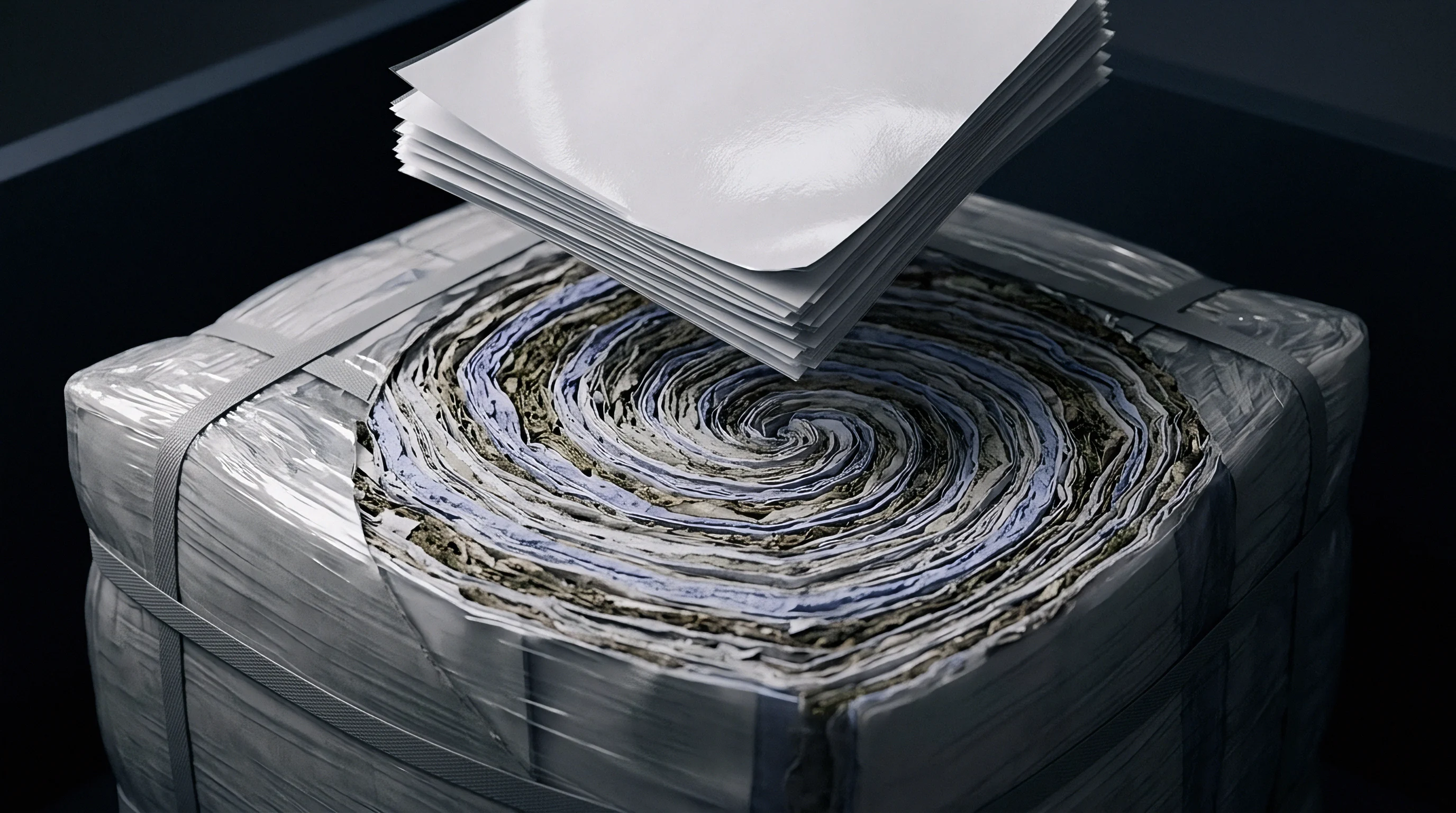
Melt
Extrusion coating lines running liquid packaging board or cupstock verify barrier film uniformity and polymer composition by measuring tracer recovery rates directly from converted reels. The extruder barrel maintains 315°C across the final metering zone. Polymer pellets pre-compounded with inorganic or organometallic tracer chemistries feed the throat under dry nitrogen blanketing to minimize premature oxidative cleavage.
When low-density polyethylene or polybutylene succinate passes through the coat-hanger die at feed rates exceeding four hundred kilograms per hour, hydrodynamic shear stresses reach three thousand reciprocal seconds. These physical conditions threaten the chemical integrity of organic fluorophores while challenging the spatial distribution of heavier inorganic micro-particles.
Resin dwell time governs thermal loss. Molten web draw-down occurs across an air gap of one hundred fifty to two hundred millimeters before contacting the paperboard substrate at the nip roll. During this brief airborne transit, ambient oxygen attacks vulnerable chemical bonds in complex tracer molecules, reducing subsequent spectroscopic emission intensity.
Inorganic rare earth oxides like yttrium vanadate and lanthanum aluminate withstand these thermal conditions without losing crystal lattice luminescence. Organic near-infrared dyes, however, suffer irreversible thermal bleaching when web temperatures remain elevated above two hundred eighty degrees Celsius for more than two seconds.
Recovery yields for lanthanide oxide taggants drop below eighty-two percent when extrusion temperatures exceed three hundred and fifteen degrees Celsius at screw speeds under forty revolutions per minute.
The chill roll pressure reaches 0.4 MPa. This mechanical force drives the molten polymer skin into the open surface pores of the unbleached or bleached paperboard fibers. High nip pressure anchors the film mechanically, yet it forces a fraction of the compounded tracer particles beneath the optical plane of subsequent surface instrumentation.
This embedding phenomenon lowers perceived recovery values during post-extrusion reflection readings even when the total mass of taggant in the resin remains intact.
- Thermal dissociation cleaves vulnerable conjugated pi-electron systems in heterocyclic fluorescent molecules under elevated die lip temperatures.
- Screw shear agglomeration forces nanoscale inorganic particles into dense clusters that alter local optical cross-sections across the extruded web.
- Melt filtration dropouts trap larger taggant agglomerates on eighty-mesh screen packs, depleting the final coating of active tracer species.
- Oxidative quenching occurs at the molten web interface when high draw ratios expand the exposed surface area before chill roll contact.
Masterbatch preparation controls downstream analytical success. Resin compounders introduce tracer concentrates through twin-screw extruders operating with specific mechanical energy inputs between 0.18 and 0.24 kilowatt-hours per kilogram. Inadequate dispersive mixing yields patchy tracer distribution, causing high relative standard deviations across cross-web sampling coupons.
High-dispersion screw elements break agglomerates down to primary particle sizes below two micrometers, guaranteeing that any twenty-millimeter spectroscopic sampling aperture captures a statistically representative tracer mass.
Converting facilities frequently receive masterbatch lots with unverified dilution instructions. Resin suppliers regularly argue that minor thermal degradation in the extruder barrel remains harmless because downstream optical sorting equipment detects relative peak positions rather than absolute emission counts.

Beam
Electromagnetic radiation directed at the polymer-coated paperboard surface provides rapid quantification of embedded tracers without destroying commercial stock. Energy dispersive X-ray fluorescence and attenuated total reflectance Fourier-transform infrared spectrometers interrogate the extruded barrier layer at distinct operational depths. Incoming X-ray photons penetrate through the entire twenty-gram coating layer and enter the base paperboard, generating characteristic fluorescent lines for inorganic markers such as yttrium, zirconium, and lanthanum.
In contrast, infrared evanescent waves probe only the upper 0.8 to 2.2 micrometers of the coating, limiting their analytical scope to surface phenomena.
Photon absorption drops along the transverse axis. The angle of incidence in optical reflection rigs dictates whether the excitation energy interacts solely with the extrusion layer or excites fluorophores situated deep within the cellulose network. When using benchtop ultraviolet and near-infrared spectrometers to track anti-counterfeiting taggants or sorting identifiers, precise alignment of the optical axis prevents specular glare from the semi-gloss polyolefin surface.
Glare saturates charge-coupled device detectors, distorting the baseline and masking weak tracer emission peaks.
| Spectroscopic Technique | Excitation Source | Penetration Depth | Target Tracer Chemistry | Lower Detection Limit |
|---|---|---|---|---|
| Energy Dispersive X-Ray Fluorescence | Rhodium target X-ray tube (30 kV) | 15 to 80 µm | Inorganic rare earth oxides (Y, La, Ce) | 5 ppm |
| Attenuated Total Reflectance FTIR | Mid-infrared ceramic glow emitter | 0.8 to 2.5 µm | Aliphatic esters, oxazoline ring tags | 250 ppm |
| Shortwave Infrared Reflectance | Tungsten-halogen lamp (900-1700 nm) | 50 to 200 µm | Rare-earth phosphors, ceramic taggants | 50 ppm |
| Confocal Micro-Raman | Diode laser (785 nm, 50 mW) | 2 to 15 µm | Inorganic functional crystals, rutile | 20 ppm |
Attentuation skews the emission count. A measured 94.2% recovery rate via energy dispersive X-ray fluorescence on an eighteen-gram low-density polyethylene coating rests on 2022 DIN 55675 interlaboratory trials across forty-five samples compounded with five hundred parts per million yttrium oxide. That benchmark holds under laboratory geometries with an incident angle of forty-five degrees and thirty-second dwell times.
The recovery calculation would drop below eighty-five percent if paperboard mineral filler levels exceed 3.5% calcium carbonate, because backscattered Bremsstrahlung radiation raises the spectral noise floor precisely where the yttrium K-alpha emission peak appears at 14.95 keV.
- Instrument warm-up stabilizes detector temperature at minus twenty degrees Celsius to suppress electronic thermal noise.
- Standard calibration verifies detector gain against an internal pure copper reference disc before batch evaluation.
- Substrate profiling records the specific background scatter of unextruded baseboard from the identical mill reel.
- Sample clamping secures the coated board coupon under flat pneumatic pressure to eliminate air gaps against the aperture.
- Integration timing collects spectral counts over sixty live seconds to achieve counting statistics below one percent uncertainty.
Raman spectroscopy resolves chemical signatures that infrared reflection obscures. A focused 785-nanometer laser penetrates the thin extruded layer without burning the heat-sensitive polyethylene film, exciting sharp vibrational modes in inorganic dopants. Confocal pinhole apertures reject out-of-focus background fluorescence generated by underlying cellulose fibers, isolating the tracer signal within the barrier film thickness.
This depth selectivity permits exact verification of whether the tracer concentrated near the air interface, settled near the paper fibers, or distributed evenly across the barrier profile.
Rougher coating profiles scatter primary incident radiation away from the collection optics and depress measured signal peaks irrespective of instrument calibration quality.

Matrix
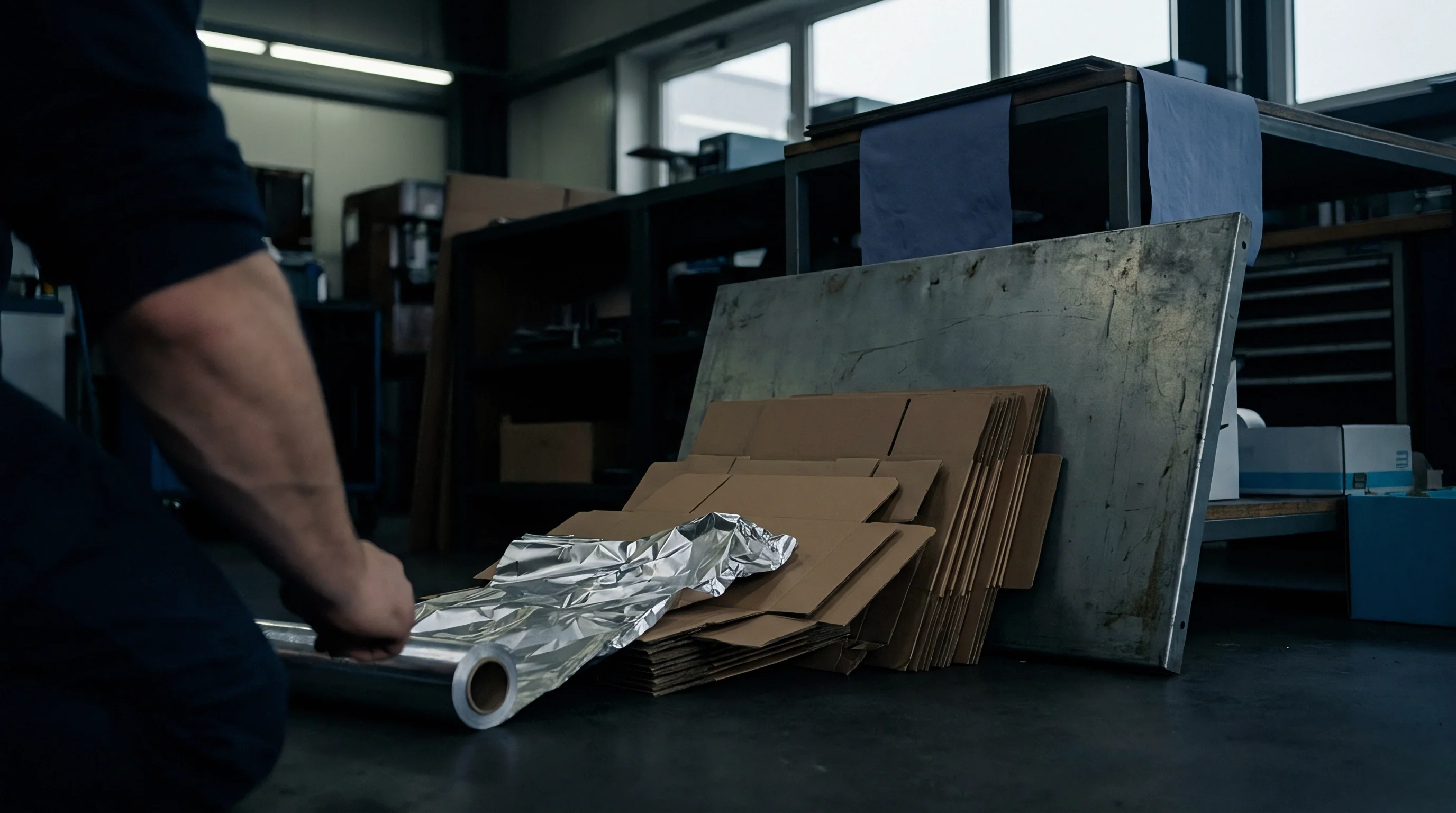
Base paperboard presents a complex fibrous network that distorts analytical tracer recovery through optical absorption, fluorescence interference, and spatial shielding. Bleached chemical pulps treated with optical brightening agents introduce broad emission bands between 420 and 480 nanometers under ultraviolet excitation. Unbleached kraft substrates absorb excitation photons heavily across visible wavelengths, reducing the net quantum yield of luminescent taggants compounded into the overlying polyolefin barrier.
Minerals in clay pre-coatings further complicate spectroscopic isolation by reflecting and refracting light unpredictably at the extrusion interface.
Cellulose fibers scatter incoming radiation. Kaolin clay shields fluorescent taggants. In security printing, high-denomination banknote paper utilizes similar cotton fiber furnishes where taggant detection algorithms continuously combat cellulose background scatter.
In packaging converting lines, the fiber orientation and surface sizing of solid bleached sulfate board introduce directional scattering effects that vary between the machine direction and cross direction. Caliper variations in the paperboard alter the focal distance in non-contact optical inspection heads, creating artificial fluctuations in detected tracer concentrations.
Coarse filler pigments in the board base layer quench optical emission signals faster than smooth bleached chemical pulps.

Does Optical Brightener Migration Distort Rare Earth Calibration?
Stilbene-based optical brightening agents compounded into the base paperboard surface bleed into extruded coatings during hot nip lamination. When the melt hits the fiber sheet at three hundred degrees Celsius, low-molecular-weight brightener molecules migrate across the interface into the amorphous zones of the polyolefin skin. Under ultraviolet excitation, these migrated brighteners emit strong blue fluorescence that overlaps the narrow emission bands of europium or terbium tracer complexes.
Calibration curves established using pure polymer films fail completely on commercial coated board due to this interfacial cross-contamination.
Calibration drifts without matrix matching. Laboratory trials frequently reference a 15% fluorescence quenching factor attributed to rutile titanium dioxide present in top-ply board coatings. This specific fifteen-percent figure cannot be defended with universal certainty due to wide supplier variance in pigment particle size distributions and coating binder formulations.
A prudent buyer establishes an empirical baseline blank from the raw, unextruded paperboard for every incoming paperboard reel lot to capture real substrate variations before running spectroscopic verification runs.
Ignoring substrate optical interference during tracer recovery checks leads to systematic miscalculations of applied barrier weight, triggering needless reel rejections or customs disputes regarding verified recycled polymer content.

Digestion
Chemical decomposition of the packaging laminate isolates compounded tracers from the paperboard structure, establishing absolute recovery values through elemental mass balance. Complete dissolution eliminates the optical artifacts, scattering losses, and quenching phenomena that hinder nondestructive reflection spectroscopy. Acid deconstruction breaks down both the cellulosic web and the synthetic barrier film, driving inorganic taggants into liquid suspension for inductively coupled plasma optical emission spectrometry.
For organic tracers, selective solvent extraction dissolves the polymer skin while leaving the insoluble lignocellulosic fibers behind.
The acid dissolves the fibrous backing. Microwave pressure reaches forty bar. Closed-vessel microwave systems charge sample coupons with concentrated nitric acid, hydrogen peroxide, and trace hydrofluoric acid to break down stubborn mineral fillers.
Heating digestion vessels to two hundred ten degrees Celsius over twenty minutes ensures total destruction of the organic matrix, oxidizing carbon backbones into carbon dioxide while holding metallic tracer cations in clear acidic solution. High vessel pressure prevents volatile metallic species, including antimony or arsenic derivatives sometimes present in older pigment chemistries, from escaping before spectroscopic nebulization.
| Barrier Polymer | Target Taggant | Dissolution Reagent | Processing Temperature | Digestion Time | Mean Analytical Recovery |
|---|---|---|---|---|---|
| Low-Density Polyethylene | Yttrium Oxide (Y2O3) | HNO3 + HF (4:1 ratio) | 210°C (microwave) | 25 min | 98.4% ± 1.2% |
| Ethylene Vinyl Alcohol | Lanthanum Borate | HNO3 + HCl (Aqua Regia) | 195°C (microwave) | 30 min | 97.1% ± 1.8% |
| Polylactic Acid | Terbium Organic Chelate | Dichloromethane | 40°C (reflux) | 60 min | 89.6% ± 3.4% |
| Polybutylene Succinate | Zirconium Dioxide | H2SO4 + HNO3 (3:2 ratio) | 220°C (microwave) | 35 min | 96.8% ± 1.5% |
| Values represent the mean of eight replicates per substrate type according to modified ISO 11885 protocols. | |||||
Solvent extraction pathways target the polymeric phase exclusively. Immersing coated board samples in boiling toluene or ortho-dichlorobenzene strips low-density polyethylene skins cleanly off the paperboard fibers. The remaining fiber pad is rinsed, dried, and weighed to confirm complete polymer separation.
Centrifuging the dissolved polymer extract isolates insoluble inorganic tracer particles, while liquid chromatography resolves dissolved organic marker molecules. This separation reveals whether the tracer suffered chemical modification during thermal extrusion processing.
Take a 25-tonne commercial production lot of 230 g/m² cupstock coated with an extruded eighteen-gram low-density polyethylene barrier layer. The extruder compounded an inorganic yttrium oxide tracer into the resin at a target specification of four hundred parts per million. Analytical verification punches ten circular specimens of exactly one hundred square centimeters across the web deckle, yielding a total analyzed board mass of 24.80 grams.
The polymer fraction accounts for 1.80 grams of this sample weight, representing an theoretical unextracted yttrium content of 0.720 milligrams.
Microwave acid dissolution followed by inductively coupled plasma analysis detects 0.661 milligrams of elemental yttrium in the digestion solution. The measured recovery yield equals 91.8% relative to the compounding target. A documented 2023 CEPI benchmark across thirty cupstock samples establishes that laboratory recovery for this specific wet-digestion route achieves 92% under ideal conditions.
The analytical result confirms proper masterbatch dosing at the converting plant within an acceptable 0.2% variance band, proving that the barrier coating contains the specified polymer weight without excessive dilution.
- Coupon punching cuts ten precise specimens of 100 cm² across the front, center, and back of the converted reel.
- Gravimetric separation measures total initial specimen weight to four decimal places prior to chemical treatment.
- Microwave charging introduces the sample into high-purity fluoropolymer vessels with nine milliliters of sub-boiling distilled nitric acid.
- Thermal digestion executes a ramped heating cycle to two hundred ten degrees Celsius holding for twenty-five minutes.
- Volumetric dilution transfers the cooled digestate into fifty-milliliter polymethylpentene flasks using ultrapure deionized water.
- Plasma interrogation quantifies elemental emission lines against five-point matrix-matched calibration standards.
The single unresolved challenge centers on whether nano-scale tracer particles permanently embed into the inner lumen of cellulose fibers during high-pressure nip consolidation, escaping both liquid solvent extraction and gentle chemical delamination routines.

Dossier
Compliance documentation turns laboratory spectroscopic recovery figures into legally defensible customs and food contact certifications. Border enforcement authorities and packaging compliance audits evaluate extruded barrier papers against strict migration thresholds and circularity metrics. A spectroscopic test report showing high recovery numbers provides proof that an extruded barrier layer satisfies functional barrier definitions.
Without an accredited test dossier, environmental declarations regarding recycled resin content or barrier composition risk immediate regulatory rejection.
Testing confirms the resin ratio. European Union packaging regulations penalize undocumented polymer additions on fibrous packaging. Under the European Packaging and Packaging Waste Regulation, composite packaging designs face mandatory recyclability performance grades based on total non-fiber mass.
Extruded barrier layers exceeding fifteen percent of total pack weight trigger higher Extended Producer Responsibility fees or complete market bans. Precise spectroscopic tracer quantification demonstrates that a twelve-gram barrier layer remains strictly below regulatory weight thresholds, defending the packaging against punitive fiscal reclassifications.
Compliance failure under Regulation 10/2011 Annex II triggers immediate customs detention at destination ports when inorganic tracer migration exceeds five micrograms per kilogram of food simulant.
Customs authorities impound mismatched lots. When packaging converters import paperboard labeled as carrying certified post-consumer recycled polyolefin coatings, cross-border customs agents request verified tracer documentation. Spectroscopic recovery files verify that the imported material matches the resin batch declared on the bill of lading.
Uncertified shipments face full rejection. The economic exposure includes daily demurrage fees at the marine terminal, cargo re-export expenses, and the commercial damage of missing shelf delivery deadlines for consumer brands.
Food contact clearance establishes the final regulatory gate. Tracers introduced into extrusion resins intended for direct food contact must comply with positive list allowances or qualify under functional barrier migration exclusions. European Union Regulation 10/2011 establishes specific migration limits for metals and additives in plastic layers, capping heavy metal extraction into food simulants at analytical limits of detection.
The migration testing dossier must include chemical recovery data proving that the taggant remains tightly bound within the polyolefin barrier matrix and does not transfer into fatty food simulants under high-temperature contact conditions.
Purchase specifications that incorporate standard ISO 17025 accredited laboratory verification clauses legally shift financial liability for non-compliant tracer recovery directly to the primary resin compounder.