Standard Laboratory Methods for Paperboard Repulpability Testing
Paperboard repulpability testing verifies fibre yield and adhesive contamination under standardised laboratory disintegration to validate recyclability claims.
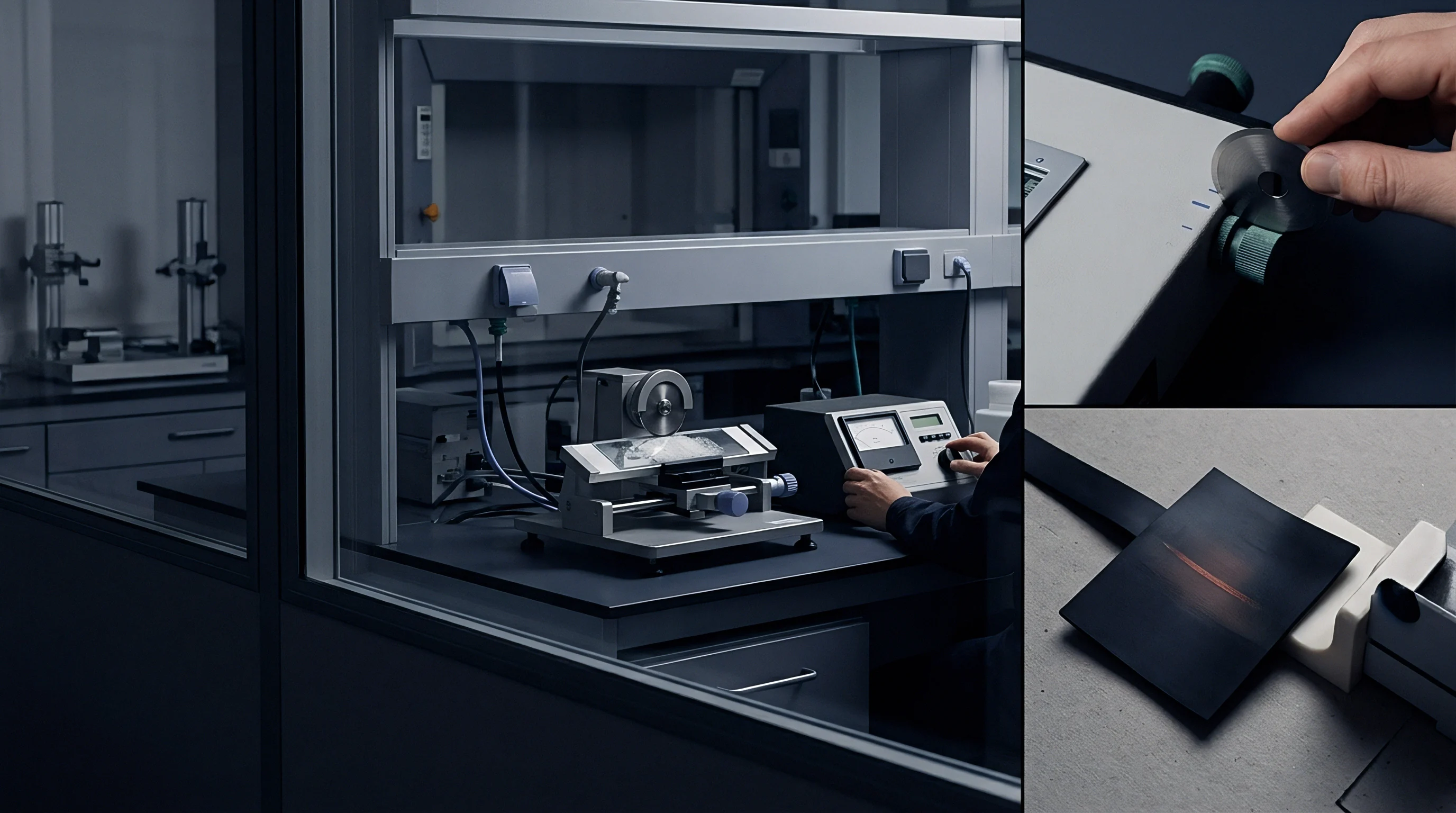
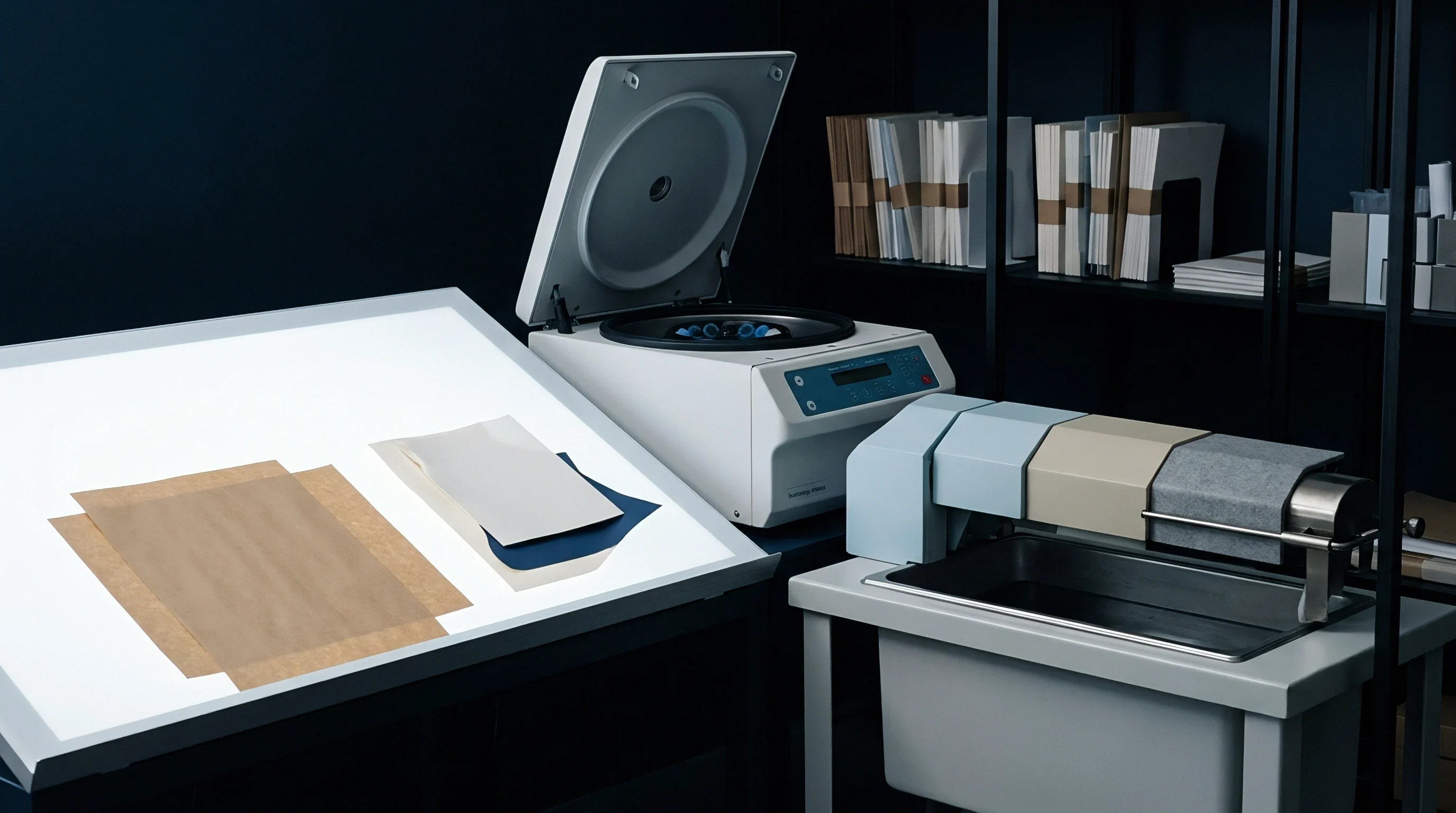
Slurry
Cross-border paperboard specifications turn on how fibres separate when agitated in water at defined temperature and mechanical shear. A delivery of barrier-coated cartonboard carrying an environmental claim passes or fails customs review based on repeatable dispersion in standard disintegrators. European mills test incoming recycled stock and coated packaging using the CEPI Harmonised Recyclability Test Method or PTS-RH 021/97, while North American buyers calibrate acceptance to TAPPI UM 204 or the Fibre Box Association repulpability testing protocol.
When a coated board enters an hydropulper, aqueous penetration dissolves the hydrogen bonds binding adjacent cellulose chains. If plastic linings, synthetic polymers, or cross-linked wet-strength resins lock the fibrous matrix, flakes remain intact, contaminating stock preparation screens.
Laboratory evaluation begins by reducing board stock into square swatches, typically 1.5 by 1.5 centimetres or 2.0 by 2.0 centimetres, avoiding sheared edges that give an unrepresentative rate of wetting. Technicians equilibrate these fragments under standard conditioning atmospheres defined by ISO 187 at 23 degrees Celsius and 50 percent relative humidity. Moisture content directly alters the initial water uptake and disintegration kinetics.
Immersing dry board into the vessel without conditioning creates baseline scatter across duplicate batches.
Under CEPI Version 2 pulping conditions at 40 degrees Celsius and 10 minutes residence time, uncoated bleached kraft board releases 98.4 percent of its dry mass through standard fractionation.
The standard disintegrator described in ISO 5263 operates with a propeller driven at 2,900 revolutions per minute inside an un-baffled cylindrical vessel holding 2 litres of suspension at 1.5 to 2.0 percent consistency. TAPPI T 205 specifies an identical mechanical geometry for handsheet preparation. High-consistency pulping procedures, such as PTS Method PTS-RH 021/97 Category II for packaging materials, use a baffled vessel operated at 40 degrees Celsius and approximately 5.0 to 10.0 percent consistency, imparting intense fibre-to-fibre friction.
Energy dissipation during laboratory pulping ranges between 20 and 55 watt-hours per kilogram of bone-dry fibre, replicating industrial low-consistency drum pulpers or high-consistency batch pulpers.
- Pre-heat tap water to target test temperature within a tolerance of plus or minus one degree.
- Determine dry solid matter of conditioned board samples following standard oven-drying at 105 degrees Celsius.
- Charge the disintegration vessel with precisely weighed board swatches equivalent to target dry fibre mass.
- Add conditioned water to achieve exact stock consistency specified in the reference protocol.
- Operate the drive shaft for the mandated revolution counter or dwell duration without interruption.
- Discharge the suspension immediately into an unpressurised holding vessel to arrest mechanical shear.
Fibre release depends heavily on aqueous surface tension and wetting dynamics. Polyvinyl alcohol barriers disperse rapidly in warm suspensions, whereas functional wax alternatives or low-surface-energy fluorochemical substitutes impede moisture diffusion. Adding non-ionic wetting agents or sodium hydroxide alters pH and saponifies ester links within polymeric barriers, distorting results away from neutral mill circuits.
| Test Method | Vessel Type | Consistency (%) | Stock Temp (°C) | Disintegration Duration | Rotational Speed (RPM) |
|---|---|---|---|---|---|
| CEPI Harmonised V2 | Standard ISO Disintegrator | 1.5 | 40 ± 1 | 10 min (29,000 revs) | 2,900 |
| PTS-RH 021/97 Cat II | PTS High-Consistency Pulper | 10.0 | 40 ± 2 | 15 min | 500 ± 10 |
| TAPPI UM 204 | TAPPI Standard Disintegrator | 2.0 | 23 ± 2 | 5 min (15,000 revs) | 3,000 |
| WMU Recyclability Pilot | Helico Batch Pulper | 8.0 | 52 ± 2 | 20 min | 800 |
Mill technical directors often argue that proprietary dispersion barriers dissolve cleanly in commercial processing despite generating laboratory flakes, pointing to higher thermal inputs and extended dwell times in full-scale hydropulpers.

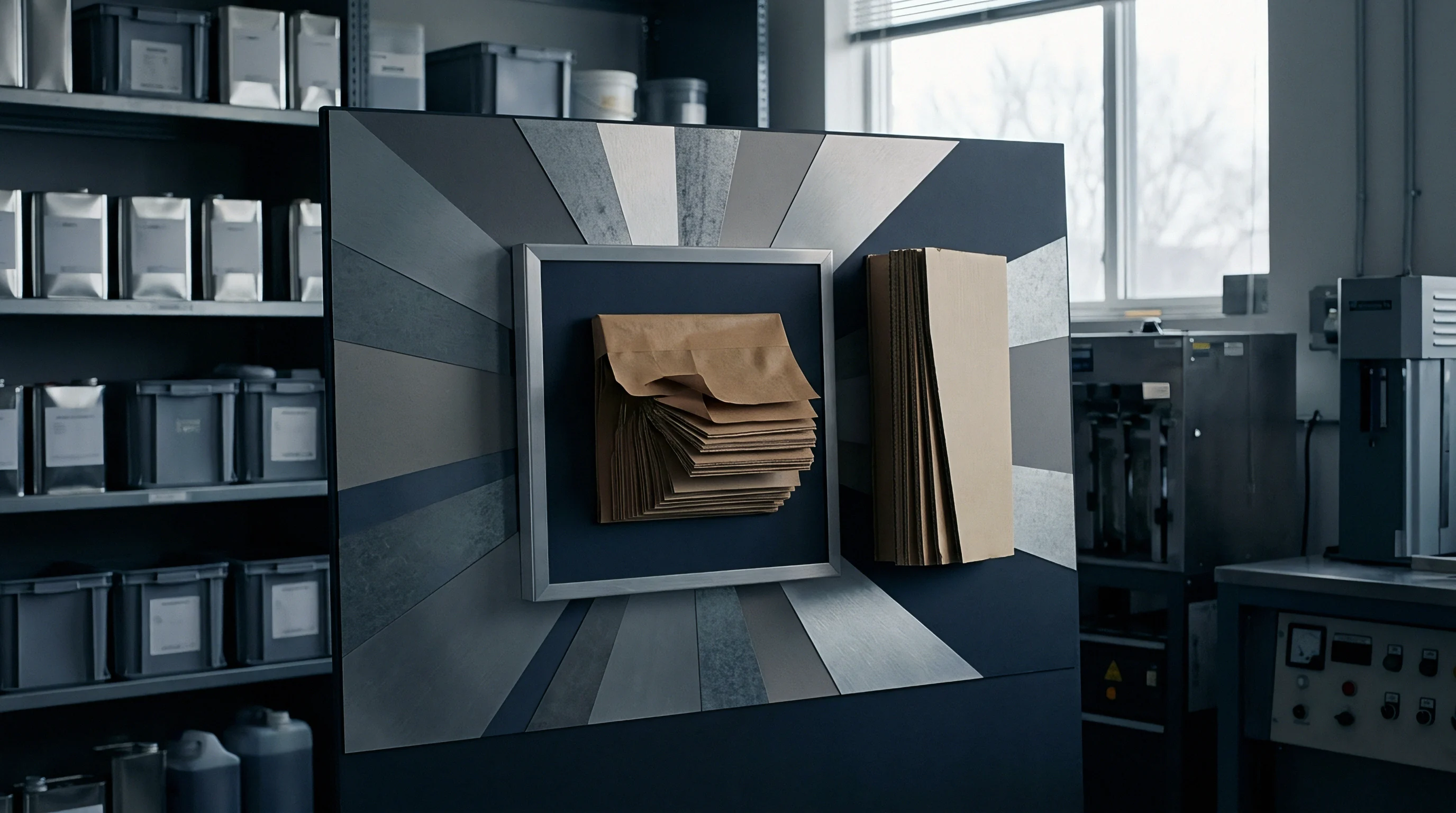
Mesh
Fractionation separates acceptable, suspended cellulosic fibres from undispersed fragments, laminates, and barrier debris. Once mechanical disintegration halts, the resulting fibrous suspension undergoes screening across calibrated mechanical apertures. The standard instrument for this separation in European laboratories is the Somerville fractionator, defined in TAPPI UM 242 and PTS-RH 021/97.
It features a flat horizontal plate perforated with precisely milled slots 0.15 millimetres wide and 45.0 millimetres long. Alternative configurations incorporate the Haindl fractionator or automated Pulmac screeners equipped with 0.10 or 0.15 millimetre slot geometries. The physical slot width determines whether a non-dispersed flake reports to the usable pulp stream or to the gross reject fraction.
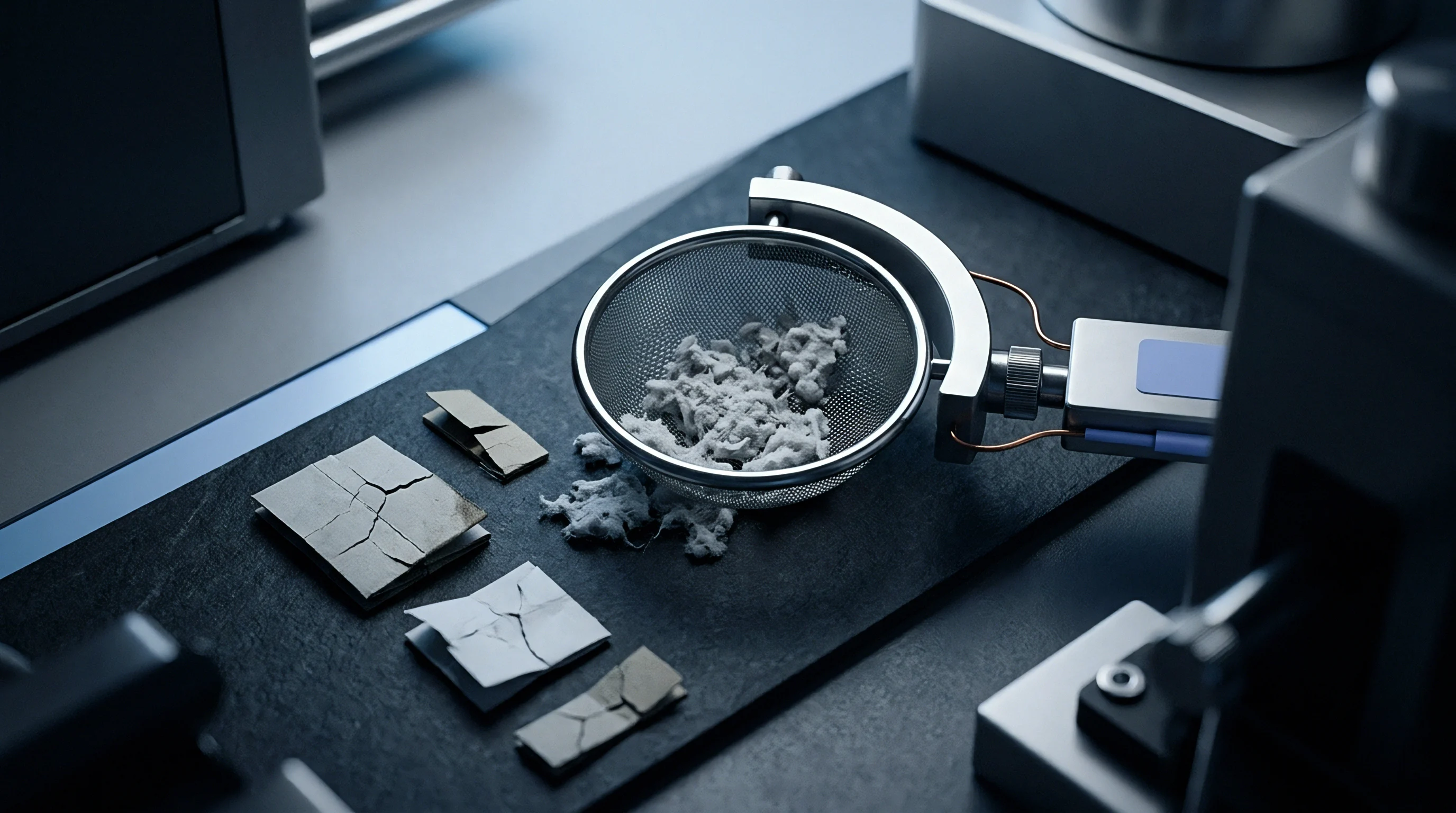
Which Disintegration Variables Dictate Laboratory Reject Ratios?
Agitation velocity, suspension temperature, and chemical swelling determine whether coated board separates into individual fibres or stays as clustered bundles. Polyethylene coatings applied by hot extrusion do not dissolve. Instead, shear stresses rip the polymer into macroscopic films.
If the film retains attached fibres, those fibres cannot pass the slotted plate. They remain on the upper face, contributing directly to the mass of coarse rejects.
Water spray nozzles set above the vibrating plate flush acceptable fibres downward through the apertures using a regulated water flow of 8.6 to 9.0 litres per minute under a constant hydraulic head. Somerville screening continues for exactly 20 minutes. Flakes larger than 0.15 millimetres cannot align with the narrow openings under horizontal oscillation, collecting along the perimeter weir.
Technicians gather these rejects, dry them to constant weight at 105 degrees Celsius, and calculate the coarse reject percentage relative to initial input dry mass.
- Coarse Flake Mass measures macroscopic fibre bundles that failed to disintegrate under defined energy inputs, signifying incomplete hydraulic defibering in stock prep.
- Polymer Film Shreds quantify fragmented non-soluble synthetic coatings stripped of fibre, revealing how barrier films break into irregular particles during pulping.
- Wet-Strength Agglomerates register paperboard structures fortified with polyamide-epichlorohydrin resins, reflecting insolubility under neutral water temperatures.
- Inorganic Foil Residuals capture aluminium barrier layers that tear into planar flakes, preventing clean passage through mechanical screen slots.
Take a 50-tonne converted lot of dispersion-coated folding boxboard undergoing acceptance testing. Assume a laboratory sample of 50.0 grams bone-dry board subjected to CEPI Version 2 disintegration and Somerville screening. The oven-dry mass of rejects collected from the 0.15 millimetre plate measures 3.25 grams.
Coarse reject content calculates as 3.25 divided by 50.0, yielding exactly 6.5 percent. Under CEPI guidance, coarse rejects exceeding 5.0 percent trigger a mandatory secondary pulping cycle of 5 minutes. If secondary pulping reduces rejects to 1.8 grams (3.6 percent), the material passes with an energy penalty rating.
If the secondary cycle yields 2.8 grams (5.6 percent), the grade fails qualification outright, forcing mill downgrade to mixed waste streams.
| Protocol | Screening Device | Slot Dimension (mm) | Water Pressure / Flow | Pass Threshold (Rejects) |
|---|---|---|---|---|
| CEPI Version 2 | Somerville Fractionator | 0.15 ± 0.005 | 8.6 L/min; 123 kPa | ≤ 5.0% dry basis |
| PTS-RH 021/97 | Haindl / Somerville | 0.15 ± 0.005 | Calibrated overflow head | ≤ 20% Category II (coarse) |
| 4evergreen Recyclability | Somerville Fractionator | 0.15 ± 0.005 | 8.6 to 9.0 L/min | ≤ 10.0% total rejects |
| TAPPI UM 242 | Somerville Fractionator | 0.15 ± 0.005 | 124 kPa nozzle pressure | Information report only |
A single test result of 4.8 percent coarse rejects resting on a sample size of three replicates from a single paper reel carries an empirical error margin of plus or minus 0.6 percent under ISO 5725 reproducibility standards. A shift in municipal water hardness from 50 to 300 parts per million calcium carbonate reduces surfactant efficiency in dispersion barriers, elevating measured coarse rejects above the 5.0 percent ceiling. The buyer specifies testing in deionised water to eliminate seasonal municipal variance.
Clean separation on the screen guarantees efficient fibre recovery in the mill.
Tack
Polymeric adhesives, hot-melts, and synthetic binder resins introduce adhesive agglomerates, universally termed stickies, into the repulped stock. Micro-stickies pass through 0.15 millimetre screen slots alongside individual cellulosic fibres, entering the clean accept suspension. Once pumped into paper machine circuits, these elastomeric particles encounter thermal shocks, shear gradients, and pH shifts, coalescing into larger tacky masses.
They adhere to forming fabrics, press felts, and drying cylinders, punching holes through newly formed paper webs and tearing moving rolls. Standard repulpability protocols isolate both macro-stickies, retained on slotted screens, and micro-stickies remaining in filtrate.
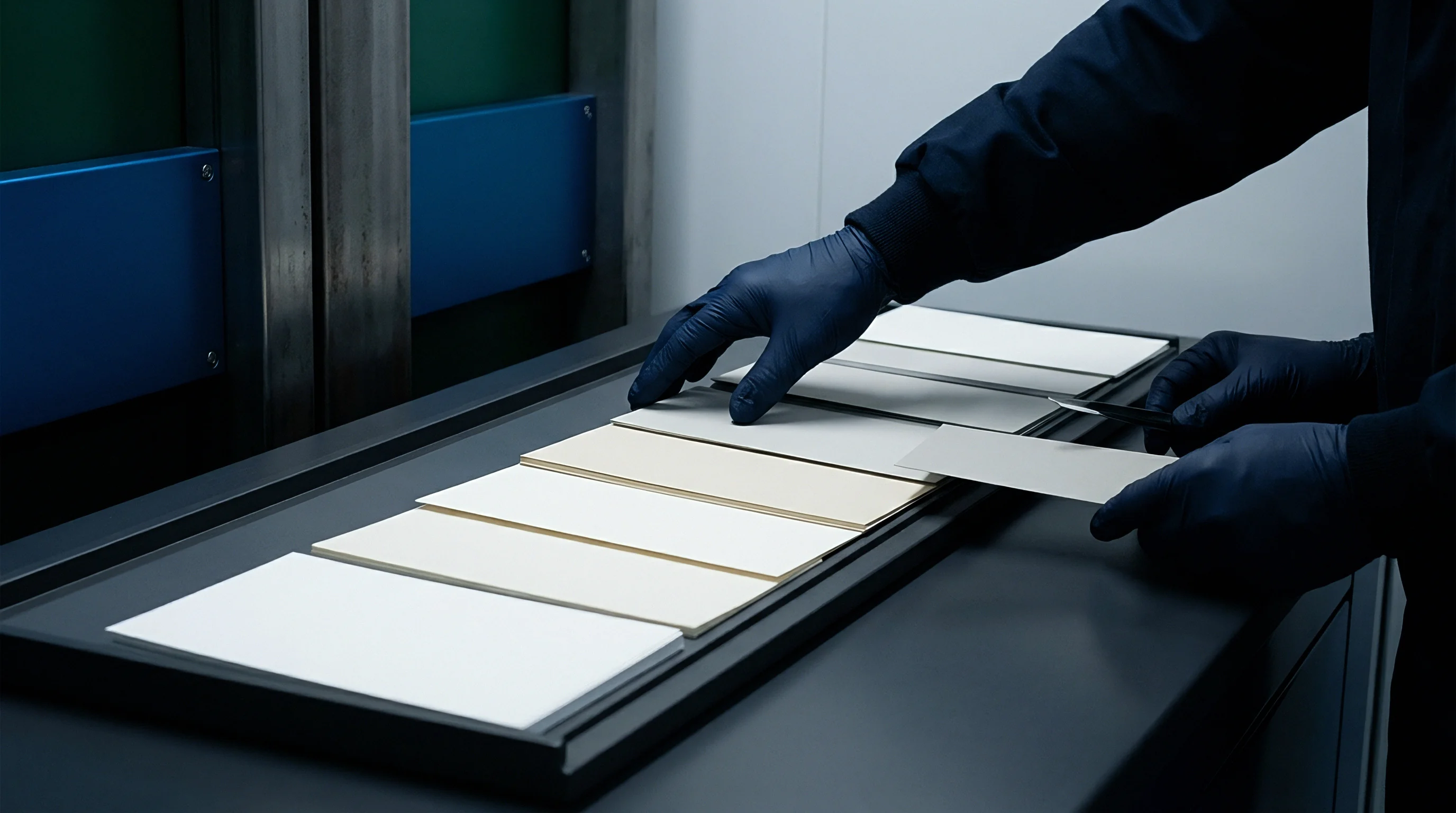
Quantifying macro-stickies involves transferring screen residues onto silicone release paper, followed by compression under heated platen presses. TAPPI T 277 details this thermal-mechanical fixing. The dry residue from the slotted screen undergoes pressing against black filter paper at 105 degrees Celsius under a pressure of 345 kilopascals for five minutes.
Molten or tacky synthetic particles adhere firmly to the paper substrate. When dyed using water-soluble dyes such as methylene blue or post-treated with black toner powder, tacky particles stand out in high contrast against the fibrous background. Image analysis systems scan the surface, quantifying total sticky surface area expressed in square millimetres per kilogram of bone-dry pulp.
Annex B of the CEPI Harmonised Standard mandates that adhesive deposits larger than 2,000 micrometres automatically disqualify packaging stock from standard mill recyclability streams.
Dispersed acrylic barriers present severe micro-sticky risks despite passing coarse screening. During repulping, mechanical shear shreds acrylic dispersions into particles measuring between 5 and 50 micrometres. These particles defy gravity sedimentation and centrifuge cleaners.
Dissolved and colloidal substances elevate Chemical Oxygen Demand (COD) in closed mill water loops. Testing protocols measure this burden by spinning filtrate in a centrifuge at 3,000 times gravity for 15 minutes, followed by chemical oxygen demand titration under ISO 6060 or total organic carbon (TOC) measurement.
- Hot-Melt Fragments soften rapidly under thermal exposure, adhering to screening wires and dry-end felt jackets during sheet formation.
- Pressure-Sensitive Adhesives resist aqueous dispersion completely, forming tacky elastomeric beads that generate pinpoint defects in downstream coating operations.
- Aqueous Emulsion Resins break down into ultra-fine colloidal dispersions, escalating systemic mill water conductivity and COD loading.
- Extrusion Lamination Polyolefins split into fibrous polymer ribbons, trapping filler particles and generating web breaks under tension.
A baseline figure of 200 square millimetres of macro-stickies per kilogram of pulp appears in merchant specifications as an acceptable processing ceiling. The provenance of that number rests on obsolete 1998 pilot line trials using virgin kraft pulp mixed with clean unprinted boxboard. A modern converting plant running water-based barrier emulsions alongside modified acrylic cold-set adhesives regularly exhibits deposition rates four times higher at identical measured surface areas, because surface tack depends on polymer glass transition temperature rather than area alone.
Facing this discrepancy, packaging buyers implement dynamic tack testing under TAPPI T 577 rather than relying on static visual image thresholds.
Standard laboratory repulping protocols assess adhesive agglomeration under static temperature conditions, leaving open whether high-shear centrifugal cleaners in modern commercial mills disperse or agglomerate shear-thinning barrier fragments.
Mat
Acceptable fibres passing through the fractionator plate must demonstrate papermaking capability when reformed into a continuous fibrous structure. Laboratory verification requires fabricating standard isotropic handsheets using a British sheet machine under ISO 5269-1 or a Rapid-Köthen apparatus under ISO 5269-2. The suspension collected from the Somerville or Haindl accepts is diluted to 0.15 percent consistency in a stock tank.
Deaerated water fills the forming column, into which the measured volume of pulp enters. Air agitation creates uniform fibre distribution before drainage through a 150-mesh bronze or stainless steel wire grid under gravity suction.
Are Laboratory Handsheet Visual Defects Defensible Commercially?
Visual inspection of dried handsheets uncovers defects that clear screening slots but compromise printability and aesthetic integrity. Transparent polymer specks, commonly termed windows, form when small film fragments lie flat across neighbouring fibres during pressing. Stained or dark specks signal unbleached inclusions, carbon black from conductive barriers, or char from heat-sealing zones.
Digital scanners capture both transmitted and reflected light images across ten replicate handsheets, each possessing a grammage of 60 grams per square metre bone-dry. Automated thresholding algorithms classify defects by size category, from 0.05 square millimetres up to particles exceeding 1.0 square millimetre.
Desiccant loading mechanics in maritime shipping containers illustrate why particle dispersion matters beyond the testing bench. When moisture condenses on container ceilings and drips onto corrugated cartons, non-fibrous inclusions within recycled plies act as moisture sinks. Water collects around polymer flakes, softening surrounding starch bonds and collapsing container stacking strength.
A paper web containing unrepulped synthetic flakes degrades structural integrity under dynamic loading.
- Optical Inhomogeneity tracks unseparated barrier flakes that distort sheet translucency and print ink absorption across converted panels.
- Tensile Strength Loss measures the reduction in inter-fibre hydrogen bonding caused by hydrophobic barrier residues sitting between cellulose strands.
- Burst Factor Degradation records hydraulic rupture resistance changes between baseline virgin furnish and the recycled paperboard blend.
- Surface Roughness Spikes identify protruding polymer specks that create micro-voids during rotogravure or flexographic ink transfer.
Mechanical strength testing confirms structural viability. Technicians condition handsheets at 23 degrees Celsius and 50 percent relative humidity before punching standard 15-millimetre test strips. ISO 1924-2 tensile testing delivers breaking length, tensile energy absorption, and elastic modulus.
If the barrier-containing furnish produces a tensile index drop greater than 15 percent compared to a control sheet formed from virgin reference pulp, the material fails European 4evergreen recyclability criteria. Bursting strength measured on an automated Mullen tester under ISO 2758 must maintain at least 85 percent of control values.
A measured laboratory yield figure represents one area of genuine commercial vulnerability. Standard test reports state clean pulp yield as a single percentage, such as 92.4 percent. The desk cannot fully verify whether that number accounts for dissolved water-soluble polymers, starch losses, and mineral filler washing, or merely represents retained oven-dry solids.
Packaging buyers under this uncertainty calculate procurement volumes assuming a 5 percent net deficit below any laboratory-certified yield figure, absorbing the cost difference into initial margins.
Distributors printing unverified recyclability marks on paperboard that produces defective handsheets face shipment rejections by major packaging converters, who cancel purchase orders when converted board blisters during flexographic drying.

Gate
Regulatory scrutiny under the European Union Packaging and Packaging Waste Regulation (PPWR) elevates laboratory repulpability from a mill technical detail to an absolute legal clearance gate. Packaging materials marketed across member states must prove recyclability at scale by defined timelines. Article 6 of the PPWR establishes design for recycling criteria, categorising packaging into Recyclability Performance Grades ranging from Grade A down to Grade C. Packaging scoring below 70 percent recyclability performance faces total commercial prohibition.
Conformity assessment dossiers demand accredited third-party test reports executed strictly under harmonised laboratory protocols.
Producer responsibility organisations (PROs) enforce eco-modulation fees based on laboratory findings. In jurisdictions including Germany, France, and Italy, eco-contributions levied per metric tonne of placed packaging adjust dynamically according to repulping efficiency. A folding boxboard carton certified under CEPI Version 2 with coarse rejects below 5 percent, zero adhesive agglomeration, and handsheet visual purity earns maximum bonus discounts.
Cartons using wax coatings or non-dispersible polyolefin barriers trigger maximum malus penalties, increasing Extended Producer Responsibility payments by more than 400 Euros per metric tonne.
A standard material supply agreement specifying delivery of certified recyclable paperboard remains unfulfilled if test certificates rely on expired screening standards or unaccredited internal laboratory procedures.
Third-party testing labs charge between 1,200 and 3,500 Euros per material qualification, depending on whether the scope requires basic Somerville coarse reject verification or exhaustive chemical oxygen demand, sticky deposition, and handsheet mechanical assays. Sourcing directors verify that the testing facility operates under ISO/IEC 17025 accreditation, with specific competence listed for PTS-RH 021/97, CEPI Harmonised Recyclability Test, or relevant TAPPI standards. A report lacking accredited status fails to protect importers against customs challenges under the European Green Claims Directive.
| Performance Tier | Laboratory Criteria | PPWR Equivalence | Fee Modulation Impact | Commercial Qualification |
|---|---|---|---|---|
| Tier 1 (Optimal) | Rejects ≤ 5.0%; Stickies ≤ 100 mm²/kg; Yield ≥ 95% | Grade A (≥ 95%) | Maximum bonus discount | Unrestricted food and retail packaging |
| Tier 2 (Standard) | Rejects 5.1–10.0%; Stickies ≤ 2,000 mm²/kg; Yield ≥ 85% | Grade B (85–94%) | Neutral baseline fee | Standard secondary packaging |
| Tier 3 (Conditional) | Rejects 10.1–20.0%; No macro-tack; Secondary pulping passes | Grade C (70–84%) | Moderate malus surcharge | Specialty technical packaging only |
| Tier 4 (Disqualified) | Rejects > 20.0%; Macro-stickies present; Yield < 70% | Grade D / Failed (< 70%) | Prohibitive surcharge / Ban | Banned from single-market commercialisation |
| Performance tiers align with CEPI/4evergreen Recyclability Evaluation Protocol Version 2.0 and draft PPWR Annex II criteria. | ||||
Disputes between board mills and converting customers trace back to purchase order wording. When a contract states that the substrate will be recyclable without citing a specific laboratory standard, the supplier delivers stock compliant with basic hydropulping under historical standards. The converter then discovers that regional mills refuse the trim waste.
Specifying CEPI Version 2 or PTS-RH 021/97 Category II directly within technical exhibits binds the supplier to measurable laboratory metrics.
Purchase specifications incorporating the mandatory clause, ‘Substrate must achieve CEPI Harmonised Version 2 Grade A certification with coarse rejects not exceeding 5.0 percent when tested by an ISO 17025 accredited laboratory’, assign direct commercial liability to the mill for all downstream eco-modulation penalties resulting from unrepulped barrier residues.