Z Direction Tensile Strength Testing Methods for Recycled Folding Boxboard
Z direction tensile testing isolates internal bond strength under perpendicular loads, preventing ply separation during high tack printing and blister sealing.
Plies
Recycled folding boxboard relies on distinct structural layers engineered from mixed paper waste, deinked pulp, and mechanical screenings. Multi-ply cartonboard grades such as white lined chipboard, classified under DIN 19302 as GD2, GD3, or GT2, distribute virgin mechanical or chemical pulp solely to the outer liners. The core plies consist of unsorted recovered fibers, broken corrugated material, and post-consumer waste containing high concentrations of calcium carbonate filler, mineral fines, and chemical additives.
Fiber hornification reduces recycled fiber flexibility across repeated drying cycles. Secondary fibers lose water retention value and conformability during wet web consolidation on the forming wire. Hydrogen bonding between adjacent fibers in the middle strata weakens systematically as recycled fiber content increases.
Plies separate along weak boundaries.
Interlayer adhesion in multi-ply recycled boards depends primarily on mechanical fiber entanglement and wet-end chemical application. Paper machines forming heavy chipboard grades apply spray starch between forming wires to supplement dry strength across ply interfaces. Corn or potato starch slurries cook in situ during cylinder drying, forming an adhesive bridge that compensates for degraded fiber-to-fiber contact.
Uneven spray distribution or poor thermal gelatinization creates dry spots across the board sheet. Excessive mineral filler accumulation at ply boundaries interferes with starch migration, creating localized rupture planes. When a converting nip applies peel or shear stress, cleavage initiates within these unbonded interfaces.
Starch spray applied at four grams per square meter between wet plies increases internal bond strength by forty kilopascals under standard twenty-three degree conditioning.
A supplier often claims that internal delamination traces back to excessive crease channel penetration or excessive die pressure on the converting line rather than deficient fiber bonding in the core strata.

Recycled Furnish Stratification
Caliper development in recycled folding boxboard balances stiffness targets against raw material costs. Mills achieve required sheet thickness by bulking the middle plies with low-density wastepaper streams and mechanical screenings. Density differentials between dense, starch-sized top plies and porous, filler-heavy center layers create severe stress gradients across the sheet thickness.
Tensile loads applied perpendicular to the board surface concentrate strain energy within the weakest inner layer. Moisture content variations across the z-axis aggravate this mechanical imbalance. Laboratory tests reveal that the middle ply fails first in over ninety percent of perpendicular tensile ruptures across commercial GD2 boards.
Fiber orientation also influences internal bond integrity. While fiber alignment predominantly affects machine direction and cross direction tensile stiffness, drainage shear on multi-cylinder or multiply fourdrinier formers generates directional fiber shingling. This angular arrangement leaves fewer fibers oriented along the perpendicular z-axis.
Mechanical interlocking between adjacent web layers diminishes when machine speeds increase and dewatering times shrink.
- Filler Migration reduces direct fiber contact points along the wet-laid boundary when excessive ash migrates into the interlayer zone during rapid suction dewatering.
- Secondary Fiber Hornification stiffens recycled cellulose fibrils, preventing hydrogen cross-linking during pressing and drying cylinders.
- Starch Retrogradation halts adhesive polymer spread across the interface if dryer temperatures spike before starch granules complete moisture-driven gelatinization.

Platen
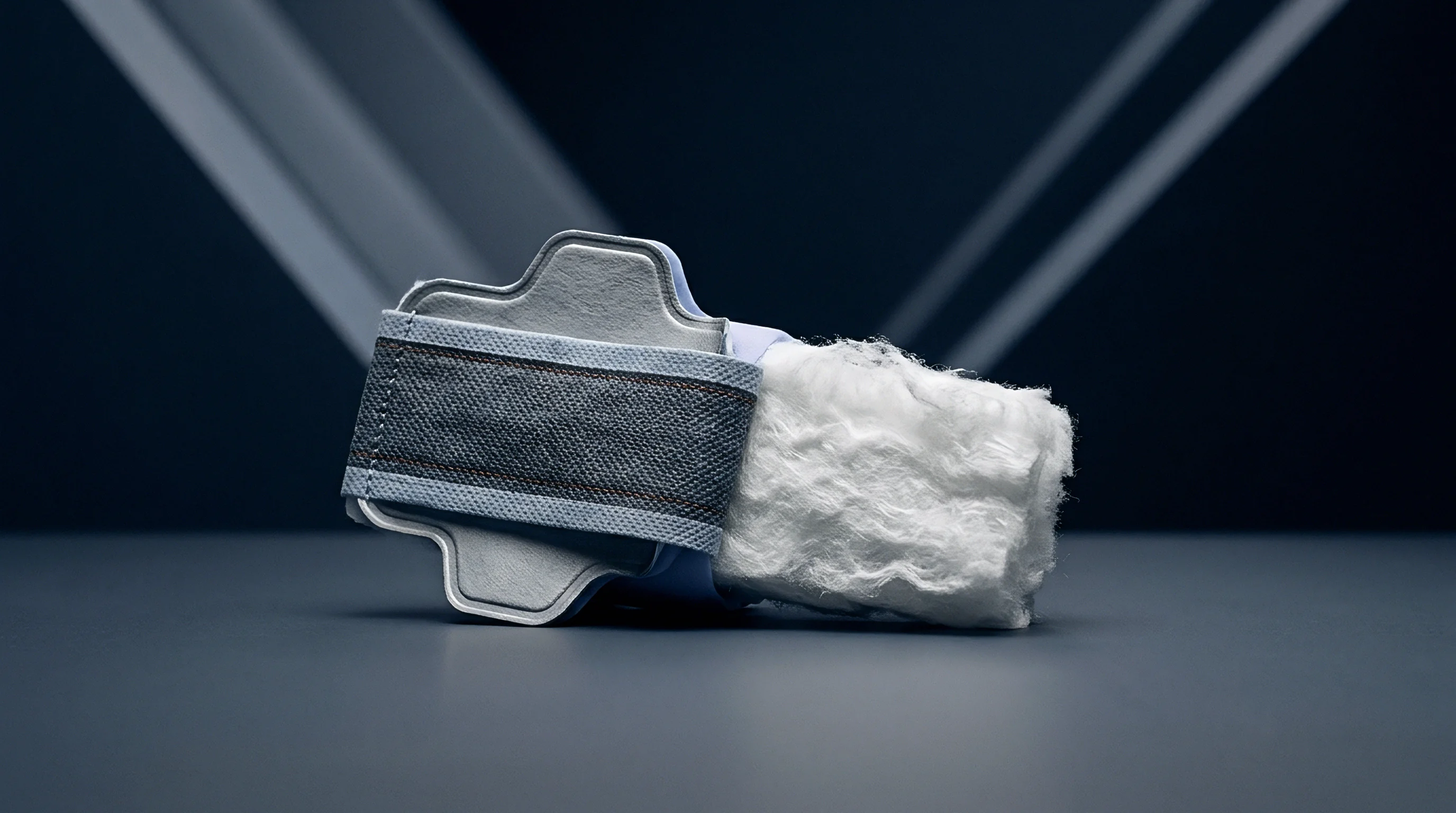
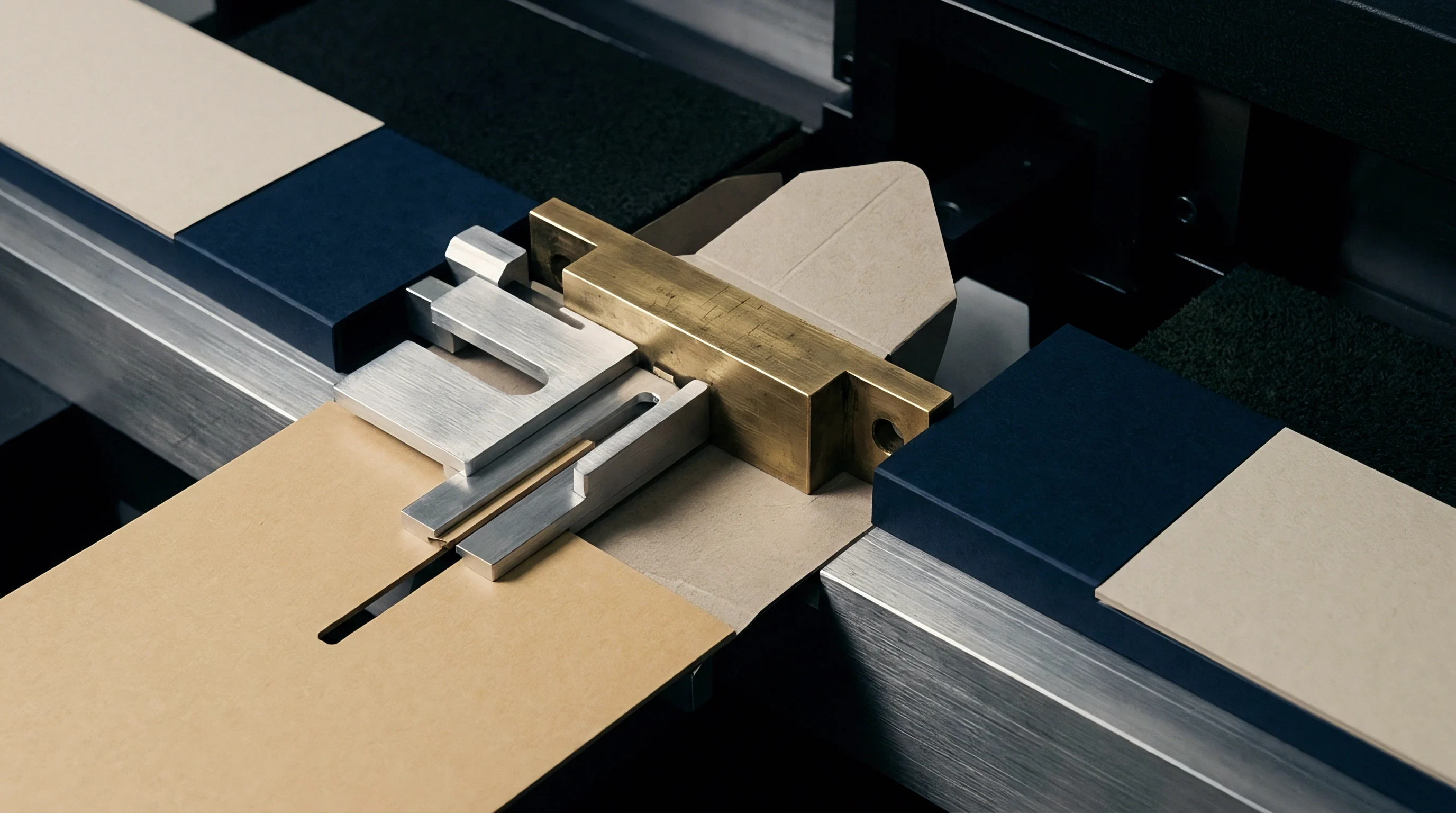
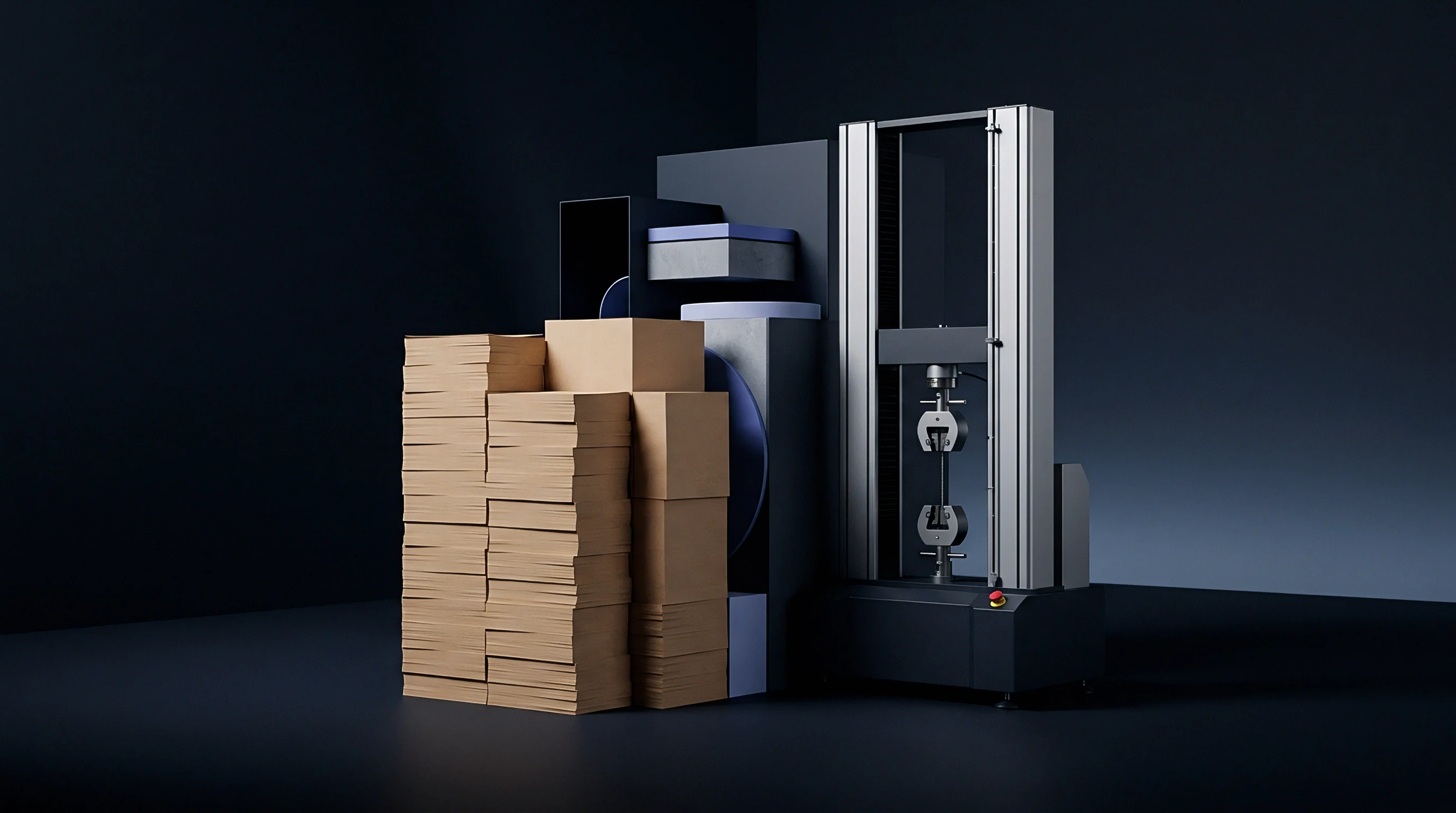
Specimen mounting mechanics govern the measurement of perpendicular internal bond strength. True z-direction tensile testing evaluates the ultimate tensile stress supported by paperboard when loaded uniformly perpendicular to its surface planes. Test methods ISO 15754 and TAPPI T 541 specify clamping the test specimen between two rigid metal blocks using double-sided pressure-sensitive adhesive tape.
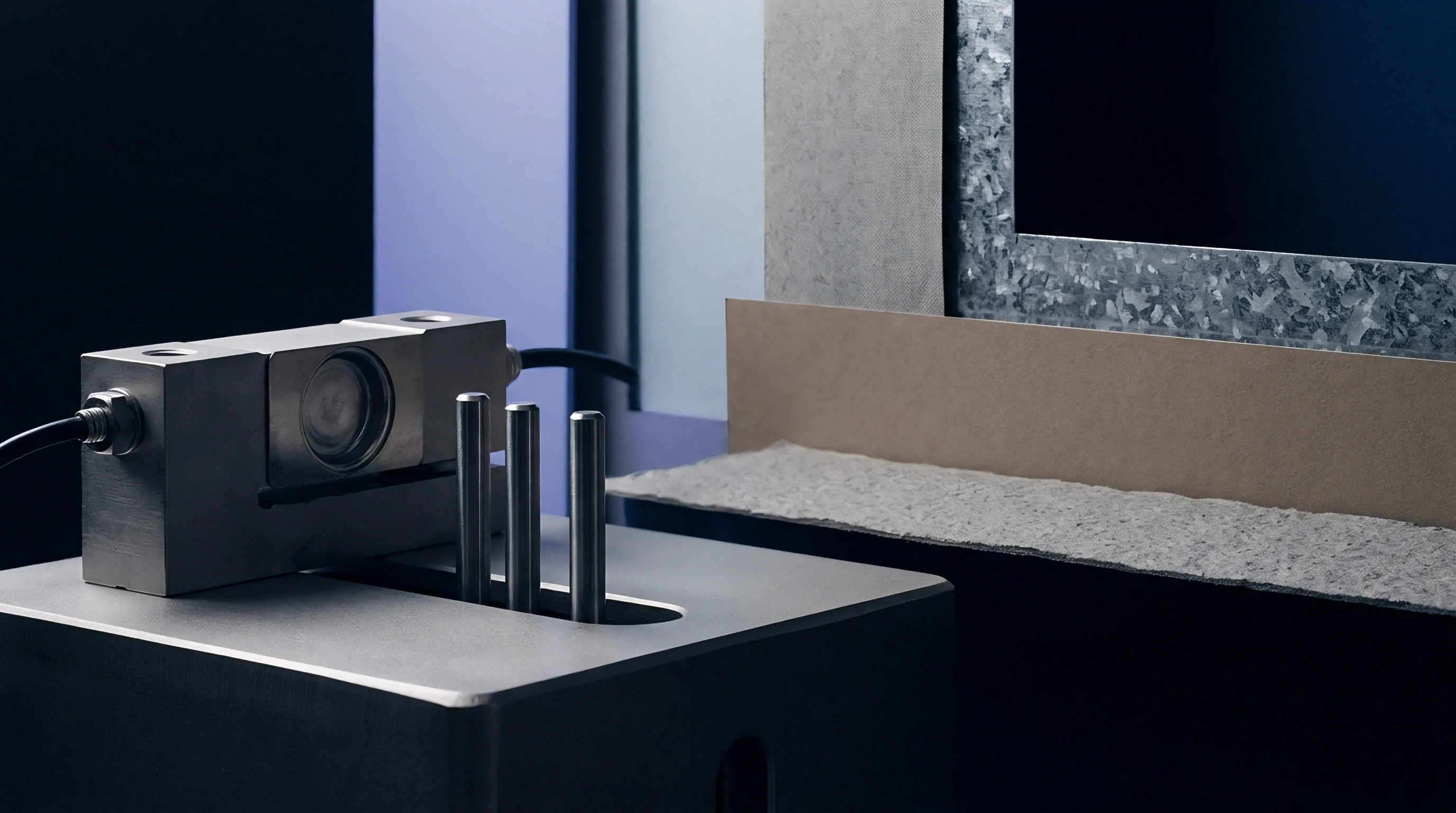
The instrument applies an axial tensile force at a controlled separation rate until the internal fiber structure fractures. Platen alignment governs tensile uniformity. Any non-parallelism between upper and lower fixture blocks induces non-uniform edge stress, triggering premature peel failures that register as artificially depressed tensile values.
Clamping pressure during tape application determines the reliability of the test interface. The tape adhesive must wet the rough, uneven surface of uncoated recycled board without crushing the porous center plies. TAPPI T 541 specifies a mechanical pre-clamping pressure of 0.70 megapascals applied for three seconds to seat the adhesive transfer tape.
Insufficient clamping pressure leaves micro-voids between tape adhesive and board fibers, causing tape detachment instead of paperboard fracture. Excessive clamping pressure crushes the internal fiber network, initiating internal micro-fractures before the tensile stroke begins.
ISO 15754 clause 8 mandates platen parallelism within 0.05 millimeters across the entire fifty-millimeter diameter contact surface to prevent peel initiation.
Double-sided tape secures the specimen. The tape itself exhibits viscoelastic behavior that influences stress transfer into the board specimen. High-tack acrylic film tapes or reinforced transfer tapes minimize elongation during loading.
If the tape backing deforms elastically under tension, it absorbs displacement energy and skews the load-elongation curve. Tensile loads peak abruptly.
Standard Measurement Procedures
Standard testing methods establish specific test geometry, platen dimensions, and crosshead speeds to isolate z-axis material properties. TAPPI T 541 employs circular or square test specimens with a defined area of 6.45 square centimeters, pulled at a constant crosshead separation rate of 2.5 millimeters per minute. ISO 15754 standardizes on circular test surfaces of 50.0 square millimeters or 20.0 square centimeters, pulling at a constant rate of displacement or constant rate of elongation.
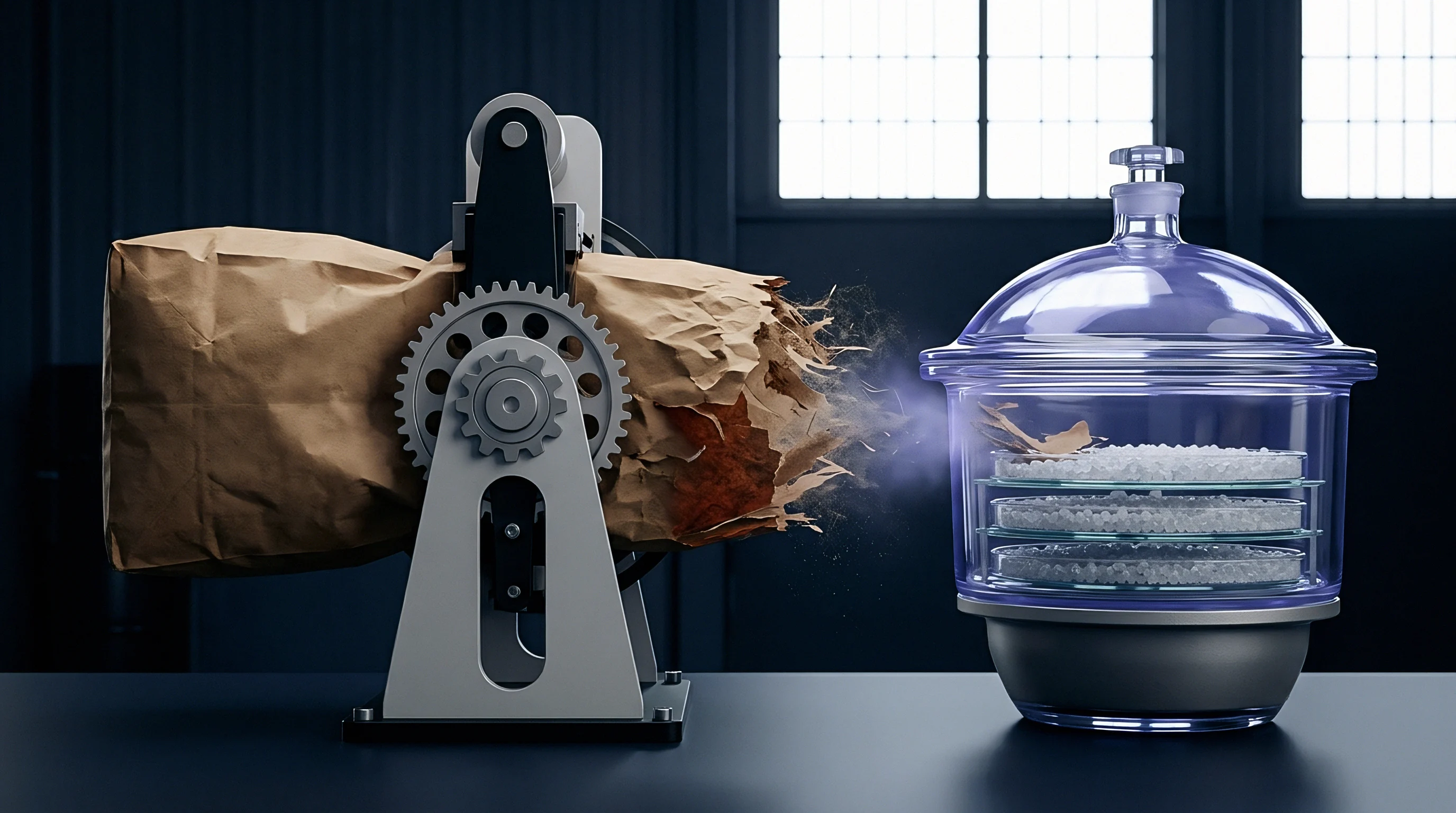
Both methods require pre-conditioning test specimens under ISO 187 standards at 23 degrees Celsius and 50 percent relative humidity for a minimum of twenty-four hours before testing.

Why Do Secondary Fibers Weaken Internal Ply Bonds?
Repeated wetting, chemical bleaching, and thermal drying cycles alter cellulose microfibril morphology permanently. Secondary fibers display lower swellability and collapsed lumen structures, diminishing contact area during sheet consolidation. The chemical composition of recovered fiber stocks contributes to bond deterioration.
Lignin-rich mechanical pulp fragments and residual deinking chemicals hinder inter-fiber hydrogen bonding. The cumulative effect lowers perpendicular tensile resistance relative to virgin fiber folding boxboards.
| Standard Designation | Test Principle | Specimen Area | Loading Velocity | Reported Units |
|---|---|---|---|---|
| ISO 15754 | Perpendicular Tensile Pull | 20.0 or 50.0 cm² | 10 mm/min or 50 mm/min | kPa |
| TAPPI T 541 | Perpendicular Tensile Pull | 6.45 cm² (1.0 in²) | 2.5 mm/min ± 0.5 mm/min | kPa or psi |
| SCAN-P 80 | Perpendicular Tensile Pull | 10.0 cm² | 20 mm/min | kN/m² |
| TAPPI T 569 (Scott) | Dynamic Pendulum Impact | 2.54 × 2.54 cm | Dynamic velocity | J/m² |

Adhesive Tape Selection and Dwell Dynamics
Specimen preparation demands precise tape selection to prevent adhesive failure at high tensile loads. Acrylic transfer tapes with high shear resistance and coat weights above sixty grams per square meter provide optimal mechanical anchorage into porous board surfaces. Rubber-based adhesives can slip or flow under sustained tensile tension, yielding false elongation values.
The mounting procedure requires applying uniform pressure across the assembly using a calibrated pneumatic press. Dwell time under pressure allows the viscoelastic polymer adhesive to flow into surface micro-crevices. Calibration errors ruin the test.
Under international sales specifications governing grade GT2 chipboard, delivered lots must meet a minimum z-direction tensile strength of 130 kilopascals measured under ISO 15754 conditions or the purchasing party holds the contractual right to reject the shipment upon receipt.
Fracture
Material separation under out-of-plane loading reveals structural differences between true z-direction tensile testing and pendulum impact bond testing. Scott Bond testing according to TAPPI T 569 measures the dynamic energy absorbed during rapid delamination initiated by an angled impact hammer. The pendulum applies combined shear and tensile stresses at millisecond strain rates.
ISO 15754 measures static perpendicular tensile resistance under pure uniaxial tension. Recycled paperboard behaves differently across these loading regimes. Scott Bond values often mask poor static ply cohesion because the viscoelastic deformation of fibers and starch polymers absorbs impact energy during high-velocity shock.
Static perpendicular tensile testing exposes dry fiber bonds that fail under sustained loads. When converting processes subject folding boxboard to peel forces during hot foil release or blister sealing, stress duration exceeds dynamic impact time scales by orders of magnitude. A recycled sheet exhibiting acceptable Scott Bond energy ratings of 160 Joules per square meter can still delaminate under modest static tensile loads below 100 kilopascals.
Relying on pendulum impact data alone leaves packaging lines vulnerable to catastrophic ply separation.
Pendulum impact testing measures total absorbed rupture energy while perpendicular tensile testing isolates true failure stress.
Density directly correlates with perpendicular tensile values across recycled grades. Denser boards produced with higher wet-press loads force flattened secondary fibers into closer contact, maximizing hydrogen bonding sites. High moisture reduces tensile resistance.
When ambient relative humidity rises from 50 percent to 75 percent, z-direction tensile values drop by twenty to thirty-five percent as water molecules disrupt hydrogen bridges between recycled fibers.
Scott Bond Dissociation from Perpendicular Tensile Stress
Correlation between static z-direction tensile tests and dynamic pendulum impact tests remains tenuous across recovered paper grades. Virgin solid bleached sulfate boards maintain a consistent proportional relationship between Scott Bond values and z-direction tensile values due to uniform fiber morphology and homogeneous sheet structure. Recycled chipboard breaks this correlation.
Mineral fillers, starches, and non-fibrous contaminants scatter unpredictably throughout the cross-section. Dynamic impact tests cause extensive out-of-plane delamination shear that artificially inflates energy absorption through multi-planar fiber pull-out. Static tensile loads isolate the weakest plane with minimal gross shear deformation.
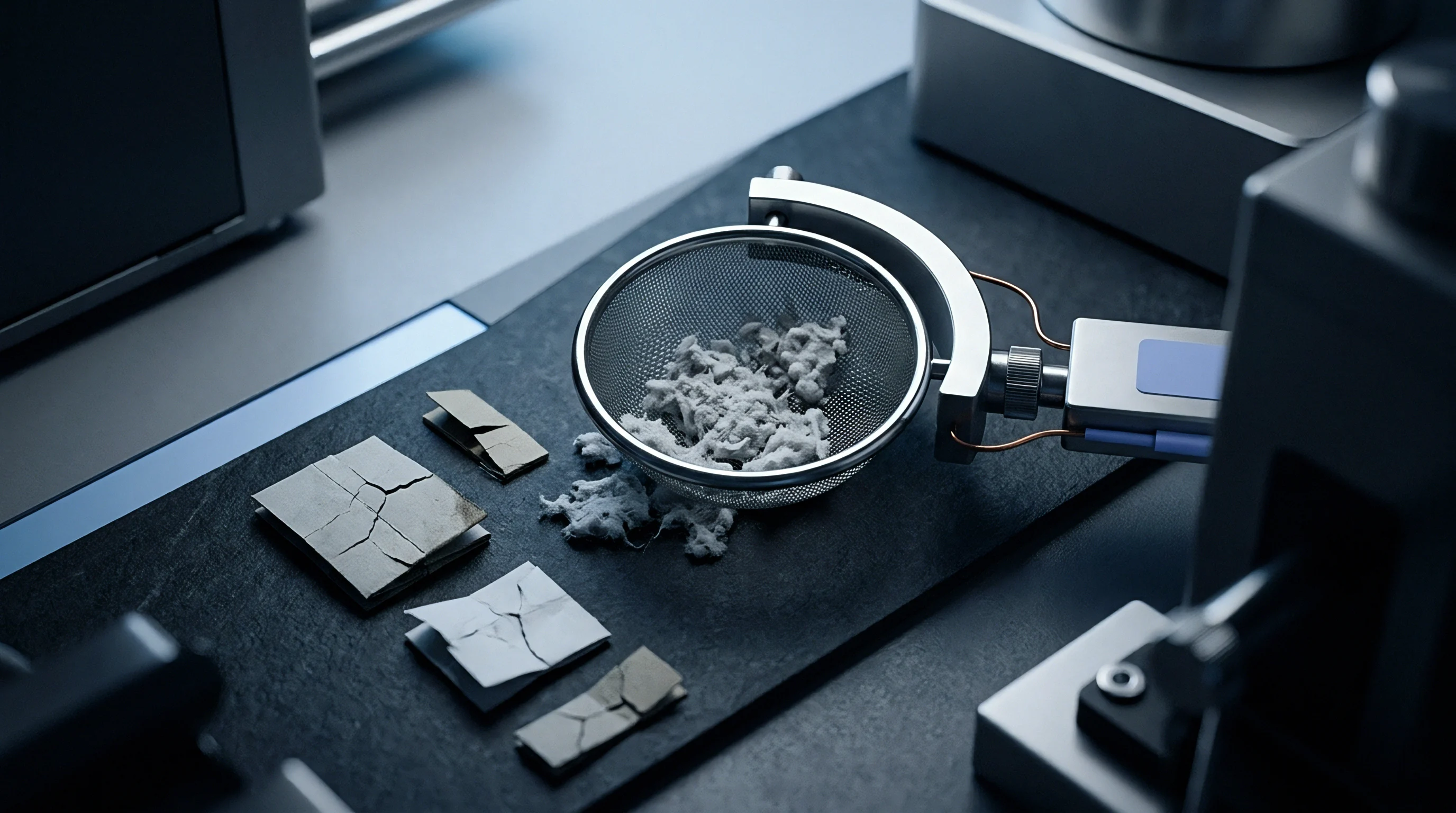
Testing laboratories must log fracture morphology after every tensile pull. A valid test exhibits rupture within the internal paperboard structure across at least ninety-five percent of the specimen area. Rupture occurring at the tape-to-board interface invalidates the reading, signaling adhesive release rather than substrate failure.
Interlayer splitting between the white top liner and grey middle ply points to starch starvation at the wet-end couch roll. Deep core delamination within the filler-heavy center ply reflects poor furnish refinement or excessive post-consumer ash content.
Where Do Laboratory Measurements Disagree with Converting Realities?
Standard testing environments control temperature to 23 degrees Celsius and relative humidity to 50 percent under closed laboratory conditions. Converting plants operate across fluctuating industrial environments where seasonal shifts change board moisture levels. High converting line speeds impose complex triaxial strain fields, combining bending, transverse shear, and perpendicular pull within milliseconds.
Laboratory tensile platens pull uniformly across flat specimens, whereas real converting tools apply concentrated point loads along scores, embossments, and heated seal borders.
- Anvil Parallelism Drift produces localized edge stress concentrations that initiate running cracks across the specimen face.
- Tape Backing Creep introduces false displacement measurements during slow crosshead loading cycles.
- Sample Edge Damage from dull cutting dies introduces micro-cracks that trigger premature delamination during axial pulling.
Plies bonded with adequate starch and high density resist delamination under converting stress while dry, uncompressed fibers split apart.
Passes
Subsequent finishing stages subject printed folding boxboard to localized peel forces, thermal shocks, and mechanical deformation that exploit low z-directional tensile strength. Multi-pass carton manufacturing frequently combines sheet-fed litho printing, overall or spot UV coating, hot foil stamping, and film lamination. Each added pass introduces physical forces oriented perpendicular to the sheet plane.
When printing high-coverage solid designs with high-tack offset inks, ink splitting in the printing nip exerts strong suction forces on the board surface. If tack-induced peel stress surpasses internal bond strength, the top liner tears away from the middle ply, filling printing blankets with fiber debris and halting the run.
Hot foil stamping applies combined heat, dwell time, and pressure, followed by sudden mechanical separation. Heated stamping dies soften the thermoplastic adhesive on stamping foils at temperatures between 100 and 130 degrees Celsius. Hot dies weaken internal cohesion.
The mechanical peel action required to release carrier film from stamped foil pulls directly upward against the substrate surface. In recycled chipboards with z-direction tensile strength below 140 kilopascals, this peel force pulls the white virgin top liner completely out of the board core. The resulting blisters ruin stamped logos and degrade packaging aesthetics.
Hot foil carrier film peel tension during high-speed stamping routinely exceeds eighty kilopascals of localized perpendicular stress.
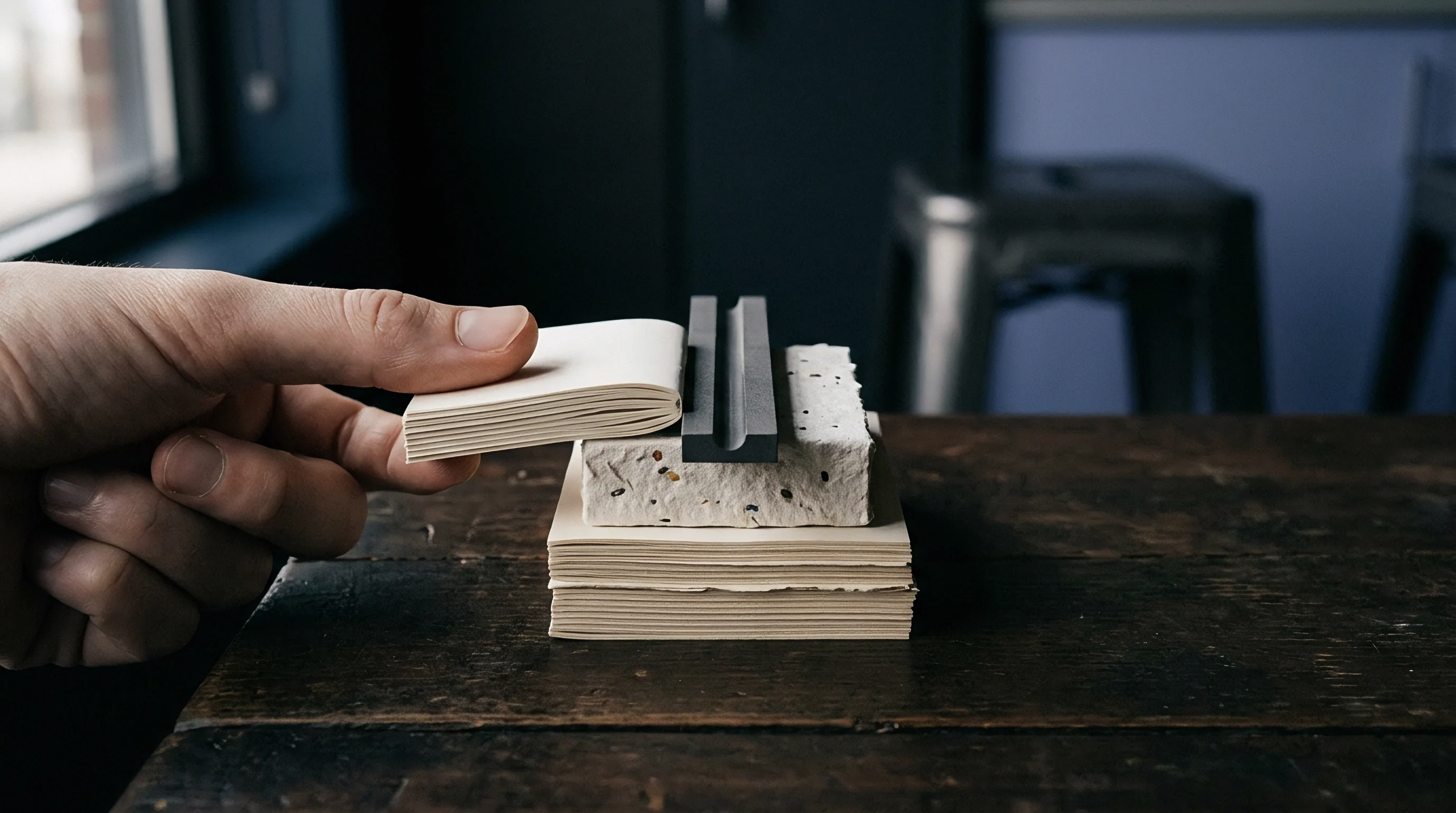
Creasing and folding operations place intense shear stress on internal ply interfaces. During rotary or flatbed die-cutting, steel creasing rules depress the cartonboard into female matrix channels. This controlled deformation causes deliberate, localized delamination across internal layers, allowing the sheet to fold 180 degrees without cracking its outer liner.
If the middle plies possess deficient z-direction tensile resistance, creasing deformation spreads uncontrollably beyond the score bead. Wide, irregular internal ruptures weaken carton score stiffness and cause carton flaps to skew or roll over during high-speed automated packaging erection.
Offset Ink Tack and High Speed Delamination
Ink tack values rise sharply when press speeds increase or ink fountain temperatures drop. Viscous offset inks generate substantial hydrodynamic pull forces as printing blankets separate from board sheets at speeds exceeding 12,000 sheets per hour. Ink tack pulls surface fibers upward.
On recycled grades lacking adequate surface and internal strength, tack forces pluck fibers out of the top ply or induce deep interlayer cleavage. Low caliper boards delaminate faster.
Hot Foil Stamping Dwell and Thermal Shock
Thermal conductivity differences across board layers create internal thermal stresses during foil stamping. As heat flows from metal dies into the top coating and liner, residual moisture within the middle plies vaporizes into steam. Internal vapor expansion weakens hydrogen bonding across adjacent recycled plies.
When the stamping die lifts, mechanical suction combines with internal steam pressure to split the board. Selecting foils with low-temperature release properties and optimizing die dwell times mitigates thermal ply damage.
| Converting Process | Stress Mode | GD2 Recycled Board (kPa) | GT2 Coated Recycled (kPa) | GC2 Virgin Core FBB (kPa) |
|---|---|---|---|---|
| High-Tack Offset Litho | Surface Tack Pull | 140 – 160 | 150 – 170 | 180 – 220 |
| Thermal Film Lamination | Shrinkage Peel | 150 – 180 | 160 – 190 | 200 – 250 |
| Hot Foil Stamping | Carrier Film Stripping | 160 – 190 | 170 – 200 | 210 – 260 |
| Blister Flange Sealing | Thermal Tensile Cleavage | 180 – 220 | 190 – 230 | 240 – 300 |
| High-Speed Carton Folding | Crease Bead Delamination | 120 – 140 | 130 – 150 | 160 – 200 |
Thermal blister packaging imposes the highest perpendicular tensile demands encountered in consumer cartonboard applications. During sealing, heated sealing shoes press plastic blister flanges against heat-seal coated recycled board. When automated sealing heads open, thermal contraction and mechanical ejection pull the blister flange upward against the board surface.
Deficient z-direction tensile strength causes the cartonboard core to split down the middle, destroying seal integrity and dumping heavy consumer products on the floor.
- High Speed Die-Cutting causes carton flaps to split during erection when internal delamination expands uncontrollably outside the defined creasing channel.
- Blister Seal Failure tears the board core apart upon ejection from heated packing fixtures, leaving product contents exposed.
- Film Lamination Delamination occurs when cooling plastic films contract and curl, applying continuous peel forces that lift the top liner off the core.
Inadequate perpendicular tensile strength leads to machine shutdowns, destroyed printing blankets, and entire pallets of finished cartons rejected on packaging lines.

Exposure
Procurement specifications for recycled folding boxboard frequently omit minimum z-direction tensile criteria, citing only basic grammage, caliper, and bending stiffness ratings. Sourcing managers assume that standard weight classifications guarantee structural performance across automated packaging lines. This specification deficit exposes converting programs to significant financial liabilities.
Virgin fiber folding boxboards like GC1 and GC2 offer consistent z-direction tensile performance due to clean chemical pulp blends and uniform mechanical refining. Recycled grades like GD2 and GT2 exhibit wide internal bond variations across mill lots and manufacturing seasons. Buyers absorb the converting loss.
Cost differentials between virgin fiber boards and recycled chipboards disappear rapidly when internal bond failures strike a production run. Recycled board commands an attractive base sheet discount, often trading fifteen to twenty-five percent below virgin fiber cartonboard per metric ton. A single delamination incident on a high-speed five-color litho press erases this material savings instantly.
Blanket washes, discarded sheets, press downtime, and ruined finishing passes accumulate substantial waste charges. The converting ledger must account for waste risks before committing high-value packaging designs to low-strength recycled substrates.
Blister packaging contracts highlight the commercial exposure generated by unmonitored z-direction tensile strength. Pharmaceutical and hardware blister cards require total substrate structural integrity under peel loading. If a heat-sealed card delaminates internally under twenty newtons of peel resistance, the entire packaged batch faces rejection under ISO 11607 seal strength guidelines.
Specifying a mandatory z-direction tensile floor of 190 kilopascals under ISO 15754 establishes a clear contractual baseline for technical claims against board mills.

Specification Deficits in White Lined Chipboard
Mill technical datasheets for recycled board frequently cite only caliper tolerances within plus or minus five percent and stiffness tolerances within plus or minus fifteen percent. Tensile resistance along the z-axis rarely appears on standard certificates of analysis. Without explicit contractual thresholds for internal bond strength, converting plants bear total financial liability when sheets delaminate during finishing passes.
Technical dossiers accompanying mill orders should mandate batch-level ISO 15754 reporting across every pallet lot.
Reject Thresholds and Commercial Recourse
Commercial contracts must define precise sample sizes, conditioning routines, and rejection thresholds to support formal material claims. Sourcing agreements should stipulate that any delivery lot demonstrating a mean z-direction tensile strength below agreed specifications across a ten-sample testing protocol permits immediate rejection of the entire lot at the mill’s expense. The protocol must specify whether testing follows TAPPI T 541 or ISO 15754 to prevent technical disputes over platen pull velocities.
Whether mill suppliers will ever agree to standardize perpendicular tensile guarantees across lower-cost recycled chipboards without imposing prohibitive price premiums remains an open commercial question.