Verifying European Union Deforestation Regulation Compliance for Paper Substrates
Verify virgin paper substrates under EUDR by capturing verified WGS84 plot polygons for all pulp sources and lodging valid TRACES-NT due diligence statements.


Scope
European Union Regulation 2023/1115 governs commercial transactions across paper and paperboard substrates entering or leaving the internal market. Combined Nomenclature classifications determine statutory exposure under Annex I of the regulation. Importers face immediate statutory gatekeeping on Chapter 47 wood pulps and Chapter 48 paperboard products, including folding cartons, corrugated cases, and printed paperboard packaging imported as standalone merchandise.
Importers hold statutory liability.
Annex I of Regulation 2023/1115 exempts pure post-consumer recovered fibre streams while imposing full parcel traceability on every virgin pulp component.
Pre-consumer industrial offcuts and virgin furnish fractions remain subject to strict due diligence protocols. When paper substrates incorporate virgin fibres derived from softwood or hardwood pulpwood, the enterprise placing the goods on the European market assumes legal responsibility for tracing every wood lot to its specific forest origin. Mass balance certifications recognized under historical chain of custody standards do not satisfy statutory mandates on origin tracking.

Combined Nomenclature Classifications and Statutory Impact
Customs declarations require unambiguous tariff classification matching the substrate physical composition. Converted cartons entering under heading 4819 demand verification of both the constituent linerboard and the fluting medium. Packaging used solely to encase, protect, or support a non-regulated finished product during transit escapes standalone due diligence declaration; imported empty cartons, retail-ready containers, and unprinted board reels encounter full border scrutiny.
- Virgin kraftliner classifications under tariff heading 4804 mandate exhaustive production parcel tracking across all unbleached and bleached chemical pulp inputs.
- Folding boxboard substrates classified within heading 4810 require distinct origin files for both the bleached chemical outer plies and the mechanical pulp cores.
- Recovered paper packaging entering under code 48192000 escapes geolocation filings only when the furnish consists entirely of post-consumer waste streams verified through chain of custody records.
- Corrugated paperboard formats falling under tariff code 4808 demand independent proof of origin for the fluting medium and testliner plies.
Supply agreements now incorporate specific clauses transferring documentation burdens upstream: Seller warrants that all virgin fibre components supplied under this agreement originate from forest land not subject to deforestation after December 31, 2020, and agrees to furnish validated TRACES-NT reference numbers and polygonal coordinates thirty days prior to port arrival.

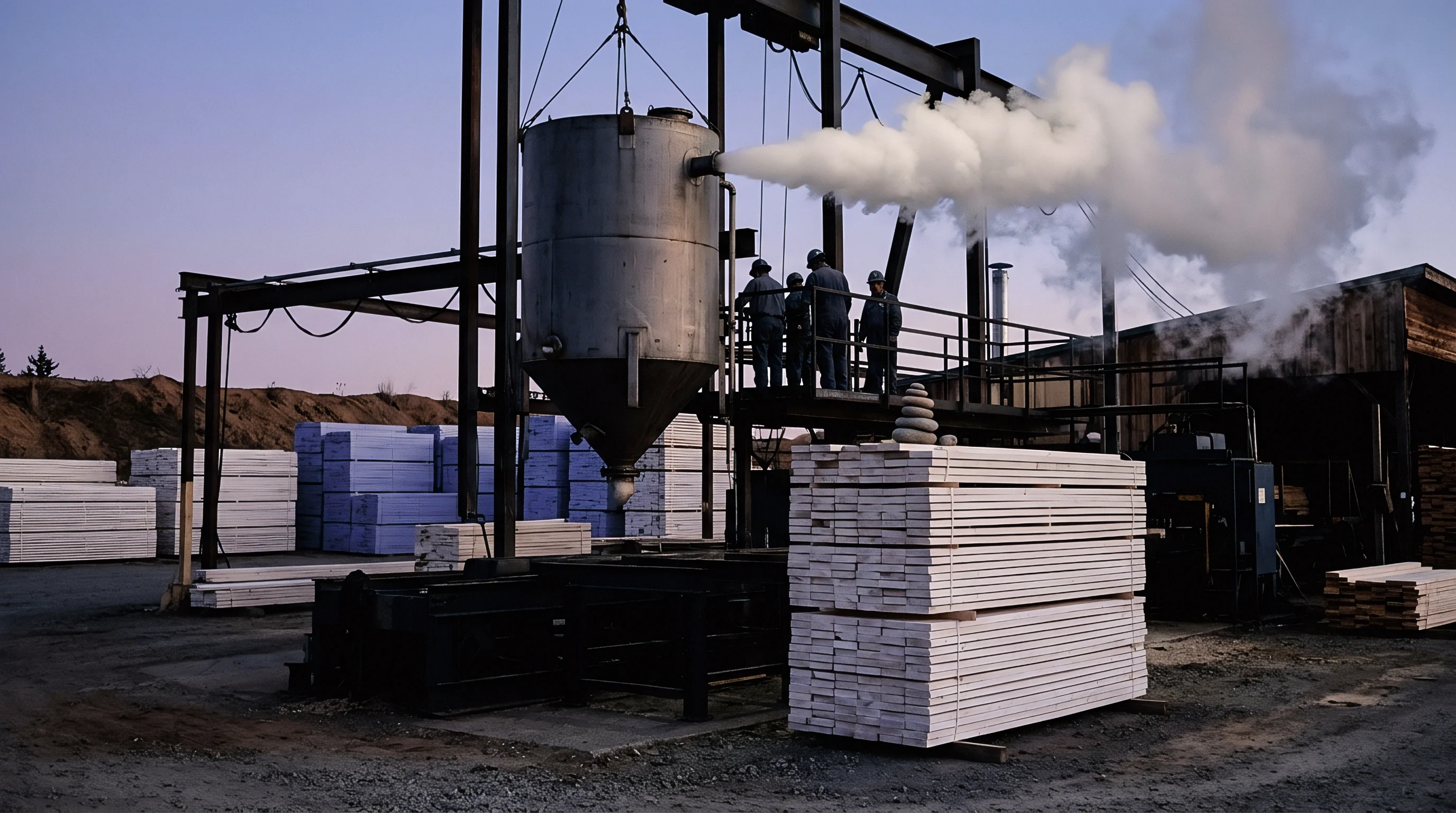
Plot
Geolocation mapping fixes the exact boundaries of timber harvesting operations feeding the pulp mill. Regulation 2023/1115 establishes a strict four-hectare boundary threshold that dictates coordinate data formats. Forest land parcels equal to or smaller than four hectares permit a single point coordinate using latitude and longitude expressed to six decimal places under the WGS84 coordinate reference system.
Harvest plots exceeding four hectares mandate a complete polygon boundary defined by sequential coordinate pairs enclosing the perimeter.
A six-decimal WGS84 coordinate pair specifies geographic position within an absolute ground tolerance of eleven centimetres at the equator.
Pulp manufacturers typically draw logs from hundreds of individual forest holdings across multiple harvest concessions. A single production batch of bleached chemical pulp blends wood chips from private smallholders, state forestry blocks, and sawmill residuals. Gathering compliant polygon files for every contributing forest tract requires uninterrupted data transmission from forest management units through chipping yards to digestion digesters.
Coordinates settle land claims.
| Parcel Area Threshold | Data Geometry Type | Coordinate Reference Standard | Precision Requirement | Mandatory Export Encoding |
|---|---|---|---|---|
| Plots equal to or under 4.0 hectares | Single Point Centroid | WGS84 EPSG 4326 | Minimum six decimal places | GeoJSON or Shapefile |
| Plots exceeding 4.0 hectares | Closed Polygon Loop | WGS84 EPSG 4326 | Minimum six decimal places per vertex | GeoJSON or Shapefile |
| Sawmill Coproduct Fractions | Polygon of parent logging site | WGS84 EPSG 4326 | Six decimal places on logging boundary | Direct TRACES-NT entry |

Forest Legality and Conversion Prohibitions
Deforestation-free criteria apply to any tree removal occurring after December 31, 2020. The regulation forbids raw material sourcing from forest areas converted to agricultural use, regardless of whether local laws permitted such clearing. Sourcing teams verify that timber was harvested in strict compliance with the national legislation of the harvest country.
This includes tenure rights, environmental protections, forest management codes, and customary land tenure systems held by indigenous groups.
Mill managers often explain coordinate missingness by asserting that their regional log yards collect timber from hundreds of unmapped peasant smallholders whose individual parcels cannot be recorded without shutting down line operations.


Fibre
Pulp chemistry and anatomical fiber identification arbitrate declarations of botanical origin. Standard certification systems such as FSC Mix or PEFC Certified operate on credit or percentage systems. These systems permit mills to mix certified virgin fiber with non-certified controlled wood inside continuous chemical digesters, issuing invoices based on calculated mass balances.
Mass balance accounting collapses.
The deforestation regulation rejects accounting substitutions: every physical metric ton of imported virgin paperboard must correspond to verified, deforested-free land plots. Paperboard structures blend fibres. Physical segregation models (such as FSC Segregated or FSC Dedicated Batch) become the minimum operational threshold for compliant virgin pulp supply chains.
Auditors cross-reference wood vessel anatomy against declared country coordinates using polarized light microscopy and chemical maceration.
Pulp mills consume varied wood. Analytical testing protocols verify that delivered reels match stated species and geography. Polarized light microscopy combined with standard staining methods under ISO 9184 establishes whether a bleached carton board comprises Betula pendula, Eucalyptus globulus, or Pinus sylvestris.
Discrepancies between identified fiber species and the tree varieties native to the declared coordinates trigger fraud investigations. Stable Isotope Ratio Mass Spectrometry (IRMS) measures spatial variations in carbon, hydrogen, and oxygen isotopes within cellulosic wall structures, enabling laboratory personnel to test whether a pulp shipment aligns with regional precipitation and climatic signatures from the stated harvest location.

Worked Calculation of Mixed Furnish Dilution and Mass Reconciliation
Consider a typical commercial production run of solid bleached sulfate (SBS) cartonboard running on a continuous four-drinier paper machine. The mill runs a target production mass of 100 metric tons of finished board at 300 grams per square meter, conditioned at 23 degrees Celsius and 50 percent relative humidity under ISO 187 test protocols.
Furnish parameters assume:
- Hardwood kraft furnish constitutes 65 metric tons (oven-dry basis) derived from plantation Eucalyptus urograndis with an average forest yield of 45 cubic meters of solid roundwood per hectare.
- Softwood kraft furnish comprises 35 metric tons (oven-dry basis) of long-fiber Pinus taeda yielding 28 cubic meters of roundwood per hectare.
- Specific wood consumption averages 4.2 cubic meters of green roundwood per metric ton of bleached chemical hardwood pulp, and 4.8 cubic meters of green roundwood per metric ton of bleached chemical softwood pulp.
The calculation traces the physical timber volume and corresponding forest footprint:
Hardwood volume required = 65 metric tons x 4.2 cubic meters/ton = 273.0 cubic meters of roundwood.
Softwood volume required = 35 metric tons x 4.8 cubic meters/ton = 168.0 cubic meters of roundwood.
Total timber consumed = 441.0 cubic meters of solid under-bark wood.
Hardwood harvest land area = 273.0 cubic meters / 45 cubic meters/hectare = 6.06 hectares.
Softwood harvest land area = 168.0 cubic meters / 28 cubic meters/hectare = 6.00 hectares.
Both harvest areas exceed the four-hectare boundary threshold. The importer must obtain, validate, and upload two discrete polygon sets encompassing exactly 12.06 hectares of logged forest, divided across the specific hardwood and softwood harvest sites. The standard admits no variance.
A missing polygon for even a single five percent softwood top-up batch invalidates the entire 100-ton delivery note.
A rule of thumb dictates that any blend of virgin chemical pulp containing more than three species from different geopolitical territories multiplies documentary failure risks exponentially.


Portal
Electronic registration of Due Diligence Statements (DDS) takes place within the European Commission TRACES-NT environmental portal. Operators input precise commodity descriptions, net mass figures, volume units, Harmonized System codes, and full coordinate polygon files prior to the release of cargo into free circulation. TRACES-NT processes polygon files through automated screening tools, cross-referencing input vectors against spatial datasets covering deforestation baselines, indigenous land titles, and protected forest reserves.
Each submitted statement produces an immutable alphanumeric TRACES-NT reference number. Downstream buyers and converters receive this reference number from the direct importer. The downstream operator references the upstream filing identifier when placing finished packaging products onto subsequent domestic commercial channels.
Timber extraction dates dictate legality.
| Data Field Element | Technical Validation Format | Permitted Characters or Range | Customs Interface Protocol |
|---|---|---|---|
| Operator Registration | EORI Identification Number | Standard ISO alpha-2 country code + 15 digits | Automated cross-check with TARIC database |
| HS/CN Commodity Code | Eight-digit numerical code | Chapters 47 and 48 exclusively | Single Window Environment for Customs (EU CSW-CERTEX) |
| Net Material Mass | Metric mass in kilograms | Numeric string up to two decimal places | Discrepancies over 1.0 percent generate manual review hold |
| Harvest Period | ISO 8601 Date Range | YYYY-MM-DD to YYYY-MM-DD | Start date must fall after 2020-12-31 |
| Polygon Geometries | Valid GeoJSON FeatureCollection | Nested array of latitude-longitude float coordinates | Automated self-intersection and coordinate order check |

Audit Trails and Risk Assessment Metrics
Operators establish an internal Due Diligence System containing documented procedures for information collection, risk assessment, and risk mitigation. Sourcing from countries categorized as high-risk under the Commission benchmarking system triggers enhanced scrutiny, requiring on-site forest audits, independent satellite land-cover monitoring, and forensic timber tracing.
- Country risk tiers dictate the statistical sampling rate applied by customs authorities, ranging from one percent for low-risk nations to nine percent for high-risk origins.
- Pre-consumer mill broke loops require explicit certification confirming that scraps originated solely from paper converting lines running compliant virgin furnish.
- Sawmill residual chip tracking requires full upstream attribution back to the original felling coupes where parent sawlogs were harvested.
- Data retention obligations bind operators to preserve all geolocation dossiers, species analyses, and transport manifests for a minimum period of five years.
The regulatory structure leaves open how mills running continuous chemical recovery systems can definitively prove zero contamination when small quantities of unmapped local wood fuel chip boilers and indirectly cross-contaminate black liquor lines during digester changeovers.


Dock
Border authorities utilize automated IT interfaces connecting customs management software directly to TRACES-NT through the European Union Single Window Environment for Customs. When an import declaration lists paper packaging or raw pulp under regulated CN headings, clearing systems hold the entry until the associated DDS reference number completes cryptographic validation. Discrepancies in weight or missing coordinates trigger automatic administrative holds at the terminal.
Customs checks stop cargo. Competent authorities inspect physical container seals, examine shipping waybills, and draw sample reels for laboratory pulpwood fiber analysis. If an enterprise submits falsified polygon data or imports paperboard derived from land converted after the December 2020 cut-off, enforcement officers apply confiscation protocols under Article 24 of Regulation 2023/1115.

Penalties and Border Rejection Liabilities
Administrative sanctions apply directly to the importer of record established within the European Union. Article 25 defines maximum administrative fines at no less than four percent of the operator total annual turnover across the Union in the preceding financial year. Authorities confiscate the commercial goods, impound inventory, and temporarily exclude non-compliant operators from public procurement processes and commercial bidding.
When an unsupported virgin furnish claim causes paperboard pallets to be rejected at customs, the financial loss encompasses terminal demurrage charges, port storage penalties, return freight costs, and immediate commercial default under downstream packaging supply contracts.