Dynamic Capillary Penetration Thresholds in High-Speed Reverse Web Wetting for Cross-Direction Curl Correction
Dynamic reverse roll wetting prevents cross-direction curl by matching liquid slip ratios to dynamic surface tension, keeping water absorption within the outer Z-axis.
Nip
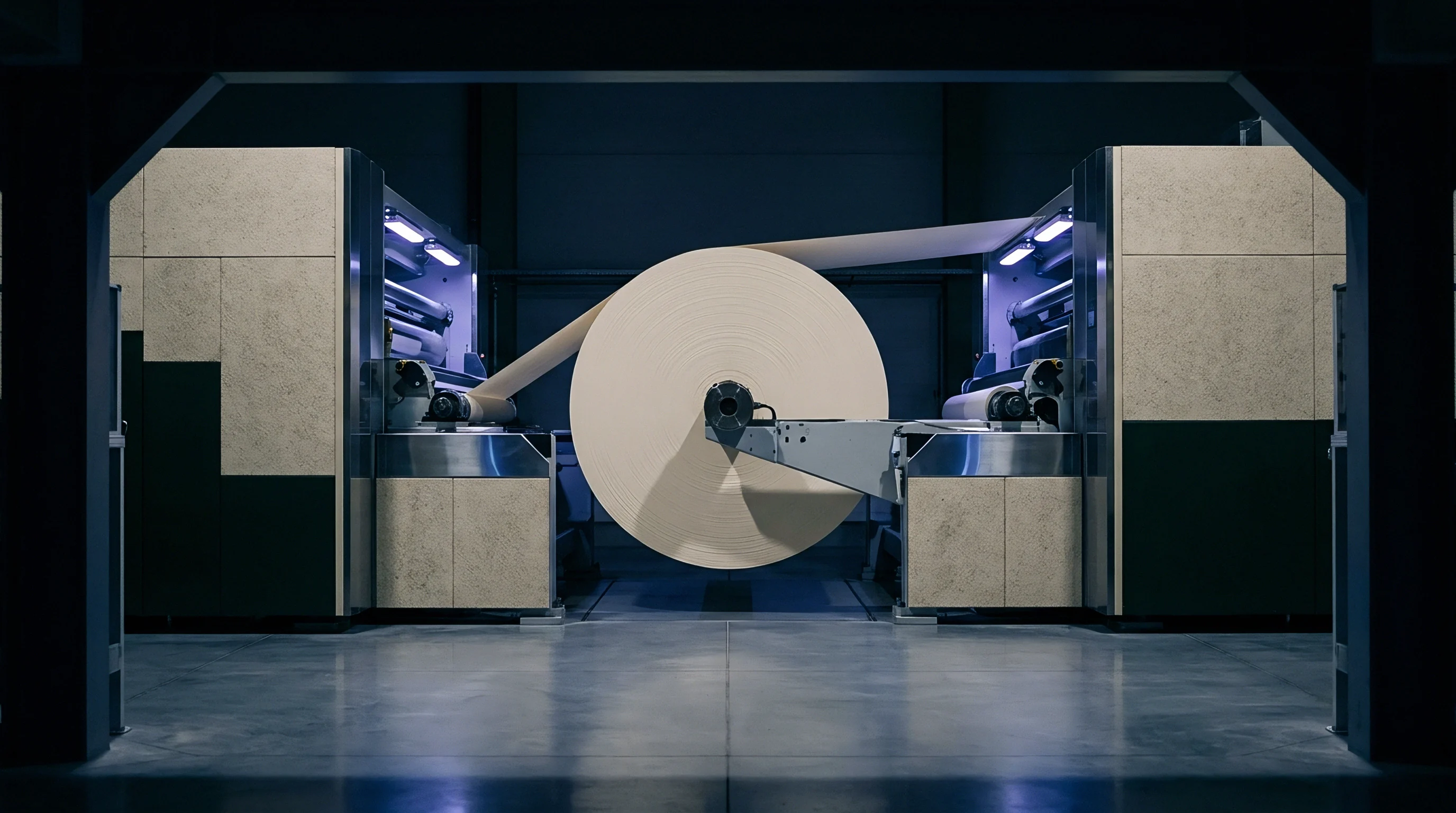
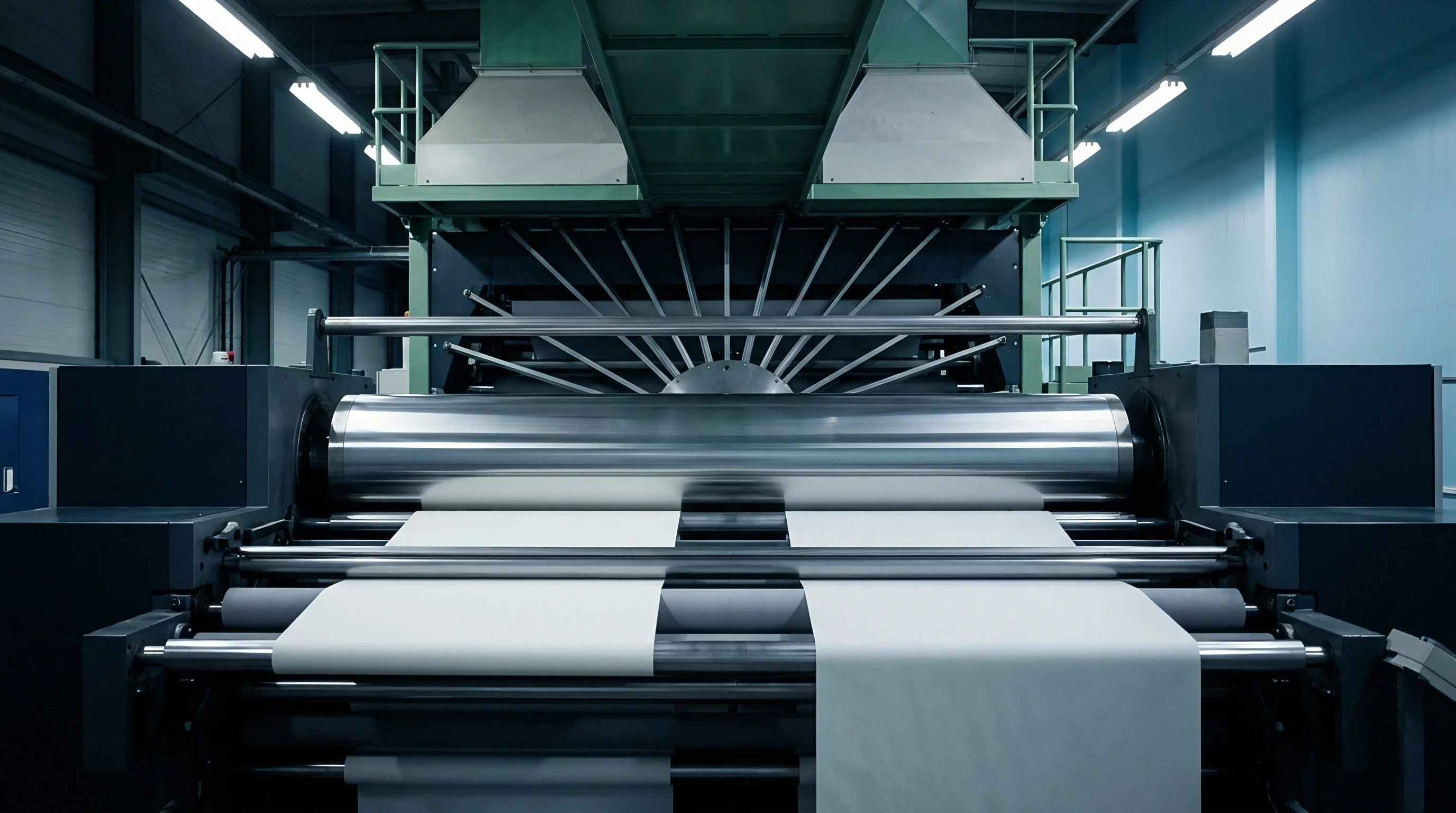
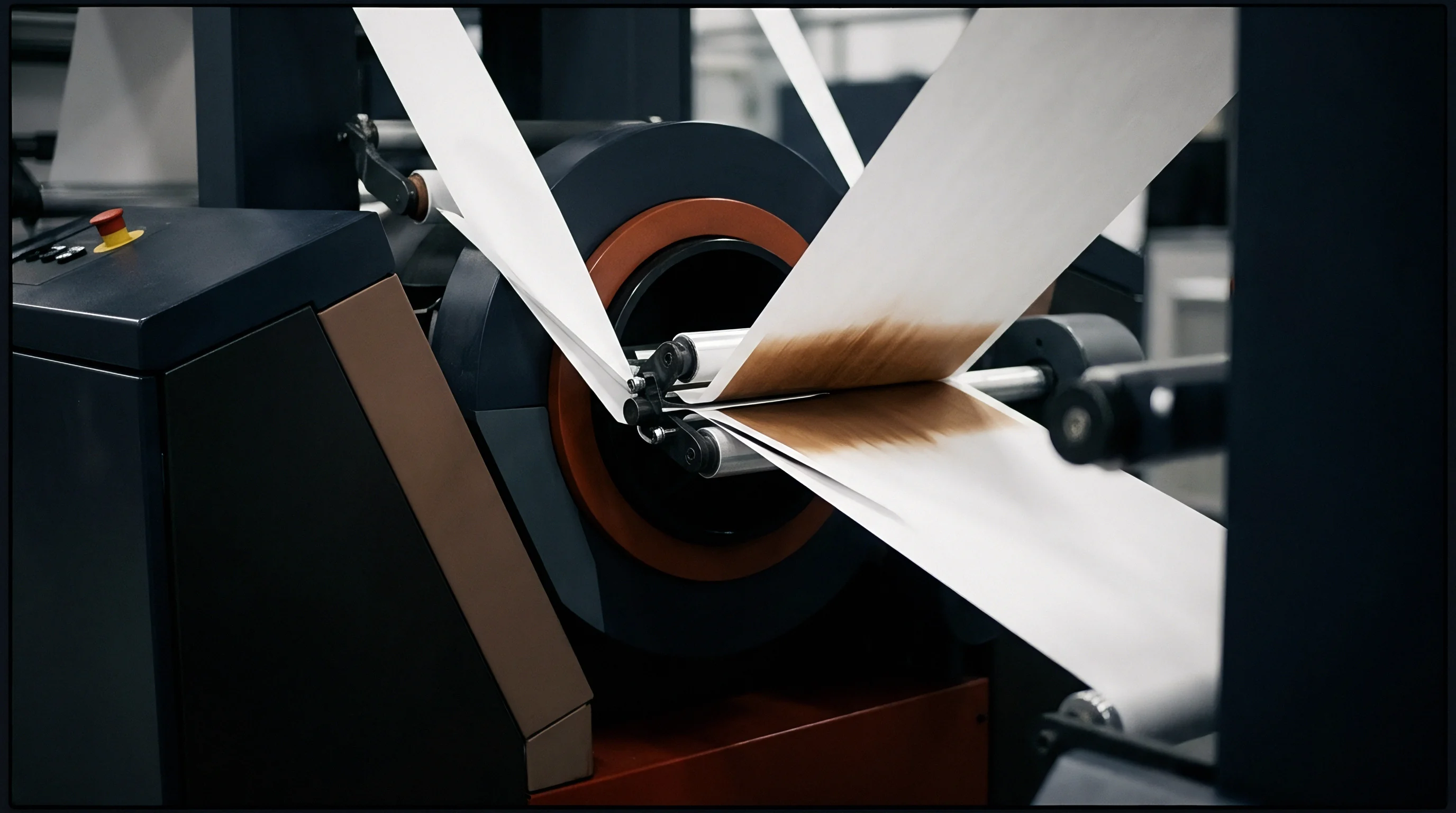
Counter-rotating applicator rollers generate intense fluid shear within the liquid film prior to web contact. At production speeds exceeding 400 meters per minute, the hydrodynamic pressure generated inside the fluid gap opposes the web tension, setting up a hydro-dynamic wedge that determines initial contact width. The boundary layer attached to the reverse-spinning roller meets the moving paperboard web in a micro-zone defined by high shear rates, frequently exceeding 100,000 reciprocal seconds.
Fluid forces in this zone force water molecules past the hydrophobic air-paper interface before atmospheric air entrainment can interrupt contact.
Liquid film thickness varies. Converting lines running lightweight paperboard require precise metering to prevent fluid flooding across the sheet edges. When the counter-rotating applicator roll surface moves faster than the paper web, the fluid film undergoes split-elongation.
This elongation creates a smooth metering profile, suppressing ribbing defects that typically appear in forward-roll configurations. The fluid mass transferred to the sheet scales directly with the slip ratio, which represents the differential speed between the roller circumference and the moving substrate.
Fluid film thickness on the meter roll scales with the square root of dynamic fluid viscosity divided by surface tension.
Viscous forces dominate inertial forces in the fluid wedge at high web speeds. The capillary number characterizes this balance, defined as fluid viscosity multiplied by web velocity divided by static surface tension. When the capillary number exceeds a critical threshold, typically around 0.5 for reverse roll applicators, air film entrainment occurs.
This entrained air disrupts continuous liquid deposition, resulting in localized dry spots along the cross-direction profile. Increasing the loading pressure of the backing roller collapses the air boundary layer, maintaining uniform fluid transfer across the web width.
Fluid Dynamics in Counter Rotating Roll Applicators
Applicator geometry dictates liquid distribution efficiency before fluid enters the porous structure of the paperboard. Hydraulic pressure peaks immediately upstream of the narrowest gap distance between the backing roll and applicator roll. This localized pressure impulse drives initial surface wetting, compressing the boundary air layer down to sub-micron dimensions.
The fluid layer undergoes rapid extension, forcing liquid molecules into direct contact with surface fiber wall voids.
Shear rate increases rapidly. High speed converting equipment demands low-viscosity liquid formulations to avoid structural film splitting defects at the exit zone. When dynamic viscosity rises above 150 millipascal-seconds under high shear rates, fluid filamentation occurs at the exit, leaving visible ridge patterns along the running direction.
Formulations incorporating modified starches or synthetic rheology modifiers control shear-thinning behavior, holding high-shear viscosity below 40 millipascal-seconds while retaining adequate zero-shear viscosity to prevent tank sedimentation.
Capillary Pressure Deficits at High Speeds
Dwell time within the contact zone shrinks to less than 3 milliseconds on converting lines operating at 600 meters per minute. Within this millisecond window, external mechanical pressure drops to zero as the web exits the applicator roller zone. Subsequent liquid movement relies entirely on capillary pressure generated by the pore architecture of the paperboard.
Capillary pressure operates inversely to pore radius, meaning refined micro-pores exert far greater suction forces than large inter-fiber voids.
Web tension alters absorption. High mechanical web tension reduces the effective void volume within the fiber network by compressing the sheet thickness during transit. As the paperboard relaxes upon exiting the tensioned roll assembly, internal void volume expands, generating a secondary suction impulse.
This mechanical expansion pull works in tandem with capillary forces, drawing the surface-applied liquid deeper into the Z-direction matrix before surface evaporation takes place.
| Web Speed (m/min) | Applicator Slip Ratio | Dynamic Viscosity (mPa·s) | Transfer Layer Thickness (µm) | Air Entrainment Onset |
|---|---|---|---|---|
| 300 | 1.15 | 45 | 12.4 | Absent |
| 450 | 1.25 | 38 | 9.8 | Absent |
| 600 | 1.35 | 32 | 7.2 | Controlled |
| 750 | 1.50 | 25 | 5.1 | Critical |
The operational balance between web speed and roller slip maintains continuous wetting. Machine operators adjust slip ratios in increments of 0.05 to compensate for batch-to-batch variations in paperboard surface energy. A higher slip ratio delivers greater kinetic energy to the fluid layer, driving water into low-absorbency sized coatings without requiring higher web tension across the processing span.
Pore
Cellulose fiber networks absorb applied aqueous liquids through micro-scale voids driven by capillary pressure gradients. The dynamic penetration depth follows Lucas-Washburn kinetics, where liquid advancement scales with the square root of contact time, pore radius, and surface tension, divided by dynamic fluid viscosity. At elevated web speeds, the available wetting time drops below the equilibrium time needed for surfactants to orient at the liquid-air interface.
Consequently, the dynamic surface tension active during initial liquid contact remains significantly higher than static laboratory values.
Dynamic surface tension shifts. Water containing conventional wetting agents displays static surface tension near 30 millinewtons per meter, yet presents values above 55 millinewtons per meter at surface ages below 5 milliseconds. This temporal lag restricts initial fluid penetration to large inter-fiber channels, delaying absorption into dense fiber wall structures.
Formulations utilize rapid-acting non-ionic surfactants with high diffusion coefficients to depress dynamic surface tension within 2 milliseconds of applicator contact.
At a web speed of 600 meters per minute, surfactant diffusion equilibrium under 45 millinewtons per meter requires dynamic surface tension stabilization within 3 milliseconds.
Capillary flow governs uptake. The physical volume of liquid absorbed per unit area must remain restricted to the outer Z-directional layers of the sheet. If liquid penetration extends beyond 15 to 20 percent of total paperboard caliper, structural strength suffers, leading to web limpness and registration drift in subsequent converting steps.
Controlling liquid application rates to ranges between 1.0 and 2.5 grams per square meter limits fluid movement to surface capillaries, preventing moisture from invading the hydrophobic core sizing.
Lucas Washburn Dynamics in Microscopic Fiber Networks
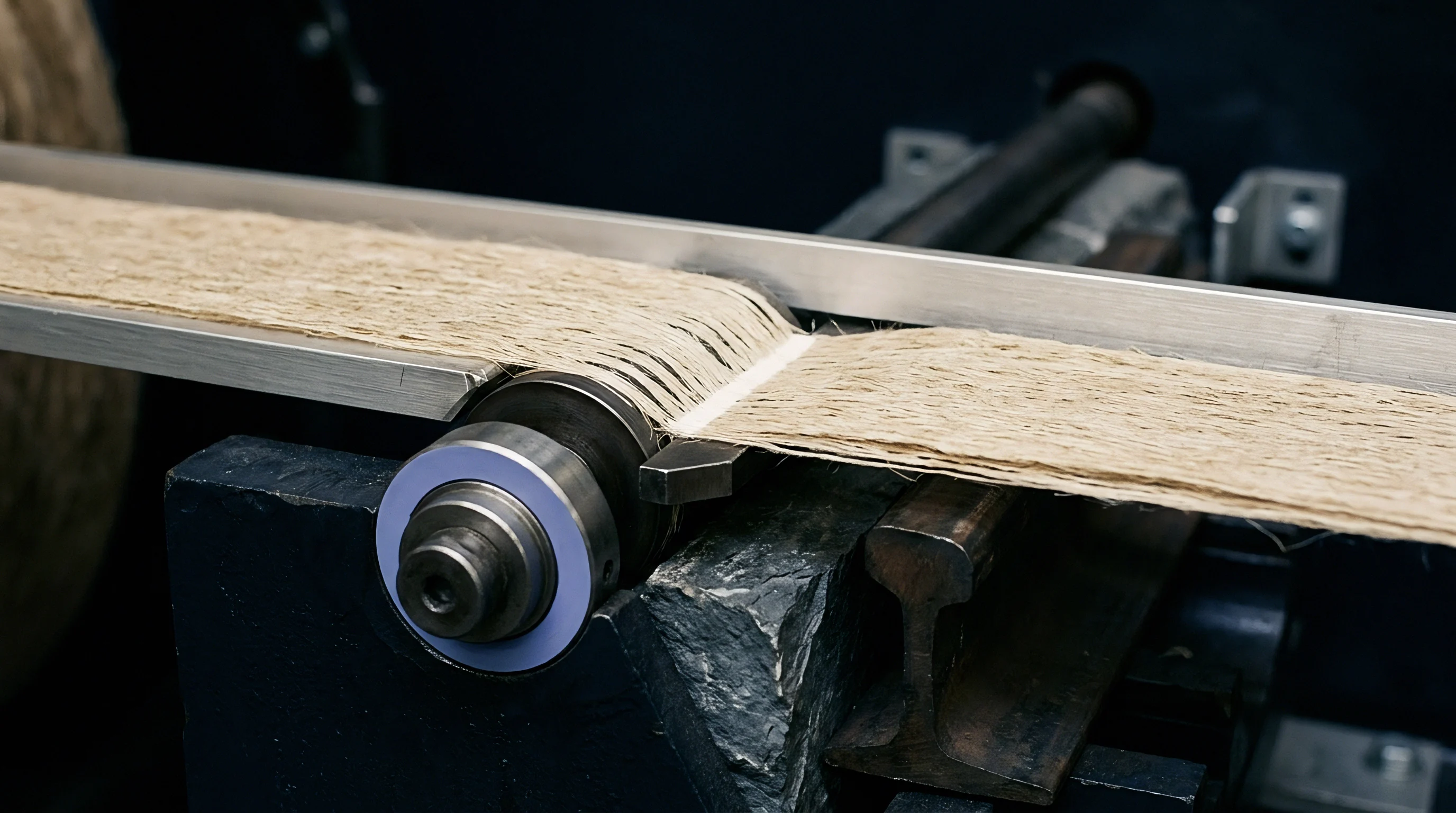
Micro-structure anisotropy alters liquid transport rates between the machine direction and cross direction. Fiber alignment predominantly parallel to the machine direction creates elongated channel pathways that favor longitudinal fluid migration. Cross-direction capillary flow faces higher tortuosity, requiring greater capillary driving pressure to achieve uniform moisture dispersion across the fiber network matrix.
Fibers swell upon contact. As water molecules enter the cell wall structure of unbleached or bleached kraft fibers, hydrogen bonds between adjacent cellulose chains break and reform around water clusters. This molecular hydration causes individual fibers to expand by up to 15 percent in diameter while undergoing less than 1 percent longitudinal elongation.
This differential expansion drives cross-direction sheet swelling, creating the internal mechanical forces needed to counter single-sided lamination curl.
Surfactant Kinetics and Dynamic Surface Tension Limits
Surfactant molecule migration speeds dictate the boundary wetting rate on high-speed reverse web coaters. Dynamic bubble pressure tensiometers measure the surface tension reduction across sub-second surface ages, providing critical data for formulation design. Standard alkyl phenol ethoxylates demonstrate insufficient migration speeds, failing to depress surface tension during the critical 2-millisecond applicator nip window.
Short-chain acetylenic diol surfactants deliver superior dynamic performance due to their low molecular weight and rapid orientation kinetics. Adding 0.1 to 0.3 percent by weight of acetylenic diol to the rewetting water lowers 5-millisecond dynamic surface tension to below 38 millinewtons per meter. This reduction accelerates initial capillary uptake without causing persistent foam generation in the fluid recirculating loop.
- Z-Direction Core Delamination Moisture penetrating beyond twenty percent of sheet caliper weakens internal bond strength, leading to ply separation under high web tension.
- Fiber Swell Blistering Rapid surface wetting without uniform core penetration generates localized hydro-expansion pockets that form blisters during downstream hot roll drying.
- Hygral Tail-End After-Backflex Delayed water absorption past the applicator section causes delayed hygroexpansional strain, resulting in reverse curl instability inside finished pallets.
- Inter-Laminar Sizing Degradation Excessive surfactant accumulation lowers contact angles within the internal fiber core, permanently destroying liquid barrier properties required for packaging board.
Equipment suppliers frequently state that insufficient wetting uniformity stems exclusively from raw paperboard absorbency variations across mill lots. Operating records demonstrate that uncalibrated applicator slip ratios and dynamic surface tension spikes cause over 80 percent of cross-direction curl correction failures on active converting lines.
Correction
Planar stability across paperboard substrates depends on balancing hygroexpansional stresses across the sheet thickness. Single-sided lamination, aqueous varnish application, or film extrusion creates structural asymmetry by locking one face of the paperboard in an expanded state. As the applied coating cures or dries, it contracts, exerting tensile forces that pull the sheet into a cross-direction curl toward the processed side.
Applying precise fluid volumes to the reverse face induces controlled fiber swell, generating equal counter-tension that restores sheet flatness.
Moisture gradients control curvature. Achieving permanent curl correction without compromising web stiffness demands a steep moisture gradient across the Z-axis. Water applied via reverse web wetting must remain concentrated within the outer 10 to 15 micrometers of the un-coated back face.
This localized swelling stretches the back surface layer, counteracting the front-side contraction forces while leaving the load-bearing sheet core structurally dry and rigid.
ISO 11093 specification mandates maximum curl curvature tolerance under 5 reciprocal meters following 24 hours of environmental equilibrium.
Paperboard memory resists movement. Internal stresses generated during wet pressing and machine-direction drying persist within the cellulose matrix until moisture content exceeds local equilibrium levels. Reverse web wetting elevates localized back-side moisture content from a baseline of 6 percent up to transient levels of 14 percent.
This localized moisture spike relaxes internal hydrogen bond networks, allowing fibers to realign under counter-tension before setting into a flat equilibrium state upon re-drying.
How Does Roll Slip Ratio Control Fluid Absorption Depth?
Metered fluid volume control relies on maintaining precise relative velocities between the web and the reverse roll surface. Increasing the roll slip speed raises the kinetic energy of the liquid layer entering the transfer zone, which compresses the air boundary layer and forces fluid into surface pores within milliseconds. Higher slip ratios allow lower liquid film thicknesses to achieve total surface coverage, preventing fluid pooling and deep core penetration.
Depth retention remains critical. Operating with a slip ratio of 1.35 at 500 meters per minute deposits a uniform 1.5 grams per square meter water film that penetrates exactly 12 micrometers into a 250-micrometer paperboard substrate. Lowering the slip ratio to 1.05 while increasing fluid volume to achieve the same coverage increases penetration depth beyond 45 micrometers, causing core softening and loss of bending stiffness.
Hygroexpansional Stress Equilibrium across Caliper Profiles
Stiffness retention during curl correction requires calculated application rates based on sheet caliper, original moisture content, and the elastic modulus of the applied lamination layer. Thicker paperboard grades require higher absolute force to counteract front-side laminate contraction, but their increased caliper permits slightly deeper fluid penetration without core structural failure. Precision application systems scale fluid delivery dynamically based on real-time line speed measurements and web tension feed-forward loops.
- Establish baseline cross-direction curl curvature profiles across un-wetted production samples using standard optical curl gauge measurement protocols.
- Calibrate applicator roll dynamic slip ratios to match current line velocity, target application weight, and substrate absorption capability.
- Adjust non-ionic surfactant dosing to maintain dynamic surface tension below 40 millinewtons per meter at 5 millisecond surface ages.
- Monitor post-application web moisture content via near-infrared sensors positioned 2 meters downstream of the rewetting nip.
- Verify sheet flatness post-drying, re-adjusting applicator roller fluid supply pressure if residual curvature exceeds specification limits.
| Substrate Basis Weight (g/m²) | Lamination Material | Reverse Wetting Rate (g/m²) | Initial Curl Curvature (1/m) | Final Curl Curvature (1/m) |
|---|---|---|---|---|
| 200 | 12 µm PE Film | 1.2 | 14.2 (Diagonal) | 1.1 (Flat) |
| 250 | 15 µm PET Film | 1.8 | 18.5 (CD Concave) | 0.8 (Flat) |
| 300 | 20 g/m² OPP Lamination | 2.2 | 22.1 (CD Concave) | 1.4 (Flat) |
| 350 | 12 µm PET Film | 2.6 | 16.8 (CD Concave) | 0.5 (Flat) |
Failure to limit water penetration within the calculated boundary zone leads to structural ply failure during subsequent die-cutting operations. Over-wetted cartonboard exhibits severe creasing matrix score cracking and score-line tearing when converted under industrial press conditions.
Verification
Quantifying moisture depth profiles across moving webs relies on real-time non-destructive testing instrumentation integrated directly onto the converting line. Near-infrared spectroscopic absorption gauges operating at specific water absorption bands, such as 1.45 and 1.94 micrometers, measure total web water mass. Multi-frequency microwave attenuation arrays provide split-layer moisture resolution, enabling operators to differentiate between surface-deposited water and core moisture content at high web velocities.
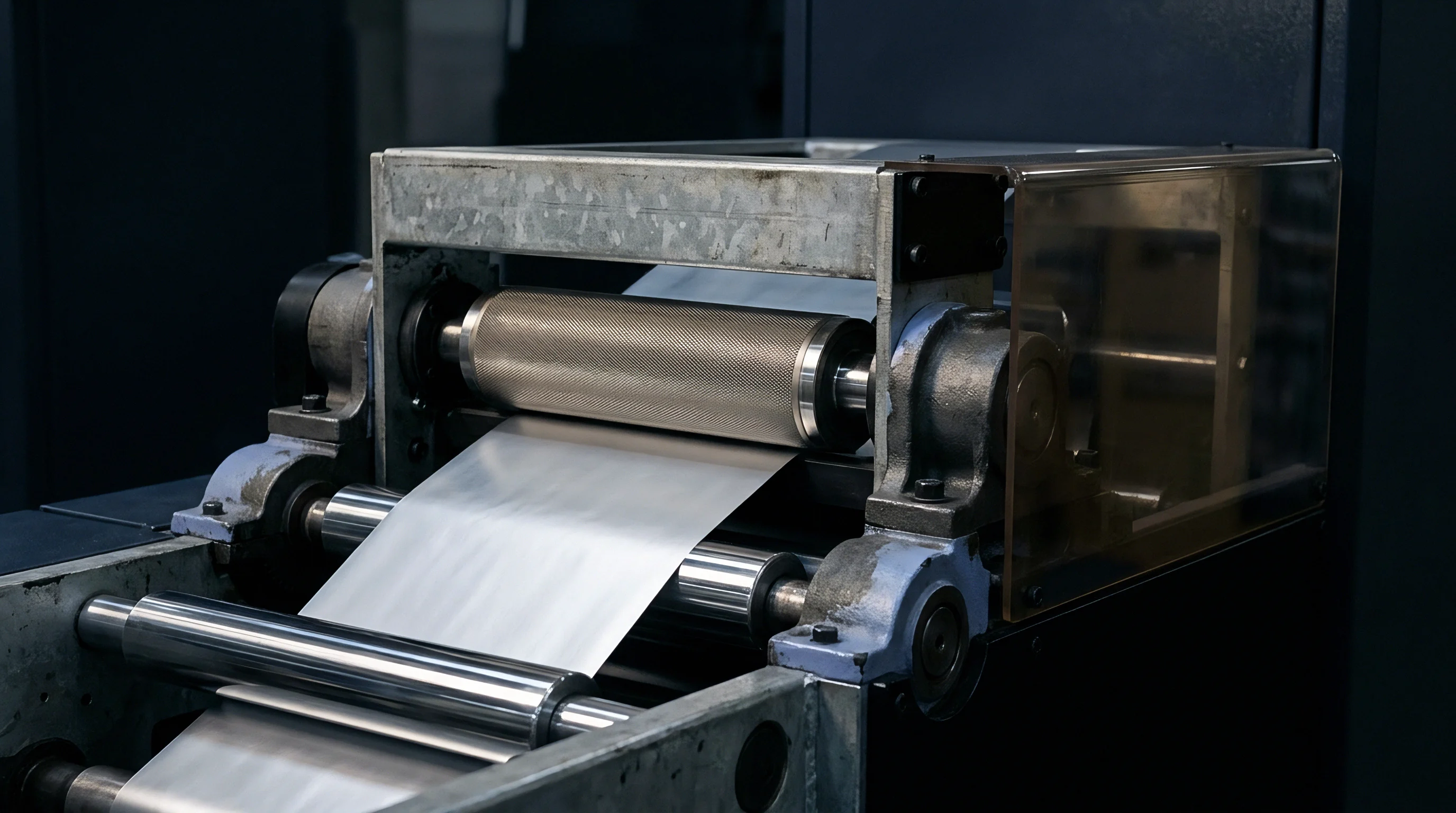
Ultrasonic attenuation detects penetration. Acoustic wave velocity through a paperboard sheet decreases in direct proportion to localized moisture content, as liquid water weakens hydrogen bonding between structural cellulose fibers. High-frequency non-contact ultrasonic transducers positioned immediately downstream of the reverse wetting applicator measure signal transit times across the sheet thickness.
Rapid velocity drops indicate deep core moisture penetration, triggering automated adjustments to applicator roll slip or fluid dosing volumes.
Excess back-side wetting past the Z-axis mid-plane induces irreversible structural limpness without restoring planar stability.
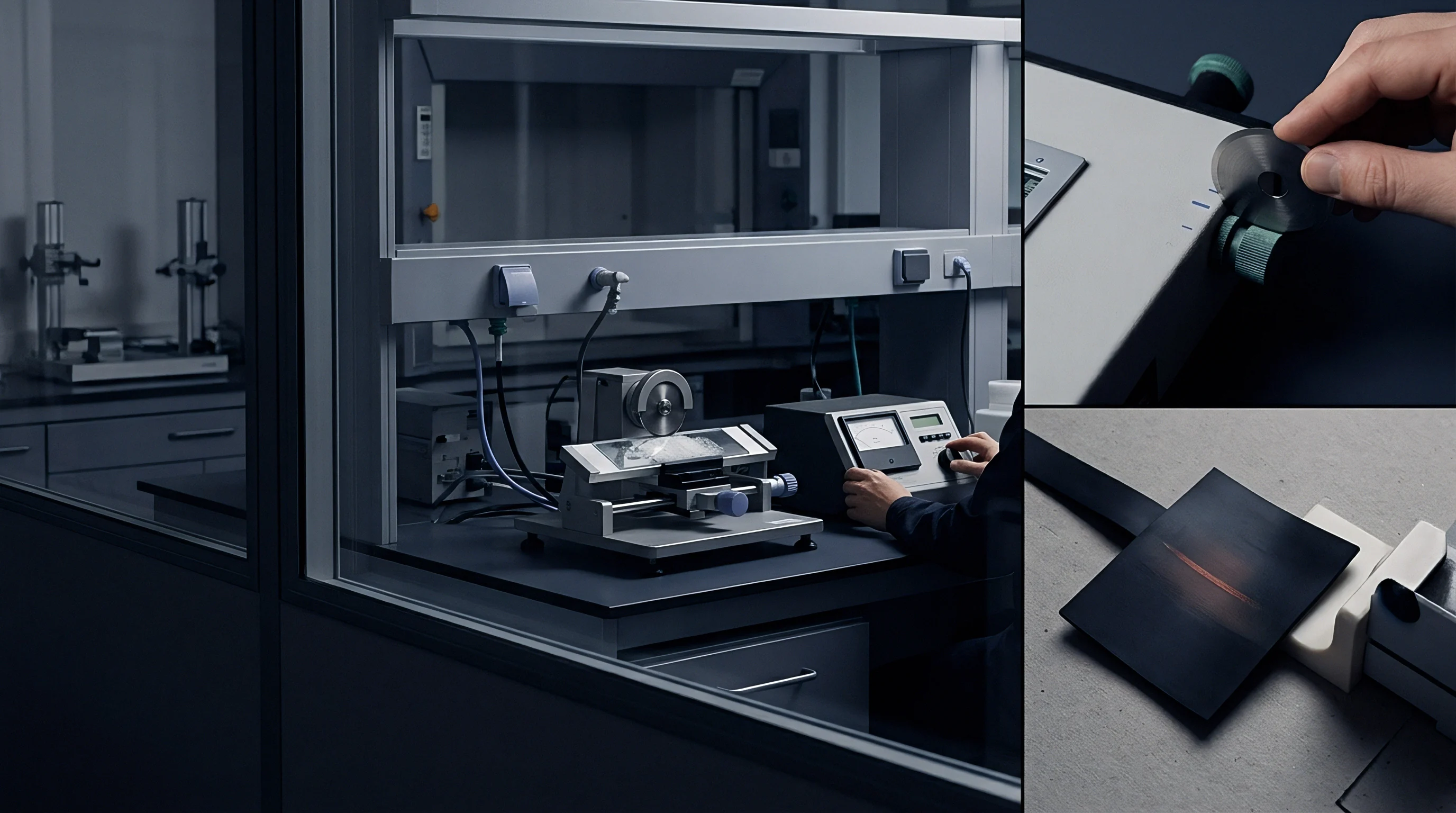
Off-line destructive testing validates continuous sensor calibration. Cross-sectional optical microscopy performed on samples injected with fluorescent water-soluble dyes maps exact fluid penetration boundaries across the Z-axis. Technicians slice conditioned paperboard samples at a 45-degree angle to amplify the Z-dimension visual scale, measuring dye boundary depth relative to total sheet thickness under ultraviolet illumination.
Ultrasonic Attenuation for Instantaneous Penetration Depth
Acoustic propagation speed through paperboard correlates directly with internal elastic modulus and moisture distribution. Dry cellulose fibers transmit longitudinal sound waves at velocities between 2,200 and 2,800 meters per second depending on fiber orientation and refining levels. Liquid ingress into surface pores slows acoustic transmission locally by disrupting inter-fiber bonding networks.
Sensors capture microsecond shifts. Online ultrasonic sensor arrays transmit 1 MHz acoustic pulses through the moving web at sampling rates exceeding 500 measurements per second. A sharp decrease in pulse transmission velocity combined with high amplitude attenuation indicates bulk core wetting.
Conversely, minimal amplitude decay paired with a slight transmission delay confirms that fluid remains localized within the outer surface layers as required for successful curl correction.
Trace Dye Spectrophotometry and Destructive Cross Sectioning
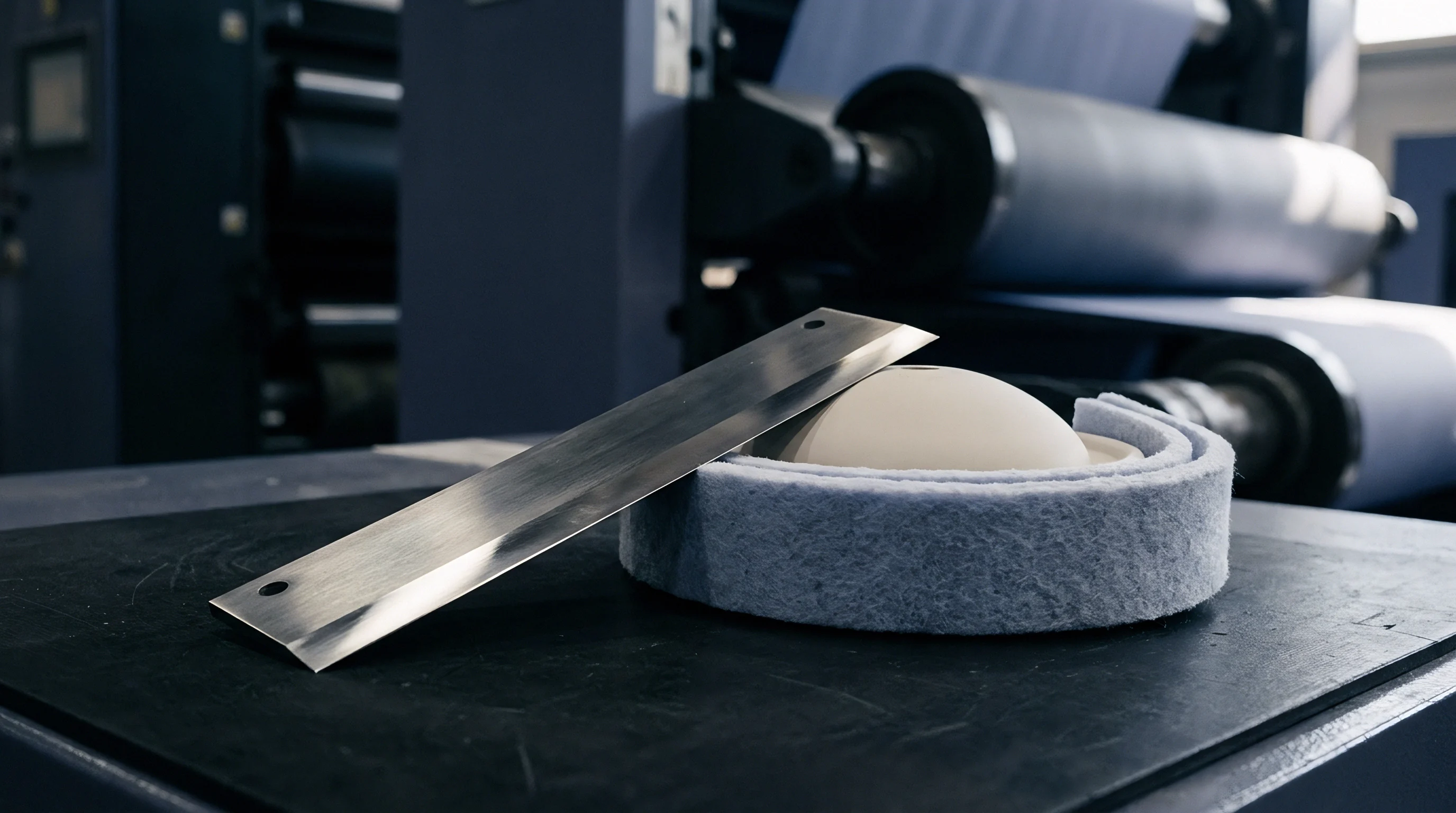
Laboratory validation relies on water-soluble optical brighteners or acid blue dyes added to the applicator fluid during test runs. Doped paperboard samples collected post-converting undergo precision cryo-sectioning using microtome blades chilled to minus 40 degrees Celsius. Cryogenic freezing prevents dye migration during the cutting process, preserving the true liquid distribution state established during high-speed applicator contact.
Spectrophotometric scanning quantifies dye density profiles across sectioned edges in 2-micrometer increments from the back surface to the front coating interface. Peak fluorescence intensity located within the initial 15 micrometers with zero signal detection past the 30-micrometer line confirms ideal fluid confinement. Profile curves displaying long tailing distributions into the center plies indicate excessive fluid dwell time or low dynamic surface tension in the applicator fluid formulation.
- Cobb Absorption Certificate Standard ISO 535 test protocol documentation defining 60-second water absorbency rates for base paperboard stocks prior to reverse wetting treatment.
- NIR Dwell Time Log Machine historian record tracking real-time web speed, moisture pickup, and sensor calibration metrics across entire mill roll production spans.
- Z-Axis Penetration Dossier Analytical report containing microtome optical cross-section images and spectrophotometric dye density curves for certified convertor lots.
- Hygroexpansional Strain Matrix Standardized laboratory data table matching specific paperboard calipers and basis weights to precise fluid volume application thresholds.
Commercial converter delivery contracts mandate that supplied paperboard lots meet ISO 11093 curl limits while retaining 95 percent of baseline Taber stiffness. Failure to meet these dual metrics invalidates quality compliance, transferring all downstream converting scrap costs back to the primary processing facility.
Margin
Financial returns on automated reverse fluid application depend on scrap reduction and thermal energy savings. Operating thermal web-flattening equipment such as high-intensity gas infrared dryers or steam shower assemblies consumes substantial electrical and gas power. Controlled liquid application via counter-rotating reverse roll units achieves curl correction at line speeds up to 800 meters per minute while using less than 10 percent of the energy required by thermal flattening systems.
Thermal drying demands energy. Evaporating water from over-moistened webs to force sheet flattening consumes approximately 2,600 kilojoules per kilogram of evaporated water, excluding system thermal losses. In contrast, mechanical reverse roll application deposits only the exact micro-gram liquid volume required to balance surface stresses, eliminating the need for high-capacity re-drying ovens downstream of the application zone.
Converting lines run fast. Implementing automated reverse web wetting systems reduces job make-ready spoilage by over 60 percent during lamination bring-up. Without precise dynamic wetting control, operators run hundreds of meters of board to establish thermal equilibrium and web flatness, generating significant material waste at current paperboard market prices.
Energy Balance between Thermal Dehydration and Reverse Rewetting
Calculations comparing operational expenditures between thermal drying systems and liquid reverse applicator units reveal substantial cost differentials across high-volume production schedules. Gas infrared heater banks running across a 1.6-meter web width consume roughly 180 kilowatt-hours of natural gas equivalent per operating hour to achieve thermal stress relaxation on 250 g/m² laminated board stock.
Reverse wetting reduces utility draw. Running a precision reverse applicator roll system with a 3 kW drive motor and a 0.5 kW chemical metering pump drops energy consumption to under 4 kilowatt-hours per operating hour. The micro-gram liquid volume applied dries naturally via ambient moisture equilibration within the wrapped reel, removing energy-intensive thermal processing steps entirely from the production flow.
Waste Arithmetic across High Volume Packaging Runs
Consider a commercial converting order processing 50 metric tonnes of 250 g/m² Solid Bleached Sulfate (SBS) paperboard laminated to a 12-micrometer polyethylene film. Total order area equals 200,000 square meters running across a 1.6-meter wide converting line at 500 meters per minute. Total run duration equates to 400 machine operating minutes excluding reel changes.
Baseline scrap rates on single-sided lamination lines operating without back-side wetting average 4.5 percent due to cross-direction curl warping, stack distortion, and off-spec die-cutting matrix registration. At a substrate purchase cost of 1,450 Euros per metric tonne, baseline curl-related material scrap represents 2.25 tonnes of wasted board, generating a direct material loss of 3,262.50 Euros per job lot.
Operating a dynamic reverse web wetting system depositing 1.8 grams per square meter of water treated with 0.05 percent acetylenic diol surfactant reduces curl scrap rates down to 0.4 percent. Saved raw board volume equals 2.05 metric tonnes, preserving 2,972.50 Euros in direct material value per 50-tonne run. Total surfactant and purified water chemical costs for treating 200,000 square meters amount to exactly 48.00 Euros, delivering net material savings of 2,924.50 Euros per job lot.
| Flattening Technology Option | Energy Consumption (kWh) | Substrate Scrap Rate (%) | Utility Cost (€) | Total Operational Expense (€) |
|---|---|---|---|---|
| High-Intensity Gas IR Dryers | 600 | 3.2 | 108.00 | 2,428.00 |
| Steam Shower Pre-Conditioning | 420 | 2.1 | 75.60 | 1,598.10 |
| Reverse Web Wetting (Dynamic Slip) | 8 | 0.4 | 1.44 | 315.44 |
Line speed capability determines final equipment pay-back periods. Integrating automated counter-rotating applicator rolls directly into existing lamination frameworks eliminates production bottlenecks caused by slow thermal drying steps, allowing line speeds to increase from 350 to 600 meters per minute without risking planar instability in finished pallets.